March 27, 2015
Architect Kengo Kuma Discusses the 'East Japan Project' and Reconstruction in Tohoku (2) | INTERVIEW
SPECIAL INTERVIEW
Architect Kengo Kuma Discusses the "East Japan Project" and Tohoku's Reconstruction (2)
Creating Slowly, Selling Slowly: The True Happiness
The "Ejp (East Japan Project)" is an initiative led by architect Kengo Kuma, collaborating with traditional craftspeople from Tohoku to propose everyday items. The latest creation, "Tachiagare Pen," made using the "hariko" paper-mâché technique—where paper is applied to molds made of wood or clay—is now available. "We must not be enslaved by computers, nor must craftspeople cling rigidly to their own methods," says Kuma. This is the second part of our interview, following the previous installment.
Vol.1 "Architect Kengo Kuma Discusses the "East Japan Project" and Tohoku's Reconstruction" here
Photographs by SUZUKI ShimpeiText by KAJII Makoto (OPENERS)
The Charm of Imperfection: The "Tachiagare Pen"
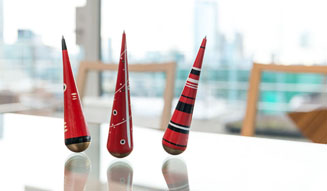
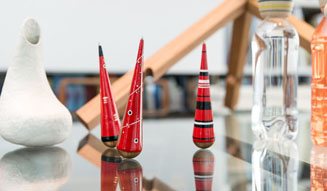
The latest creation from "Ejp (East Japan Project)," the "Tachiagare Pen," is a self-standing pen inspired by "Okiagari-koboshi" and "Aka-beko," traditional lucky charms and folk toys from the Aizu region of Fukushima Prefecture.
"The Tachiagare Pen was designed by architect Masahiro Harada of MOUNT FUJI ARCHITECTS STUDIO, and brought to life by craftsman Shoichi Hashimoto from Nishida Town, Koriyama City, Fukushima Prefecture. Harada, who enjoys designing small objects, had this idea for a while. There are three types, and each has a unique expression. I love the slight imperfections that come with handcraftsmanship—the lack of precision, you could say (laughs)," says Kuma.
"What we aim for with this project is to propose practical items that offer usability and design optimized for Japan, enabling a 'new way of living' distinct from our previous lives. We truly hope people will embrace these non-industrial products," he continues.

The Importance of "Slowness" in All Things
The products from Ejp (East Japan Project) are characterized by their limited production: "Because they are handmade, we cannot make many." Kuma has realized something significant from this.
"Our daily work often rushes us, and we unconsciously become accustomed to this sense of time in our lives. However, through Ejp (East Japan Project), I've learned that craftspeople are not happy with that. Selling a lot isn't necessarily good; creating slowly and selling slowly is the happiest path. This might seem obvious, but it's something we had forgotten," he explains.
He adds, "We also realized that we must not be enslaved by computers, nor must craftspeople cling rigidly to their own methods. Crafts are living things, so there should always be new discoveries through mutual interaction. We want to increase such opportunities through this project."
NOSIGNER Collaborates with Naruko Onsen Kokeshi Craftsmen in Miyagi Prefecture
For example, the "NARUCO Kokeshi Light" and "NARUCO Kokeshi Bottle Cap," born from Ejp (East Japan Project), are designed by the innovative design firm NOSIGNER and individually handcrafted by kokeshi artisans from Naruko Onsen, Miyagi Prefecture, using traditional lathe techniques. While respecting traditional methods, the application of these skills to items like LED lights and bottle caps undoubtedly empowers the artisans' creativity.
In the third part of our interview with Kengo Kuma, we will ask, "Why are so many architects involved in supporting the reconstruction of disaster-stricken areas in various ways?"
East Japan Project
Ejp General Incorporated Association Secretariat
Within Kengo Kuma Architects and Associates
Aoyama Tower Building 12F, 2-24-15 Minami-Aoyama, Minato-ku, Tokyo
Aoyama Tower Building 12F
Tel. 03-5771-7577
http://e-j-p.org/