October 28, 2025
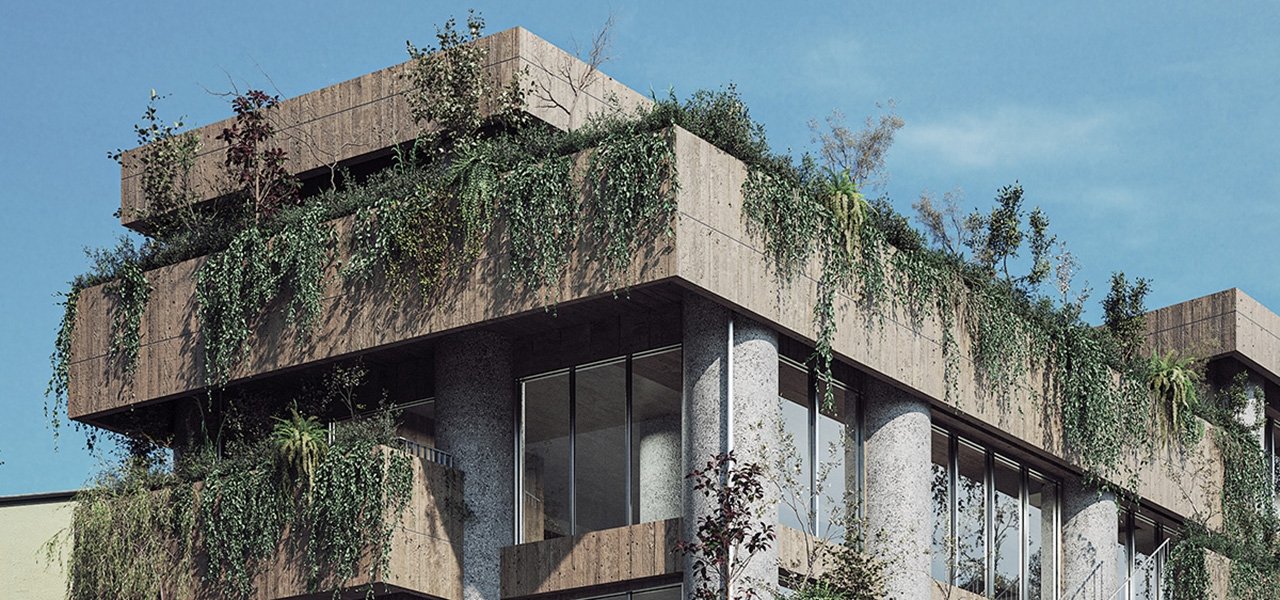
A Good Design Award-winning architectural project that cultivates a forest within the city.
THE GRANDUO
An intriguing piece of news has emerged from Faith Network, a company that continues to propose new forms of luxury in high-end rental properties. Eight of their projects received awards at the 2025 Good Design Awards, including one called the "Urban Greening Project." This initiative aims to create 100 tsubo of green space in Tokyo each year, transforming buildings into vertical forests. Walls, rooftops, and balconies all become havens for greenery. By gathering small patches of green, a large forest will eventually take shape. Such a grand project is underway.
Text by AOYAMA Tsuzumi | Photographs by THE GRANDUO (Faith Network)
Faith Network has been frequently featured on OPENERS. We've received more interesting news from this real estate developer, which has been proposing new forms of urban living through its high-end rental "THE GRANDUO" series.
It turns out that an impressive eight projects handled by Faith Network were honored at the 2025 Good Design Awards. Among them, the "Urban Greening Project: Gathering Small Greens to Create a 100-Tsubo Forest" particularly catches the eye.
I paused for a moment, wondering what it means for a greening project to win a design award. Nowadays, it's almost commonplace for new buildings to feature rooftop gardens, and it's not unusual to see ivy growing on walls. Generally, comfortable living spaces often consider harmony with nature.
So, what does it mean for an architectural project to receive a design award?
The Concept of Turning Buildings into Forests
Reading the judges' comments finally brought clarity.
"The vertical architectural planting was evaluated for pursuing multifaceted effects of greening and demonstrating new developments in architectural design. The greening, which looks beyond mere visual appeal to consider flood control and mitigation of the urban heat island effect, will be a great contribution to the local community. The approach of integrating planting into the architectural design and returning it to the residents' lives, rather than treating greenery as mere decoration, is a crucial perspective."
While the project is recognized for its greening effects extending beyond aesthetics to community contribution, the most significant point is the elevation of greenery from an "extra" to a "main feature." This became clear as I delved deeper into the project's details.
Every aspect of the building is designed as a "place for greenery to thrive." Faith Network's approach is thorough. While green spaces are naturally incorporated on floors and the ground, they extend to walls, balconies, and of course, rooftops.
This urban greening project is already being implemented in the "THE GRANDUO" and "GranDuo" series properties developed by Faith Network, particularly in the Jonan area (around Setagaya, Meguro, and Shibuya).
For instance, looking at photos of "GranDuo UMA" in Setagaya Ward, greenery cascades from the building, giving it the appearance of a giant hedge. When the wind blows, the plants sway, and their leaves shimmer in the morning light. As the seasons change, the building's appearance will undoubtedly transform.
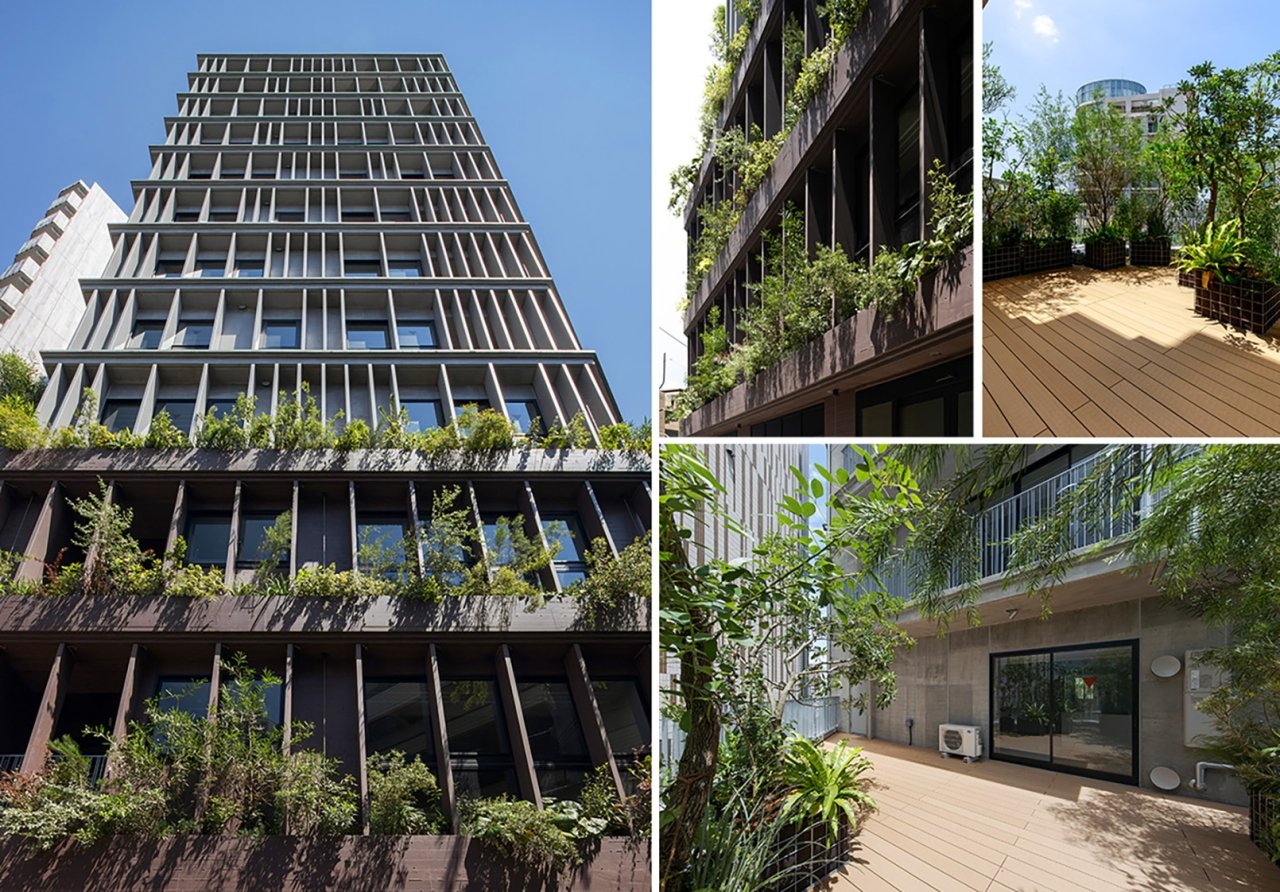
But a question arises: What about maintenance? Who bears the cost? And most importantly, do the residents and neighbors welcome it?
Interestingly, the answers to these questions were quite revealing.
The Secret Lay in "Light Soil"
Let's start with maintenance.
The biggest challenges in vertical greening are weight and watering. Placing ordinary soil on walls or rooftops places a significant burden on the building. Watering at high elevations is also difficult.
This problem was solved by the "Aqua Soil Method" developed by partner company Ikegami. This method uses a special soil called Aqua Soil.
This soil is surprisingly light when you hold it. Yet, it boasts three times the water retention capacity of regular soil. Quantitatively, it's around 440 liters per cubic meter. This means one cubic meter of soil can store more than two drums of water. It's light yet holds abundant moisture, much like a high-performance sponge.
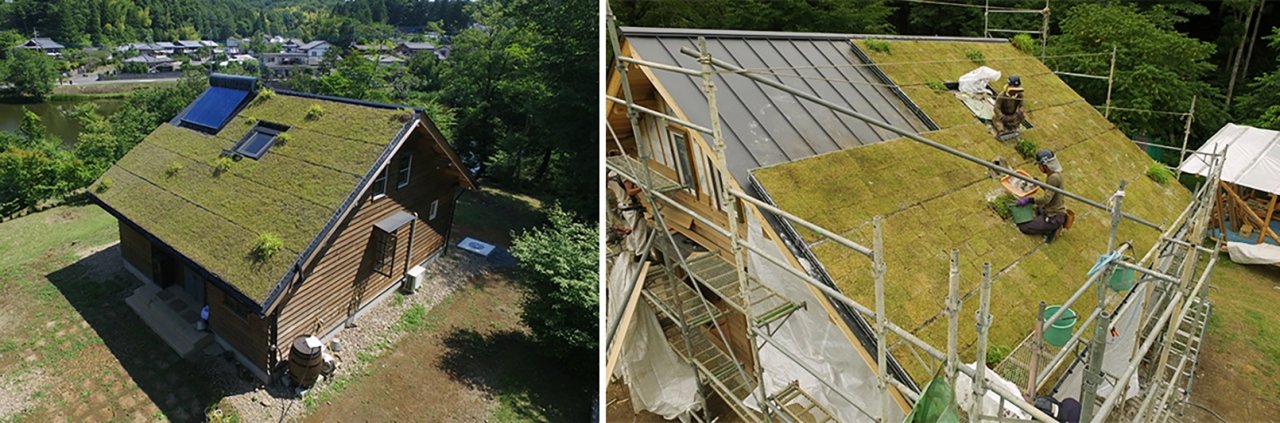
Reducing the frequency of watering lowers maintenance costs and lessens the burden on the building. This significantly lowers the barrier to vertical greening.
Furthermore, this soil brings three additional "bonuses."
Miniature Dam EffectHave you ever seen drains overflow during a sudden downpour? In Faith Network's buildings, the planting areas temporarily absorb rainwater. Each project can hold 600 liters, equivalent to 300 plastic bottles. This also contributes to Setagaya Ward's "Setagaya Dam Concept." (Upon checking, the goal is to store 130,000 cubic meters of rainwater across all households – a grand ambition.)
Evaporative Cooling EffectAt 3 PM on a midsummer afternoon, the irrigation system activates. As the temperature rises during the day, the water stored in the Aqua Soil slowly evaporates, and the resulting evaporative cooling lowers the building's surface temperature.
This integrates the wisdom of traditional Japanese 'uchimizu' (water sprinkling) into modern architecture. While building surfaces can exceed 50 degrees Celsius on hot summer days, the planted areas remain 5 to 10 degrees cooler. This temperature difference creates a gentle breeze, cooling the entire building. It might even make it comfortable to raise the air conditioner setting by one degree.
An Oasis for Living CreaturesThis is a particularly heartwarming aspect. Faith Network is committed to conserving native Musashino plant species.
Konara oaks, kunugi oaks, and Japanese dogwoods. These are "familiar trees" to the local wildlife. Indeed, within six months of the building's completion, butterflies begin to appear. After a year, white-eyes and great tits start building nests.
Imagine waking up to the chirping of birds in the morning. A small ecosystem is forming in Tokyo, a city often called a concrete jungle. An oasis is emerging in the heart of the metropolis.
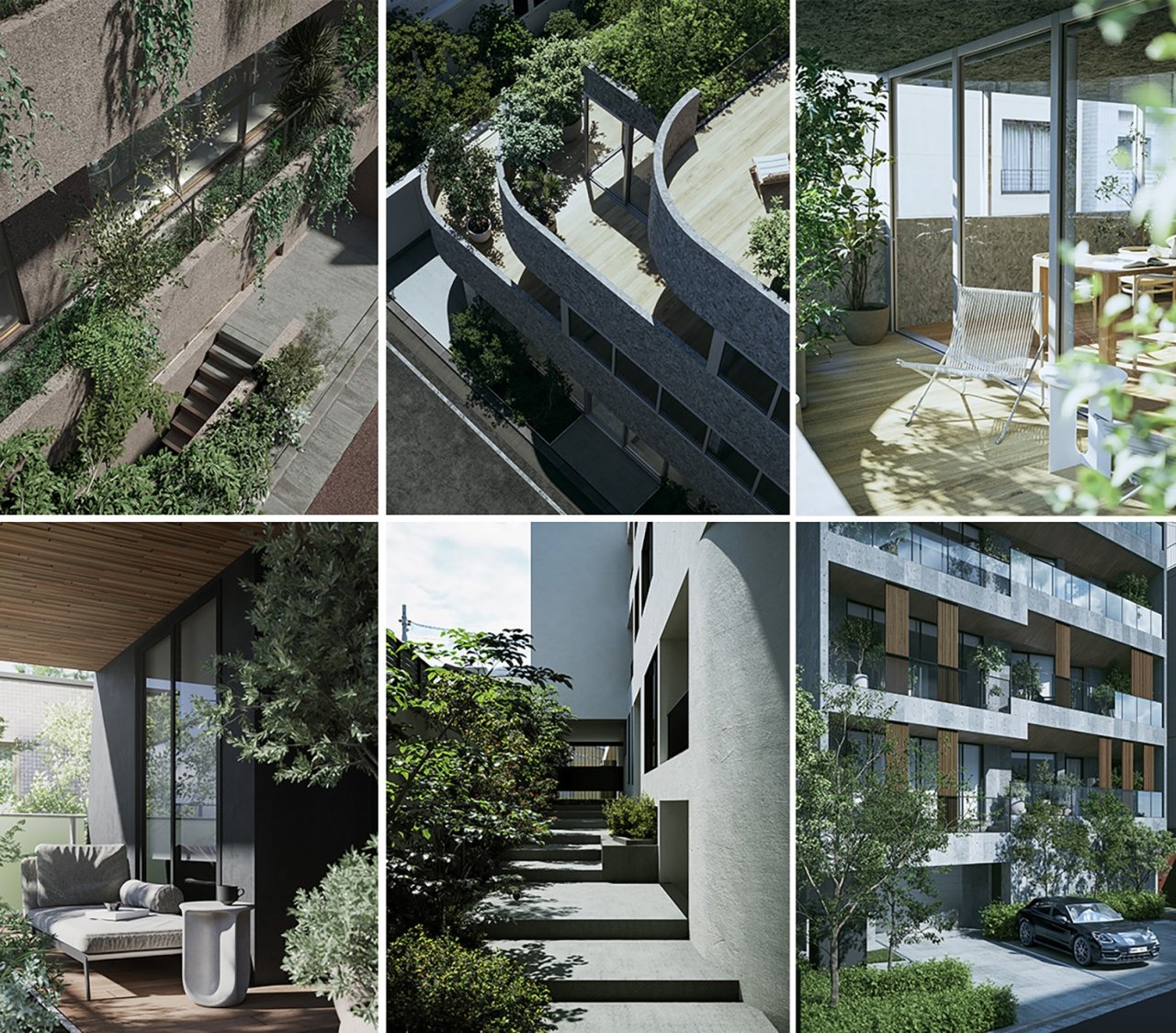
Having confirmed the effects of Aqua Soil, let's now address the crucial question: "Do the residents appreciate it?"
Since 2025, Faith Network has begun distributing planting pamphlets to residents. These pamphlets answer questions like, "What is this tree?" and "How should I care for it?" The response from residents has reportedly been very positive. The presence of greenery enhances the property's value, and residents enjoy living amidst nature.
This is the Design of the Future
What about the associated costs?
When I asked Yasuhiro Kuno, an executive officer in charge of architecture promoting this project, I received an insightful answer.
"We need a paradigm shift in thinking, from viewing greening as a cost to seeing it as an investment."
I thought, "That makes sense."
Certainly, there's an initial cost. But in the long run, there are various returns: increased property value, improved local environment, and higher resident satisfaction.
What's interesting is that Faith Network pays for the "excess greenery."
They established a system called "GREEN CHARITY." Each municipality has greening ordinances that stipulate a minimum amount of greenery to be planted. Faith Network plants more than this standard. For every square meter of "excess greenery" planted, they donate 1,500 yen to an urban greening organization.
In fiscal year 2024, they donated 200,000 yen to the Setagaya Town Planning Trust. The business owner, designers, and planting contractors all contribute financially, giving back to the community.
"While it may be a small amount from a business perspective, we believe there is meaning in continuing this effort," says Kuno.
In essence, the core of this project lies in whether one views greening as a mere cost or as an investment in the future.
Faith Network aims to add 100 tsubo of green space in Tokyo annually.
100 tsubo. That's about 1.2 tennis courts.
Doesn't seem like much? But consider it year after year. 1,000 tsubo in 10 years. 2,000 tsubo in 20 years. Furthermore, it's concentrated in the three Jonan wards. Futako-Tamagawa, Minami-Aoyama, Chitose-Funabashi, Gakugei-Daigaku, Kami-Meguro, Higashi-Oka, Shimokitazawa, UMA, Yoyogi... When plotted on a map, these green dots will form lines, eventually coalescing into an area.
Designing Cities, Designing the Future
Kuno speaks of an even grander vision.
"We actively collaborate with architects possessing strong conceptual and design capabilities, and we aim to think and design with a long-term perspective rather than focusing on short-term, efficient development. Currently, it's point-based development, but we will evolve this into lines, and then into an area."
What's even more intriguing is the next phase.
"Additionally, from the perspective of 'creating safe and secure towns,' a theme we are newly addressing, we will focus on lighting and develop 'small lights' that gently sway with the wind, integrated with 'small greenery.'"
Greenery and light. Indeed, greenery might be beautiful at night as well.
Greening from cost to investment. This shift in perspective is likely what the Good Design Awards recognized. Lowering urban temperatures, absorbing rainwater, and creating habitats for wildlife. Beyond a single building, it's about designing the entire city.
This is known as "Biophilic Design" – a concept that fosters mental and physical well-being and a rich life by harmonizing and coexisting with nature. It involves integrating greenery, which requires maintenance, into architecture to establish a new balance of economic rationality. It's not easy, but that's precisely why it holds value.
Gathering small greens to create a 100-tsubo forest.
It sounds grand, yet it's a steady step forward. Such a project is currently underway in Tokyo.
Award Winner Comments
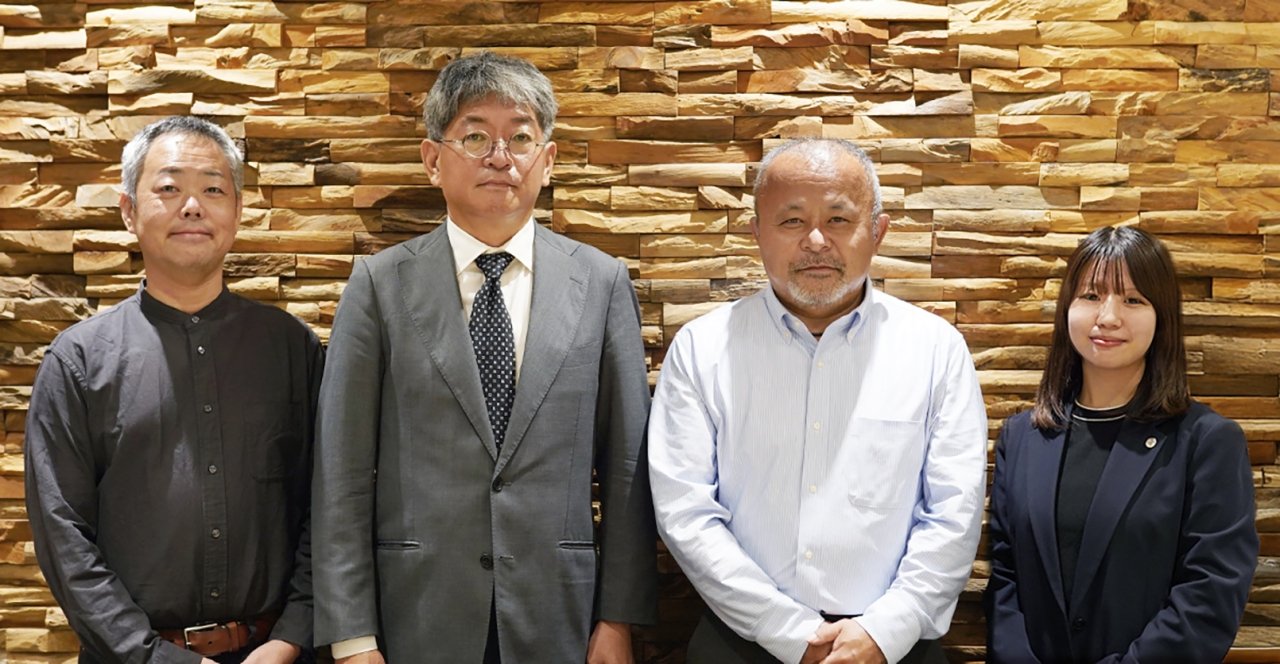
Producer: Yasuhiro Kuno (Executive Officer, Architectural Division, Faith Network Co., Ltd.)
Receiving the Good Design Award is the culmination of our past challenges and a starting point for the future. We are delighted to have been able to shape this theme of creating green cities, which we have continuously explored for its potential to contribute to societal issues, through discussions with many colleagues. We are beginning to see signs of this project influencing other companies and regions, and we feel motivated to continue our efforts towards realizing a better urban environment.
Receiving the Good Design Award is the culmination of our past challenges and a starting point for the future. We are delighted to have been able to shape this theme of creating green cities, which we have continuously explored for its potential to contribute to societal issues, through discussions with many colleagues. We are beginning to see signs of this project influencing other companies and regions, and we feel motivated to continue our efforts towards realizing a better urban environment.
Designer: Reina Yano (Architectural Division, Faith Network Co., Ltd.)
I am deeply pleased that our greening initiatives have been recognized with a Good Design Award. Achieving both quality and quantity in limited spaces required numerous adjustments, but through persistent dialogue between design and construction, we feel we have realized the "functions of greenery" within the urban environment. I believe this award is the result of our continuous trial and error in establishing greenery as a mechanism that contributes to the urban ecosystem.
I am deeply pleased that our greening initiatives have been recognized with a Good Design Award. Achieving both quality and quantity in limited spaces required numerous adjustments, but through persistent dialogue between design and construction, we feel we have realized the "functions of greenery" within the urban environment. I believe this award is the result of our continuous trial and error in establishing greenery as a mechanism that contributes to the urban ecosystem.
Partner: Yasuyuki Ikegami (Representative Director, Ikegami Co., Ltd.)
I am truly delighted by this award and express my deepest gratitude to everyone who has supported us. Our collaboration with Faith Network marks the dawn of an era where greening is a standard feature of buildings, and it is a first step demonstrating tangible value for living, the environment, and the economy. Utilizing our technology in this new endeavor has been a significant opportunity for learning and growth. As climate change is no longer a distant issue but a reality directly impacting our lives, the importance of urban greening continues to grow. We will continue to evolve and take on new challenges, leveraging our technology, experience, and long-cultivated expertise to contribute to the realization of sustainable urban environments.
I am truly delighted by this award and express my deepest gratitude to everyone who has supported us. Our collaboration with Faith Network marks the dawn of an era where greening is a standard feature of buildings, and it is a first step demonstrating tangible value for living, the environment, and the economy. Utilizing our technology in this new endeavor has been a significant opportunity for learning and growth. As climate change is no longer a distant issue but a reality directly impacting our lives, the importance of urban greening continues to grow. We will continue to evolve and take on new challenges, leveraging our technology, experience, and long-cultivated expertise to contribute to the realization of sustainable urban environments.
Partner: Kentaro Nakanishi (Ikegami Co., Ltd.)
I am genuinely pleased to have been involved in this greening initiative and that its success has been recognized with a Good Design Award. A major challenge was balancing the quality and quantity of greenery within limited spaces. Particularly during coordination with the construction site, detailed adjustments were necessary between design ideals and site realities regarding plant selection and maintenance methods, requiring numerous dialogues. I feel this award is a testament to the dedication of everyone involved in design, construction, and operation.
I am genuinely pleased to have been involved in this greening initiative and that its success has been recognized with a Good Design Award. A major challenge was balancing the quality and quantity of greenery within limited spaces. Particularly during coordination with the construction site, detailed adjustments were necessary between design ideals and site realities regarding plant selection and maintenance methods, requiring numerous dialogues. I feel this award is a testament to the dedication of everyone involved in design, construction, and operation.
"Gathering Small Greens to Create a 100-Tsubo Forest"
2025 Good Design Award Winner
Reference Sites
Press Release (IR Information)
Good Design Award Special Site
https://faithnetwork.co.jp/gooddesign/
Good Design Award Winners Gallery
https://www.g-mark.org/gallery/winners/29512
2025 Good Design Award Winner
Reference Sites
Press Release (IR Information)
Good Design Award Special Site
https://faithnetwork.co.jp/gooddesign/
Good Design Award Winners Gallery
https://www.g-mark.org/gallery/winners/29512
Social Media
Instagram |@the_granduo
X (formerly Twitter) |@the_granduo
youtube |@the_granduo
note
https://note.com/the_granduo
Instagram |@the_granduo
X (formerly Twitter) |@the_granduo
youtube |@the_granduo
note
https://note.com/the_granduo
Contact
THE GRANDUO Official Website
https://thegranduo.com/