May 15, 2015
Series: Hiroshi Yanagimoto | Part 23: A Conversation with Munenori Hashizume on "Design and Education" (Part Two)
Series: Koichi Yanagimoto | Part 23: A Conversation with So Hashizume on "Design and Education" (Part 2)
This time, we invite graphic designer So Hashizume to discuss what he learned and thought during his two years at the RCA (Royal College of Art, London).
By Koichi Yanagimoto
The Meaning Behind the Thesis Title: "Emptiness of Design"
HashizumeWhen the phrase "Emptiness of Design" first came to mind for my thesis title, I recognized that this idea itself connected with Eastern philosophies, such as Zen and haiku. However, my European tutors told me, "We don't understand what you're saying" (laughs). But when I considered "emptiness" under the premise of not actively creating something new, I began to feel it might connect with the work of Åbäke (a design studio based in London) and my own experiences living in London. Through extensive reading and research, the keyword "practice" emerged.
YanagimotoSo you took a step beyond your graduation thesis theme.
HashizumeAmong the books I read, "The Practice of Everyday Life" by Michel de Certeau was a key text that deepened my thinking on "Emptiness of Design." The book frames everyday actions we take in urban spaces as "practices." It articulated a concept not of subverting power or systems to secure one's own territory, but of skillfully navigating within existing structures and living by cutting and pasting. It stated that life has various "components" (meaning parts that have specific functions but cannot be used alone, requiring combination with other programs in the world of software) and that by rearranging the order of things, we can create new forms of interest and meaning for those living. Actions like children taking detours on their way home from school or decorating a rented apartment to their liking, despite its fixed layout, fall under this category.
The concept of "components" led me to realize the existence of so many things in the world, rather than designing from scratch. Considering the history, including the Bauhaus movement and the rise of Swiss typography, I thought that future design could become more interesting by rearranging the order of existing things and utilizing the concept of components in the process of re-editing. This idea became a major guiding principle for my subsequent activities.
YanagimotoAnd when you returned to Japan, didn't you feel a gap with the UK?
HashizumeIt was quite tough (laughs). It's true that the perspectives and values were completely different from London. Moreover, I couldn't immediately apply what I learned at the RCA in a design context, so I went through a period of struggle after returning. At that time, even when I consulted with Japanese designers of my generation, the conversation often ended with, "But, you know, the reality is..." I could have seriously considered returning to the UK, thinking, "Japan is hopeless." However, my personal conviction to "share what I learned in the UK and build new relationships in Japan" prevailed, and I decided against leaving Japan for a second time.

Tokyo Offers Many Elements for Interesting Editorial Work
YanagimotoSo how did you manage to persevere?
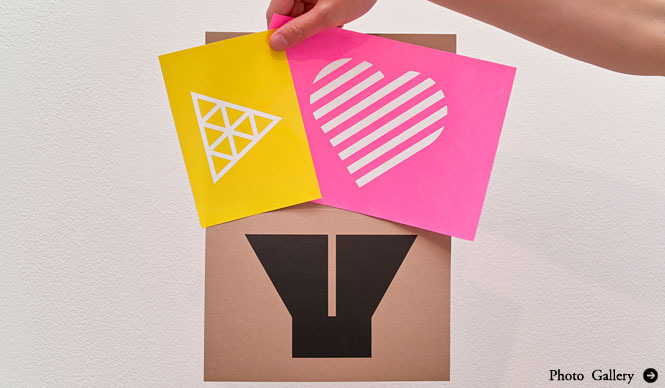
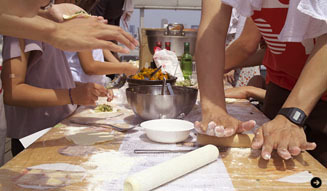
HashizumeAt that time, I realized that while most design work in Japan is client-based, I needed to shift towards creating my own environment and fostering relationships within Japan to practice my ideas in such a situation. Looking at Tokyo objectively, I became convinced that it held many elements for interesting editorial work. It was then that I encountered Hiroshi Eguchi of Utrecht. I don't think there's anyone else in Japan doing what he does. He runs a practical bookstore, hosts English classes in the attached cafe, and his activities are somewhat unconventional (laughs), but they all foster relationships. Beyond the concept of "components," Eguchi-san goes a step further by lightly creating "spaces" as a practice. His relaxed personality also contributes (laughs). As we spent time together, Eguchi-san, product designer Hiroko Shiratori (an RCA alumna), and I hit it off and decided, "Let's do something." While nurturing the idea, it eventually led to "D ♥Y."
* "D ♥Y" was an event held over two days, June 5th and 6th, 2010, at CLASKA. With "Do It Yourself" as its theme, it brought together over 40 exhibitors. The event, featuring a wide range of activities such as making things on the spot, custom orders, cooking and eating together, and group singing, attracted approximately 2,000 visitors. Hashizume served as a producer for the overall event and also as its art director.
YanagimotoAt "D ♥Y," it must have felt like returning to your RCA days in London.
HashizumeYes, it did. The DIY concept greatly influences the cultural structure in London, and Eguchi-san, Shiratori-san, and I conducted various research to create a model for "D ♥Y." We saw an event at the V&A (Victoria and Albert Museum) called "VILLAGE FETE," a kind of design village festival, where RCA students and independent designers set up stalls like a bazaar. However, the designers there weren't just selling things; they were engaging participants by utilizing their processes and expertise as designers, even in areas outside their specialization, to ensure everyone had a good time. The "Village Fete" in the UK, what I learned at the RCA, the city of Tokyo, and the various relationships we cultivated... the permutation and combination of these elements became the driving force behind holding "D ♥Y." Ultimately, these kinds of practices are strongly influenced by the editorial concept I absorbed in my youth from my favorite music, particularly DJ culture: "connecting existing elements through various methods."
Next time, we will delve into Hashizume's concept of "editing."
So Hashizume | HASHIZUME So
Born in Hiroshima Prefecture in 1978. Graduated from Musashino Art University, Department of Visual Communication Design. Completed his Master's degree in Communication Art & Design at the Royal College of Art (RCA), UK. After returning to Japan, he has been involved in numerous projects, including art direction, book design, and web design, in fields such as art, architecture, and fashion. Recently, he has been actively involved in planning workshops and events that cross various domains.
http://www.sosososo.com/
