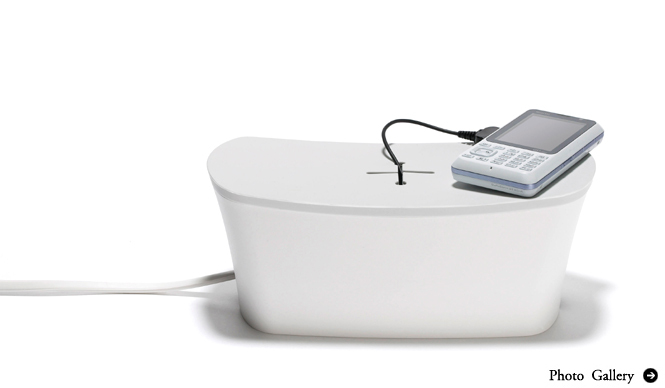
Hiroshi Yanagimoto | Part 20: A Conversation with Takashi Nemoto on "Entertainment and Design" (Part 1)
Takafumi Nemoto on "Entertainment and Design" - Part 1
This time, we introduce Takafumi Nemoto. Recently, I've had many opportunities to meet young designers who are active as freelancers while also working for manufacturers, and Nemoto-san is one of them. I'd like to ask him about the environment of his childhood that influenced him and how he balances working for a company and freelancing.
Text by Hiroshi Yanagimoto
Michael Jackson, a Profound Influence
YanagimotoFirst, could you tell us about your childhood?
NemotoMy father was an engineer, so I was surrounded by portable electrical products from a young age and played with them as toys. My maternal grandfather also ran a lathe shop, so I often visited to watch the iron being machined. Looking back, I had an environment where "monozukuri" (craftsmanship/making things) was close at hand. When I was two years old, I started attending "EDA," a child development center founded privately by Masaru Ibuka.
I attended until I started kindergarten, and I still clearly remember being a child who couldn't rest unless I used all the crayons when drawing. At the center, they would have children draw pictures, hang them on the wall, and the parents in another room would guess which picture belonged to their child. Apparently, my parents could identify my drawings right away based on my use of colors.
YanagimotoNemoto-san, I heard you were greatly influenced by Michael Jackson from a young age?
NemotoYes. At that time, I had asthma, and every Monday, as soon as all my classes were over, I would go to the hospital for desensitization treatment. Because of this, I spent a lot of time in the car, and Michael (Jackson) and Earth, Wind & Fire were always playing on the car stereo. I was particularly inspired by Michael (laughs). His singing and dancing were first-class, and I learned about his pursuit of "showing oneself to others" and his professionalism.
This is my own thought, but when comparing entertainment and design, Michael could mobilize tens of thousands of people for a single live performance and satisfy the audience simultaneously for a few hours. In design, achieving "simultaneous satisfaction" is very difficult, and especially in product design, it's hard to truly understand the user's intentions. Comparing the two, I feel a dilemma in design and sometimes admire people in entertainment.
YanagimotoBeyond the relationship between entertainers and their audience, or the way live performances are staged, did you learn anything else from Michael?
NemotoThe fact that he didn't make you conscious of race. I don't think there are many influential entertainers who can achieve that. I spent my high school years in Singapore, and even with people of various Asian ethnicities, I was able to get along without feeling out of place, thanks to Michael's influence. I also saw his music videos featuring people from various countries.
Speaking of race, when I was young, I had blond hair and fair skin, so people called me "American." I wasn't bullied for my hair color, but I was often teased, which is why I think I sympathized with Michael.
YanagimotoWhen you went to Singapore, did you ever feel out of place?
NemotoPerhaps not out of place, but there were people of various races and religions, and human relationships were maintained by a delicate balance. If that balance was disrupted, there would be disputes or riots... that did happen. Art also developed alongside religion, so the colors and decorations were unlike anything I had seen in Japan.
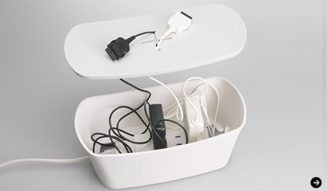

High School Trading Experience Now Useful in Design Work
YanagimotoDid you ever have differing opinions or misunderstandings with locals regarding your "Japanese identity" and your political views or thoughts?
NemotoIn terms of school life, it was a Japanese school and a boarding school, so that wasn't the case. However, in my interactions with locals, I found myself unable to answer many of their questions about Japan. I felt ashamed when they asked, "Why don't you know about your own country?" That's when I became aware of my Japanese identity and decided to learn more about it gradually.
Speaking of boarding school, what struck me most was that students were trading goods among themselves within the dormitory. The school seemed to tolerate it. This was in Singapore, but Japanese fashion was popular at the time, and these transactions made me realize that "this person might not value it much, but this person does." Some of the seniors would go to Thailand on weekends, dig through vintage clothing warehouses for items destined for Japan, and ship them back. Their wallets would be bulging with Singapore dollars (laughs). Also, at that time, we were somehow creating an environment where the other party would desire the item.
I believe my high school trading experience is now useful in my design work, in the process of exhibiting prototypes, gathering feedback, and then finding manufacturers.
YanagimotoGiven that trading experience, it seems like you would have chosen to become a freelancer right after graduation or to start your own label and handle everything from design to sales. Why did you join a manufacturer?
NemotoThe main reason was that I had wanted to design electrical products since I was a student. I also had the desire to work as a freelancer, but I judged that it would be difficult to get work externally since Japanese manufacturers have in-house designers. Starting to design electrical products as an individual is challenging, so I initially thought about starting with analog designs, but I prioritized my initial desire and chose the path of employment.
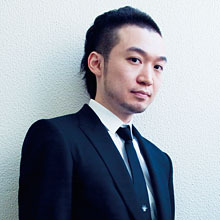
Photo by KENTA AMINAKA
Takafumi Nemoto
PORE is a nickname from his time in Singapore, where he spent his high school years.
In 2001, while studying at Nihon University College of Art, he began his activities with the keyword "PORE OVER IT! (Think deeply)."
In 2004, after graduating from university, he joined the design department of an electronics manufacturer.
http://www.poreoverit.com