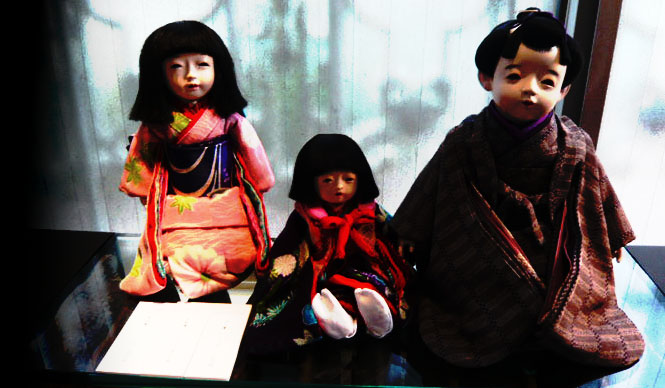
Akimitsu Fujimura: A Doll Exhibition / Kaki no Hana Annex
INTERIOR & DESIGN NEWS selects and introduces the latest information and event reports on Tokyo's interior and design scene.
This time, we feature the Akimitsu Fujimura doll exhibition currently being held at Kakitsubata Bekkan in Nakameguro. What is the tradition of Japanese doll making, which has evolved uniquely in ways not seen in other countries?
Text by Takashi Kato
The Tradition of Ichimatsu Dolls
Ichimatsu dolls, also known as Yamato dolls or nakig doll (crying dolls), are抱き人形 (dakiningyo - huggable dolls) in the form of children.
Until the first half of the Edo period, they were unattainable luxuries reserved only for the children of the aristocracy. However, around the mid-Edo period, mass production became possible by using inexpensive materials like sawdust, and they gradually became accessible to the common people.
Ichimatsu dolls have served as huggable dolls, used as playthings for children and for emotional education.
Typically sold undressed, Ichimatsu dolls also served as teaching materials for Japanese sewing (wasa-i, the art of making Japanese clothing), as their outfits were handmade by the users themselves.
While Ichimatsu dolls were objects of play for young children, they also served as surrogates for children and as charms to ward off evil, reflecting the loving wishes of parents for their children's healthy growth and well-being.
The Ichimatsu dolls created by Akimitsu Fujimura, currently on display at Kakitsubata Bekkan, are imbued with the spirit of craftsmanship, handmade today using the same techniques as those used to create these play dolls for the common people since the Edo period.
While it is becoming mainstream to create Japanese dolls using more easily handled materials like plastic and gypsum, Fujimura continues to craft them using traditional paulownia wood and gofun (powdered oyster shell) paste.
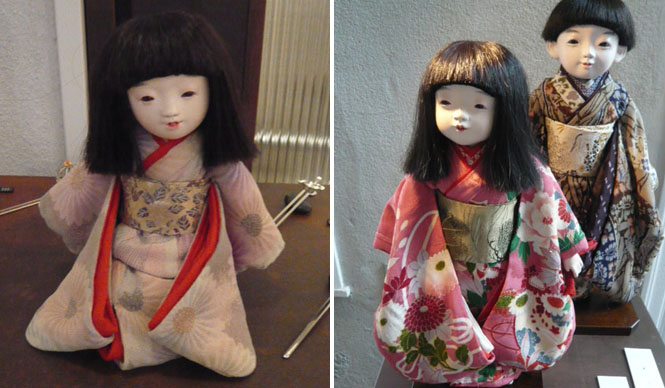
What is most striking about the dolls Fujimura creates are, without a doubt, their eyes.
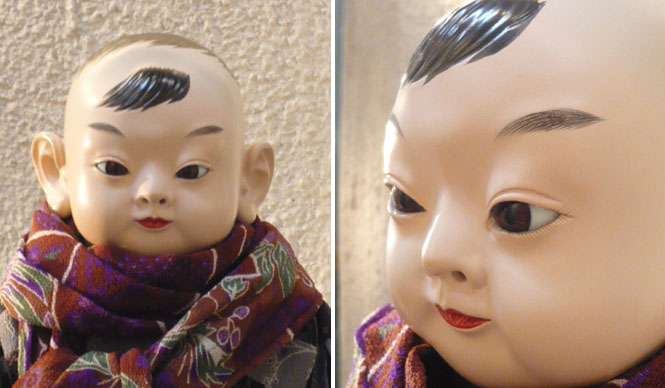
The glass eyes attached to the fabric skin are first sealed with gofun during the creation process, and then reopened through the delicate, precise work of the doll maker's small knife. This is akin to bestowing life upon the doll.
Consequently, the doll's expression reflects the maker's state of mind at the time of creation, resulting in a unique expression for each individual doll. It is no exaggeration to say that everything about the doll maker and the doll is revealed here. This is why, since ancient times, dolls have been believed to possess a soul-like essence, and thus have also been objects of awe and reverence.
Fujimura's expressive Ichimatsu dolls, which convey a sense of joy in their creation, communicate the richness and authenticity of the tradition inherent in Japanese craftsmanship.
Especially now, we Japanese must recognize the culture that has been born and nurtured within the climate of this land.
Akimitsu Fujimura Doll Exhibition
Dates | Through Sunday, October 28, 2007
Hours | 13:00–19:00
Venue | Kakitsubata Bekkan
Closed | Mondays and Tuesdays
Address | 2-16-7 Aobadai, Meguro-ku, Tokyo 153-0042
TEL | 03-3770-3401
FAX | 03-3770-3405
URL | http://www.kakitsubataweb.com