March 13, 2015
Series: Yoko Ueno Lewis | Kurashi Note - Part 9: Sweden Intuitive Journey Vol. 2 "Malmö: The World's Most Watched Eco-Conscious City"
The Way We Live with “STYLE”
Living Notes: Part 9 – Intuitive Sweden Trip, Vol. 2
Sweden’s Inspiring Simplicity: Malmö, the World’s Most Environmentally Advanced City
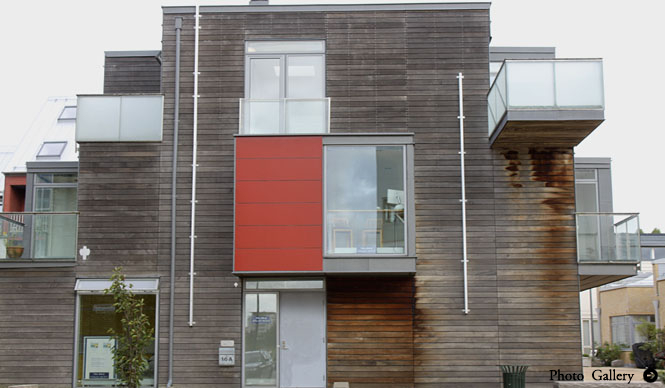
While on assignment to interview Yayoi Minowa, an environmental journalist, we were given a tour of the city by a young staff member from Malmö's environmental department. When Minowa asked for their advice on rebuilding Japan's disaster-stricken areas, they responded, "This is your chance to start from scratch!" This single remark created a moment of profound resonance, as if we were standing in Malmö representing Japan.
Photos and text by Yoko Ueno Lewis (Dec. 2011)

Evoking a Sense of Place Rooted in Water
What struck me most in Malmö's residential areas was the way rainwater is utilized. I had always held a rather simplistic view: rain falls from the sky, moistens the earth, nourishes plants, seeps into the ground, and the excess simply flows away somewhere….
In Japan, I believe most homes and residential areas have gutters and drainage channels. (Incidentally, my own house has a flat roof, and the slight slope channels rainwater directly into the gutters and then straight into the ground. During the dry season, not a drop of rain falls for months, so we have no choice but to use tap water for watering the plants. The entire water system for California is primarily sustained by groundwater, thanks to the Sierra Nevada mountains in the East.)
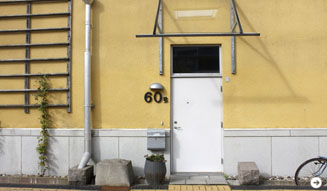
Gutters by the door or on the facade are unobtrusive.
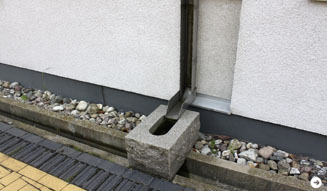
Rainwater flows through gutters into stone catch basins.
In the city's residential areas, stylized channels collect water from the gutters of each house. These channels feature occasional 'pools' where water-loving plants are grown. This creates small 'waterside' micro-environments, complete with the sound of water and visits from dragonflies and birds.
Upon reflection, this bears a striking resemblance to a very Japanese aesthetic. For instance, in residential areas like Kamigamo in Kyoto, where clear spring water flows, it evokes a timeless atmosphere created by a deep connection to water, a tradition that has endured for ages.
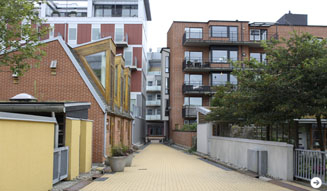
A Collaborative Project Between the City and Private Sector
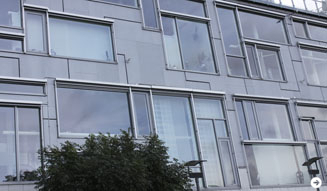
Clever use and design of windows.
A Highly Condensed Experience in Malmö
However, Malmö was planned and executed from scratch, creating a system that connects to the future. Most importantly, it is constantly evolving. While the approach to rainwater may differ in places with abundant rain like Japan or Oregon, and in regions with distinct wet and dry seasons like California, the concept remains crucial.
The opportunity to conceptualize and build a system from the ground up for its realization, right from the initial stages, is fleeting. This is especially true for fundamental infrastructure such as water, waste, sewage, electricity, gas, and transportation – the very prologue to human life. Consider roads: providing dedicated bicycle lanes from the outset creates a vastly different outcome than carving them out later from existing car lanes and sidewalks.
Perhaps systems that enrich our lives emerge from a foundation of agreed-upon principles established from the very beginning? Much like how Rikyu's decision on the size of the tea room led to an infinite expansion of the tea ceremony itself.
Our stay in Malmö lasted just over 30 hours. With its blue skies, gentle sunlight, the presence of water flowing through the city, and the encounters with two cheerful young guides from the environmental department, our time in Malmö was incredibly rich and meaningful.
