Toyota Launches the New Land Cruiser 300 Series | TOYOTA
TOYOTA Land Cruiser | Toyota Land Cruiser
Toyota Launches the New Land Cruiser 300 Series
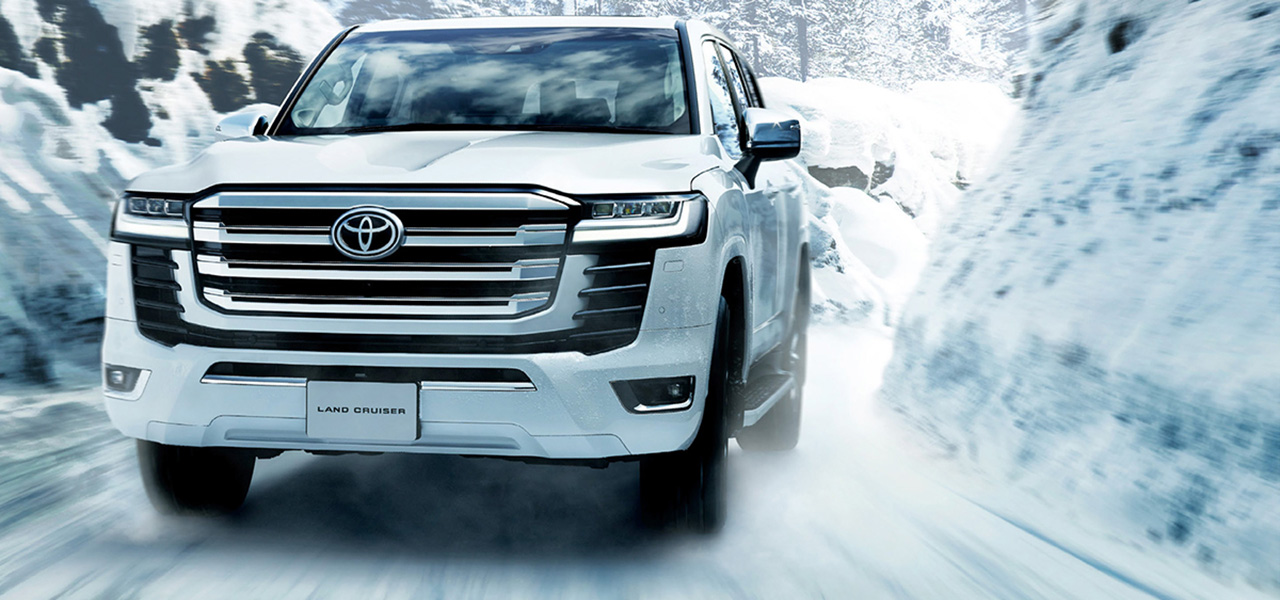
On August 2nd, Toyota launched the fully redesigned, authentic SUV, the "Land Cruiser 300 Series."
Text by HARA Akira
Achieves 200kg Weight Reduction Through Refined Ladder Frame and Aluminum Body Panels
The Land Cruiser was born in August 1951 as the Toyota BJ, a four-wheel-drive vehicle equipped with a powerful engine. For 70 years since then, it has served as Toyota's authentic SUV, tasked with the mission of "being able to go anywhere and return alive." By evolving its performance based on real-world usage by users worldwide, it has achieved cumulative sales of approximately 10.6 million units, with over 300,000 units sold annually, active in 170 countries and regions. The new Land Cruiser 300 Series aims to be a vehicle that "inherits and evolves reliability, durability, and off-road capability" and is "easy to drive and fatigue-free on any road in the world."
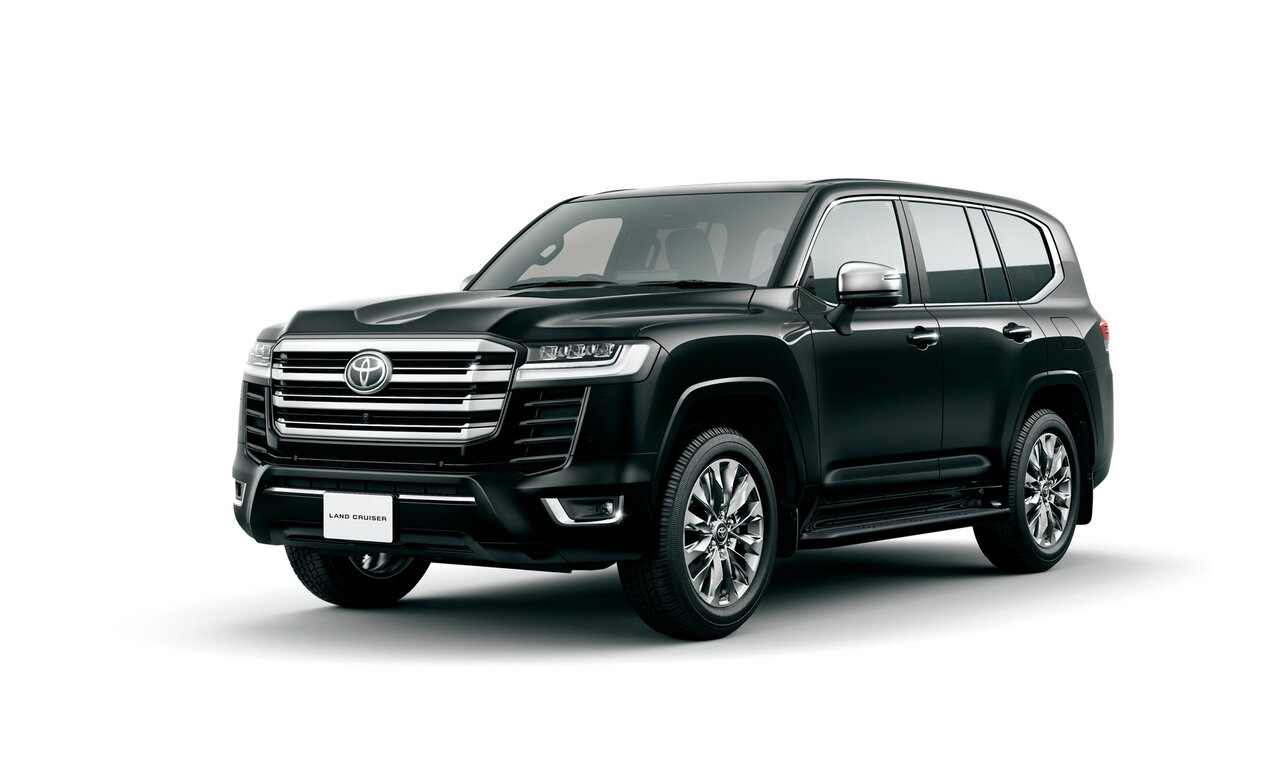
The new model's body dimensions are 4,985-4,950mm in length, 1,990-1,980mm in width, and 1,925mm in height, with a wheelbase of 2,850mm. Vehicle weight ranges from 2,560 to 2,360kg. It adopts the GA-F platform, designed for high-level driving performance and improved environmental efficiency, and features a refined traditional ladder frame. The body utilizes expanded use of high-tensile steel and aluminum for the hood, roof, and all door panels. Furthermore, the powertrain has been moved 70mm rearward and 28mm downward within the vehicle. These changes result in a significant vehicle weight reduction of approximately 200kg, a lower center of gravity, and improved front-rear weight distribution.
The powertrain options include a 3.5-liter gasoline and a 3.3-liter diesel engine. The newly developed 3.5-liter V6 twin-turbo gasoline engine produces a maximum output of 305kW (415ps) and a maximum torque of 650Nm. The adoption of D-4ST with multi-hole direct injection, a longer stroke, and optimized valve overlap angle for high-speed combustion and high-efficiency twin turbos are said to generate powerful low-end torque and excellent boost response.
The other engine, a 3.3-liter V6 twin-turbo diesel, optimizes the structure of each engine component, including the piston combustion chamber, intake port, and injector, to produce a maximum output of 227kW (309ps) and a maximum torque of 700Nm.

Both powertrains are equipped with the Direct Shift-10AT transmission. Lock-up is engaged in almost all ranges except during startup, providing a direct feel. The 10-speed design allows for closer gear ratios and a wider overall gear range, achieving a rhythmic and comfortable driving rhythm, improved fuel economy at high speeds, and enhanced acceleration and off-road performance simultaneously.
The suspension system, in conjunction with the platform refinement, features newly developed high-mount double-wishbone (front) and trailing-link rigid axle (rear) suspension. The rear suspension, in particular, has optimized shock absorber placement to improve ride comfort and handling stability.
Additionally, the AVS (Adaptive Variable Suspension), which independently controls the damping force of the shock absorbers on all four wheels according to road conditions and driving operations, now employs a new linear solenoid type. It also features power steering with a steering actuator that responds to the needs of the times and ensures durability in rough terrain, and an electronic brake-force distribution system that detects the amount of brake pedal operation via sensors to generate optimal braking force with hydraulic brakes, resulting in more linear braking characteristics. The ZX grade is equipped with a Torsen® LSD to ensure traction performance for the rear tires. It optimally distributes driving force according to the load on the rear left and right wheels during cornering acceleration, achieving high control performance.

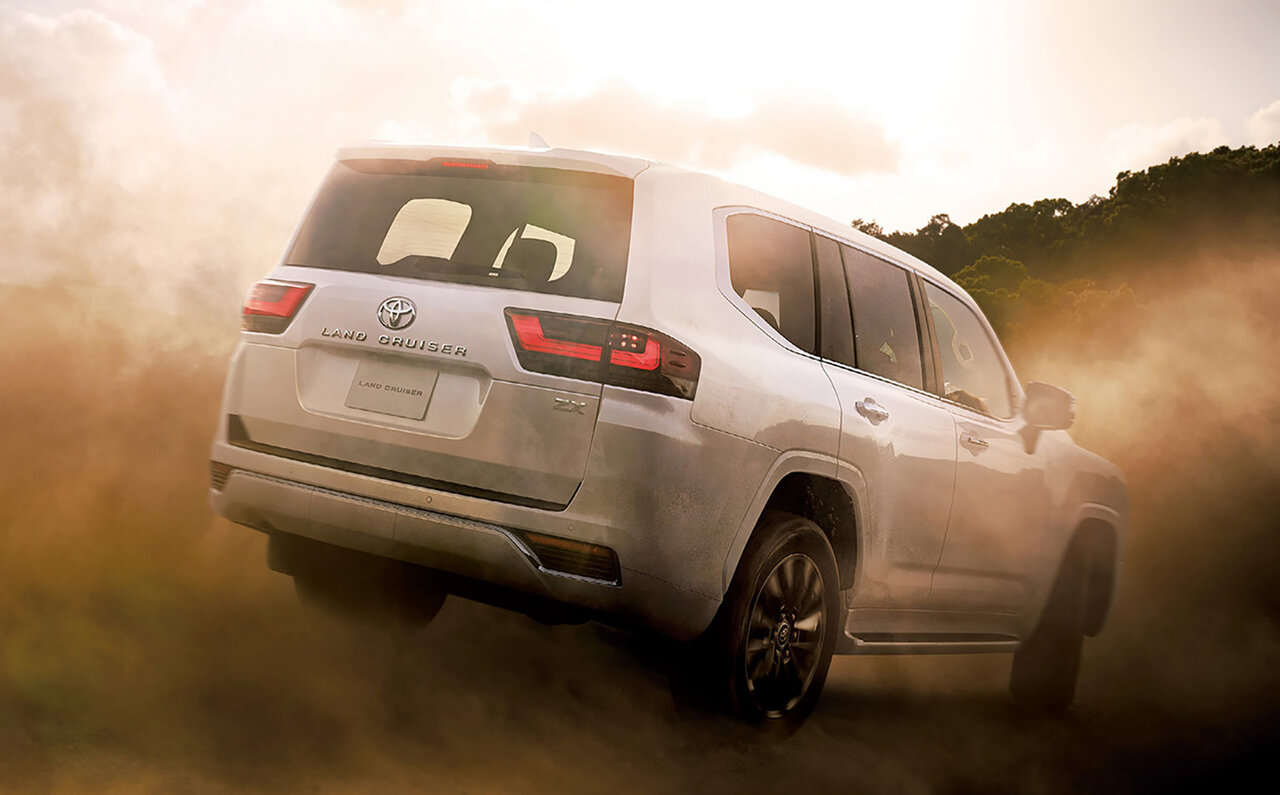
For off-road driving, a system is installed that allows selection from six modes (AUTO/DIRT/SAND/MUD/DEEP SNOW/ROCK) to provide driving support tailored to road conditions where tire slippage or insufficient driving force can lead to getting stuck or losing momentum. Each selected mode automatically integrates and controls driving force, suspension, and brake hydraulic pressure to ensure off-road capability. The system's operating range has also been expanded to the high range (H4), making it usable for a wider range of off-road driving. Furthermore, in AUTO mode, which estimates road surface conditions from various sensor information and optimizes driving force, the vehicle can achieve its off-road performance according to the driving scene without the driver needing to manually switch modes.
The Multi-Terrain Monitor, which supports situational awareness around the vehicle using four cameras, is also included. By switching between images captured by cameras mounted on the front, sides, and rear, drivers can check road conditions in blind spots around the vehicle. While the front view is displayed, the vehicle can be stopped, and by pressing a switch on the screen, it can be switched to an underfloor view. This system displays past images of the foreground as an underfloor transparent view, overlaying lines indicating the current vehicle and tire positions to show the conditions beneath the vehicle and the position of the front wheels. Additionally, a new view has been added that transmits through the vehicle and displays a magnified close-up of the rear wheel area. This allows drivers to grasp the situation near the tires and the distance to obstacles, proving useful for escaping from being stuck or from dead ends.