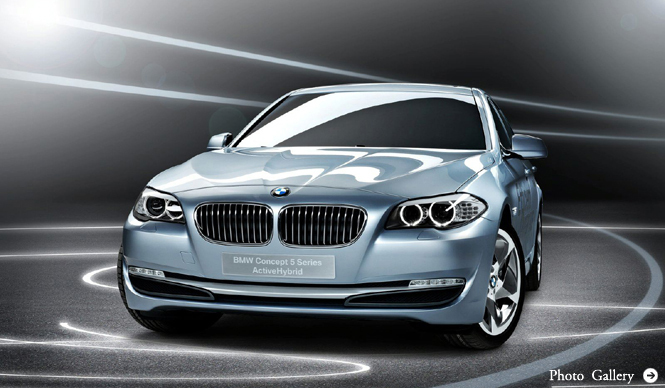
BMW 3 & 5 Hybrid | Hybrid Models Now Available for the 3 and 5 Series
BMW 3 & 5 Hybrid
Hybrid Models Arrive for the 3 and 5 Series
BMWannounced at the 90th Annual General Meeting in Munich, Germany, that it plans to introduce hybrid models to the "3 Series," following the "5 Series."
Photos: BMWText: Giraffe
Hybrid 5 Series in 2011, Hybrid 3 Series in 2012?
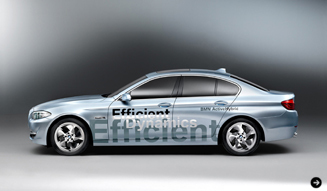
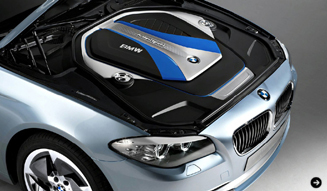
BMW already offers models with ActiveHybrid in the "7 Series" and "X6." At the Geneva Motor Show in March, they also unveiled the hybrid version of the "5 Series."
BMW Chairman Norbert Reithofer stated that the hybrid version of the 5 Series will be commercially available in 2011, and that the hybrid version of the 3 Series will follow.
Its debut is expected to coincide with the launch of the next-generation 3 Series, scheduled for 2012.
The introduction of hybrid versions for its core models, the 3 Series and 5 Series, signifies BMW's serious commitment to hybrid technology. We look forward to observing their future developments.
BRAND HISTORY
Instantly recognizable by its "kidney grille" and quad round headlights, BMW has consistently held a strong position in the Japanese import car market. Yet, surprisingly few may know the meaning behind its name.
Bayerische Motoren Werke, which translates to "Bavarian Motor Works." Its predecessor, Rapp Motorenwerke, was founded in 1913 by Karl Friedrich Rapp in Bavaria, Germany, as a manufacturer of aircraft engines. It partnered with fellow Bavarian aircraft manufacturer Otto-Flugzeugwerke to achieve success. In 1916, it was renamed Bayerische Motoren Werke GmbH. Two years later, it reorganized as a stock corporation and registered its propeller logo, inspired by the blue skies and white clouds of Bavaria.
BMW continued to enhance its presence through innovative technology, but the defeat in World War I forced the cessation of aircraft engine production. BMW then channeled its expertise into motorcycles, gaining attention with the shaft-driven "BMW R32" in 1923. Not content with this, they acquired Dixi, which was licensed to produce the Austin Seven. This provided a foothold in the automotive business, and in 1929, they launched the "BMW 3/15 PS," marking the beginning of their history as an automobile manufacturer.
Incidentally, Otto-Flugzeugwerke, which had a close relationship with BMW, was founded by Gustav Otto, the son of Nikolaus August Otto, who established the theory of the internal combustion engine. This historical connection likely explains BMW's continued focus on internal combustion engines.