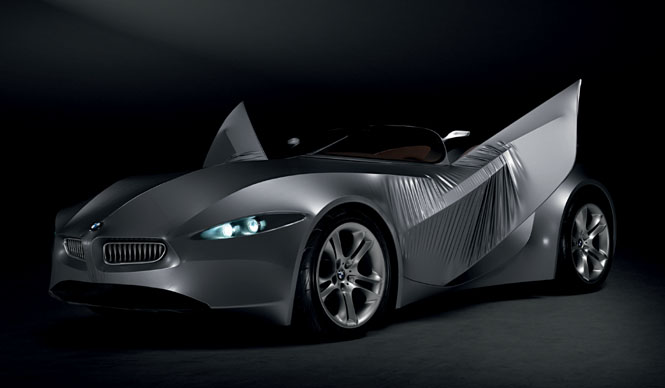
BMW's Woven Body Moves Like a Living Thing
A BMW Clad in Fabric Moves Like a Living Thing—
The Design Concept "BMW GINA Light Visionary Model"
BMWhas unveiled its design concept model, the "GINA Light Visionary Model."
"GINA" (Geometry and Functions In “N” Adaptions) is a future-oriented design concept from the BMW Group, aiming to realize products that blend design and functionality, capable of enriching the owner's individuality and responding to diverse needs.
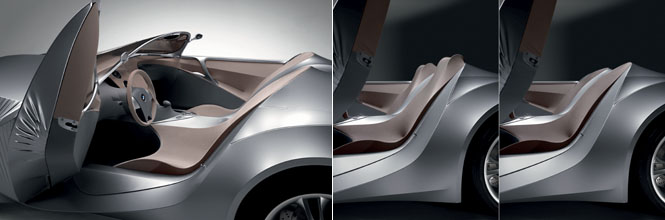
One means of embodying this is the "GINA Light Visionary Model." While it takes the form of a sporty BMW two-seater roadster, its body is covered in fabric, and it is an exceptionally unique concept model that can change its shape through its internal movable parts.
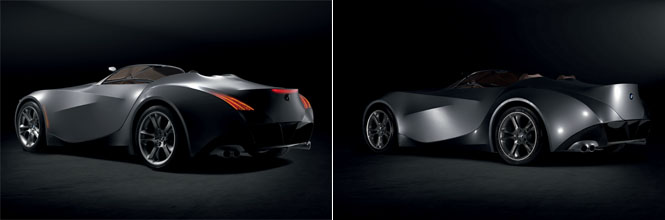
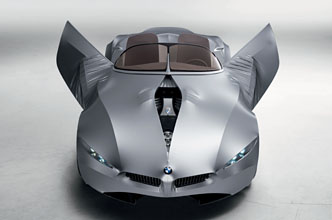
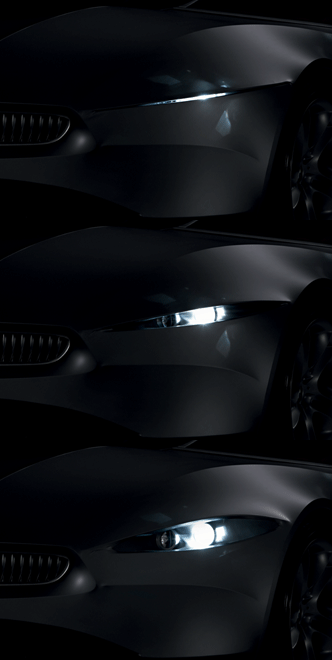
For example, the headlamps, which are normally invisible, appear from the front corners with a movement like a living creature opening its eyes when illuminated. The upward-opening doors create wrinkles in the body panels as they open, and the rear spoiler automatically lifts at higher speeds to generate downforce.
The engine hood splits open from the center to reveal an eight-cylinder engine, and the headrests supporting the occupants' heads emerge as the seats bulge, demonstrating a consistent fusion of design and function.
BRAND HISTORY
With its distinctive front mask characterized by the "kidney grille" and dual round headlights, BMW is instantly recognizable. It has consistently held high popularity in Japan's imported car market, yet surprisingly few people can immediately answer what its name signifies.
Bayerische Motoren Werke. Literally translated, it means "Bavarian Engine Works." Its predecessor, Rapp Motorenwerke, was an aircraft engine manufacturer founded in Bavaria, Germany, in 1913 by Karl Friedrich Rapp. Rapp partnered with fellow Bavarian aircraft manufacturer Otto-Flugzeugwerke to achieve business success. In 1916, it was renamed Bayerische Motoren Werke GmbH. Two years later, it reorganized as a stock corporation and registered its propeller logo, inspired by Bavaria's blue skies and white clouds.
BMW continued to enhance its presence through innovative technology, but the defeat in World War I forced the cessation of aircraft engine production. BMW then channeled its expertise into motorcycles, gaining attention in 1923 with the shaft-driven "BMW R32." Not content with this, the company acquired Dixi, which held the license to produce the Austin Seven. This provided a foothold in the automotive business, and in 1929, BMW launched the "BMW 3/15 PS," marking the start of its history as an automobile manufacturer.
Incidentally, Otto-Flugzeugwerke, which had a close relationship with BMW, was founded by Gustav Otto, the son of Nikolaus August Otto, who established the theory of the internal combustion engine. This connection likely explains BMW's enduring focus on internal combustion engines.