CITROEN | Citroën DS4 Unveiled
CITROEN DS4
A New DS Series with Crossover Flair
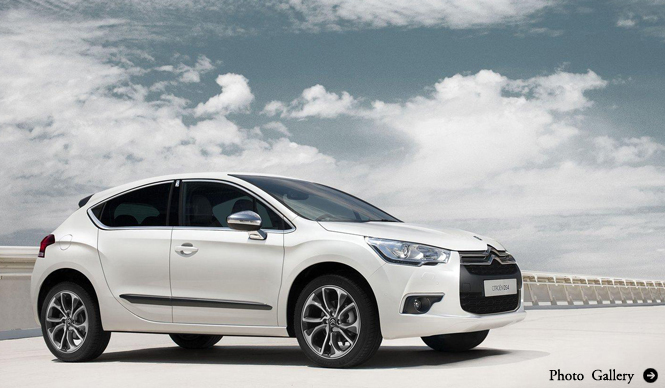
At the Paris Motor Show, Citroën unveiled the DS4, the second model in its DS series, which fully incorporates the characteristics of a crossover into a compact hatchback, with a focus on interior refinement.
Text by Giraffe
Powered by a Jointly Developed BMW Engine: THP200
The DS4 is the second model in the current DS series, following the DS3. With dimensions of 4,270mm in length, 1,810mm in width, and 1,530mm in height, it offers a raised ride height compared to the compact hatchback DS3, emphasizing its small crossover aesthetic.
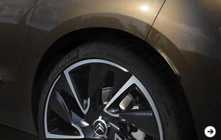
Despite its crossover styling, the rear door handles are cleverly concealed within the C-pillars, lending it a coupe-like silhouette, a distinctive feature of this model. Of course, the flared fenders and other design elements clearly convey its crossover identity.
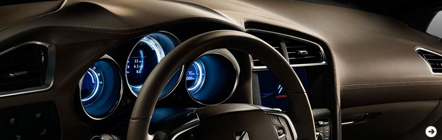
The interior exudes a premium feel, with leather appointments on the dashboard, door panels, and seats, befitting a compact car.
The engine is a jointly developed BMW 1.6-liter direct-injection, inline-four turbocharged gasoline unit. While the displacement and cylinder count remain the same as the DS3, it features the top-tier "THP200" engine, delivering 200ps and 28kgm of torque. Additionally, there are five engine options in total, including the "HDi110" turbodiesel equipped with idling stop and brake energy regeneration systems, offering a diverse engine lineup similar to the DS3.
The DS series, starting with the DS3 and now the DS4, is set to expand with the DS5 planned for release in 2012. Citroën's next move is eagerly anticipated.
BRAND HISTORY
Citroën, a French manufacturer founded in 1919, was once renowned for its innovative mechanics and distinctive styling, positioning itself at the forefront of unique automotive design. Its upper-tier models still feature the hydropneumatic system, which uses hydraulic pressure to adjust suspension stiffness, ride height, braking, and power steering.
Founder André Citroën, an automotive engineer, derived the double-chevron logo, still in use today, from the gears he devised during that era. Before the war, the company produced a range of vehicles from mass-market to luxury, praised for their sporty handling, low stance, and smooth body lines. Their prevalence in French film noir, often used by gangsters for getaways, attests to their performance. Post-war, in the 1950s, Citroën emphasized unique engineering with innovations like the hydropneumatic system.
The DS series, introduced in 1955, is considered an eternal icon due to its hydropneumatic suspension, unique body structure, and unparalleled styling. It continues to be used in commercials and is cherished by Citroën itself as part of its heritage. This lineage has been carried forward through the CX in the 1970s, the C5 in the 1990s, and the C6 in the 2000s.
In the realm of mass-market cars, Citroën has also produced highly distinctive vehicles. A prime example is the 2CV, launched in 1949. It featured a compact body with a small air-cooled engine, yet maximized interior space with a high roof and flat floor. Developed with practicality in mind for rural France, it was said to be capable of carrying potatoes and offering a ride smooth enough not to break eggs. Produced until the early 1990s, many are still driven worldwide today.
Belonging to the PSA Peugeot Citroën group since the 1970s, Citroën maintains its unique identity while sharing platforms with Peugeot. The current Japanese lineup includes the C5 (sedan and wagon) in the BMW 3 Series class, the C4 in the Golf class, the C4 Picasso multi-purpose wagon, the C3 in the Polo class, and the distinctive two-door coupe DS3. The latest Hydractive III suspension, an evolution of hydropneumatic technology combined with electronic control, is featured in the C5.
The current lineup uses "C" in its model names. However, like the DS3, there are plans to expand the lineup targeting niche markets, which will be prefixed with "DS." (Updated August 2010)