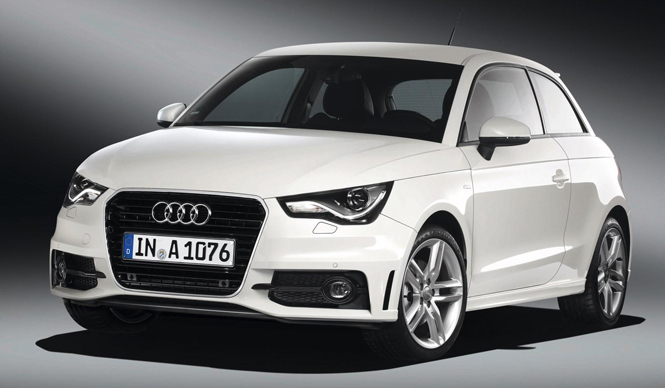
AUDI A1: The Unveiling
AUDI A1
Powertrain That Surpasses the GTI
Audihas revealed details of the sportier "A1" variant, the "1.4TFSI," which will be unveiled at the Paris Motor Show. This model features an enhanced engine and an electronic differential lock for improved sportiness.
Text by Giraffe
A Robust Chassis Supporting a Top Speed of 227 km/h
This model is equipped with a direct-injection 1.4-liter inline four-cylinder gasoline engine, essentially shared with the Volkswagen Polo GTI. It employs a twin-charger system, utilizing a supercharger below 1,500 rpm and a turbocharger above 3,500 rpm. This setup delivers a maximum output of 185 ps, a 5 ps increase over the Polo GTI, and a peak torque of 25.5 kgm, identical to its counterpart. Naturally, its environmental performance is also commendable, boasting a European combined fuel economy of 16.95 km/l and CO2 emissions of 139 g/km.
Furthermore, the combination of this engine with the 7-speed S tronic dual-clutch transmission enables exceptional performance, achieving 0-100 km/h in 6.9 seconds and a top speed of 227 km/h. To support this performance, the chassis has been reinforced, featuring larger brake discs and standard ESP with an electronic differential lock.
The "A1 1.4TFSI" is scheduled for release in Europe by the end of the year. Pricing in Germany is announced to start from 22,450 euros (approximately 2.5 million yen).
BRAND HISTORY
Audi's emblem is the "Four Rings." As you may know, each ring represents one of the automotive manufacturers: Audi, DKW, Horch, and Wanderer. All were based in Saxony and were pioneers of the German automotive industry at the start of the 20th century. However, facing the repercussions of the Great Depression following World War I, these four companies formed Auto Union in 1932 to ensure their survival. DKW focused on motorcycles and small cars, Wanderer on mid-size cars, Audi on premium mid-size cars, and Horch on luxury vehicles.
However, with the defeat in World War II, Saxony in East Germany fell under Soviet occupation, and Auto Union ceased to exist. Anticipating this, the new Auto Union was established in Ingolstadt, Bavaria, in West Germany. Unlike BMW and Mercedes-Benz, Auto Union faced a challenging start without existing factories, gradually building its strength through the production of vehicles like the DKW delivery van.
In late 1964, Auto Union came under the umbrella of Volkswagen and soon introduced new models bearing the Audi name. In 1969, it merged with NSU, known for its development of the Wankel engine and based in Neckarsulm, becoming Audi NSU Auto Union. From 1985 onwards, it has continued as Audi to the present day. Technologies such as quattro, dynamic performance backed by motorsport activities, elegant design, and high-quality finishes are the driving forces behind Audi's popularity.