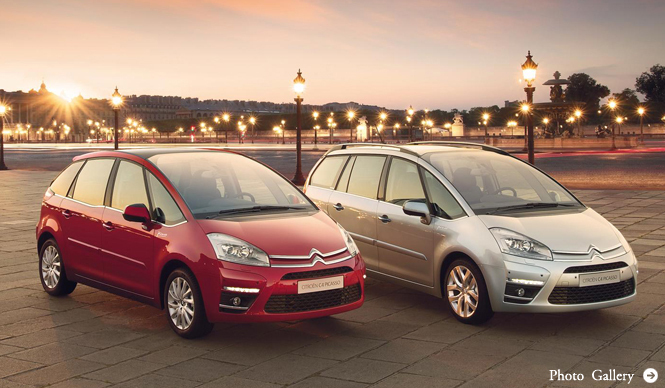
CITROEN | Citroën C4 Picasso | Grand C4 Picasso Minor Change
CITROEN C4 Picasso
Grand C4 Picasso
Enhanced Quality MPV with Design and Engine Updates
Citroën has announced that the updated "C4 Picasso" and "Grand C4 Picasso" models will be exhibited at the Paris Motor Show, opening on the 30th.
By Giraffe
Equipped with HDi Engine, e-HDi System Available
These models are MPVs based on the C4, which debuted approximately three years ago. The C4 Picasso features two rows of seats, while the Grand C4 Picasso has three rows (in Japan, the Grand C4 Picasso is sold under the C4 Picasso name).
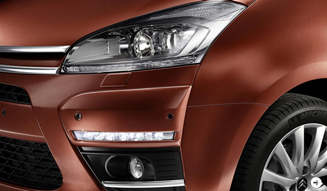
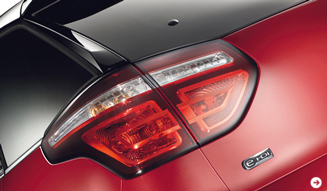
Exterior changes for this update include a facelifted front, a bumper incorporating LED daytime running lights, Citroën's new logo, and redesigned taillights.
Additionally, for the European market, the engine will be the latest turbo-diesel "HDi." Furthermore, an "e-HDi" unit, which enhances environmental performance by incorporating idling stop and energy regeneration systems, is also said to be available.
The new C4 Picasso and Grand C4 Picasso models are scheduled to go on sale in Europe by the end of this year, following their announcement at the Paris Motor Show.
BRAND HISTORY
Citroën is a French manufacturer established in 1919. Once known for its innovative mechanisms, it was a leading brand in creating distinctive automobiles with unique styling. Its higher-end models still feature the hydropneumatic system, which uses hydraulic pressure to adjust suspension stiffness, ride height, brakes, and power steering.
The founder was André Citroën, an automotive engineer. The double chevron logo, still used today, originates from gears designed by André Citroën during that era. Before the war, the company produced a range of vehicles from mass-market to luxury cars, earning acclaim for their sporty handling, low profile, and smooth body lines. Their frequent appearance in French film noir, often used by gangsters for getaways, was attributed to their excellent performance.
After the war, in the 1950s, the company showcased its distinctive engineering with innovations like the hydropneumatic system. The DS series, introduced in 1955, is considered an eternal icon due to its hydropneumatic suspension, unique body structure, and unparalleled styling. It continues to be used in commercials and is cherished by Citroën itself as part of its heritage. This lineage was carried forward by the CX in the 1970s, the C5 in the 1990s, and the C6 in the 2000s.
In the realm of mass-market cars, Citroën also produced highly distinctive vehicles. A prime example is the 2CV, launched in 1949. It featured a compact body with a small air-cooled engine, yet maximized interior space with a high roof and flat floor. Developed with practicality in mind for the agricultural French populace, it was reportedly tested for its ability to traverse rough terrain with potatoes and provide a smooth ride that wouldn't break eggs. Production continued until the early 1990s, and many are still driven worldwide today.
Since the 1970s, Citroën has been part of the PSA Group. While sharing platforms with Peugeot, the brand maintains its position by continuing to produce distinctive vehicles. The current Japanese lineup includes the C5 (sedan and wagon), positioned in the BMW 3 Series class; the C4, in the Golf class; the C4 Picasso, a multi-purpose wagon; the C3, in the Polo class; and the distinctive two-door coupe, the DS3. The latest Hydractive III suspension, an evolution of the hydropneumatic system combined with electronic control, is featured in the C5.
The current lineup uses "C" in its model names. However, with models like the DS3, there are plans to expand the lineup targeting niche markets, which will be designated with "DS."
(Updated August 2010)