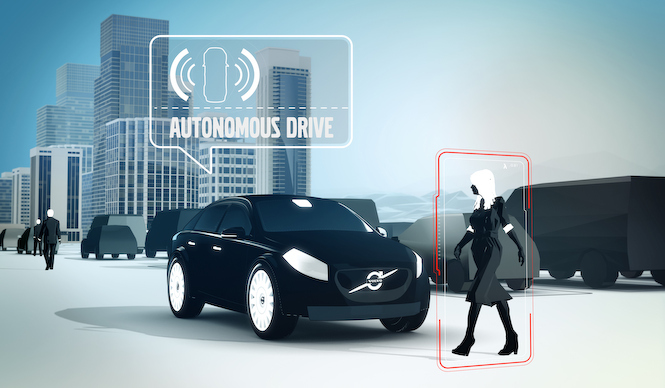
Volvo Announces Safety Features Planned for the New XC90 | Volvo
Volvo
Volvo Announces Safety Features for New XC90
Volvo Car Group has announced the safety systems and driver assistance technologies planned for the new XC90, scheduled for release at the end of 2014.
Text by SUZUKI Fumihiko (OPENERS)
One Step Closer to Autonomous Driving
"We are adopting autonomous driving functions to avoid accidents and achieve comfortable driving."
Along with this statement, Volvo has unveiled several new safety technologies. These are slated to be first implemented in the XC90, due out at the end of 2014, and are said to include the following functions:
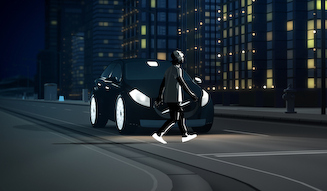
Pedestrian detection in the dark
A pedestrian detection function that works even in darkness, linked to automatic braking. It can also detect vehicles and bicycles, not just pedestrians.
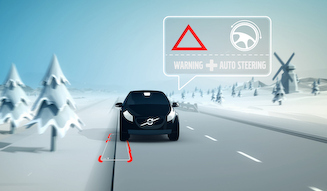
Road departure prevention with automatic steering control
This function detects the road's boundaries and automatically steers to guide the car back onto the road if it begins to drift or risk falling off. It can handle situations like collisions with guardrails or falling off cliffs, even without clear lane markings.
Adaptive cruise control with automatic steering control
Provides lane-keeping and following functions, including steering assistance.
"When the XC90 was first released in 2002, it featured innovative safety equipment. With the next-generation XC90, we aim to maintain our leadership in automotive safety," Volvo concludes.
Incidentally, while still speculative at this point, the following functions may also be adopted in future Volvo models:
Animal detection
A function to mitigate collisions with animals, day or night. Adoption is being considered for models beyond the XC90.
Towards zero
Functions aimed at achieving "Vision 2020," a strategy to ensure no one is killed or seriously injured in a Volvo by 2020. This system involves vehicles communicating with each other to share real-time positional data, utilizing both vehicle connectivity and infrastructure such as road signs and traffic signals.

Automatic Parking
For details,see previous reportthe car will automatically find a parking space and park itself after the driver exits. When the driver returns, the car will automatically exit the parking space.
This announcement clarifies thatMercedes-Benzand Volvo are both pursuing autonomous driving.