The Mercedes G-Class: A Full Model Change After 40 Years
Mercedes-Benz G-Class
Years of Evolution Culminate at Once
The Mercedes G-Class: A Full Model Change After 40 Years
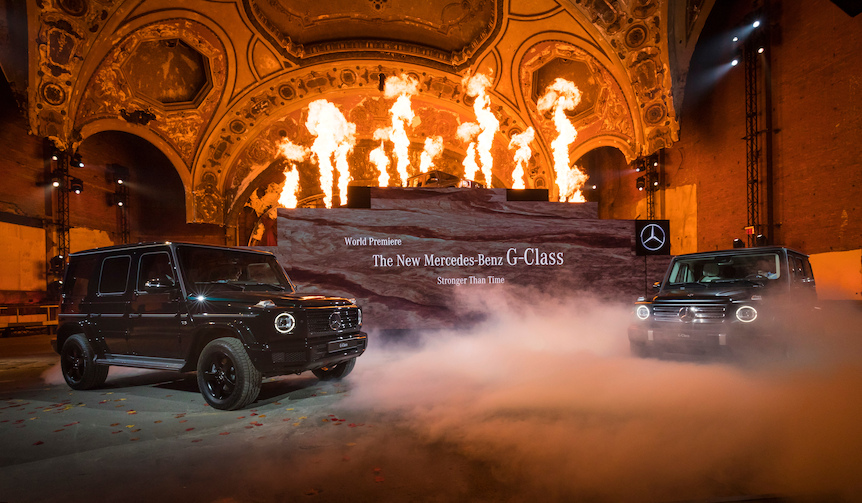
In January of this year, Mercedes-Benz unveiled the new G-Class at the 2018 North American International Auto Show (NAIAS) in Detroit, marking its first full model change in 40 years.
Text by SAKURAI Kenichi
The G-Wagen Enters its Second Generation
For nearly 40 years, the "G-Wagen," a solitary SUV from Mercedes-Benz, has garnered strong support from customers worldwide. In its early days, the SUV category didn't even exist, and looking at it now, one can see it was a rugged, purpose-built off-road vehicle focused solely on capability.
The G-Wagen was originally conceived as a military vehicle through a joint development between Mercedes-Benz and Steyr-Puch of Austria. It was later adapted for civilian use. The initial production model in 1979 was the W460, featuring a part-time 4WD system. A minor change in 1989 led to the W463 designation and the introduction of a full-time 4WD system.
Time marched on. Following Mercedes' naming strategy, it came to be known as the "G-ClassG-Class" in 1994. While it underwent numerous improvements through powertrain changes and updates to its interior and exterior, its fundamental body structure, including the chassis and body form, has remained consistent since its debut until today.
And so, in January of this year, approximately 40 years after its debut,North American International Auto Show (NAIAS, commonly known as the Detroit Motor Show)the new G-Class was revealed. As mentioned, having been produced for nearly 40 years without fundamental structural changes, Mercedes refers to this new G-Class as the second generation.
Mercedes-Benz G-Class
Years of Evolution Culminate at Once
The Mercedes G-Class: A Full Model Change After 40 Years (2)
Traditional Exterior Meets Modern Interior
So, what are the features of this new model?
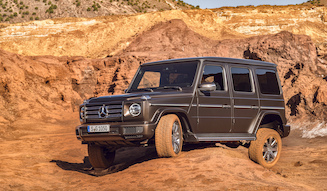
The appearance is what draws attention. The iconic, square form of this traditional, authentic 4x4 has been inherited from the first-generation model. It features a vertically oriented front fascia and a flat windshield. Indeed, the exterior design unveiled is unmistakably a G-Class from any angle. The characteristic elements that make the new G-Class look like a G-Class are also present. These include the turn signal lenses atop the front fenders, the door handles, the exposed door hinges, and the spare tire cover mounted on the rear gate – all traditional details meticulously carried over.
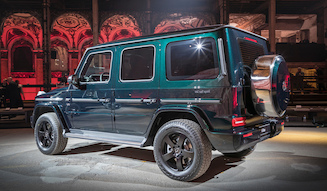
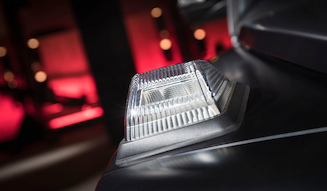
Whether one rejoices in this design or dismisses it as lacking progress is a matter of personal opinion, but for Mercedes, the decision to maintain this unchanging design must not have been easy. However, one can agree that this design was necessary for the G-Class to remain the G-Class. In other words, it seems to have proven that the G-Class's exterior design possesses a kind of timelessness, independent of trends or the demands of the era.
While the design appears unchanged at first glance, the body size has increased by 53mm in length and 212mm in width (manufacturer's figures). The benefits of this increased body size are also evident in the interior. Front occupants gain 38mm in legroom and shoulder room, and 68mm in elbow room. Rear legroom has been expanded by a significant 150mm, ensuring ample space. Simultaneously, rear shoulder room is 27mm wider, and elbow room is 56mm wider.
In the expanded cabin, unlike the exterior which closely mirrors the previous model, one can feel the evolution of 40 years. The dashboard area, in particular, feels remarkably new. A 12.3-inch LCD monitor is mounted atop the center console. Optionally, the instrument cluster can also be replaced with an LCD panel, creating a dual 12.3-inch ultra-wide screen setup (the standard instrument cluster is analog, but its design was not disclosed at the time of the announcement).
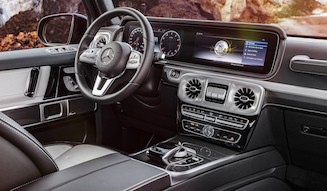
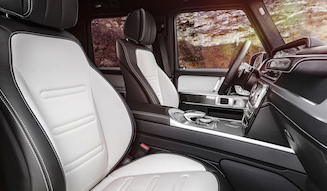
The G-Class's dashboard, with its two connected LCD monitors, transforms into a modern instrument cluster reminiscent of the "S-Class" S-Class. Furthermore, like other modern digital devices, the instrument cluster design can be arbitrarily set to one of three types: Classic, Sport, or Progressive.
Of course, like other Mercedes models, the G-Class now features the latest infotainment system with a touchpad and rotary dial controls. The steering wheel is also a new design with modern controls inherited from the S-Class. If one were to see only this dashboard, it might be hard to believe it belongs to a G-Class. The only element that distinctly identifies it as a G-Class is the presence of the grab handle (assist grip) above the passenger glove compartment, just like in the previous model.
Mercedes-Benz G-Class
Years of Evolution Culminate at Once
The Mercedes G-Class: A Full Model Change After 40 Years (3)
Mechanicals Also Fully Updated
While we've focused on the visual aspects of the G-Class, its internal structure has also changed significantly. The new model retains the ladder frame construction with the body mounted on top, but the frame itself is completely new, boasting a 55 percent increase in torsional rigidity. The body utilizes high-strength steel and aluminum, resulting in a 170kg weight reduction compared to the previous model.
AMG was involved in the suspension development. While the front suspension transitions from a rigid axle to a double-wishbone setup, the rear remains a rigid axle but with increased trailing arms, aiming to improve on-road stability and ride comfort.
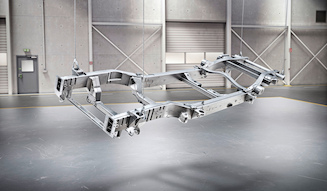
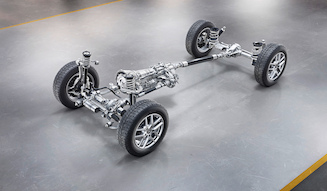
The steering system has been changed from ball joints to a rack-and-pinion setup, and it now incorporates electric power steering. This is likely to enable the integration of driver-assistance systems similar to other Mercedes models, such as lane-keeping assist.
These chassis improvements, along with the new ladder frame and body design, have increased the ground clearance by 6mm to 241mm. The approach and departure angles have each increased by 1 degree to 31 and 30 degrees, respectively. The ramp breakover angle, which measures the clearance under the body when traversing obstacles, is now 26 degrees, a 1-degree increase. The maximum wading depth has been increased by 100mm to 700mm.
Mercedes-Benz G-Class
Years of Evolution Culminate at Once
The Mercedes G-Class: A Full Model Change After 40 Years (4)
Powertrain Also Renewed
At the time of the announcement, the engine lineup consisted solely of a 4.0-liter V8 twin-turbo producing 422 hp and 610 Nm of torque. The transmission is exclusively the 9G-TRONIC 9-speed automatic. The drivetrain is, of course, full-time 4WD, but like the previous model, the front, center, and rear differential locks can be individually engaged via switches on the dashboard.
This powertrain also offers improved fuel efficiency over the previous model. The catalog figures show a combined European cycle fuel consumption of 11.1 L/100km (approximately 9.0 km/L) and CO2 emissions of 263g/km. Currently, there are no announcements regarding diesel variants, AMG-powered versions, or electrified engines (such as PHEVs or mild hybrids represented by EQ), which Mercedes has been actively promoting recently.
Driver-assistance systems, such as radar safety features, which were previously absent from the G-Class but standard on other Mercedes models, have been updated to the latest specifications in the new model. The assurance of safety equivalent to other Mercedes vehicles thanks to ADAS will be welcome news for G-Class users living in urban areas (which may be the majority). While we cannot confirm this until we test drive it, hearing that it underwent rigorous off-road testing at Mount Schöckl in Austria, close to its production base, as previous models did, raises expectations that its off-road performance has also been significantly refined.
The NAIAS announcement did not reveal everything about the second-generation G-Class, but it's hard not to be excited about such a significant development. While we welcome this historical model's evolutionary progress (and the fact that the design did not end up like some previously revealed concept cars), we eagerly await further details, including the timing of its Japanese launch.
Mercedes Call
0120-190-610