The Second-Generation Q5 Debuts, Evolved for Sportiness | Audi
Audi Q5 | The Audi Q5
The Second-Generation Q5 Debuts, Evolved for Sportiness
The second-generation Q5 has made its world premiere at the Paris Motor Show. This is the first full model change in eight years since the debut of the first generation at the Beijing International Automotive Exhibition in April 2008.
Text by OHTO Yasuhiro
Increased Size, Improved Efficiency
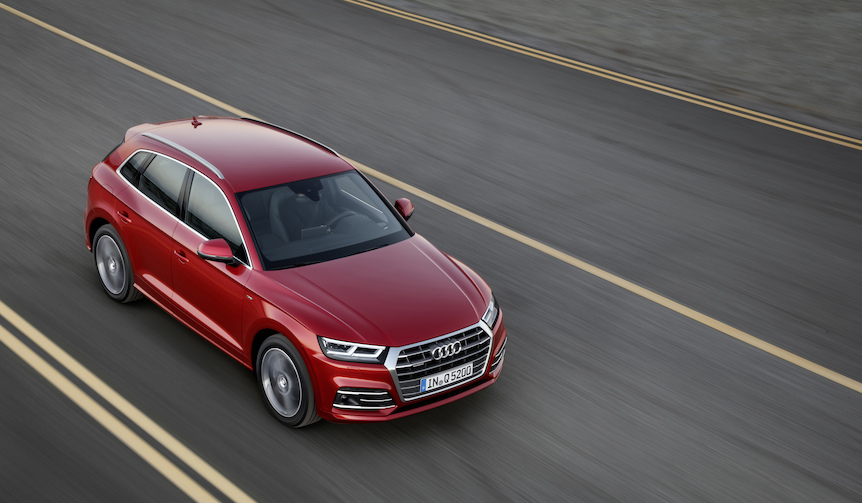
The all-new second-generation model inherits the sportiness of its predecessor while featuring enhanced refinement in both design and functionality. The front fascia is equipped with the sculpted singleframe grille adopted by Audi's latest SUV models, such as theQ3and theQ7" and the "Q7", giving it a rugged appearance in conjunction with the sharp LED headlamps.
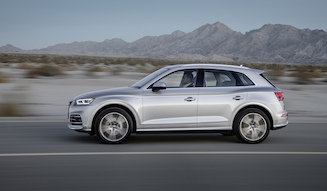
The side view, with its emphasized wheel arches, expresses the powerful driving and high off-road capability of the Audi quattro system, while the door panel design, narrowed in the center, conveys the toughness of a toned athlete's body.
Despite its sharp styling that makes the body appear compact, almost all dimensions have been increased compared to the previous model: length 4.66m, width 1.89m, height 1.66m, and wheelbase 2.82m. However, thanks to the use of a composite body structure combining high-strength steel and aluminum, the vehicle weight has been reduced by up to 90kg. Furthermore, the aerodynamics have been refined, achieving a drag coefficient (Cd) of 0.30 for the four-cylinder engine models, resulting in a highly efficient body.
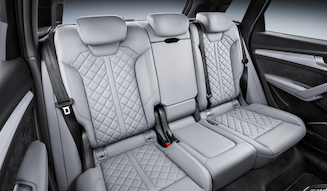
The interior, which ensures a comfortable space for five occupants, also surpasses the previous model in almost all dimensions. The instrument panel design incorporates the flowing horizontal lines found in the latest "A4" and other models, with a streamlined arrangement of controls that not only enhances usability but also creates a visually spacious feel.
The luggage compartment, a crucial element for an SUV, offers a capacity of 550-610 liters as standard, expandable to a maximum of 1,550 liters, thus improving practicality. Additionally, a new feature allows for a wide selection of colors and materials for trims and seats, catering to individual customer preferences.
Audi Q5 | The Audi Q5
The Second-Generation Q5 Debuts, Evolved for Sportiness (2)
Adopts New quattro with ultra technology
The powertrain lineup is primarily diesel TDI, featuring three different 2.0 TDI engines with outputs of 150ps, 163ps, and 190ps, along with a 3.0 TDI producing 286ps and 620Nm of torque, the most powerful in the range. The gasoline option is limited to the 2.0 TFSI, generating 185kW (252ps). The European fuel consumption for this improved engine is 6.8 L/100km (approximately 14.7 km/L), with CO2 emissions of 157g/km.
The transmission options are a 6-speed manual or a 7-speed S tronic dual-clutch. Only the 3.0 TDI is paired with an 8-speed Tiptronic torque converter automatic transmission.
The entry-level 150ps 2.0 TDI model will have AWD with the new quattro system featuring Audi ultra technology as an option, while all other grades, including the 3.0 TDI, come standard with it. This new quattro system can disengage the rear axle, contributing to improved fuel efficiency.
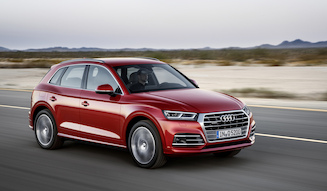
The newly developed five-link suspension can be chosen from two options: coil suspension with damper control or adaptive air suspension offering five levels of ride height adjustment. Combined with the also newly developed electric power steering, it achieves a blend of sportiness and excellent comfort in its handling.
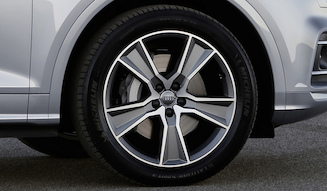
While 17-inch alloy wheels are standard, 18-inch or 19-inch wheels will be fitted depending on the grade, with up to 21-inch wheels available as an option.
Production of the new model will take place at a new factory built in Mexico, with its European launch scheduled for early 2017. The price is expected to start at 45,100 euros for the 163ps 2.0 TDI quattro model with the 7-speed S tronic.