Toyota: Cooperating with Wind Turbine Installation in Belgium
TOYOTA
Collaborates on Wind Turbine Installation in Belgium
Toyota Motor Europe (TME), the European headquarters of Toyota, has announced a joint project with Belgian energy company Eneco Belgium to install wind turbines at TME's vehicle logistics center. The announcement was made today.
By Tomomi Yanaka
Contributing to Sustainable Development with Renewable Energy
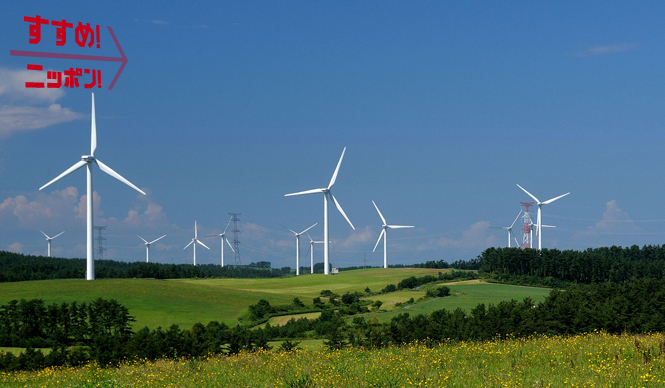
TME will lease a portion of the land at its vehicle logistics center in Belgium to Eneco Belgium. Eneco Belgium will install two wind turbines on the site, with operations expected to commence in early 2013. The installed wind turbines will have a rated output of approximately 3,000 kW, generating an estimated 17.1 million kWh annually.
In addition to this initiative, TME has been actively pursuing environmental protection measures. Since 2008, they have been implementing the "Sustainable Dealership Project," aiming to make all approximately 3,000 dealerships across Europe more environmentally friendly and energy-efficient. Furthermore, in 2010, they introduced large-scale solar power generation panels at their parts logistics centers, demonstrating a broad commitment to sustainability.
Across the entire Toyota group, environmental initiatives at factories have been developed and implemented in Japan, the United States, Europe, and Asia. These efforts are based on three core pillars: developing and introducing production technologies to reduce CO2 emissions; reducing energy consumption through "Kaizen activities"; and utilizing renewable energy sources such as solar power. Additionally, "factory forest creation" activities foster community engagement and protect ecosystems.
Moving forward, Toyota continues to advance its activities aimed at contributing to the sustainable development of society and the planet across all areas of its corporate operations. This includes the commencement of solar power generation at Toyota Manufacturing UK in July of this year.
BRAND HISTORY
Toyota's journey as an automobile manufacturer began in 1936. Its initial offerings were a six-cylinder model featuring a streamlined body, which was popular at the time, and a model targeting the upper market segment. In the late 1950s, the Corona, a 1-liter model, and the Crown, a 1.5-liter model, were added to the lineup. In the 1960s, adopting a corporate strategy to expand sales in the U.S. market, Toyota developed a range of vehicles from compact models to V8-powered cars, embarking on a path to become a full-line manufacturer.
The key to Toyota's growth lies in its unwavering market-centric approach. In the 1960s, the company achieved success in the U.S. market by introducing models that targeted compact cars from Britain and Italy. Subsequently, this product strategy, which offered appropriate performance at a suitable price, was applied to a wide range of vehicles, from large sedans to sports cars. Later, by establishing factories in the U.S., Toyota began producing many vehicles specifically for the American market, such as large pickup trucks.
Domestically, the 1960s, a period of high economic growth, marked a significant peak for Toyota. Supported by its sales and marketing efforts, the company secured a solid market position through its diverse product offerings. In its primary market, the U.S., the two oil crises of the 1970s proved to be advantageous, fueling rapid growth with its focus on small, fuel-efficient vehicles. A major leap forward in recent times occurred in the late 1980s with the launch of Lexus, a separate luxury brand, in the U.S., where demand for premium vehicles was increasing. Toyota adopted a "source-based" approach, emphasizing meticulous quality control from the smallest components, and marketed its vehicles for their superior quality.
Another significant leap was the launch of the Prius in 1997. Although the hybrid powertrain was unfamiliar to the general public and criticized by some in the automotive industry at the time as being "meaningless in the technological progression from internal combustion engines to fuel cells," its foresight has been proven by its current success. Manufacturers worldwide are now promoting hybrid technology, albeit with some variations in approach. Other automakers have had to acknowledge that the battery technology essential for hybrid vehicles is also crucial for electric vehicles and the fuel cell vehicles that may follow.
Since the Lehman Shock in September 2008, which led to a slowdown in luxury car sales, and coinciding with significant attention from the U.S. Congress regarding product recalls, Toyota is currently facing headwinds. The early withdrawal from Formula 1 in 2009, after entering in 2002, also disappointed fans. However, the company has announced its intention to resume international motorsport activities, including potential participation in the World Rally Championship, raising expectations for the future. (Updated August 2010)