
Audi | Photography Exhibition Held at Audi Forum Tokyo
Audi
Audi Forum Tokyo: John & Yoko Photo Exhibition
AudiAudi Japan will present a special photo exhibition, "KISHIN SHINOYAMA PHOTO EXHIBITION John Lennon, With Yoko Ono... A Love Fantasy," at Audi Forum Tokyo from December 4th to January 5th, 2011.
By Dai Matsuo
John and Yoko: A Love Across Three Decades
The "KISHIN SHINOYAMA PHOTO EXHIBITION John Lennon, With Yoko Ono... A Love Fantasy" is a special exhibition featuring previously unpublished photographs of John Lennon and Yoko Ono, captured by renowned photographer Kishin Shinoyama.
In 1980, the legendary album "Double Fantasy" by John Lennon and Yoko Ono was released. Kishin Shinoyama was the photographer behind the album's iconic cover. Thirty years later, Shinoyama photographed Yoko Ono again in the same location, Central Park.
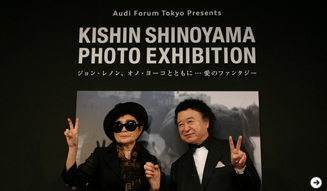

This exhibition will mark the world premiere of these new photographs, alongside previously unseen images of John Lennon and Yoko Ono with their son Sean, taken 30 years ago for the album cover.
Additionally, the venue will feature an interactive art installation by Yoko Ono. Titled "WISH TREE," this piece is part of Ono's ongoing project focused on wishes, inviting visitors to write their wishes on paper slips and hang them on the branches of a tree.

KISHIN SHINOYAMA PHOTO EXHIBITION John Lennon, With Yoko Ono... A Love Fantasy
Dates: December 4th (Sat) - January 5th (Wed) (Free Admission)
Hours: 10:00 - 20:00 (Open Year-Round)
Location: Audi Forum Tokyo
6-12-1 Jingumae, Shibuya-ku
Access: 2-minute walk from Exit 7 of Meiji-jingumae Station on the Tokyo Metro Chiyoda and Fukutoshin lines
5-minute walk from Harajuku Station on the JR Yamanote Line
*No parking available
Audi Communication Center
0120-598-106
BRAND HISTORY
Audi's emblem, the "Four Rings," represents the four founding companies: Audi, DKW, Horch, and Wanderer. All were based in Saxony and were pioneers of the German automotive industry in the early 20th century. However, facing the Great Depression after World War I, these four companies merged in 1932 to form Auto Union, each specializing in different vehicle segments: DKW in motorcycles and small cars, Wanderer in mid-size cars, Audi in premium mid-size cars, and Horch in luxury cars.
Following Germany's defeat in World War II, Saxony, located in East Germany, fell under Soviet occupation, leading to the dissolution of Auto Union. Anticipating this, a new Auto Union was established in Ingolstadt, Bavaria, in West Germany. Unlike BMW and Mercedes-Benz, Auto Union faced a challenging start without existing factories, gradually building strength through the production of vehicles like the DKW delivery van.
In late 1964, Auto Union came under the umbrella of Volkswagen and soon introduced new models bearing the Audi name. In 1969, it merged with NSU, known for its development of the Wankel engine and based in Neckarsulm, becoming Audi NSU Auto Union. From 1985 onwards, it has continued as Audi. Technologies like Quattro, dynamic performance backed by motorsport activities, elegant design, and high-quality finishes are the driving forces behind Audi's popularity.