Audi | Audi Q7 Adds New Unit
Audi Q7
New TDI Unit Model Announced
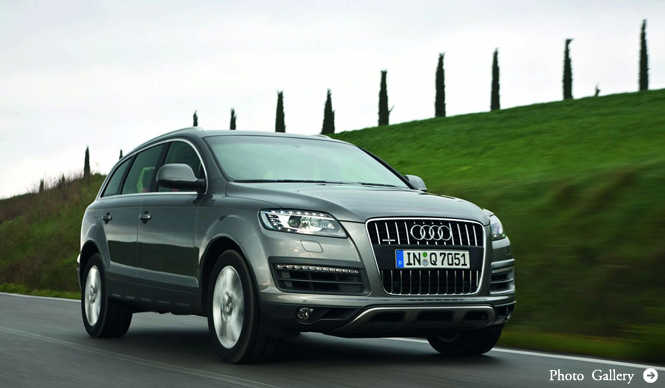
Audi has announced the addition of a new model to the "Audi Q7" lineup, featuring a newly designed 3.0-liter TDI unit.
Text by Giraffe
A New Heart Boasting 13.9 km/ℓ Fuel Efficiency
The newly adopted 3.0-liter TDI unit for the "Audi Q7" delivers a maximum output of 204 ps and a peak torque of 45.9 kgm. It achieves 0-100 km/h in 9.1 seconds and a top speed of 202 km/h (205 km/h with air suspension). Despite being a large SUV, it records excellent figures with a fuel economy of 13.9 km/ℓ (European combined cycle) and CO2 emissions of 189 g/km.
This is due to the synergistic effect of its lightweight construction, with the engine alone weighing under 200 kg, and the 8-speed automatic transmission.
The engine, in particular, features separate cooling passages for the crankcase and cylinder head, enabling thorough thermal management. Furthermore, refinements to the turbocharger and camshaft control, along with the adoption of an idling stop mechanism and an energy regeneration system, have resulted in a highly efficient power unit.
The planned sales price in Germany is 51,800 euros (approximately 5.85 million yen). We eagerly await its introduction to Japan.
BRAND HISTORY
The Audi emblem is "Four Rings." As you may know, each ring represents one of the automotive manufacturers: Audi, DKW (Draisine Kraft Wagen), Horch, and Wanderer. All were based in Saxony and were leading brands in the German automotive industry at the beginning of the 20th century. However, the four companies, hit by the Great Depression after World War I, formed Auto Union in 1932 to survive. DKW focused on motorcycles and small cars, Wanderer on mid-size cars, Audi on premium mid-size cars, and Horch on luxury cars.
However, following Germany's defeat in World War II, Saxony in East Germany fell under Russian occupation, and Auto Union ceased to exist. Anticipating this, the new Auto Union was established in Ingolstadt, Bavaria, in West Germany. Unlike BMW and Mercedes-Benz, Auto Union faced a difficult start without existing factories, but gradually gained strength through the production of vehicles like the DKW delivery van.
In late 1964, Auto Union came under the umbrella of Volkswagen and soon introduced new models bearing the Audi name. In 1969, it merged with NSU (known for developing the Wankel engine), based in Neckarsulm, becoming Audi NSU Auto Union. From 1985 onwards, it has continued as Audi to the present day. Technology such as quattro, dynamic performance backed by motorsport activities, elegant design, and high-quality finishes are driving Audi's popularity.