An ambitious creation aiming to balance design and interior packaging – A test drive of the Mazda CX-30 | Mazda
Mazda CX-30 | MAZDA CX-30
Mazda CX-30 Test Drive
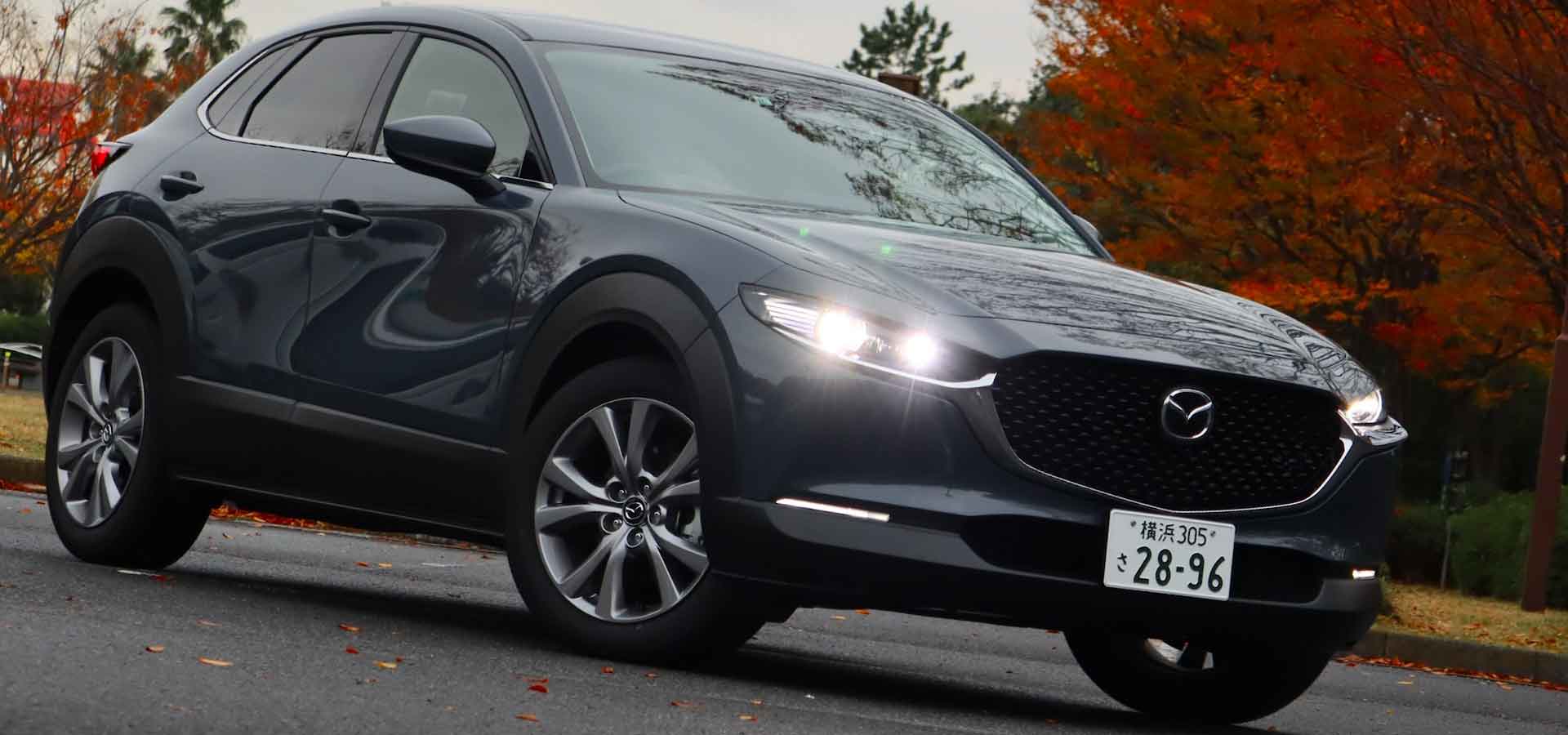
The CX-30, Mazda's second-generation compact crossover SUV. It's the SUV version of the stylish Mazda3 compact hatchback, a model that garnered significant attention for its looks. Even within the highly popular compact SUV market, it boasts a design that stands out for its exceptional level of refinement. But how does it drive? We participated in a test drive event held in Tokyo to find out.
Text & Photographs by HARA Akira
Exterior Design Crafted with Micron-Level Precision
For the exterior, design, development, and production staff worked as one to achieve micron-level precision in subtle curves, meticulously recreating the expression of the bodywork. The interior, meanwhile, is a realm of craftsmanship, incorporating not just high-quality materials but also techniques and methods that value human sight and touch.
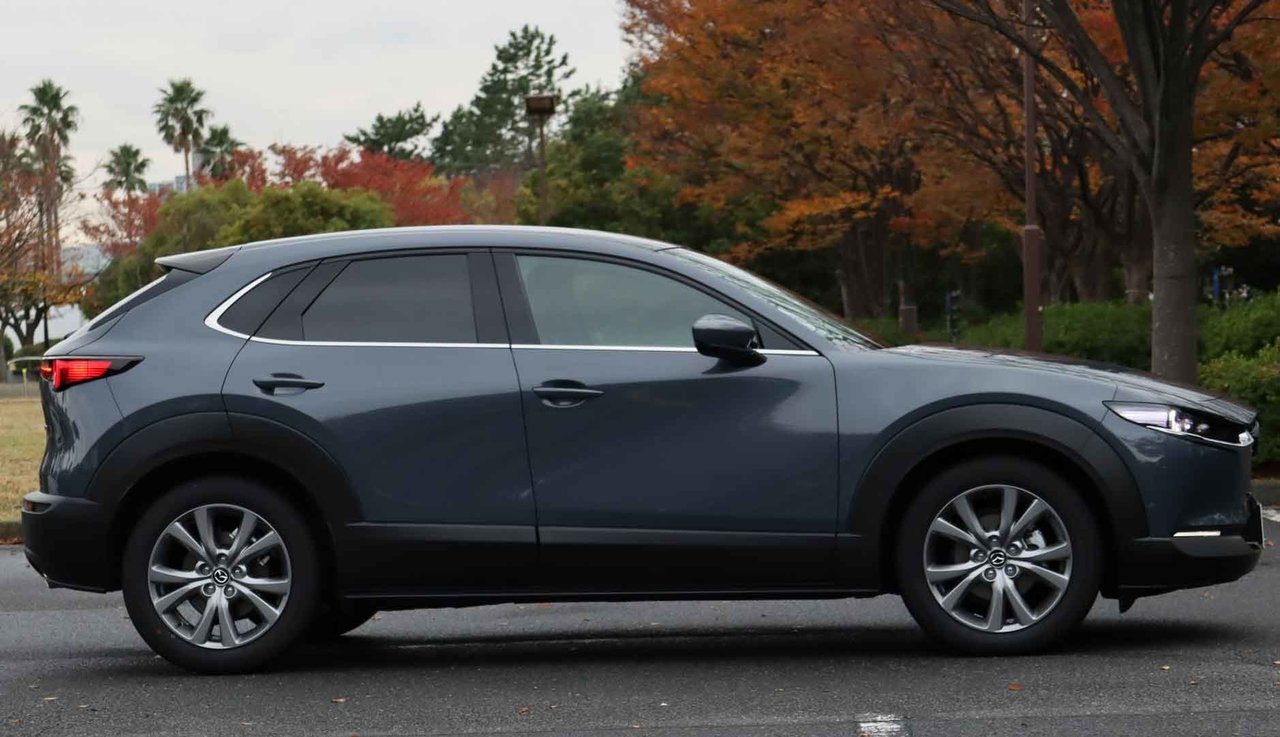
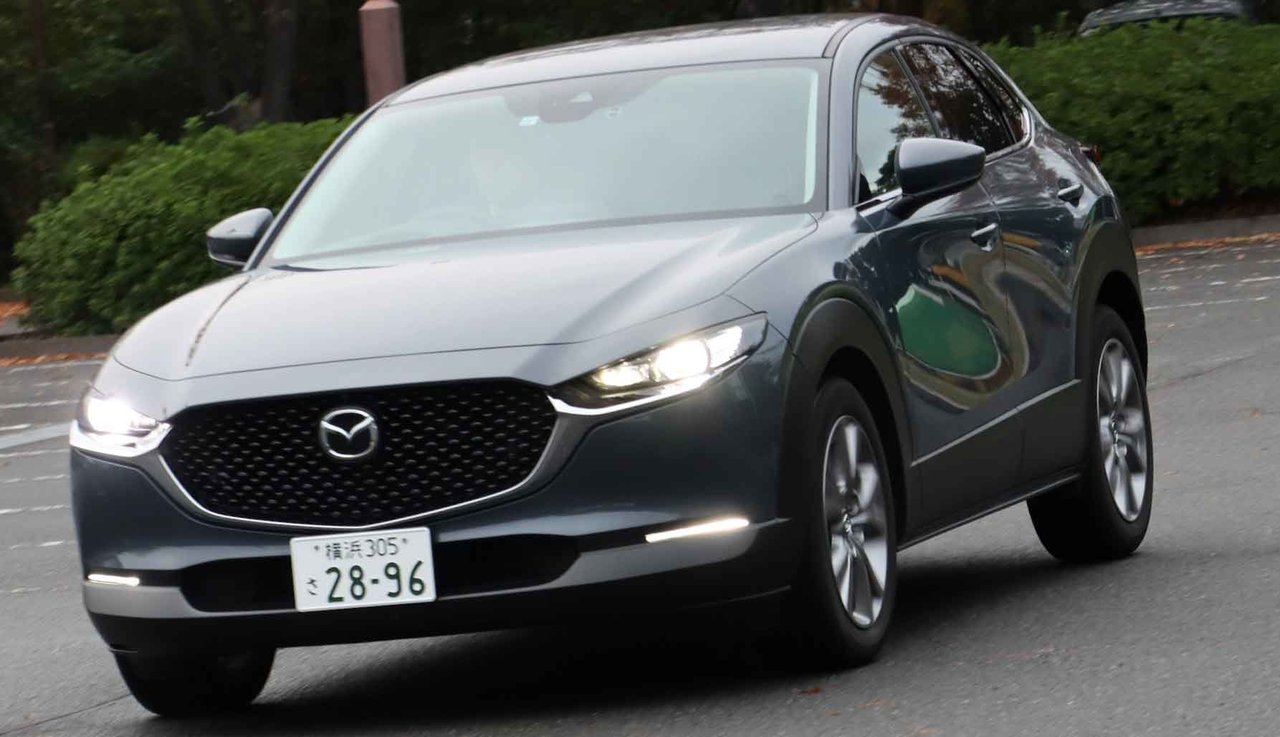
The CX-30's body dimensions, which were a focus of attention, measure 4,395mm in length, 1,795mm in width, and 1,540mm in height. The length is just 5mm shorter than the 4,400mm average for C-segment hatchbacks, and the width is under 1,800mm, making it easy to navigate narrow streets and pass oncoming traffic. The height, kept below 1,550mm, allows it to fit into multi-story car parks, successfully enhancing its maneuverability in urban environments.
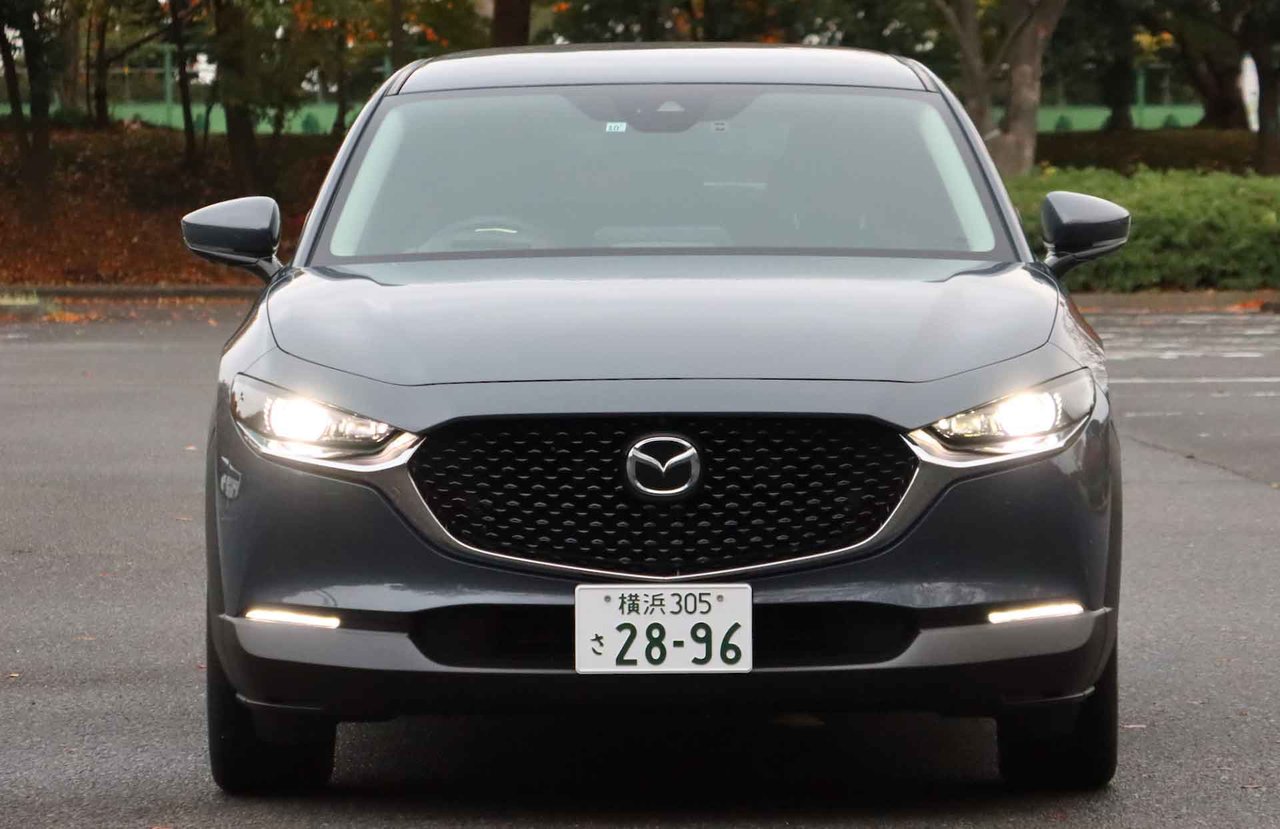
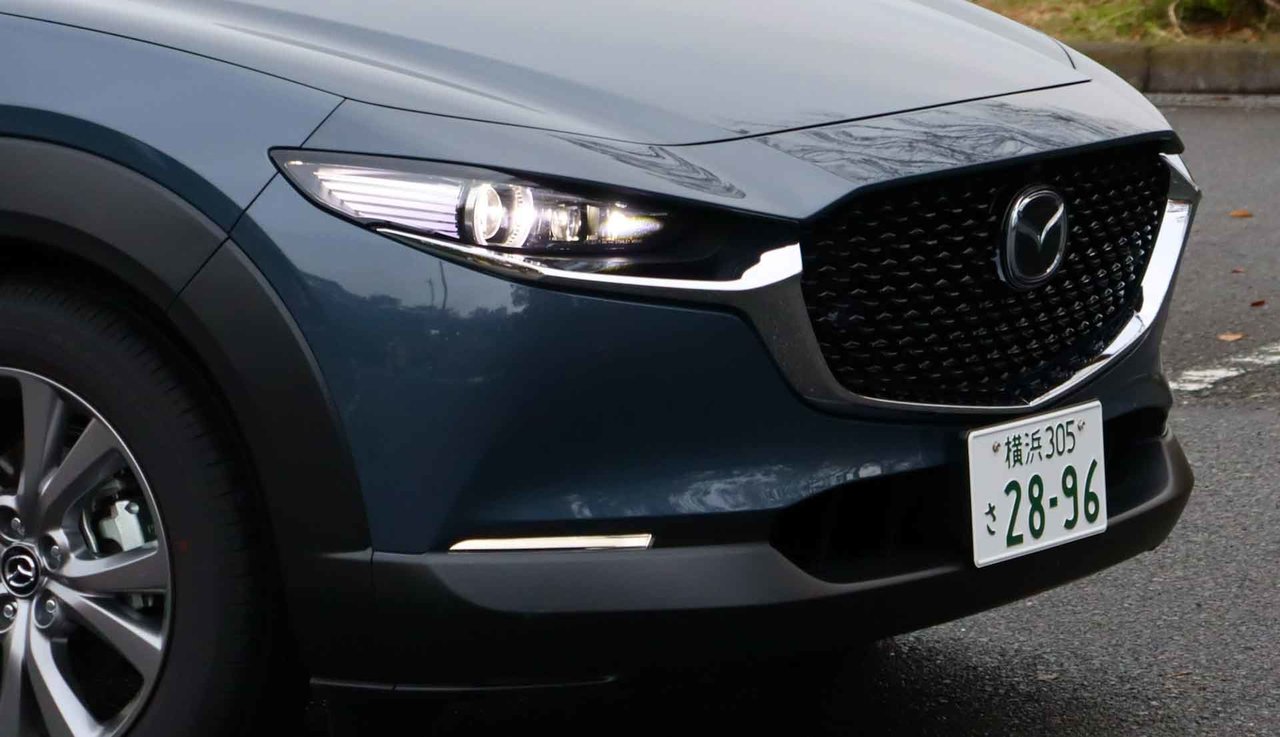
The exterior bears a strong resemblance to the Mazda3, to the point where it can be considered its SUV counterpart. An interesting detail is the reflection on the body's indentations: on the CX-30, the right side curves in a "Z" shape, while the left side forms an "S" shape. This is actually the opposite of the Mazda3. Furthermore, the lower part of the body is covered in black resin, a design choice intended to prevent it from appearing too tall.
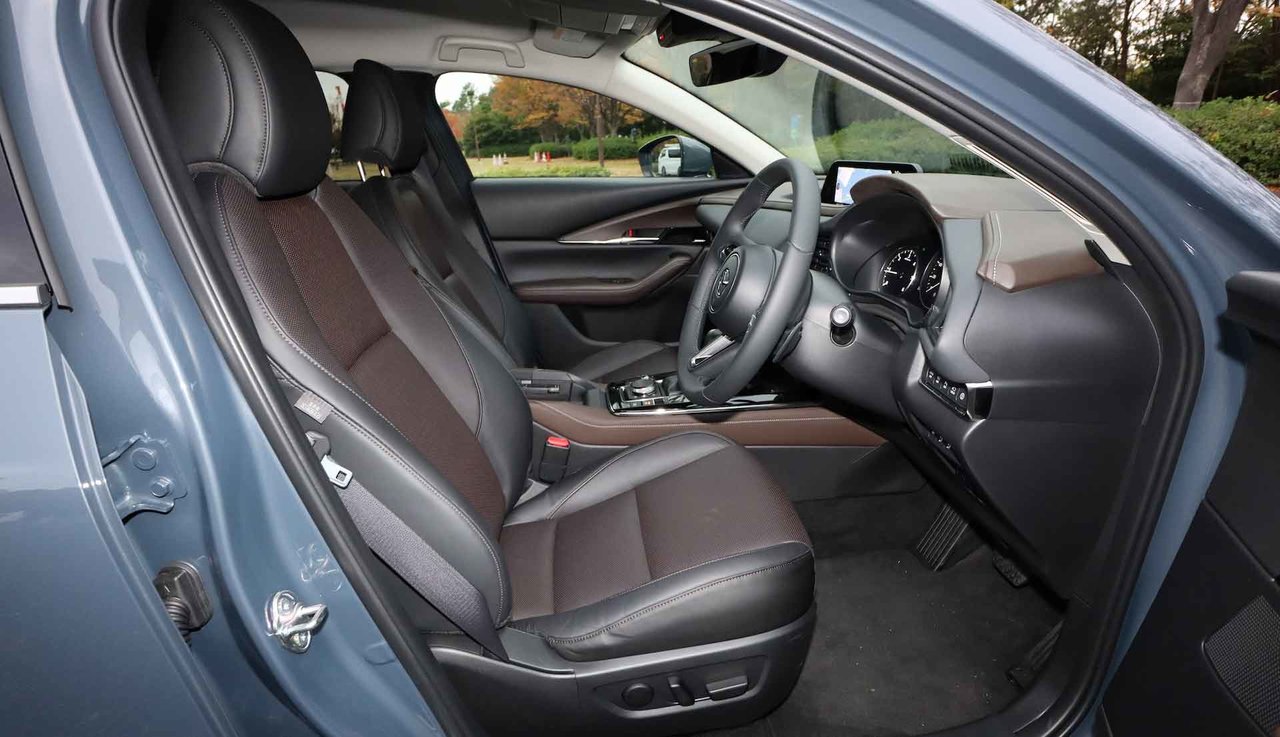
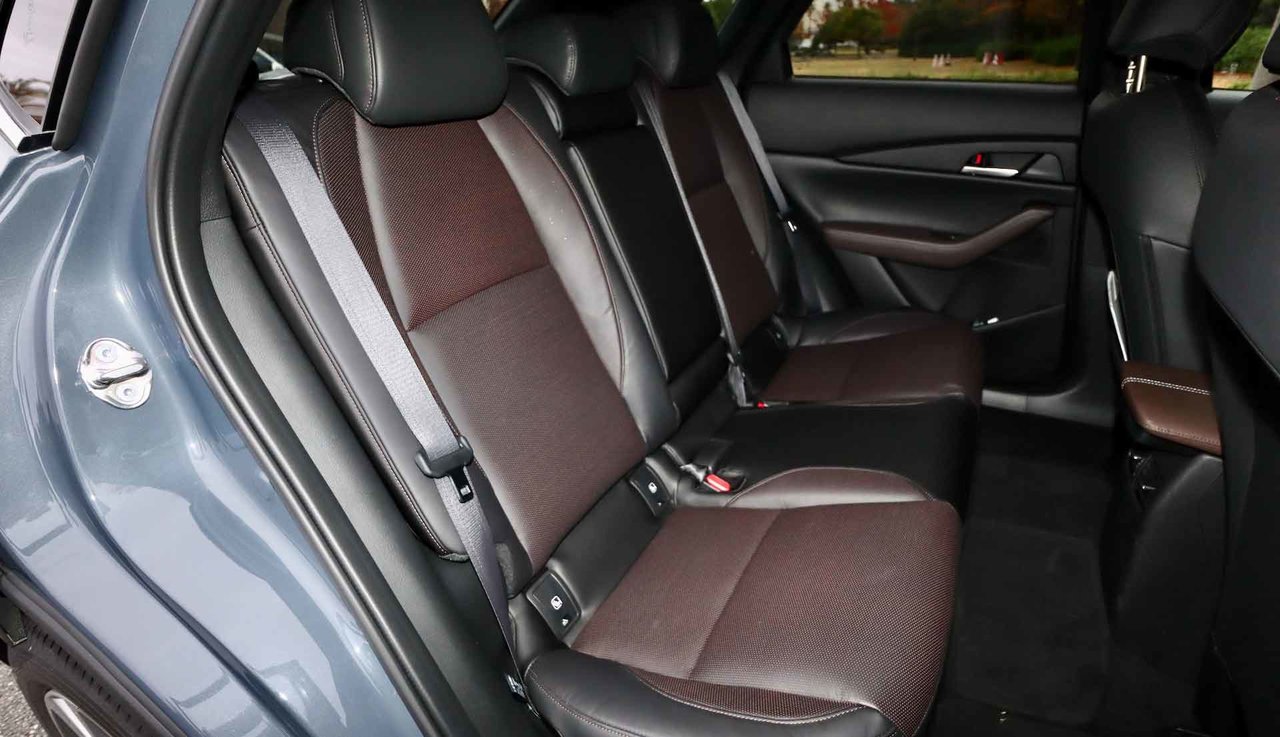
The interior, with its black/charcoal two-tone leather in the test car, finely detailed stitching, and dashboard adorned with abundant padding, presents a considerably more premium image compared to SUVs in the same class. Design prowess has been generously applied here as well.
The seat height is set at a convenient level, prioritizing ease of entry and exit for daily use. The space between the left and right seats is the same as in the CX-5. With a wheelbase 85mm longer than the CX-3, rear legroom is noticeably more generous.
Additionally, the luggage compartment is sized to accommodate the needs of young families with children, offering a capacity of 430 liters – enough for both a stroller and suitcases. The hatch opening width and height are also designed for easy loading of larger items, and it features a power tailgate comparable to higher-end models.
Driving the 1.8-Liter Diesel Model
The engine lineup consists of three powertrains: the 2.0-liter gasoline "G," the 1.8-liter diesel "D," and the soon-to-be-released "X" with spark-controlled compression ignition, all designed to embody the joy of driving.
The model we tested was the XD L Package clean diesel, equipped with the S8-DPTS 1.8-liter four-cylinder diesel engine, producing a maximum output of 85kW (116ps) at 4,000rpm and a peak torque of 270Nm between 1,600 and 2,600rpm.
The characteristic diesel clatter, audible from outside, is barely noticeable inside the cabin, and this quietness persists while driving. It's more of a subtle intrusion into the otherwise serene interior, which is well-insulated against wind and road noise.
The driving experience itself, with the 6-speed automatic transmission and front-wheel drive, is not as striking as the exterior; it's purely practical. In situations where a burst of acceleration is desired, one might wish for Mazda's 2.2-liter diesel engine option.
Perhaps due to being overwhelmed by the exterior's magnificence and setting expectations too high, this aspect was slightly disappointing.
The suspension is tuned slightly on the firmer side, reminiscent of European cars, transmitting a firm jolt from road imperfections on the metropolitan expressway to the driver's lower back. However, thanks to the high-quality seats that keep the upper body perfectly stable, long drives are unlikely to result in significant fatigue.
Conversely, for scenarios like a mother running errands around town, a slightly softer ride might be preferred. Despite the emphasis on style resulting in a reduced window area, the necessary visibility for driving is adequately secured. Combined with its compact body size, it should be a perfect fit for Japanese conditions.
One point of concern during the test drive arose when navigating gated parking lots. To retrieve a ticket, one must position the car precisely close to the machine, as leaning out from the shallow upper section of the windshield to reach the dispenser is difficult, making card insertion and removal a bit of a struggle. This is a recurring situation in urban areas and thus a notable inconvenience.
Passengers in the front passenger seat should also be cautious when carrying luggage. Due to the narrow viewing angle of the side mirrors, if large documents or bags are held on the lap, they become completely invisible to the driver, regardless of how much they stretch. While there are no issues if all occupants maintain a correct posture and position, this presents a potential blind spot.
A Perfectly Sized Partner
"Our aim was to establish this as Mazda's third pillar model, following the CX-5 and Mazda3," says Hisato Saga, the CX-30's development chief engineer.
"We have fused creative design, interior packaging, and dynamic performance at a higher level than ever before. While traditional crossover SUVs were primarily designed for weekend leisure, they are now used in a wider variety of everyday situations, and user needs have evolved. Consequently, the number of suitable vehicles has also increased."
Compact crossovers now outsell C-segment hatchbacks in the Japanese market, indicating the category's significant growth. The CX-30 was developed to meet this demand as a product with just the right size for easy outings anywhere.
"We focused on individuals entering pivotal life transitions – from singlehood to couples, and then to young families. Family structures and lifestyles change rapidly during these periods, making it challenging to choose a car that perfectly fits evolving needs. We envisioned the CX-30 as a 'partner for tomorrow that colors your future,' capable of providing brilliance to their lives during such times."
However, prioritizing design within a convenient size often compromises interior space, and vice versa. The CX-30 overcomes this trade-off by leveraging the strengths of its 'Kodo' design philosophy.
"Our development goal was to enhance interior satisfaction while maintaining design excellence, thereby establishing a unique position for the vehicle," he explained. The CX-30 is an ambitious car that strives to achieve both design and interior packaging.
Launched into a market crowded with popular compact SUVs like its sibling, the CX-3, as well as the Toyota C-HR, Honda Vezel, and Subaru XV, the CX-30 is off to a strong start, reportedly exceeding its monthly sales target of 2,500 units, appealing to customers with its design, size, and utility.
Contact Information
Mazda Call Center
Tel. 0120-386-919 (Weekdays 9:00-17:00, Saturdays, Sundays, and Holidays 9:00-12:00, 13:00-17:00)
https://www.mazda.co.jp