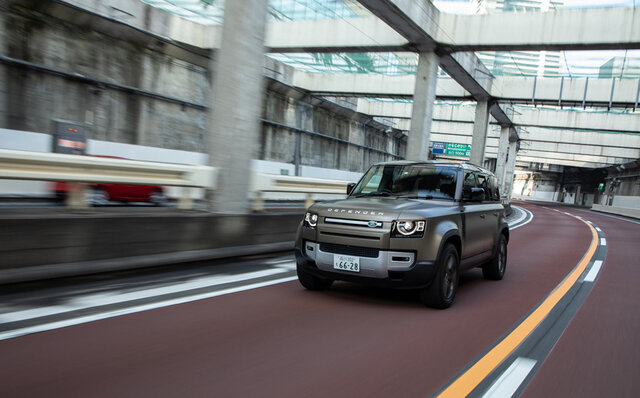
A Sporty Driving Experience Unlike Its Rugged Exterior Suggests—Test Drive of the New Defender | Land Rover
Land Rover Defender
Test Drive of the New Defender in Yokohama
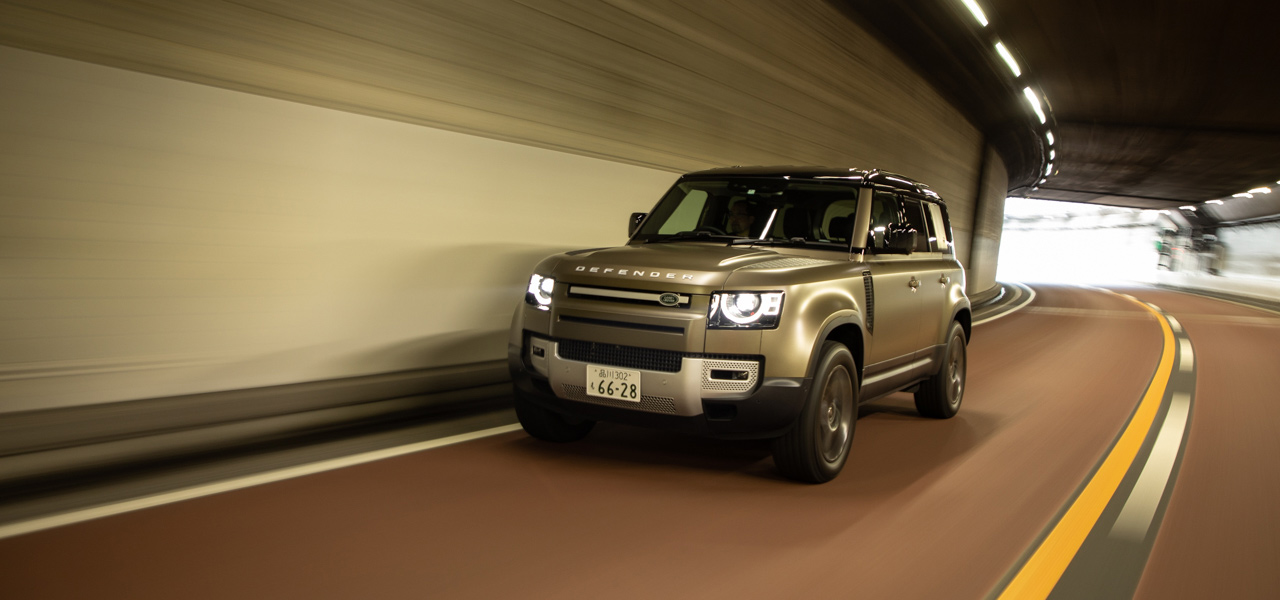
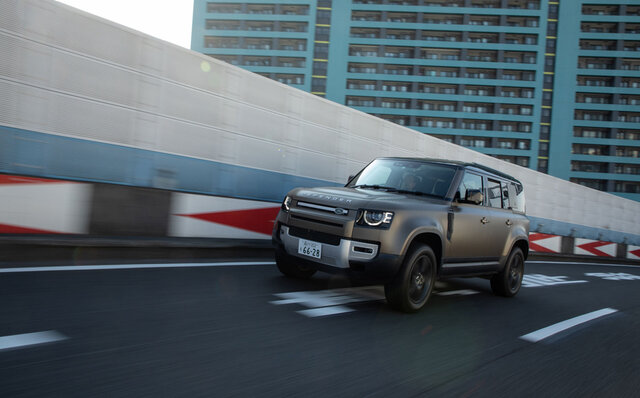
In 2019, the iconic Land Rover model "Defender" underwent a full model change for the first time in 71 years. We test-drove the model in Yokohama, which is said to have vastly improved on-road performance compared to its predecessor.
Text by FUMIO Ogawa | Photographs by KAWANO Atsuki
A Product That Captures the Hearts of Those Who Appreciate Craftsmanship
It feels quite similar to choosing a shell jacket or climbing-inspired shoes for everyday wear. This is the design sensibility of the "Defender," an SUV from British manufacturer Land Rover. It's a product that captures the hearts of those who appreciate craftsmanship by skillfully leveraging the atmosphere of the first generation, developed in 1948 as the British counterpart to the Jeep.
The new Defender, introduced to Japan in the summer of 2020. As it has been covered in various media, readers may already be familiar with its features. This good design vehicle, which can be described as both old and new, is available in two body styles: the long-wheelbase "Defender 110" and the short-wheelbase, two-door "Defender 90."
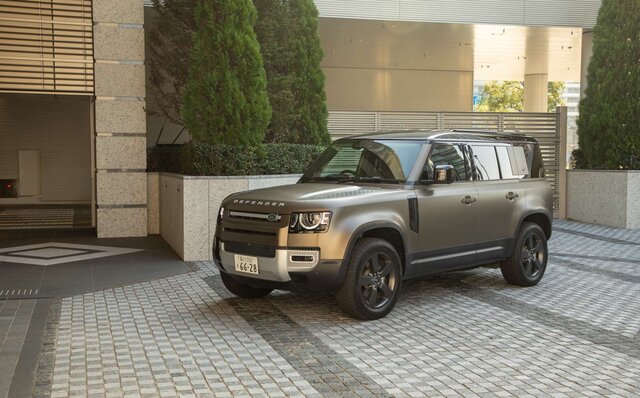
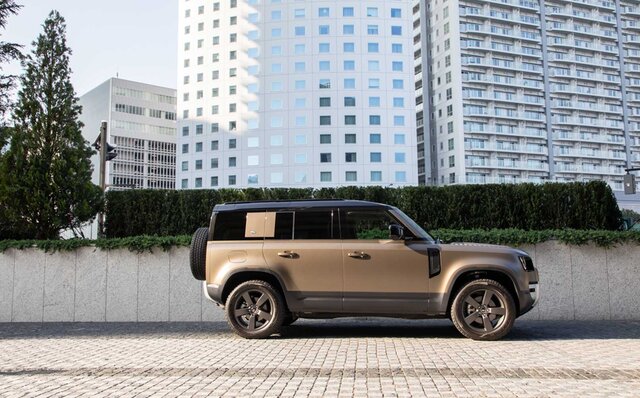
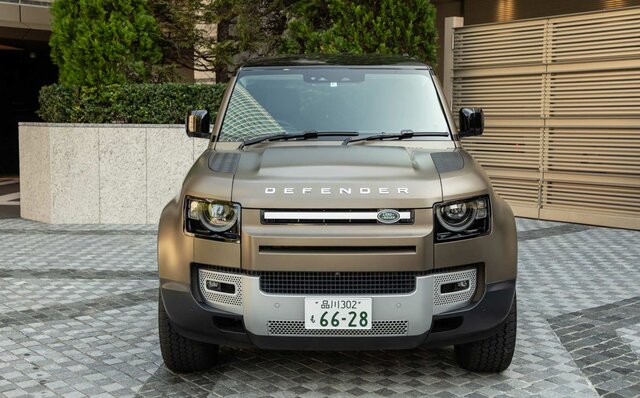
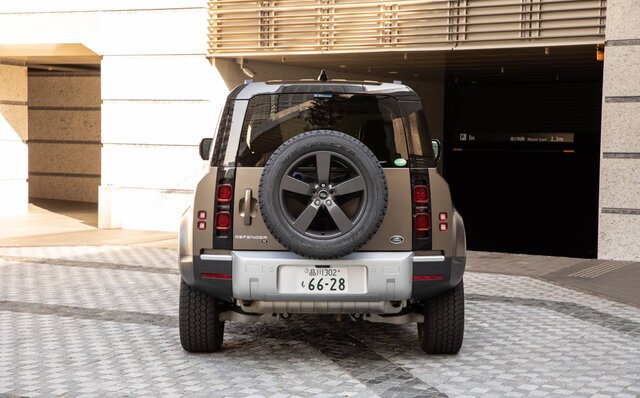
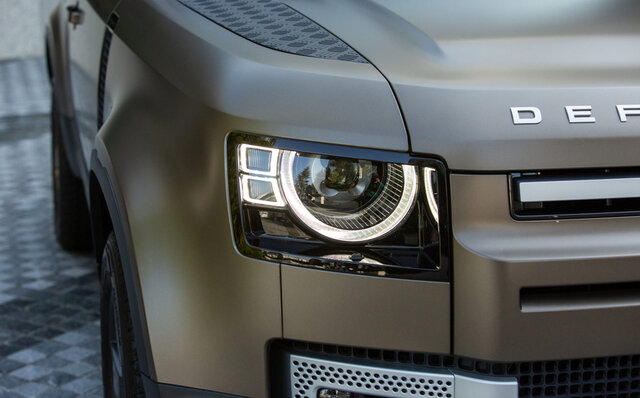
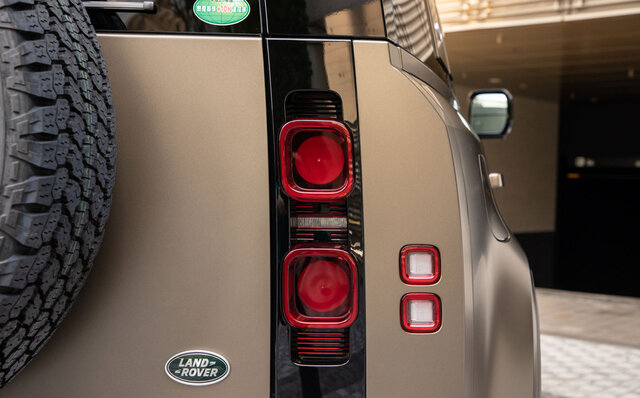
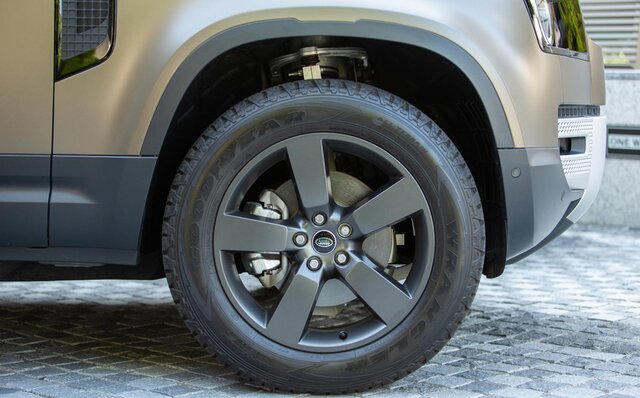
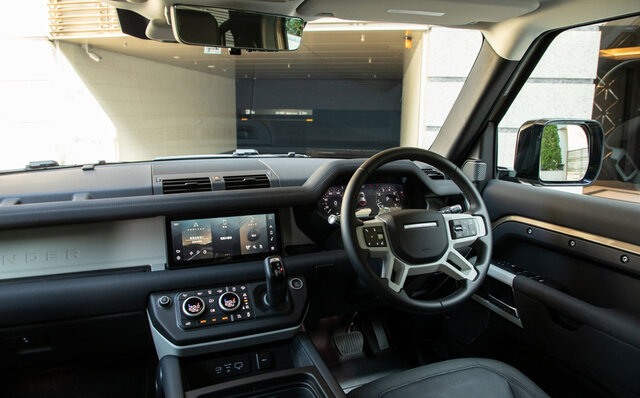
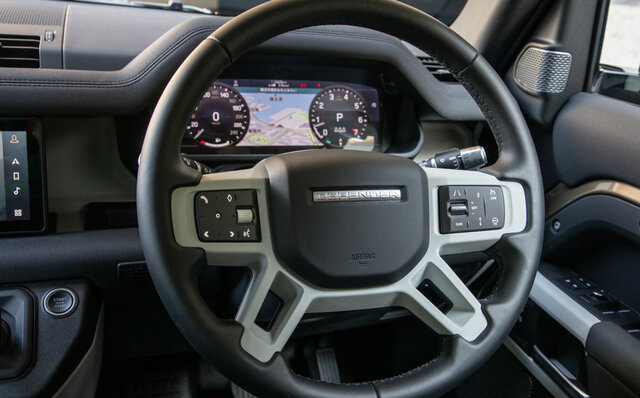
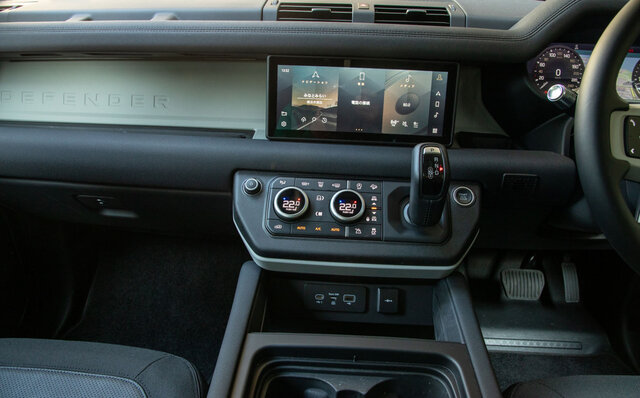
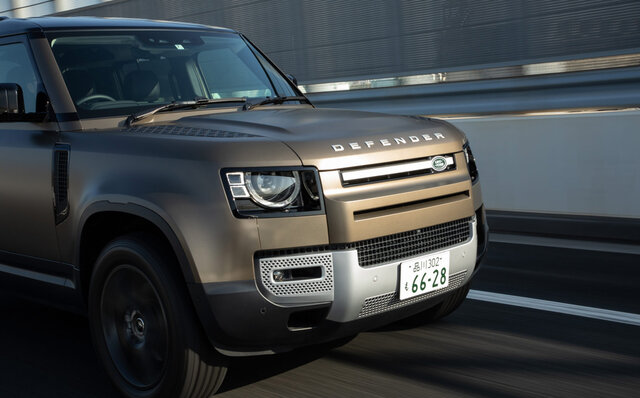
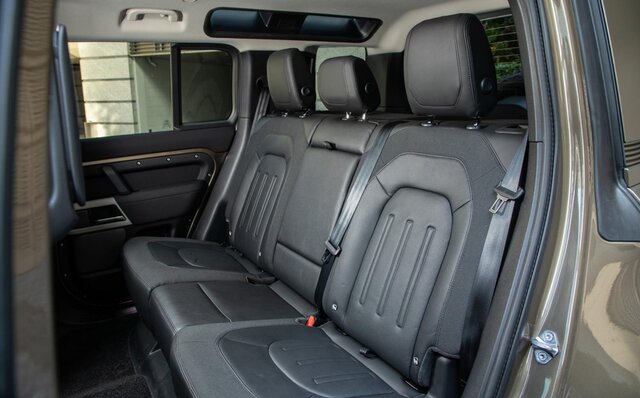
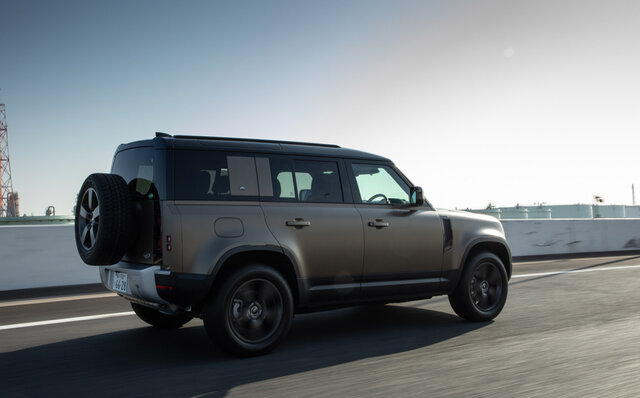
It retains elements of the original design in places, such as the round-motif headlights, the cabin's shape, the Alpine lights for illumination in the roof behind the rear seats, and the rear view with two vertical rows of round lamps on each side. The interior is similar, intentionally evoking an exposed exterior feel.
The Design Theme: Modernizing the Original's Distinctive Details
I had the opportunity to interview Gerry McGovern, who oversees Land Rover design at the company's UK headquarters, about the Defender's design philosophy in the summer of 2019.
"In the last decade, we have transformed from a 4x4 specialist to a premium luxury brand. We adopted a design-led approach. The engineering was already in place, so we explored new ways of being. Previously, design was simply an expression of function, but we aimed to rebuild the brand through design. We refreshed the lineup step by step, starting with the Evoque, then the Discovery, and now the Defender."
McGovern, whom I met in Tokyo, explained the design background while wearing a flamboyant suit tailored by the Savile Row firm Henry Poole & Co.
The design team meticulously worked to express the details that characterized the original in a modern way. This includes the undulating pressed body panels, which are even riveted visibly. Furthermore, standard-sized round headlights and flat window glass are incorporated.
However, modern regulations prevent the exact replication of such designs. The design must consider various requirements, including collision safety, pedestrian protection, interior ergonomics, and manufacturing methods. Even if it looks similar to the original, the underlying philosophy is entirely different.
"Initially, function dictated the shape; in design terms, we call it an honest form. The first generation was an engineering vehicle, not a design vehicle. Everyone had an affectionate relationship with it. Do you think the same design would succeed today? I don't think so. That's because what fascinates people changes with the times. Look at the Range Rover; when a new model comes out, the old one starts to look dated."
The 110 (a 4-door model with a 3,020mm wheelbase) was the first to be introduced in Japan. As mentioned earlier, while quoting McGovern's words about its connection to the original, the actual styling seems to draw inspiration from the vehicle when it was renamed "Defender" in 1990.
The styling is distinctive. While the original Defender was surprisingly common in cityscapes like Tokyo, many people might not be familiar with it. However, even without prior knowledge, the new Defender appears attractive. As McGovern mentioned, this is due to a design that skillfully arranges forms originally intended for function into a modern context.
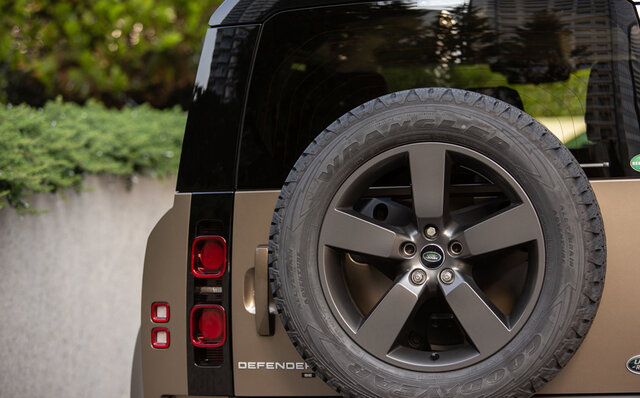
Elements like the spare tire mounted externally on the tailgate (intentionally so) and the protrusions on the front grille, reminiscent of robust radiator protectors (which also fulfill pedestrian protection requirements), are skillful historical references that have been creatively integrated.
A Drive That Makes You Forget Its Size and Weight
The test drive near Yokohama was in the "Defender SE P300," equipped with a 2-liter, four-cylinder gasoline engine. It boasts a maximum output of 300ps (221kW) and a peak torque of 400Nm, as indicated by its name. The SE trim level, with its extensive equipment, positions it at the top of the gasoline engine lineup.
The engine delivers ample torque from 2,000 rpm. The most "delicious" torque band is around 4,000 rpm. When driving normally, a slight increase in revs allows for a drive that makes you forget its size and weight.
The handling is excellent; the car's movement when cornering is finely tuned and very satisfying. Especially in medium-speed corners at higher speeds, the body roll is suppressed, allowing for an enjoyable, sporty driving experience that belies the vehicle's rugged exterior and interior image.
The 110 has a total length of 4.9 meters. While this offers the advantage of a spacious interior for some, it might be considered too large for others. For those who plan to use it primarily as a 2+2, the two-door "90" with a wheelbase of 2,585mm and a total length of 4,510mm would be a suitable option.
Prices for the "110" start at 6.19 million yen. The "P300 SE" I drove costs 7.38 million yen. The "90" starts at 5.29 million yen. A key feature of the new Defender is its extensive personalization options, the most diverse in Land Rover's history. Notably, approximately 170 accessories are available, including four accessory packs (EXPLORER PACK, ADVENTURE PACK, COUNTRY PACK, URBAN PACK).
Seven "CURATED SPEC" options, which are pre-configured with accessories, are also available. Examples include the "110 P300 Fabric Seat & 7-Seat Configuration" (6,912,000 yen) and the "110 P300 Leather Seat & 7-Seat Configuration (with Panoramic Roof)" (from 8,413,000 yen).
Additionally, although not test-driven for this article, it's worth noting that in November 2020, a 110 model equipped with a 3-liter inline 6-cylinder diesel engine was added. This is a mild-hybrid system where an electric motor supplements the engine's torque during initial acceleration and other phases, producing 300ps (221kW) and 650Nm. It sounds quite powerful. The diesel models are available in three grades, from the "S D300" (7.54 million yen) to the "X D300" (11.24 million yen).
Spec
Land Rover Defender 110
- • Body Dimensions | Length 4,945 x Width 1,995 x Height 1,970mm
- • Wheelbase | 3,020mm
- • Vehicle Weight | 2,240kg (5 seats) | 2,280kg (5+2 seats)
- • Engine | 1,995cc Inline 4-cylinder DOHC Turbo
- • Max. Output | 221kW (300ps) / 5,500rpm
- • Max. Torque | 340Nm (34.7kgm) / 1,750-3,000rpm
- • Transmission | 8-speed AT
- • Fuel Consumption (WLTC Mode) | 8.3km/ℓ
- • Drivetrain | 4WD
- • Minimum Turning Radius | 6.1 meters
- • Price | From 7.38 million yen