
October 22, 2021
In a Word: Fast and Comfortable—A Test Drive of the Nissan Note Aura | NISSAN
NISSAN NOTE AURA | Nissan Note Aura
Test Drive: Nissan Note Aura
The Nissan Note Aura, launched in June 2021 as a premium model of the new Note. This model, praised for its smooth ride powered by "e-POWER" (which generates electricity with the engine and drives with the motor) and its interior and exterior finishes that Nissan describes as "premium compact," was test-driven by motor journalist Fumio Ogawa.
Text by OGAWA Fumio | Photographs by KAWANO Atsuki
Impressed by its Sporty Handling
Hatchback cars have, from time to time, delivered pleasant shocks. It began, as you know, with the first Golf in 1974. Since then, we've seen hot hatches, ultra-compact rear-engined hatches, and unique models with creative concepts like three-seaters. The latest "surprise" is the Nissan Note Aura, released by Nissan Motor Corporation on June 15, 2021.
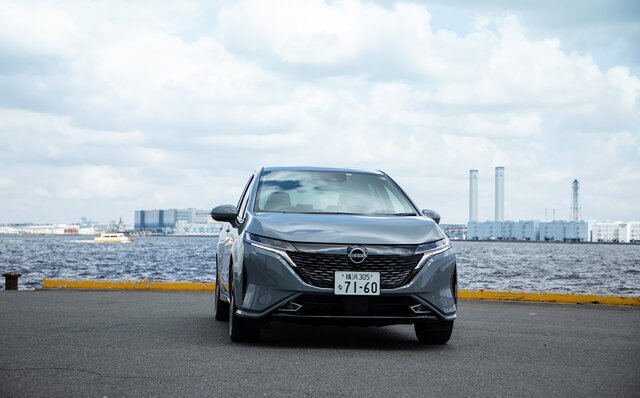
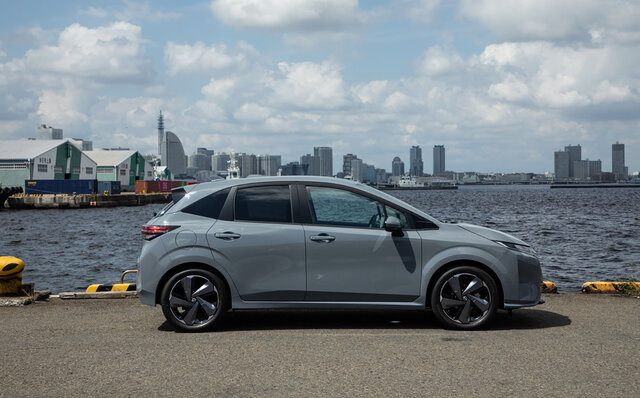
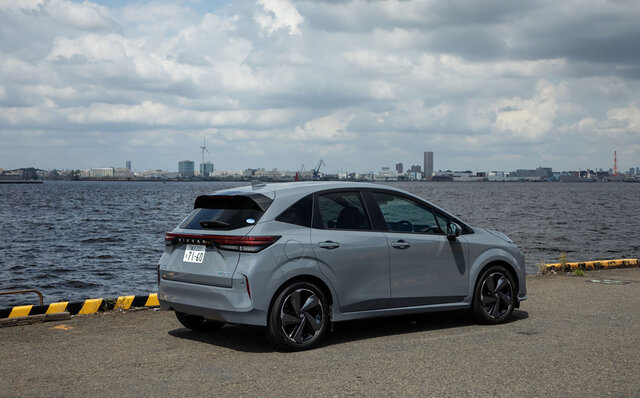
The Note Aura is a premium model of the new Note, which debuted in December 2020. It's a hybrid car, which Nissan calls "e-POWER." In this model, the engine is used solely to charge the battery that powers the motor, making it an EV that runs on electric power. In a word, it's fast and comfortable.
Like the Note, the Note Aura utilizes a newly developed platform for compact cars. It adopts Nissan's "e-POWER" electric vehicle concept, featuring a front-wheel-drive electric motor producing a maximum output of 100kW and a maximum torque of 300Nm, along with a 1198cc three-cylinder engine for battery charging.


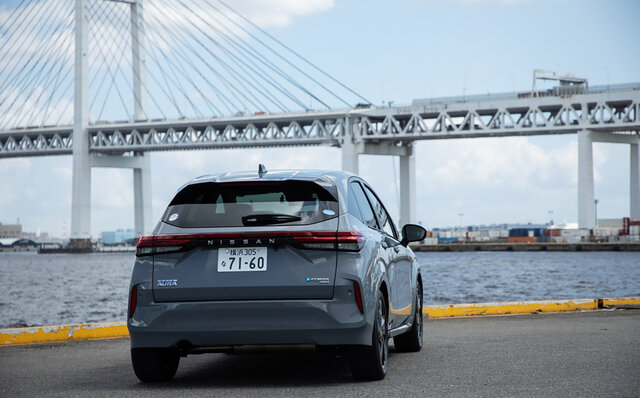
The "Note Aura G-FOUR" I test-drove this time is, as the name suggests, a four-wheel-drive model. It features an additional rear motor producing 50kW and 100Nm. The benefits include easier cornering, a flat posture that doesn't get unsettled even when decelerating, and stable driving on slippery surfaces.
While the front-wheel-drive version was perfectly satisfactory, the 4WD certainly drives more solidly. The straight-line stability at higher speeds and the agile handling through corners are impressive, skillfully managing the high torque to deliver sporty driving dynamics.
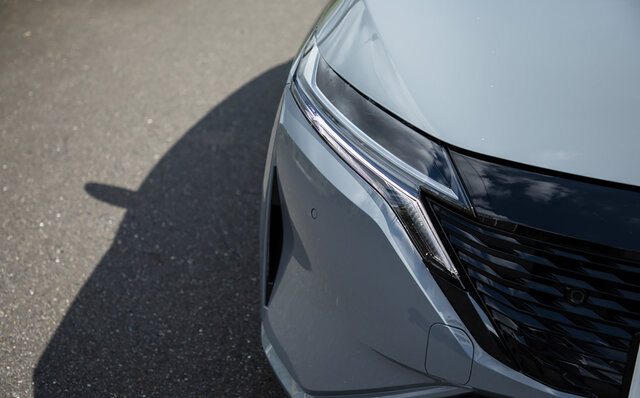

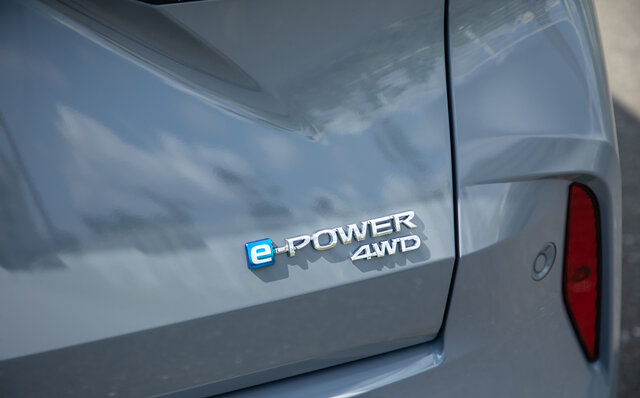

During cornering, in addition to motor torque control, the brakes are applied as needed. This likely involves lightly braking the inner wheels, similar to torque vectoring, to actively control the car's posture through the turn.
Nissan engineers explain that the torque distribution between the front and rear wheels typically ranges from 60% front and 40% rear to an even split, with the potential to shift to as much as 30% front and 70% rear. This distribution is determined by various G-forces acting on the vehicle and the driver's inputs during operation. Nissan calls this "feed-forward control."