November 30, 2021
Test Drive: Lamborghini Huracán STO – A Car That Pushes the Allure of the Internal Combustion Engine to the Limit | Lamborghini
Lamborghini Huracán STO
If You Can Buy It, I Highly Recommend It — A Test Drive of the Lamborghini Huracán STO
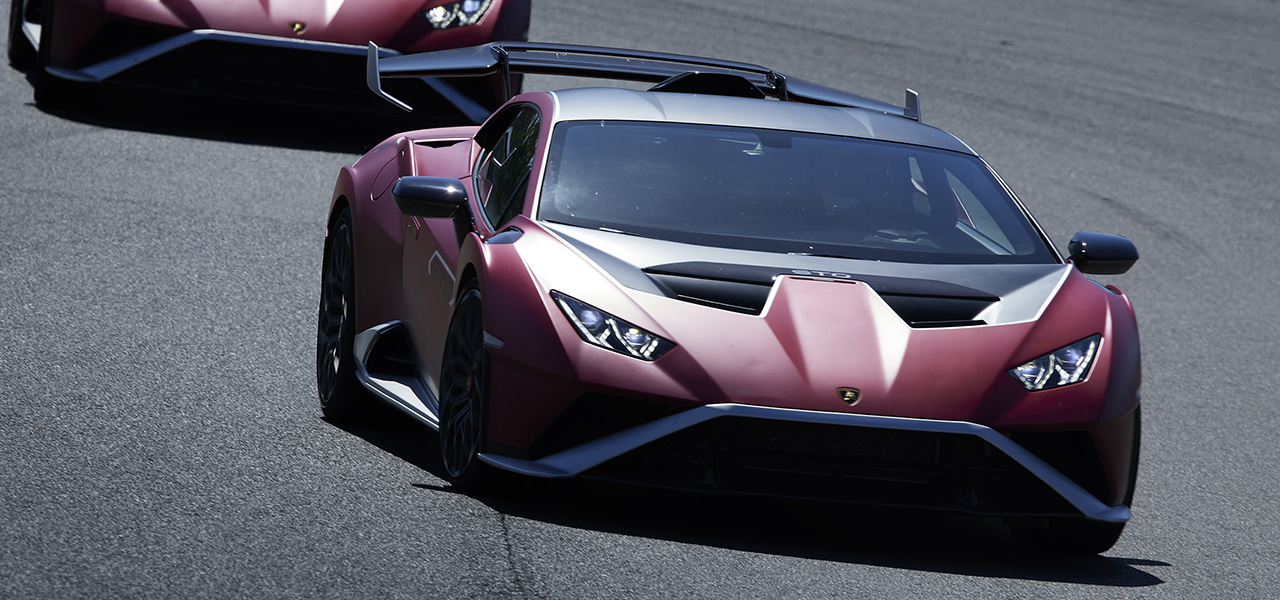
The Huracán STO was developed with inspiration from the Huracán Super Trofeo EVO race car and the GT3 EVO, and is billed as a "race car that can be driven on public roads." We had the chance to test drive the model, which has finally arrived in Japan, at Fuji Speedway.
Text by OGAWA Fumio | Photographs by MOCHIZUKI Hirohiko
Experience the Explosive Allure of the V10 Engine
Lamborghini is working hard. The Huracán STO, described as a "race car that can be driven on public roads," is a prime example. My recent test drive at Fuji Speedway was deeply moving.
It's powered by a potent 10-cylinder engine, neither hybrid nor turbocharged. And, as is typical of Lamborghinis, its design is both emotional and logical, adding to its appeal. If you can afford it, this is a model I would wholeheartedly recommend to our readers.
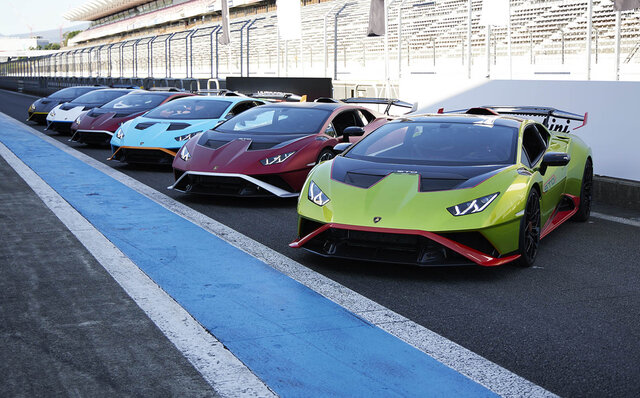


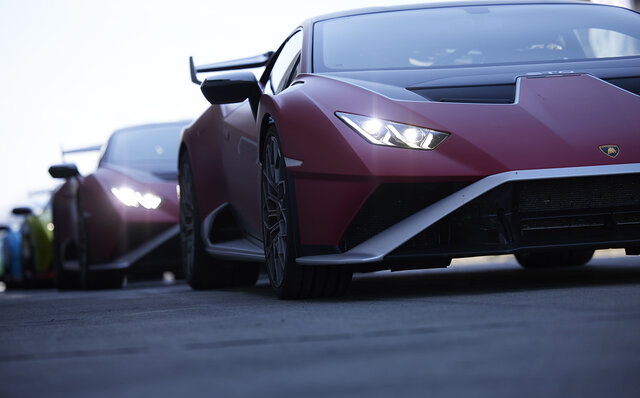
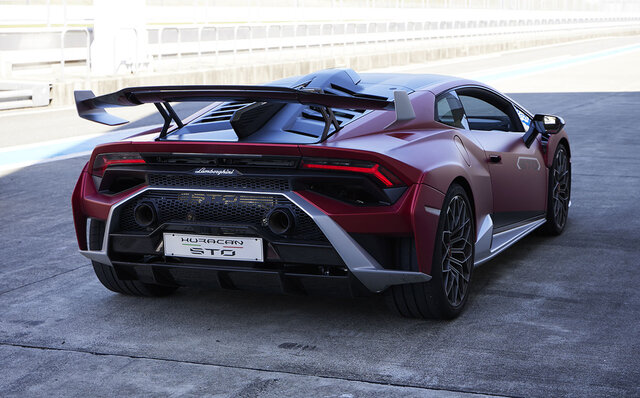
The Huracán STO is a model created with inspiration from the Huracán Super Trofeo SVO race car and the GT3 EVO. Lamborghini describes it as a "road-legal supercar," which is quite something.
The engine is a 5204cc V10, producing a maximum output of 470kW and peak torque of 560Nm. This is the same engine that has been familiar since the Huracán's debut in 2014 (or more precisely, since the previous Gallardo). However, the intake manifold and other components have been updated to enhance performance.
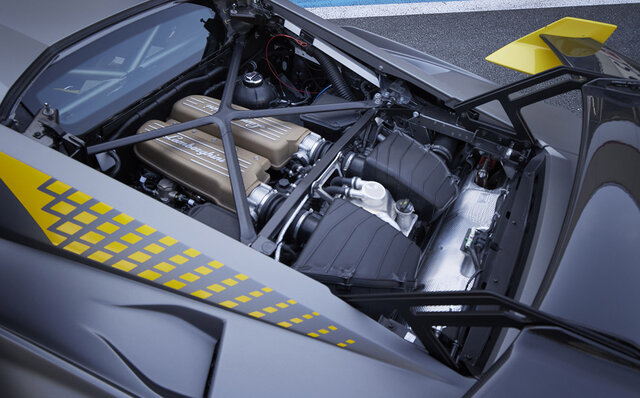
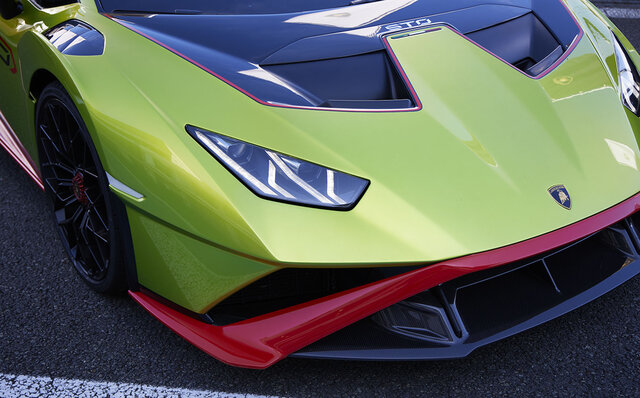
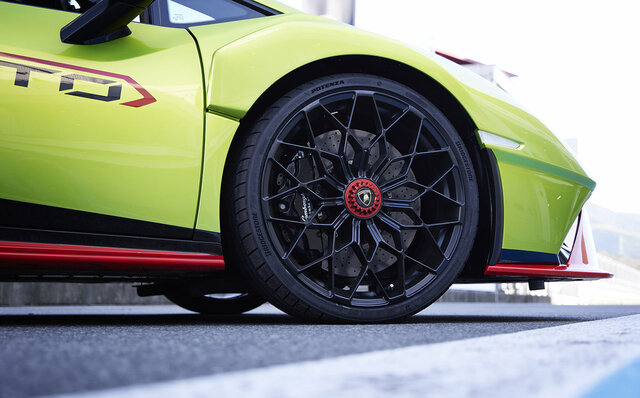
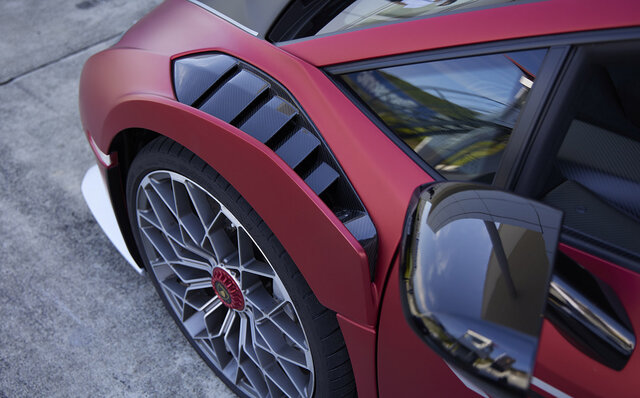
Indeed, it is a model that allows you to fully appreciate the explosive charm of the V10 engine. As the test drive took place at Fuji Speedway, I was able to fully enjoy the performance of the Huracán STO, crafted from aluminum and carbon fiber, thanks to its surging engine power, meticulously tuned suspension, and precise steering.
The front bonnet, integrated with the bumper and coined "Cofango" by Lamborghini (named from "cofano" for bonnet and "parafango" for fender), also resembles that of a race car.
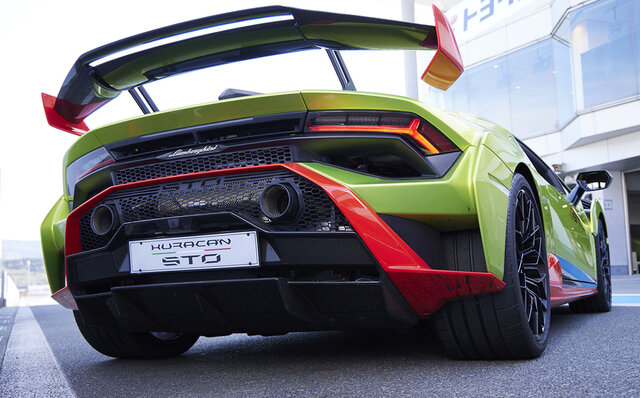
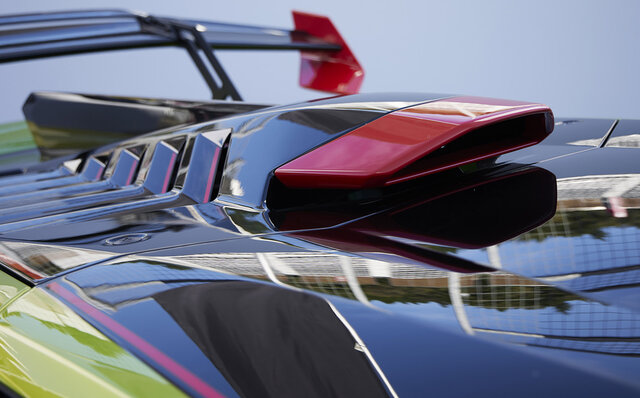
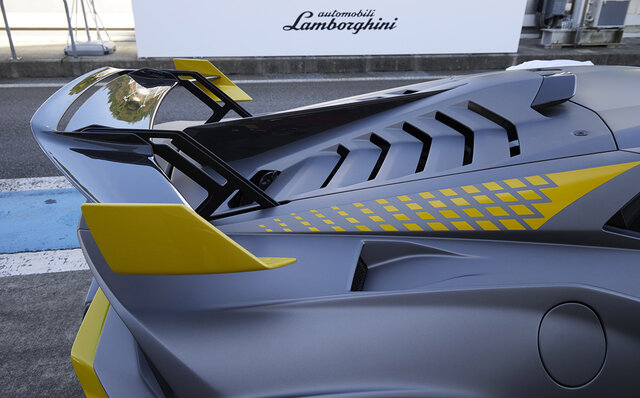
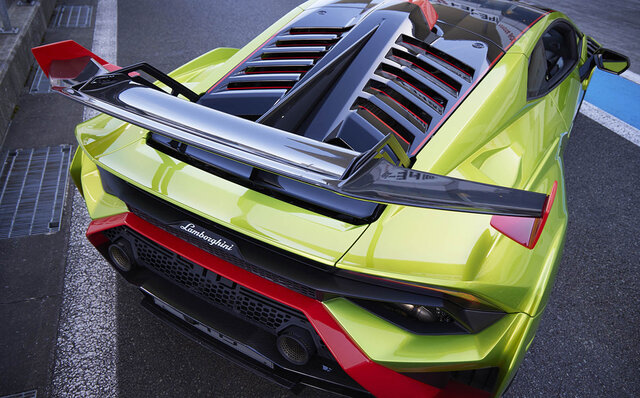
The body features numerous ducts and aerodynamic elements designed to maximize airflow, including air ducts behind the roof and a shark fin-shaped aerodynamic device for attitude control during cornering, as well as a large rear wing. These elements undoubtedly contribute significantly to the car's wonderfully responsive and quick handling.
Lamborghini's designers have succeeded in creating a unique identity for the Huracán by skillfully integrating these functional aerodynamic components. The honeycomb (hexagonal) motif, a symbol of Lamborghini cars, is also visible in various places.
Most importantly, as mentioned earlier, the airflow, reminiscent of a race car, is visually emphasized. The use of contrasting colors for the air intakes and ducts, distinct from the body color, is also a masterful touch.