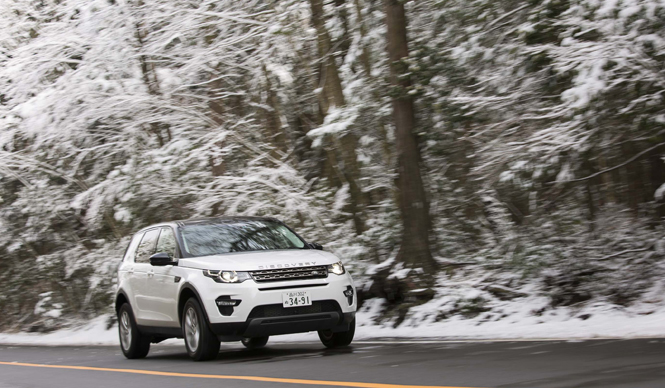
Test Drive: The Discovery Sport, a Premium SUV with an Available 7-Seater Configuration | Land Rover
Land Rover Discovery Sport | Land Rover Discovery Sport
A Premium SUV, Also Available with Seven Seats
Test Drive of the Discovery Sport
Land Rover, the venerable British 4WD manufacturer, is currently clarifying its lineup into three distinct brands: the Range Rover, the Defender, and the Discovery. The Discovery Sport, recently launched in Japan, is a crucial entry-level model designed to reinforce this strategy and assert the brand's presence in the premium 4WD market.
Text by SAKURAI KenichiPhotographs by TSUKAHARA Takaaki
Land Rover's Three Brands
Unveiled as the "Discovery Vision Concept" at the 2014 New York Auto Show and publicly revealed in its production form at the Paris Motor Show in September 2014, the new Land Rover model, the "Discovery Sport", is a vehicle that can be said to be important in foretelling the future of the Land Rover brand. Currently, Land Rover is undertaking a brand restructuring strategy to consolidate its lineup into three brands, each with a clearly defined character.
These three brands are the "Range Rover" series, which includes the "Range Rover Sport" and "Evoque", the "Defender Series", and the "Discovery Series".
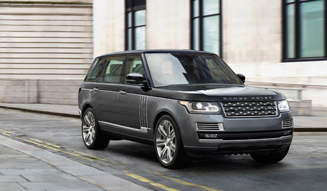
Range Rover SVAutobiography
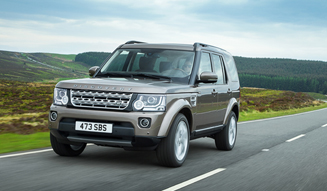
Land Rover Discovery
The "Range Rover" series, which lends its name to the brand's flagship luxury SUVs, is characterized by "refinement." To put it more simply, "luxury" is an appropriate descriptor for its character.
Although its official import to Japan has been suspended for a long time, the "Defender" series, a legend in the 4WD world, is defined by "durability." For the "Discovery" series, which includes the "Discovery Sport" we are introducing today, "versatility" seems to be the keyword that best expresses its essence.
While all Land Rover models possess exceptional 4WD performance, the "Discovery" has traditionally been viewed as a practical and popular family-oriented model, positioned from a seven-seater perspective, in contrast to the more premium "Range Rover." Of course, its pricing, while not inexpensive, was also set appropriately for a family vehicle compared to the "Range Rover."
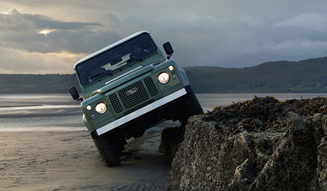
Land Rover Defender Limited edition
Meanwhile, the role of Land Rover's entry-level model was filled by the "Freelander". Although the second-generation model is currently on sale, this series is scheduled to conclude with the current generation.
This is why the "Freelander" is not included in the aforementioned three-brand strategy. As the "Final Edition" name suggests for the current model, it will soon reach the end of its lifecycle.
Land Rover Discovery Sport | Land Rover Discovery Sport
A Premium SUV, Also Available with Seven Seats
Test Drive of the Discovery Sport (2)
The Discovery Sport: A Vehicle Foretelling the Brand's Future
Which model will cover the position of the Freelander 2? In terms of price, one might point to the Range Rover Evoque, available from ¥4.78 million. However, this model belongs to the Range Rover series, responsible for luxury. Therefore, the new Discovery Sport has been chosen as the entry-level model. Not only does it possess a character distinct from existing models, but its reasonable price of ¥4.92 million also makes sense when considering its role as the successor to the Freelander 2.
There is a reason why the Discovery Sport was introduced as a crucial model in foretelling the future of the Land Rover brand, as mentioned at the outset.
It serves as the entry-level model for the Discovery brand, as well as the entry-level model for Land Rover vehicles as the successor to the Freelander 2. Coupled with its appropriate pricing and user-friendly functionality and size, making it suitable as a first Land Rover, the Discovery Sport embodies all these qualities.
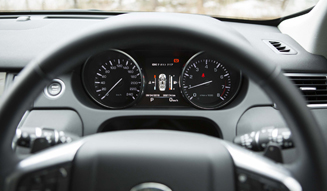
The addition of the Discovery Sport, priced in the ¥4 million range, has made the ¥7.15 million starting price of the top-tier Discovery model feel perfectly natural (though still expensive). It feels almost like a lie that the Discovery was once sold for less than ¥3 million, a sentiment I suspect many fans over 40 share.
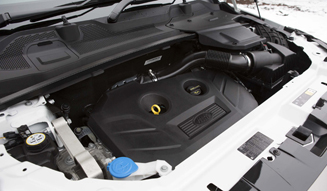
This pricing is, of course, a result of strategic brand planning, but the secret lies primarily in its underlying hardware. Simply put, it shares its platform with the Evoque. The powertrain is also identical: a 2-liter, four-cylinder turbo engine producing 177 kW (240 hp) paired with a 9-speed automatic transmission.
Consequently, while the engine is mounted transversely in this model, it is longitudinally mounted in the "Discovery." However, despite sharing components, 50 percent of the parts are newly designed and manufactured. While it bears the "Discovery" name and is a sibling to the Evoque, its internals are undeniably composed of the latest technologies that will define the new generation of Land Rover.
Land Rover Discovery Sport | Land Rover Discovery Sport
A Premium SUV, Also Available with Seven Seats
Test Drive of the Discovery Sport (3)
An Advantage Unrivaled by Rivals
While the preamble has been somewhat lengthy, analyzing the lineup situation within Land Rover's new strategy should make it abundantly clear that the Discovery Sport is more than just a new model bearing the Discovery name.
Those who thought, "Here we go again, first the Range Rover Sport following the Range Rover, and now the Discovery Sport following the Discovery," might benefit from a slight shift in perspective to grasp the essence of this vehicle.
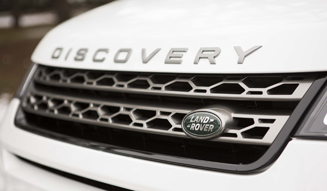
Nevertheless, the design aligns with the modern Land Rover family. The short front and rear overhangs maintain its stance of firmly planted on all four wheels. The sharp front face is an extension of the design language common to Land Rovers since the Evoque, and personally, I found it quite appealing.
As indicated by the transverse engine layout, the base is shared with the Evoque. However, the wheelbase is extended by 80 mm to 2,740 mm, compared to the Evoque's 2,660 mm. The body size is also larger at 4,610 mm. This extension allows for the inclusion of a third row of seats, offering a 5-seater configuration with two optional seats, making it a 7-seater.
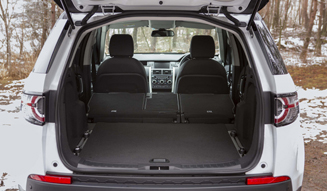
This also contributes to securing an impressive cargo capacity of 981 liters in normal use, expanding to a maximum of 1,698 liters with the seats folded. The seven-seater option is a tradition of the Discovery, and this versatility and practicality offer an advantage over rivals of similar size such as the "Audi Q5", the "BMW X3", and the "Volvo XC60", which do not offer this feature.
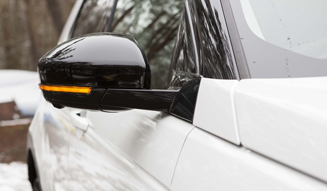
Considering that the length of rival vehicles generally exceeds 4,600 mm (Audi Q5 at 4,629 mm, BMW X3 at 4,657 mm, Volvo XC60 at 4,644 mm, according to European specifications), the packaging that enables the Discovery Sport's three-row seating can be considered quite accomplished.
For those who find the Evoque slightly too small, this model offers just the right size, with added functionality and usability.
It can also be considered a practical size as the successor to the Freelander 2. Driving it through Tokyo, its size felt perfectly balanced – not too big, not too small – making it easy to maneuver in almost all situations. With a width of 1,895 mm, comparable to its rivals, it falls within an acceptable range. The body, which is 395 mm shorter than the Range Rover and 245 mm shorter than the Range Rover Sport, is significantly easier to handle on city streets. Although it is 255 mm longer than the Evoque, the honest impression is that it causes almost no stress while driving.
Land Rover Discovery Sport | Land Rover Discovery Sport
A Premium SUV, Also Available with Seven Seats
Test Drive of the Discovery Sport (4)
A Practical Engine Given Its Displacement
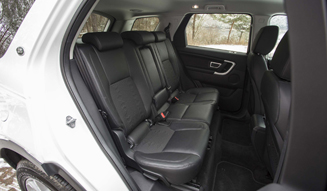
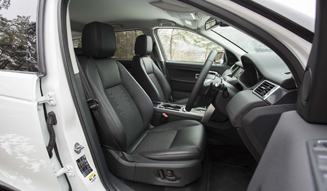
The interior offers ample space, particularly in the rear legroom, which can be described as sufficiently generous. Specifically, the rear seating position is 54 mm higher than that of the Audi Q5, with 64 mm more knee room and 60 mm more legroom. Compared to the Range Rover, it is only 13 mm less in knee room and 9 mm less in legroom. The second-row seats can slide by 160 mm, providing a clearer image of how spacious the cabin is.
However, there are some drawbacks. Unlike the traditional Land Rover driving position, known as the "command position" where one looks down upon the road, this is not the case here. This is also true for the Evoque, possibly a consequence of its stylish body design. Therefore, it is undeniable that judging the distance to the left and right edges of the front end is more difficult compared to models like the Discovery. Those switching from other SUVs should confirm whether this is acceptable before making a decision.
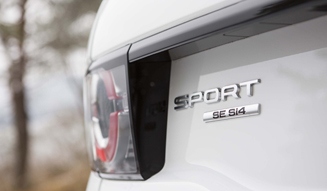
The 2-liter, four-cylinder turbo engine, dubbed "Si4" and producing 177 kW (240 ps) and 340 Nm (34.7 kgm) of torque, which also appears in the updated Evoque, exhibits a slight hesitation at very low speeds and when accelerating from partial throttle. However, this is not noticeable once the vehicle is in motion. In the normal driving range at speed, it feels agile, and considering the vehicle's weight of 1,920 kg and its 2-liter displacement, it can be described as a sufficiently practical engine.
Thanks to the latest 9-speed multi-gear automatic transmission, the engine start-stop system, and a body that is 22 kg lighter than the Freelander's (with 20% of the body constructed from high-strength steel and boron steel), the fuel economy is surprisingly good for those familiar with older Land Rovers. The manufacturer's published fuel consumption is 9.7 km/ℓ (JC08 mode). The efficiency gained from running in 2WD (front-wheel drive) on dry roads likely contributes to this fuel economy.
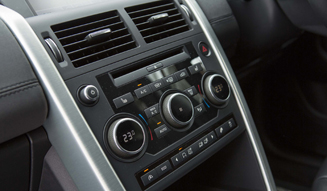
Its off-road performance, inherited from the Evoque, is worthy of the Land Rover name. At its core is an on-demand 4WD system utilizing a Haldex pre-charge system, offering a natural driving experience where the driver is not consciously aware of torque distribution changes.
The signature Terrain Response system offers four selectable driving modes: "Normal," "Grass/Gravel/Snow," "Mud/Ruts," and "Sand." On public roads, even in rainy conditions, the "Normal" mode provides stable driving. This 4WD system is surprisingly intelligent, with its natural feel that doesn't work against the driver's intentions being a key strength. It's a performance that makes one eager to test it on snowy roads during winter.
Land Rover Discovery Sport | Land Rover Discovery Sport
A Premium SUV, Also Available with Seven Seats
Test Drive of the Discovery Sport (5)
Meticulously Planned
When driving at a moderate pace on public roads, the vehicle is sufficiently quiet, and even with its 2-liter engine, there are no perceived shortcomings. The responsiveness to steering inputs and the ride comfort provided by the solid body are exceptional for an SUV of this type. It offers a sporty, car-like driving feel in the best sense.
This makes it difficult not to imagine that its roots lie in the latest platform, distinct from its larger sibling, the Discovery. Its ease of driving, comfortable ride, and high level of comfort mean that even within the same Discovery brand, commonalities are hard to find.
Long-time Land Rover enthusiasts might dismiss modern models as being too soft, citing the lack of a monocoque chassis, a transfer case, or air suspension. However, for the average user, the 4WD performance, derived from the Evoque and ultimately the Freelander, which surpasses that of its rivals in typical driving situations, possesses sufficient Land Rover quality. It has the robust capability to handle rocky terrain, sandy surfaces, and snowy roads with ease when needed.
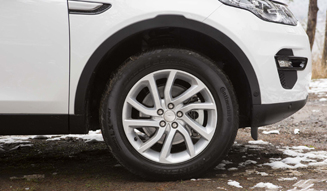
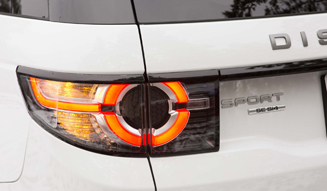
From a broader perspective, it's true that its ride might be closer to that of a passenger car than the Discovery, and perhaps not as hardcore. However, the market reality is that not everyone requires a hardcore 4WD system for challenging conditions. Furthermore, while it may be a strong icon within the premium brand, it's undeniable that some buyers do not seek the same level of luxury as the Range Rover or the stylishness of the Evoque. In this context, the Discovery Sport, with its size and practicality, strikes a very effective balance.
Compared to its European rivals, the Discovery Sport, with the brand recognition of a long-established 4WD manufacturer, is undoubtedly a formidable new option in the premium SUV market. Its size is well-suited to Japan, offering versatility and a design that is not overly ostentatious, nor does it overtly emphasize its off-road capabilities. Most importantly, its reasonable price as a "Land Rover" is expected to boost its popularity. The Discovery Sport is a new model that makes one feel confident in recommending it as an SUV that buyers will not regret purchasing.
Compared to its European rivals, the Discovery Sport, with the brand recognition of a long-established 4WD manufacturer, is undoubtedly a formidable new option in the premium SUV market. Its size is well-suited to Japan, offering versatility and a design that is not overly ostentatious, nor does it overtly emphasize its off-road capabilities. Most importantly, its reasonable price as a "Land Rover" is expected to boost its popularity. The Discovery Sport is a new model that makes one feel confident in recommending it as an SUV that buyers will not regret purchasing.
Land Rover Discovery Sport | Land Rover Discovery Sport
Body Dimensions | Length 4,610 x Width 1,895 x Height 1,724 mm
Wheelbase | 2,740 mm
Weight | 1,920 kg
Engine | 1,998 cc Inline 4-cylinder Direct Injection DOHC Turbocharger
Bore x Stroke | 87.5 x 83.1 mm
Compression Ratio | 10.0
Maximum Output | 177 kW (240 ps) / 5,500 rpm
Maximum Torque | 340 Nm (34.7 kgm) / 1,750 rpm
Transmission | 9-speed AT
Drivetrain | 4WD
Suspension Front/Rear | Strut / Multi-link
Brakes Front/Rear | Ventilated Disc
Tires Front/Rear | 235/60R18 (SE) / 235/55R19 (HSE) / 235/55R19 (HSE Luxury)
Minimum Turning Radius | 5.6 meters
Fuel Economy (JC08) | 10.3 km/ℓ
Price | ¥4,920,000 (SE) / ¥5,820,000 (HSE) / ¥6,920,000 (HSE Luxury)
Land Rover Call
Toll-Free0120-18-5568 (Excluding weekends and holidays, 9:00-18:00)