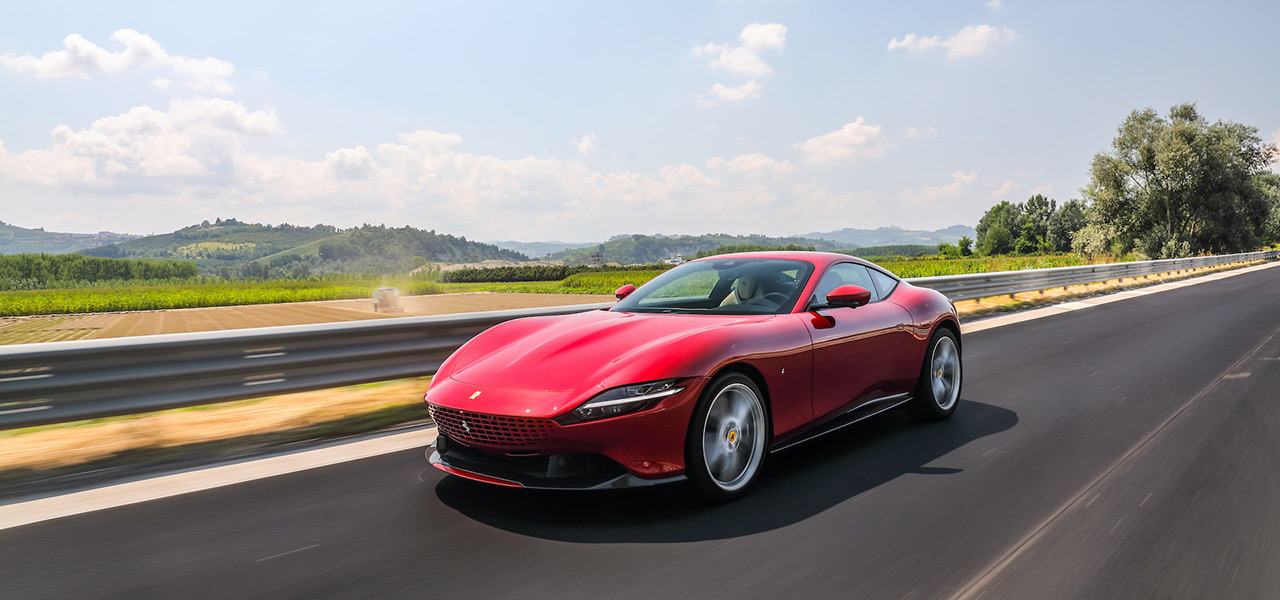
The majority of our test drive route was winding roads, with only a limited stretch of autostrada. H
Test Drive of the Ferrari Roma, a New +2 Mid-Front-Engine GT | Ferrari
Ferrari Roma
Why is the Ferrari Roma "Dolce"?
The "Roma," a completely new GT model from Ferrari, debuted in 2019 with an elegant styling distinct from recent Ferraris, under the concept of a "modern "dolce vita."
Text by Akio Lorenzo OYA
Photographs by Ferrari, Akio Lorenzo OYA
Under Unprecedented Circumstances
Ferrari's new +2 mid-front-engine GT, the "Roma." Its international press drive was held in early September in Piedmont, northern Italy.
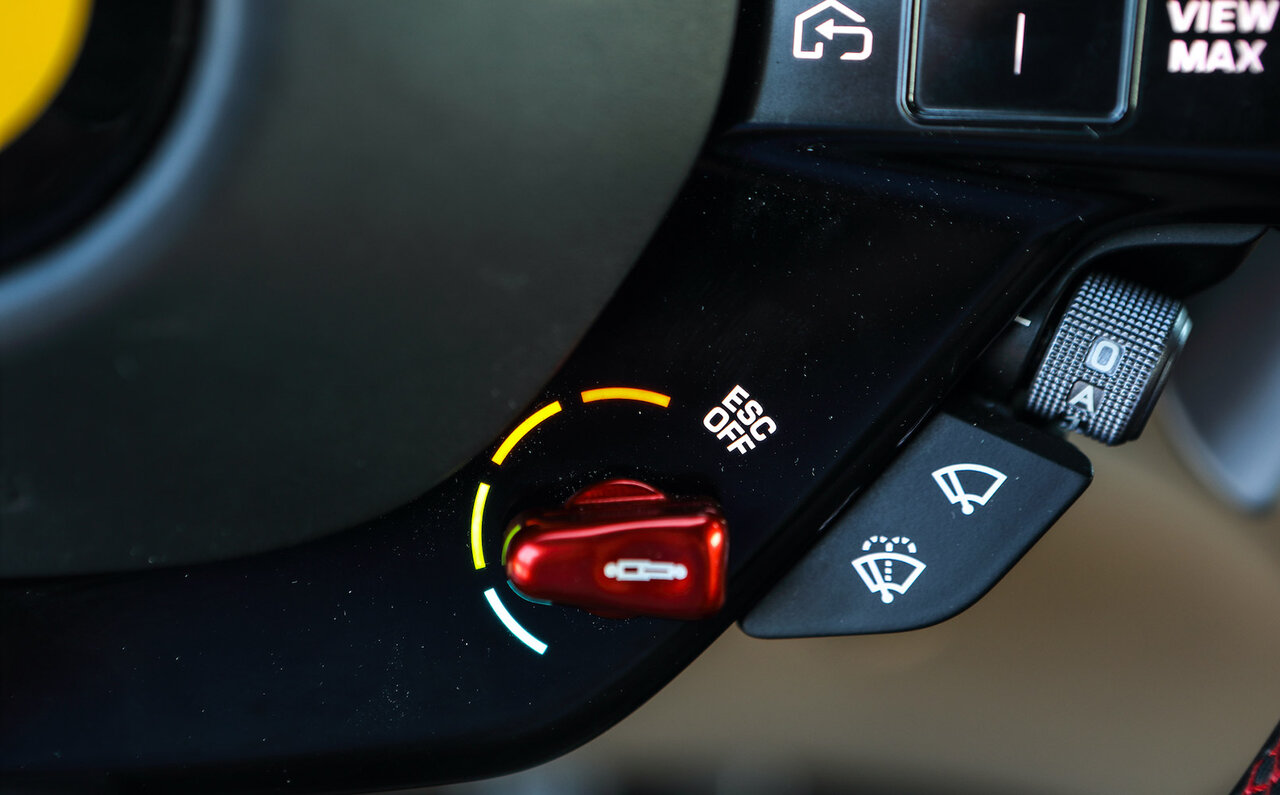
Regarding specifications such as the newly adopted 8-speed dual-clutch gearbox and the "Manettino," a 5-position driving mode selector switch – a first for a Ferrari GT – please also refer to our previous report.
Previous report.
Incidentally, as announced at the time of its unveiling in 2019, the Roma's concept is the modern "dolce vita."
Hearing this, it's natural that everyone would immediately think of Federico Fellini's 1960 film "La Dolce Vita," starring Marcello Mastroianni, which depicts the hedonistic life in Rome during the post-war economic boom.
Meanwhile, I looked up the meaning of "dolce" in the dictionary again. As an adjective, it means "sweet, gentle, pleasant," and as a noun, "sweets, cake, dessert."
What about the Roma is "dolce"? With this question in mind, I headed to the town of Bra, the birthplace of the Slow Food movement, which was the event's location.
Upon arriving at the hotel, a former Savoy residence, my temperature was first taken by staff from Maranello.
I thought they might laugh at my sub-35°C body temperature, but fortunately, I was cleared and unpacked in my room.
The hotel's courtyard was the venue for that evening's presentation. The evening bells from a nearby church chimed.
Surprisingly, that evening, there were only six journalists invited from across Europe, including myself. Due to COVID-19 countermeasures, they had been holding sessions since late July, inviting small groups each time.
For the Q&A session of the presentation, only three people were present in person, including Emanuele Caland, the Global Marketing Director. Department heads participated remotely from their homes, a thorough approach. It made me recall that Ferrari was one of the first to begin producing parts for hospital ventilators in April 2020. This demonstrated the company's serious engagement with the unprecedented situation.
Dolce Means "Gentleness"
Let's move on to the car itself.
The design of the Roma was inspired by the GT models of the 1950s and 60s, the "dolce vita" era, with an emphasis on minimalism.
Unnecessary air intakes have been eliminated, and the front features perforated panels instead of the traditional grille.
Interestingly, Flavio Manzoni, the Vice President of Design, stated that the cabin's form was explored first.
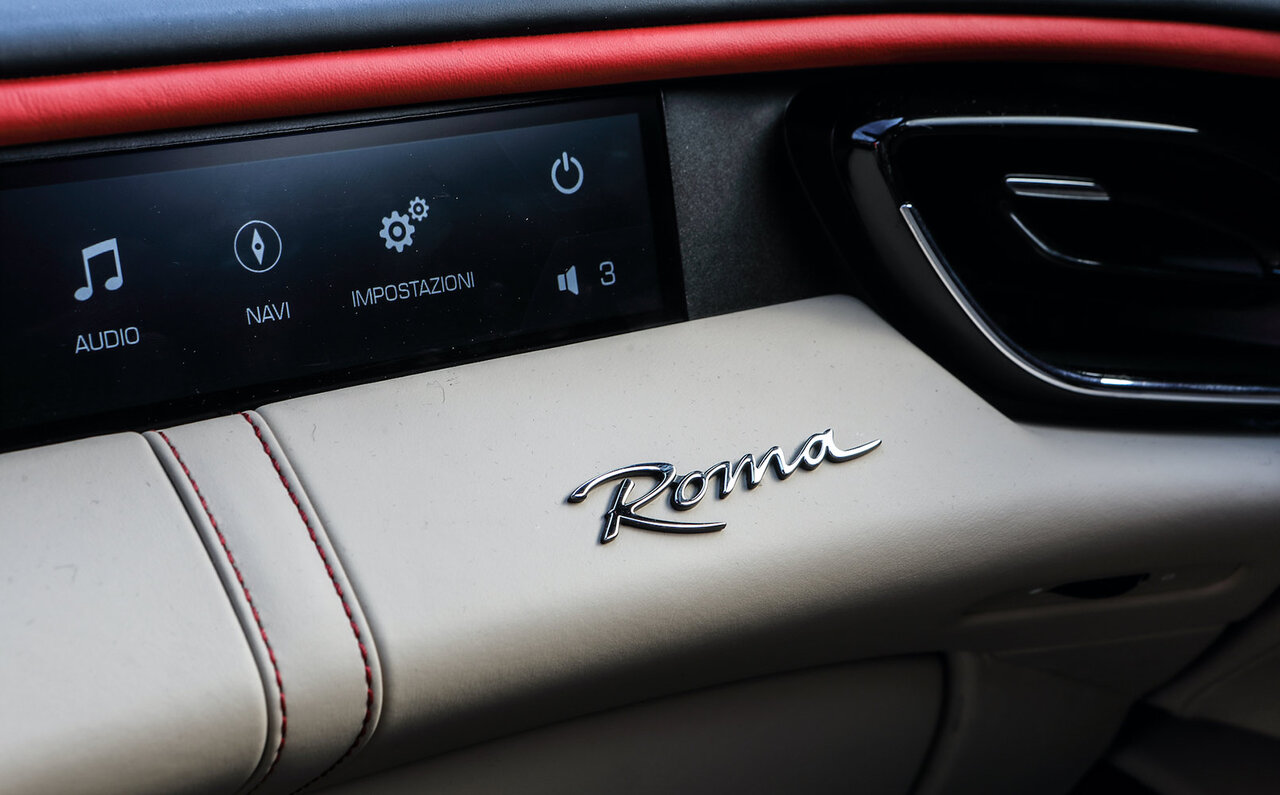
Speaking of the cabin, while previous Ferraris had driver-centric cockpits, the Roma offers both the driver and passenger virtually identical "cells."
What's the reason? In response to my question, Andrea Miltiello, who represented the design department remotely, explained, "The co-driver's presence is becoming increasingly important for Ferrari."
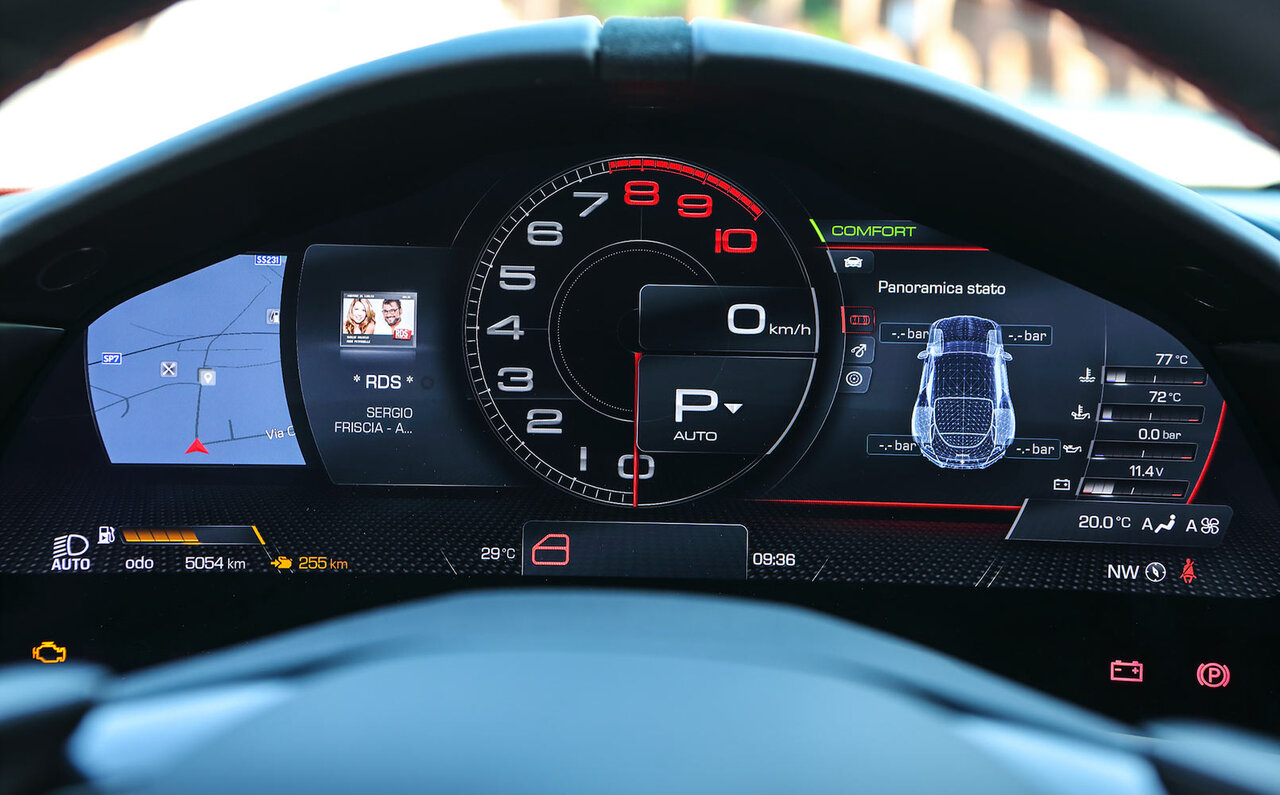
Another striking feature of the Roma is its steering wheel and the 16-inch instrument cluster, part of the new model range. At first glance, I might have easily imagined them as eccentric eye-catchers, but that wasn't the case.
With the motto "eyes on the road, hands on the steering wheel," the latest eye-tracking technology was employed to achieve the best HMI (Human-Machine Interface). The presentation highlighted the pursuit of precise switch placement and reliable information delivery. Quantitatively, unnecessary visual shifts are reduced by 4% and operational delays by 20% compared to previous models. It's not just emotion; it's science.
Dolce Means "Kindness"
The next morning, after another temperature check, I met the Roma in person in the courtyard.
The car I was assigned for the day was a deep red, named "Rosso Portofino."
Its proportions are exceptionally refined, clearly different from the super sports cars of the previous generation that invariably evoked power.
The headlight design is also not the aggressive, squinting style seen for over a decade, but rather an elegant, sharp-edged one. The electric spoiler is completely invisible when retracted.
Personally, I had been waiting for a Ferrari like this – a more understated one.
Engine start is via a touch-sensitive switch located below the steering wheel.
The view of the front hood and the voluptuous rear fenders reflected in the side mirrors as I drove away spoke to the driver that this was a Ferrari. While I'm currently fascinated by digital side mirrors, for this car, the reflection in a physical mirror felt more classical and appropriate.
The body rigidity has improved dramatically compared to the V8 models of the 1990s.
Furthermore, as long as the Manettino is set to "Comfort," the first time with 5 positions on this model, even the cobblestones characteristic of medieval towns and the poorly maintained Italian roads due to recent underfunding for repairs are not particularly uncomfortable. This alone gives a sense of a Ferrari that can be used daily.
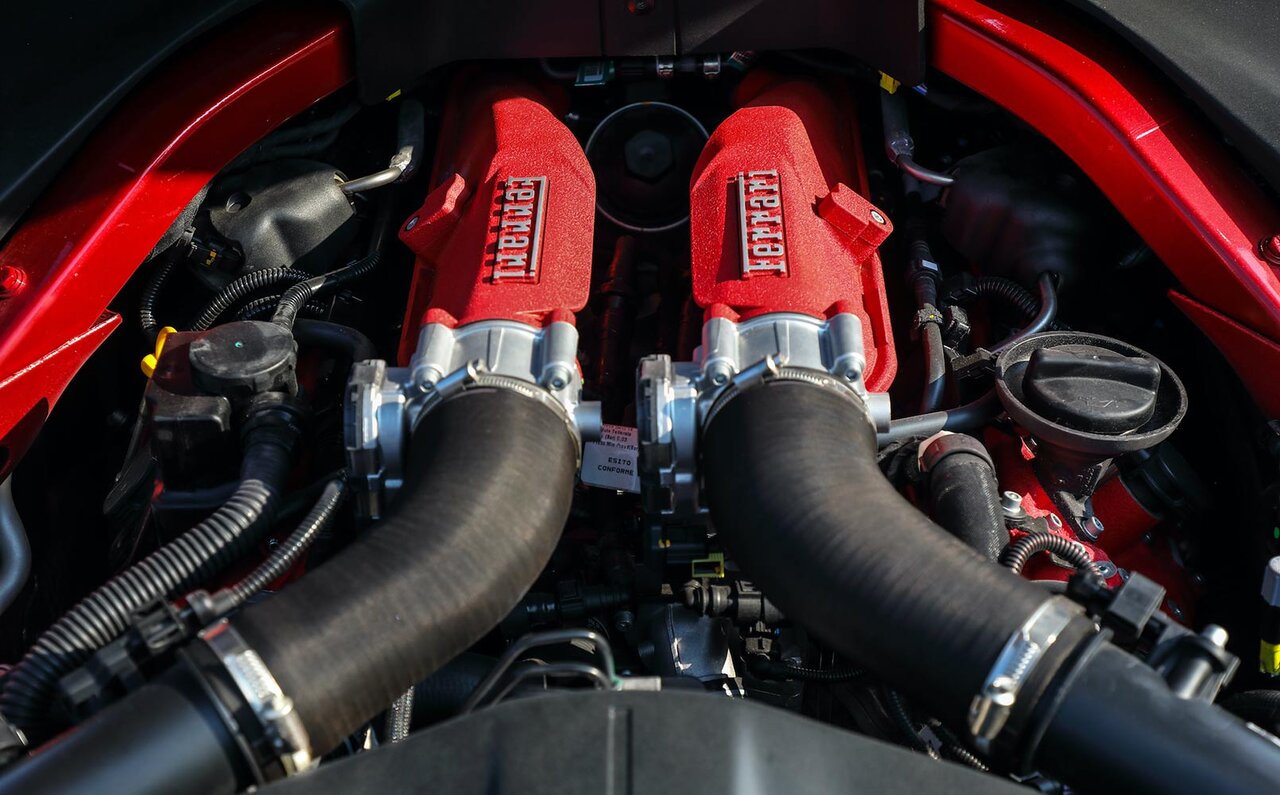
The throttle is also set with remarkable politeness. In city driving, the car cruises smoothly with subtle on-off pedal inputs. However, pressing further awakens the V8 engine, and it accelerates with a pleasant fanfare. Even I, who doesn't typically possess a passionate drive for speed, couldn't help but smile, which should give you an idea of the sensation. As the engineers intended, there's no perceptible turbo lag.
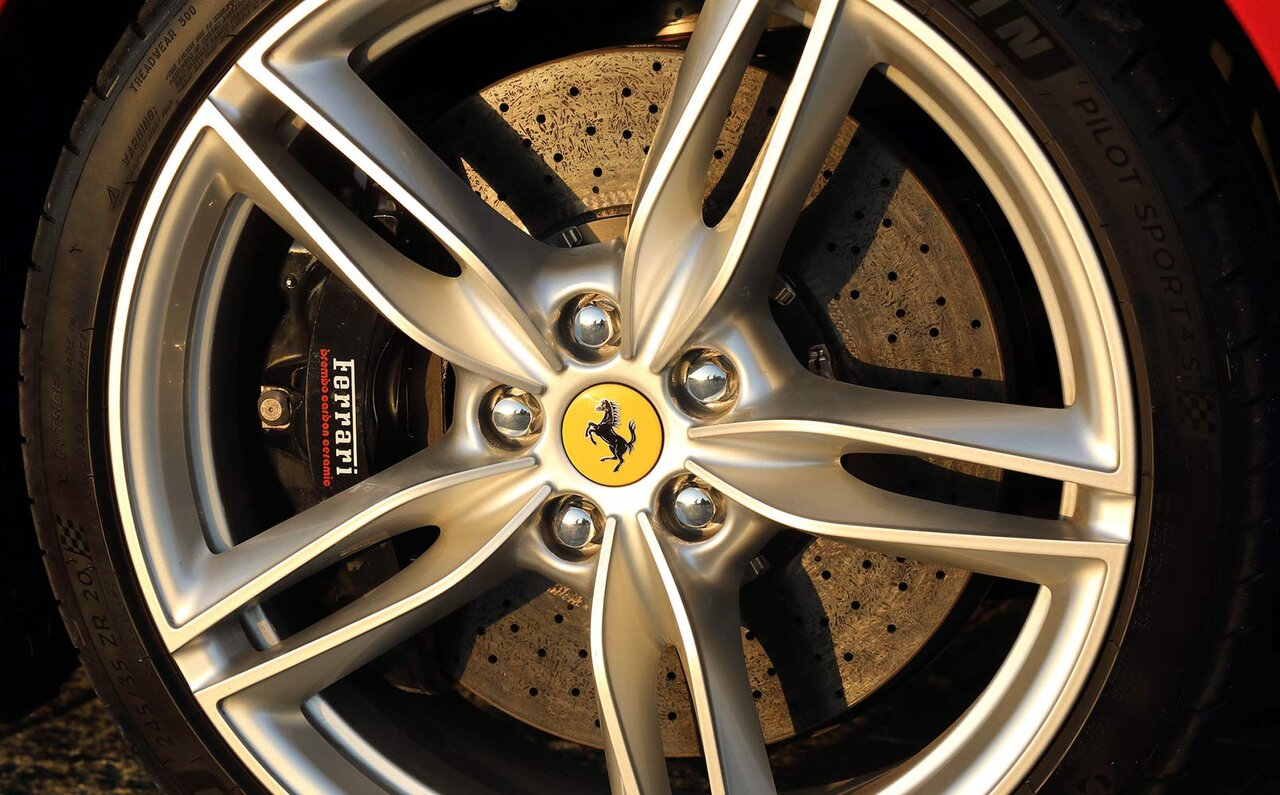
The brakes also respond with extreme sensitivity to the driver's pedal pressure, making them perfectly suitable for town use. Simultaneously, their response during panic braking is precise, delivering the stopping power expected from their specifications: 390mm x 34mm front and 360mm x 32mm rear.
Incidentally, this latest Ferrari automatically reads roadside signs and displays them on the instrument cluster. This can be considered a form of mental braking.
While the JBL audio system may not satisfy users expecting the absolute highest sound quality, it serves more than adequately as background music to the engine and exhaust notes.
The drive, exceeding 230 km, included some sections of the autostrada, but the majority was on winding roads in the heart of Italy's renowned wine regions.
Switch the Manettino to "Sport." The Roma consistently traces corners with precision. Even if you enter too aggressively and regret it, a gentle release of the pedal allows you to exit as if nothing happened. Despite its abundant 620 hp, it never feels overwhelming, at least not on public roads.
In the villages amidst the vineyards, I occasionally stopped the Roma to ponder the medieval travelers. However, in the silence after lunch (dopo pranzo), the Ferrari's exhaust note, even at idle, felt intrusive. In such moments, the start-stop function is a remarkably considerate – dolce – device for the surroundings.
Elderly people out for a stroll complimented it as a "Bella Macchina!" (beautiful car!), so I ended up being the last to return that evening.
Dolce Means "Inner Qualities"
Let's return to the word "dolce" in the Italian dictionary. The example at the end of the entry is as follows:
"Il dolce stile nuovo." Il dolce stile nuovo refers to the "Sweet New Style" poetic and literary movement in 13th-century Italy.
Rooted in medieval Catholic culture, it was characterized by humanism, particularly the insight into the inner world of beautiful women.
Enzo Ferrari, the founder of Ferrari, when asked why he always wore sunglasses, explained, "Because I don't want to reveal my inner self to others."
In both cases, "deep inner qualities" is the keyword.
For this ambitious new Ferrari, optional packages are available including SAE Level 1 adaptive cruise control, automatic emergency braking, lane departure warning, blind-spot detection, and surround-view cameras.
Although I will refrain from evaluating it due to it being in the final stages of development, voice commands that activate with the call "Ciao, Ferrari" are also provided.
Within the classic exterior lies a suite of devices, unimaginable from previous Ferraris, that are modern, sometimes protecting, sometimes delighting the driver and passengers. This combination must be another "dolce" aspect of the Roma.
Of course, Ferrari will continue to offer models that satisfy traditional, sporting-minded "Ferraristi." However, the existence of the Roma clearly challenges them to accept this new era for the brand.
At the same time, it exudes a sophistication, or even intelligence, in choosing this elegant V8 model over a V12. At least, I personally welcome such a challenge.
...I would like to conclude the article beautifully, but I actually had a problem with the Roma.
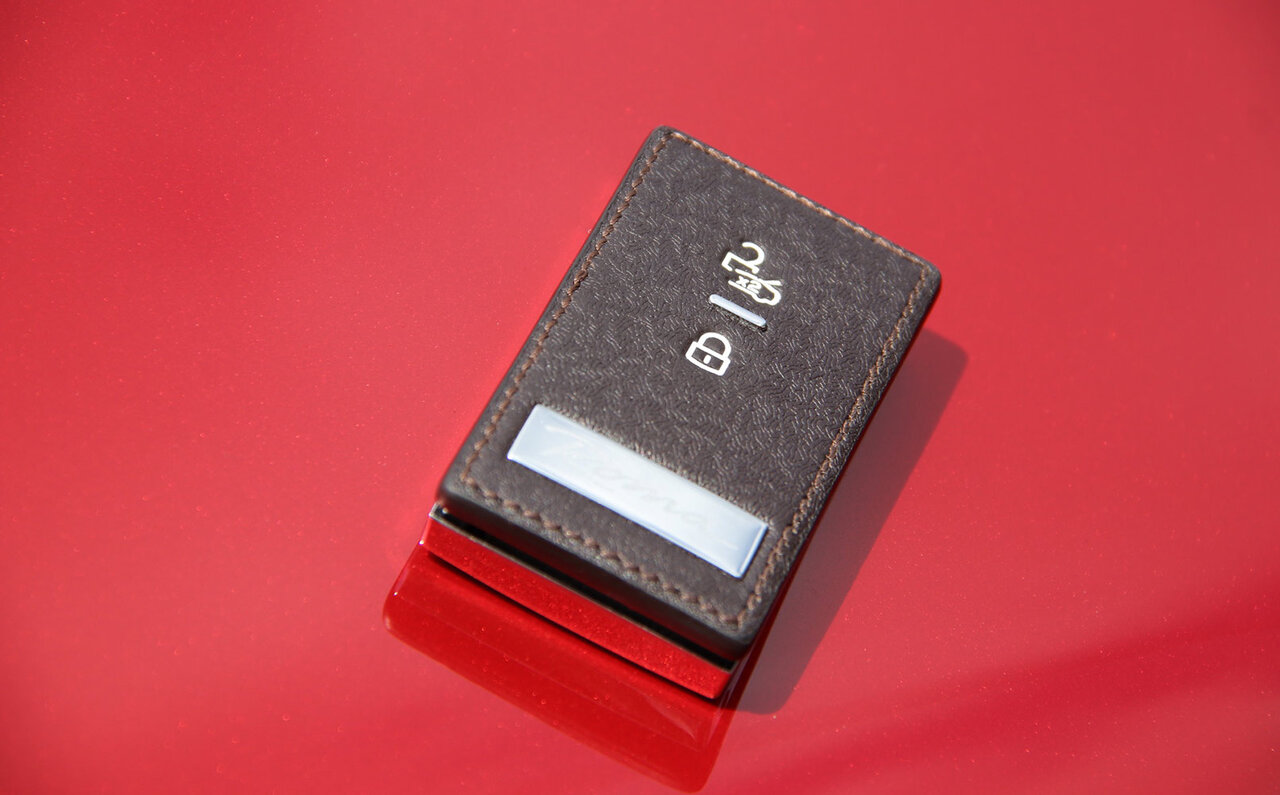
I couldn't find the remote key anywhere.
Thinking back, I got into the car in the morning after the engine had already been started. This was likely a measure to minimize contact with others. Even at the lunch venue, I handed the car over to the waiting staff with the engine running.
If I had locked the key inside, it would have been incredibly embarrassing. Even when I stopped briefly, I left the door or side window open.
Asking is temporary embarrassment. When returning the car, I quietly asked the staff about the remote key's location.
It was discreetly placed in a dedicated space in the center console. What looked like a badge was, in fact, the Roma's key.
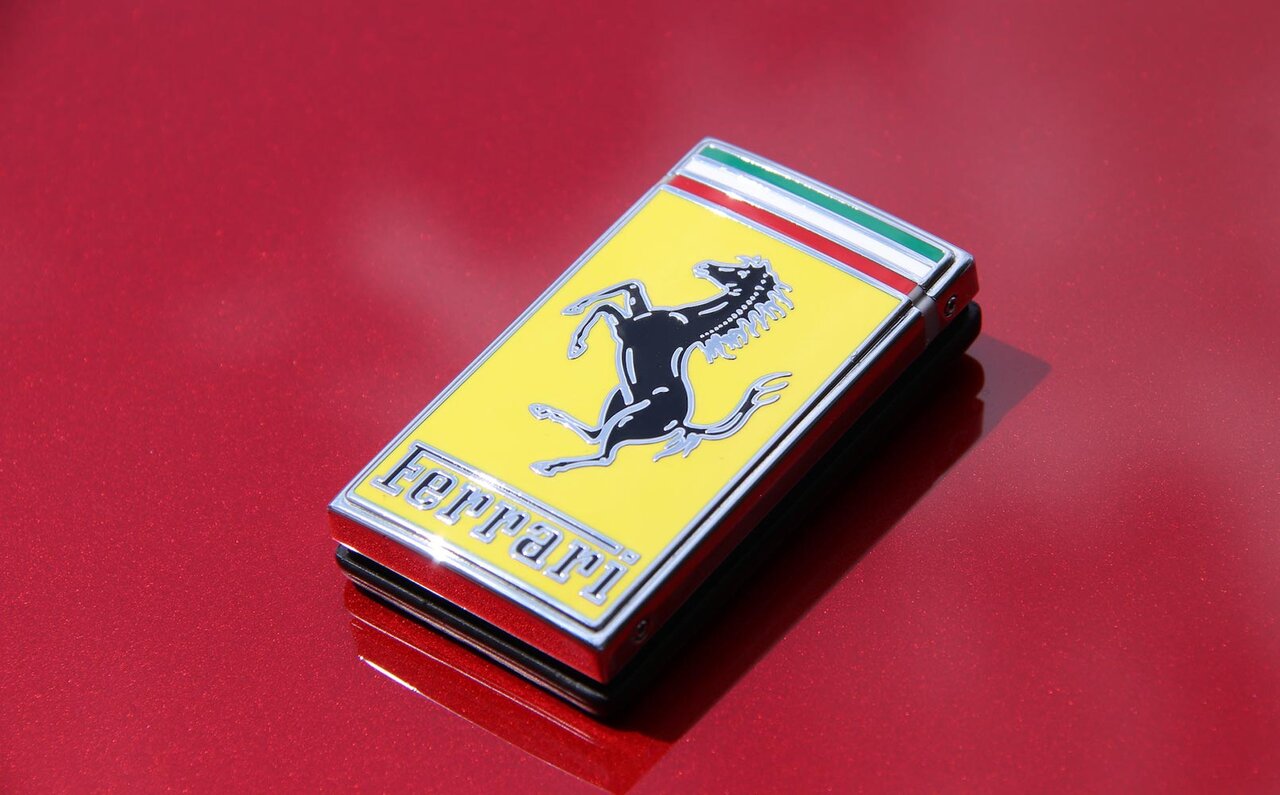
While the Scuderia Ferrari emblems on the front fenders were removed, the Prancing Horse was hidden here! The feeling upon discovering this "playfulness" at the end was akin to taking a spoonful of a rich dessert, comparable to the main course.
Spec
Ferrari Roma
- Engine: 3.9-liter 90° V8 DOHC 32-valve Turbo
- Total displacement: 3855cc
- Maximum output: 620ps (456kW) / 5750-7500rpm
- Maximum torque: 760Nm / 3000-5750rpm
- Length x Width x Height: 4656 x 1974 x 1301mm
- Wheelbase: 2670mm
- Vehicle weight: 1570kg (curb) / 1472kg (dry)
- Drivetrain: FR
- Tires: (Front) 245/35ZR20 / (Rear) 285/35ZR20
- Transmission: 8-speed dual-clutch AT
- Performance: 0-100km/h 3.4 seconds, Top speed 320km/h
- Fuel economy: Pending homologation application
- Price: 26.82 million yen (Japan)
- Odometer reading at start of test drive: 7977km
- Test drive route content: 80% mountain roads, 10% highway, 10% city
- Test drive distance: 232km
- Fuel economy: Pending homologation