May 18, 2021
A Rival to the Yaris Cross & Vezel? — A Test Drive of the Nissan Kicks Equipped with e-POWER and ProPILOT | NISSAN
NISSAN KICKS | Nissan Kicks
A Rival to the Yaris Cross & Vezel? — A Test Drive of the Nissan Kicks Equipped with e-POWER and ProPILOT
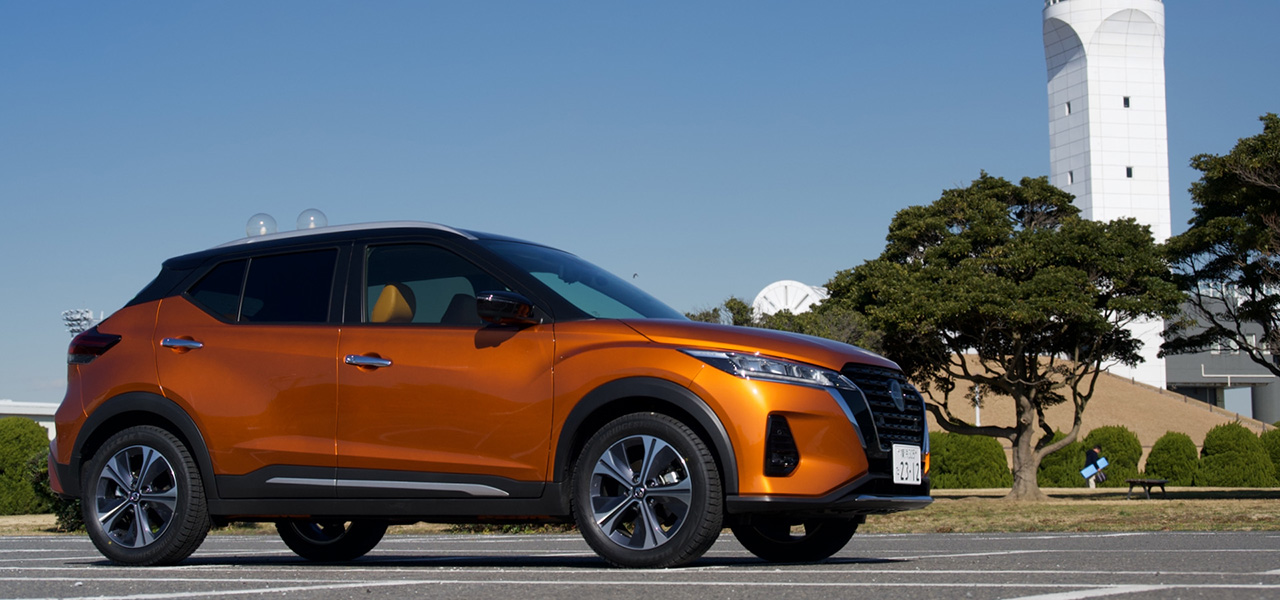
Introduced to Japan in June 2020 as the successor to the Juke, the Nissan Kicks is a compact SUV. It's also a global car that debuted overseas in 2016 and is produced in countries like Brazil, China, and Thailand. With rivals such as the Toyota Yaris Cross and Honda Vezel lining up, we took it for a test drive to explore its appeal.
Text & Photographs by HARA Akira
The Evolved e-POWER and ProPILOT Drive
Until very recently, the Nissan Juke was the go-to compact SUV from Nissan. When it was redesigned, it wasn't introduced to Japan, and the Kicks made its debut as its 'replacement.' However, the Kicks has been in production overseas since 2016, first appearing in Brazil. Production later began in Mexico, China, and Thailand, making it a global model. The version introduced in Japan is actually produced in Thailand.
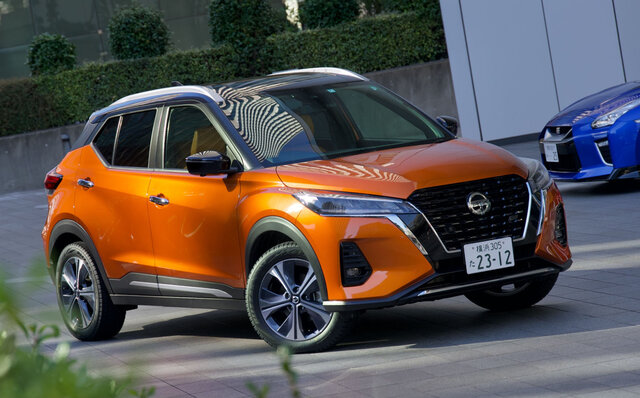
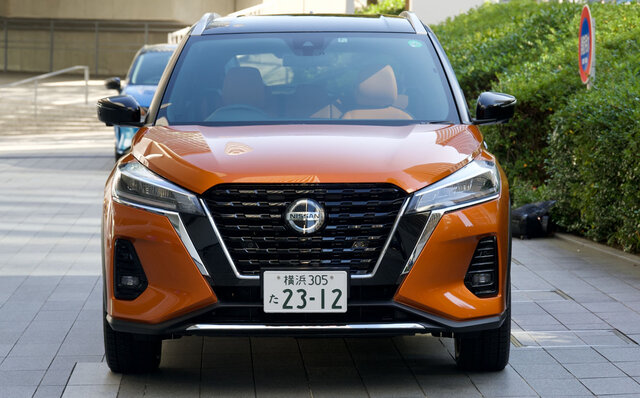
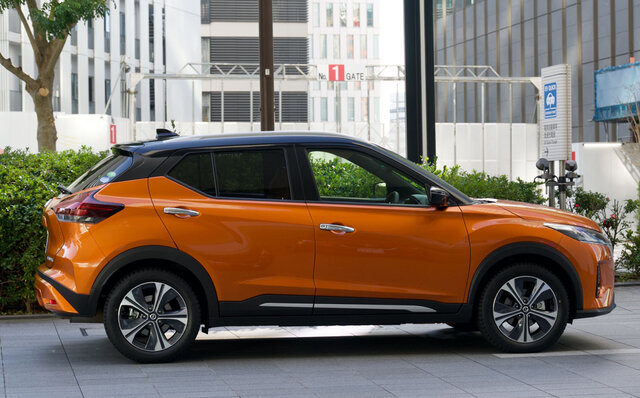
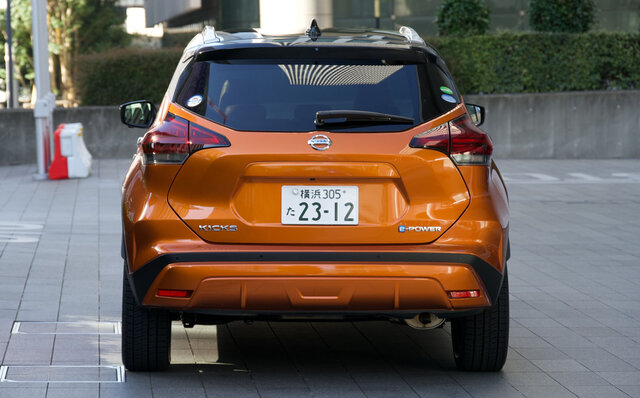
However, the Japanese-market Kicks features a right-hand drive configuration, an upgraded interior, and comes standard with Nissan's acclaimed ProPILOT driver assistance system. Furthermore, equipped with the coveted e-POWER powertrain, it's poised to be a strong contender against the Toyota Yaris Cross and Honda Vezel. We drove it on city streets and highways in Yokohama to assess its performance.
The model we tested was the premium "X Two-Tone Interior Edition" (¥2,869,900), featuring a striking two-tone interior of orange and black. The body color, a two-tone of premium horizon orange and a black roof, also contributed to a very bright impression.
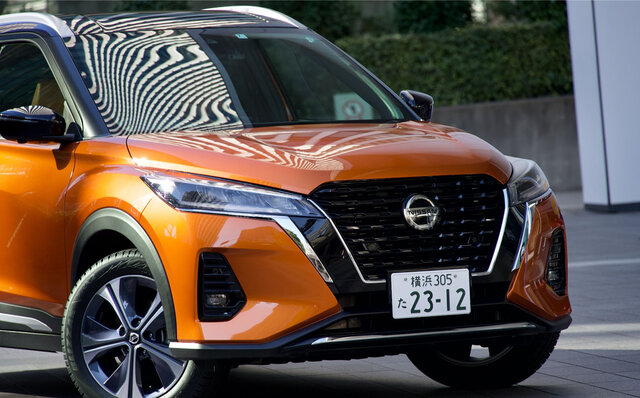
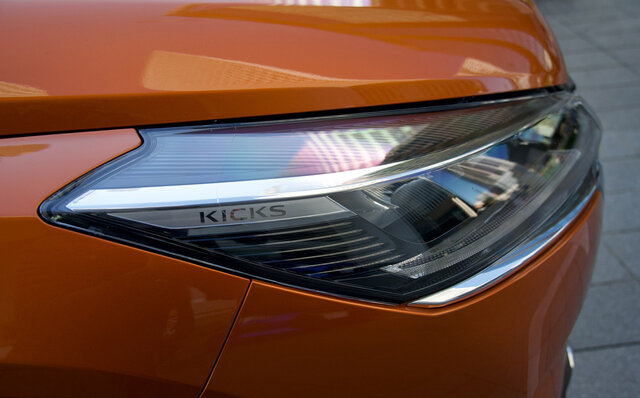

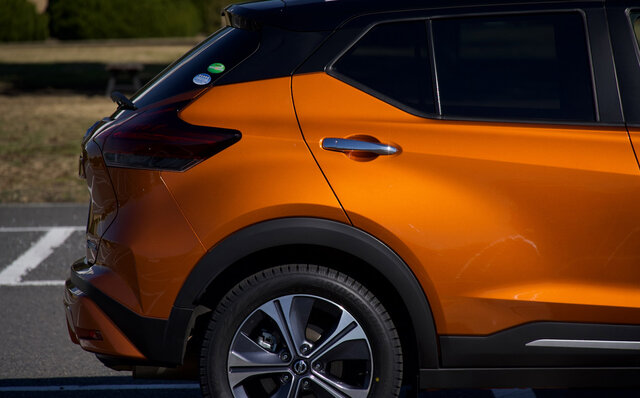
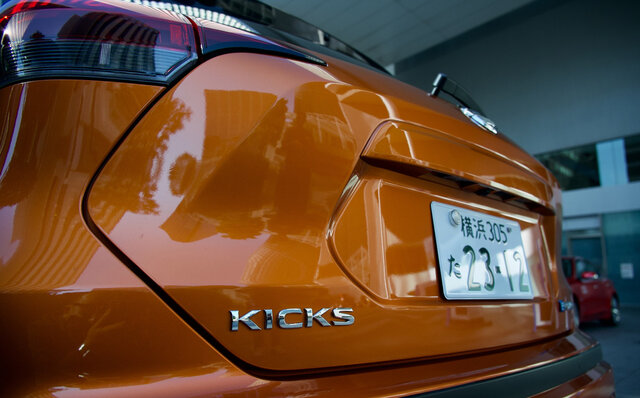
The body, built on Nissan's "V platform" for compact cars, measures 4,290mm in length, 1,760mm in width, and 1,690mm in height. Its size falls between the B and C segments, aligning with the global trend for compact SUVs and offering a highly practical body size.
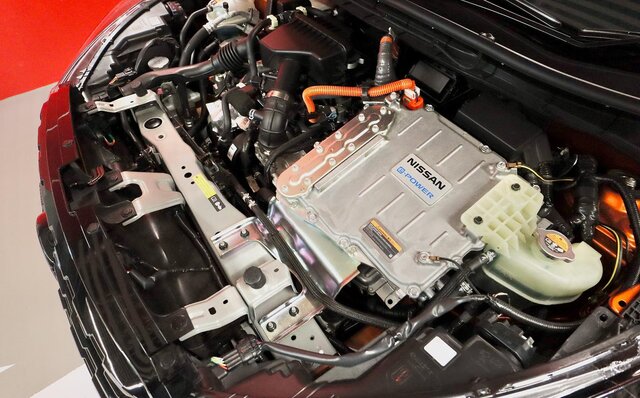
The series-hybrid electric powertrain, e-POWER, uses a 1.2-liter three-cylinder engine solely for power generation, producing 82ps (60kW) at 6,000rpm and 103Nm of torque between 3,600-5,200rpm. This powers a 1.5kWh compact lithium-ion battery and a drive motor that delivers 129ps (95kW) at 4,000-8,992rpm and 260Nm of torque between 500-3,008rpm to drive the front wheels.
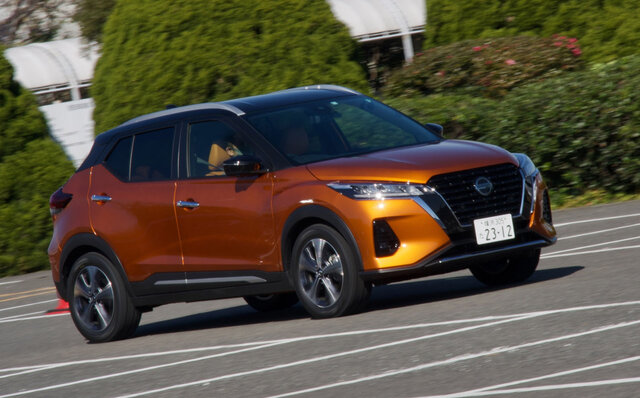
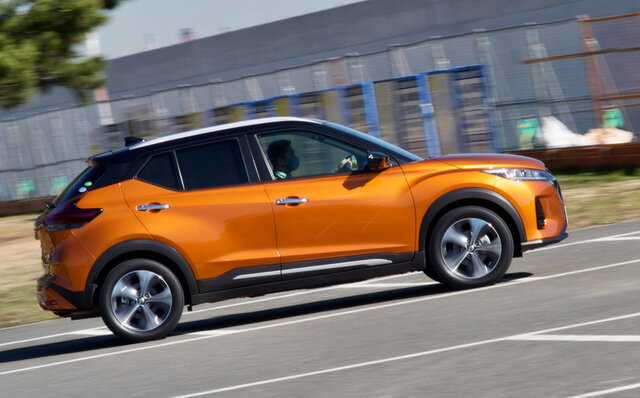
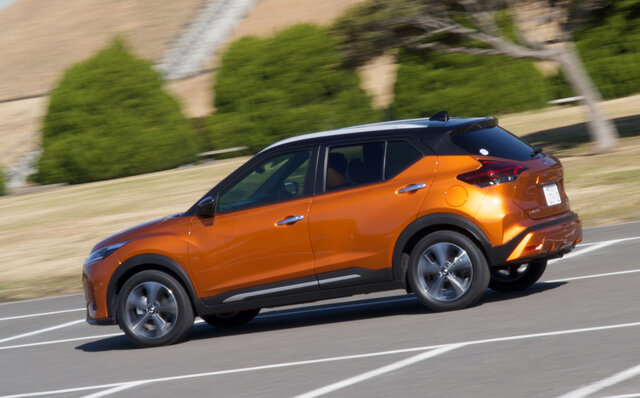
This means the motor is used for most of the driving, providing smooth acceleration from low speeds thanks to its ample torque, and of course, a quiet ride. Early versions of the e-POWER system, like in the first-generation Note, were sometimes criticized for the engine starting up for charging regardless of driving conditions, leading to noticeable noise. However, the Kicks employs an improved system that monitors wheel speed to initiate engine charging only when the driving noise is higher.
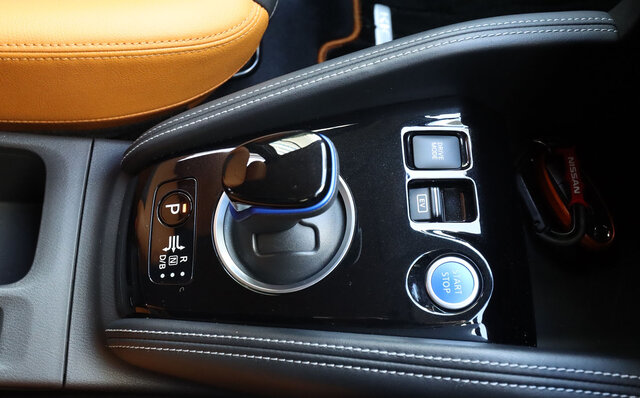
Selecting S (Sport) or ECO mode via the drive mode button near the shift lever enables one-pedal driving. In earlier iterations of one-pedal driving, releasing the accelerator pedal resulted in significant deceleration, making precise speed control challenging. However, the Kicks has refined this, allowing for smoother deceleration. Once accustomed to it, you can bring the car to a precise stop at the line. I later learned that the latest Note model has reverted to requiring the brake pedal for stopping.

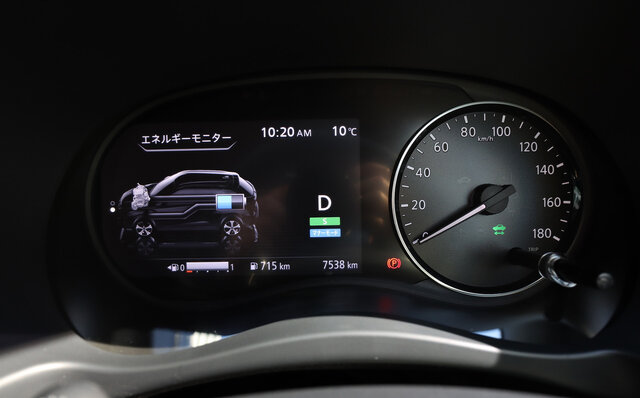
The Kicks is equipped with the standard ProPILOT system, not the ProPILOT 2.0 that allows for hands-free driving. When using the follow-the-leader function activated by buttons on the right spoke of the steering wheel, the meter display is large and clearly shows its operational status. The jerky, nose-diving movements found in earlier versions are gone, making it very user-friendly.
The suspension feels slightly firm. This setting is likely necessary for a tall, compact SUV to minimize body roll. While it offers a smooth ride on good roads, it can feel a bit jarring over rough surfaces or bumps. The tires are 205/55R17, and the test car was fitted with Bridgestone VRX-2 studless tires. Fuel economy is rated at 21.6 km/L under WLTC mode. During our test drive, the average fuel consumption displayed on the meter was typically between 16.0 and 18.0 km/L.