Test Drive: The Evolved Range Rover | Range Rover
Land Rover Range Rover
Testing the "Rolls-Royce of the Desert" in Morocco
Test Drive of the Evolved Range Rover
Having undergone a full model change,Paris Motor Showthe fourth-generation "Range Rover," which also appeared at the Paris Motor Show 2012, achieved a remarkable weight reduction of up to 420kg thanks to its all-aluminum body.NewsWhile this news was reported,Its Exterior Designits exterior design faithfully inherited the brand's DNA, exuding a calm presence befitting a king reigning supreme in the SUV world. For its first test drive, the chosen location was none other than the African continent! A report by Yasuhisa Shimashita.
Text by SHIMASHITA Yasuhisa
Evolution, Not Revolution
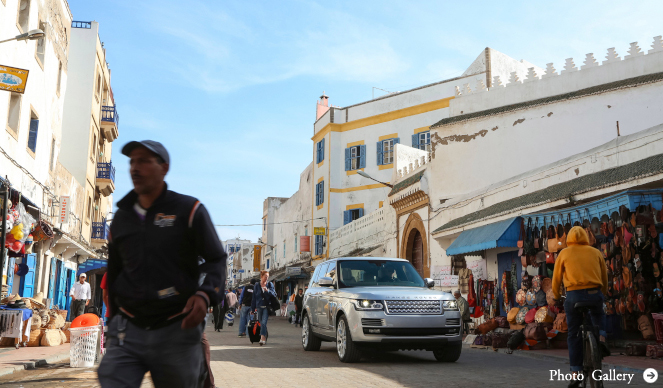
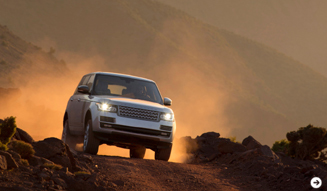
The international test drive event for the new Range Rover was held in Morocco, North Africa. While the Range Rover is known as the "Rolls-Royce of the desert," today, as the pinnacle of premium SUVs, the image of sand and mud is not its primary association. Nevertheless, the deliberate choice of this location may have been intended to emphasize that its core essence remains unchanged.
In any case, seeing the new Range Rover for the first time under the sunlight, rather than under show lights, revealed new details and a refined form: the front and rear lights became more decorative, the windshield angle was reclined, the wheelbase was extended, and the rear end was neatly tapered.
Yet, it remains undeniably a Range Rover to everyone's eyes. The theme of this model change, "Evolution, Not Revolution," is clearly reflected in its appearance.
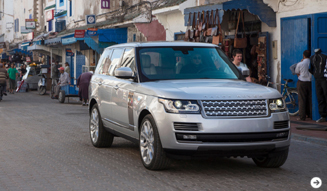
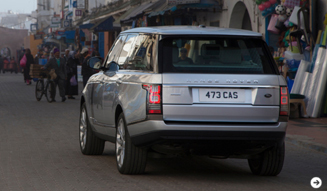
When I Saw It at the ShowI initially felt it might have been a bit too understated. However, seeing it in motion this time, I realized its dynamism and agility had significantly increased.
As this is a model change for a classic vehicle, its true evaluation may only be possible years from now. However, for the moment, I believe it's fair to say that excellent work has been done.
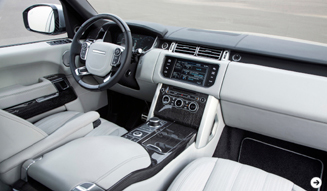
The interior layout also follows the familiar Range Rover style.
However, the number of switches has been significantly reduced, creating a very clean look. The quality of materials and craftsmanship has been further refined, offering an exceptional sense of comfort.
The rear seats, in particular, benefit from the extended wheelbase, with legroom increased by 120mm and kneeroom by 50mm, further enhancing comfort.
Land Rover Range Rover
Testing the "Rolls-Royce of the Desert" in Morocco
Test Drive of the Evolved Range Rover (Part 2)
Looking Towards Premium Cars Worldwide
In contrast to its exterior and interior, the new Range Rover boasts a bold evolution in its core engineering.
Most striking is the reduction in vehicle weight by up to an astonishing 420kg. Its body is the world's first all-aluminum construction for an SUV, making it about 40% lighter than steel, a saving of over 180kg alone. Additionally, lightweight materials used in various components shave off another 120kg.
In the case of the TDV6 diesel engine, the engine itself is over 100kg lighter than the previous TDV8, and even the gasoline engine models are well over 300kg lighter.
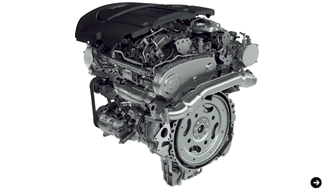
3.0-liter TDV6 Diesel Engine
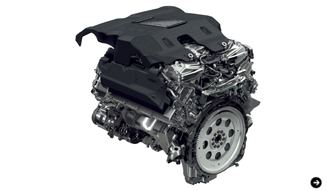
5.0-liter V8 Supercharged Gasoline Engine
The powertrain options include two gasoline engines: a 5-liter V8 direct-injection supercharged engine producing a maximum output of 510ps, and a 5-liter direct-injection naturally aspirated engine with 375ps.
Two diesel engine options are also available, with a diesel hybrid variant announced for later release. The models tested were the two gasoline engine variants.
Upon driving, I was impressed by the high level of quietness.
Engine noise, road noise, wind noise – all types of sound have been suppressed more than ever before, enveloping the cabin in a pleasant silence.
According to data, road noise is quieter than in the Mercedes-Benz S-Class and the Lexus LS,LSand wind noise is suppressed by 30% compared to, for example, the Porsche Cayenne, even surpassing the Audi A8.Cayenneand wind noise is suppressed by 30% compared to, for example, the Porsche Cayenne, even surpassing the Audi A8.A8even surpassing the Audi A8.
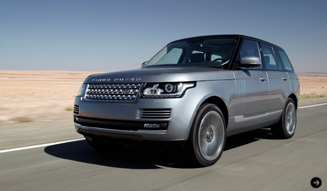
Not just in terms of quietness, the new Range Rover has been developed with the world's premium cars as its competitors, not just other SUVs.
Land Rover Range Rover
Testing the "Rolls-Royce of the Desert" in Morocco
Test Drive of the Evolved Range Rover (Part 3)
Lightweight Agility
The ride comfort remains outstanding. The suspension, with its ample travel, gracefully absorbs road imperfections, providing a ride as comfortable as being on clouds, even on Morocco's less-than-perfect roads. Despite conditions that might typically be unfavorable for ride comfort, such as the reduced weight and all-aluminum body, it shows no signs of compromise.
On the other hand, the car's agility is clearly reflected in its handling. When turning the steering wheel, which has been electrified and offers lighter feedback, the car corners smoothly without any noticeable body roll.
While the current Range Rover is by no means poor in these aspects, the reduction in weight and significantly lower center of gravity make a remarkable difference. Its sheer nimbleness makes even winding roads engaging, truly showcasing its versatility.
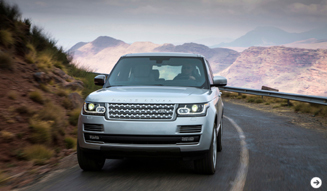
The performance is also more than adequate. Especially with the supercharged model, while the engine itself is powerful, the sense of lightness contributes even more to the exhilarating acceleration.
Of course, flooring the accelerator delivers breathtaking acceleration, but more noticeable in everyday driving is the pleasant, light sensation, distinct from the feeling of a large, heavy object pushing forward. Thanks to the 8-speed automatic transmission, the engine RPM is kept low during cruising, yet the ample torque provides a comfortable experience even at lower speeds.
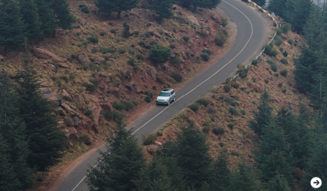
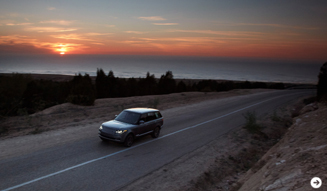
Consequently, even the naturally aspirated version offers satisfactory performance. The benefits of weight reduction are significant, providing ample power and a refreshing engine note. If I were to choose one for driving in Japan, I would likely opt for this one.
Land Rover Range Rover
Testing the "Rolls-Royce of the Desert" in Morocco
Test Drive of the Evolved Range Rover (Part 4)
Heading Off-Road
Having traveled all the way to Morocco, it's essential to touch upon its off-road capabilities. This trip allowed for driving on diverse terrains, including mountain dirt tracks, desert dunes, rocky paths, general roads, and highways.
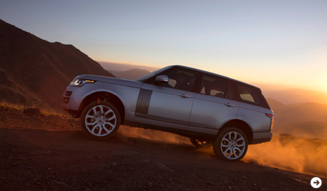
The new Range Rover boasts an extended wheel travel of 597mm, surpassing its rivals, and its ground clearance has also been increased. Furthermore, the "Terrain Response" system now includes an Auto mode that automatically adjusts the 4WD system, engine, and traction control settings based on the conditions.
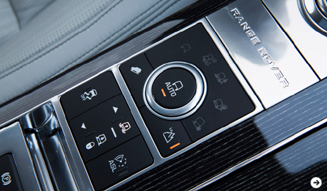
Terrain Response Controls Electronic Devices According to Conditions
The sense of security felt on paved roads naturally extends to off-road driving. When navigating roads with few guardrails, even a slight body roll can be unnerving. The absence of such instability allows for a more relaxed experience, which is a significant advantage.
There are, of course, no complaints about its off-road prowess. As an amateur off-roader, I was able to comfortably enjoy driving through sand that could easily reach my knees, and navigate rocky terrain where the suspension extended and compressed to its limits and the vehicle tilted almost sideways, without any contact with the body. This demonstrates its exceptional capability.
Observing the display that shows the status of various control systems during driving, it's clear that the vehicle is meticulously managing the center and rear differentials, locking and unlocking them as needed. By enhancing fundamental performance and integrating advanced electronic controls, it achieves a versatile driving experience, both on and off-road.
The True Value of the Range Rover
Throughout this test drive, I was consistently impressed and awestruck. The brand's unwavering concept and rigorous development approach, which incorporates innovative technologies like the new body structure without resorting to ostentatious changes, but rather focusing on delivering tangible, significant evolution befitting a Range Rover, commands deep respect. The confident expressions of the development team, who proudly stated they had "further evolved the best," were entirely convincing.
Particularly regarding its off-road performance, only a handful of owners, perhaps even fewer, would actually require such extreme capability.
However, the true value of the Range Rover lies in its ability to make such formidable performance accessible for everyday use in utmost comfort. This level of luxury is something that mere ostentatious luxury cars cannot provide. The deliberate choice of Morocco as the test drive location was undoubtedly intended to make us re-appreciate this very point.
The new Range Rover is scheduled to arrive in Japan early in 2013. I look forward to experiencing its performance, which has reached unparalleled heights, in a familiar setting.

Land Rover Range Rover
Body Dimensions | Length 4,999 x Width 1,983 x Height 1,835 mm
Wheelbase | 2,922 mm
Tread Front/Rear | 1,690 / 1,683 mm
Approach Angle | 26.0 degrees (Standard Mode) / 34.7 degrees (Off-Road Mode)
Departure Angle | 24.6 degrees (Standard Mode) / 29.6 degrees (Off-Road Mode)
Ramp Breakover Angle | 20.1 degrees (Standard Mode) / 28.3 degrees (Off-Road Mode)
Wading Depth | 900 mm
Minimum Turning Radius | 6.16 meters
Trunk Capacity | 909-2,030 liters + 550 liters under floor cover
Weight | 2,330 kg
Engine | 4,999cc V8 DOHC Supercharged with Variable Valve Timing
Maximum Output | 375kW (510ps) / 6,000-6,500 rpm
Maximum Torque | 625Nm / 2,500-5,500 rpm
Transmission | 8-speed automatic
Drivetrain | 4WD
Front Suspension | Multi-link air suspension
Rear Suspension | Multi-link air suspension
0-100km/h Acceleration | 5.4 seconds
Fuel Consumption (NEDC Value) | 13.8 ℓ/100km
*Figures for the 5.0-liter V8 Supercharged model