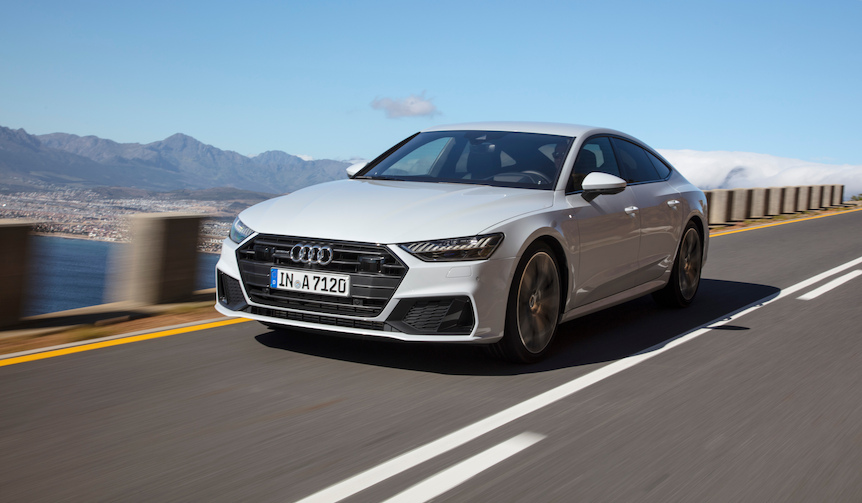
Test Drive: The New Audi A7 Sportback
Audi A7 Sportback | Audi A7 Sportback
Test Drive: The New Audi A7 Sportback
The Audi "A7 Sportback" has undergone a full model change for the first time in six years.A7 SportbackThe press event for this model was held in February of this year for journalists. In an era of increasing personalization, what does it mean for a car to be personalized? Fumio Ogawa tested the model, which has acquired features that seem to embody this concept, in Cape Town, South Africa.
Text by OGAWA Fumio
Inner Evolution is Key
The "Audi A7 Sportback" has been fully redesigned.Unveiled in Fall 2017and a press test drive event for journalists was held in Cape Town, South Africa in February 2018.
The new A7 Sportback inherits the fastback style from the previous model. The body size is also virtually unchanged. However, the content has significantly "evolved," which is its characteristic.
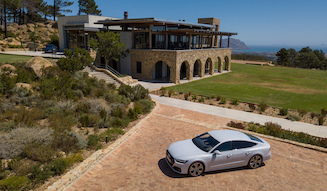
One is the powertrain, and the other is the digital equipment, including driver assistance systems. In a nutshell, the new model is a personal car for a new era, and it promises to be a reliable "partner," especially for those who use their car daily.
First, regarding the driving performance, pay attention to the chassis. An optional rear-wheel steering system called "Dynamic All-Wheel Steering" has been adopted.
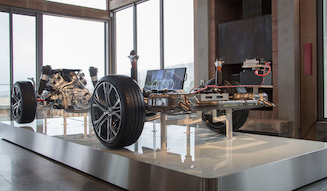
The rear wheels are steered by an electric motor in response to the front wheel's steering angle. At low speeds, the rear wheels steer in the opposite direction for a tighter turning radius, and at speeds above 60 km/h, they steer in the same direction, extending the virtual wheelbase to enhance stability.
The adoption of this system allows the use of a 48-volt high-output motor, increasing the speed range at which the engine can be stopped and restarted during low-load driving, such as high-speed cruising, which in turn contributes to fuel efficiency. Audi has also added a high-voltage battery. Charging is done by the engine and through regenerative energy during braking. This is referred to as a "mild hybrid."
The engine also has noteworthy features. The supercharger has been replaced with a twin-scroll turbocharger. It is designed to respond across a wide range of engine speeds, and the 2,995cc V6 produces a maximum output of 250 kW (340 ps) and a maximum torque of 500 Nm.
Audi A7 Sportback | Audi A7 Sportback
Test Drive: The New Audi A7 Sportback (2)
Driving That Smoothly Interprets the Driver's Intentions
Cape Town is a mountainous region, famously represented by Table Mountain, a world-renowned tourist attraction. Facing the bay, it has many cliffs with winding roads built upon them.
When traffic is light, these roads can be quite exhilarating, but they are often congested. This is likely due to population growth. The area is currently facing a severe water shortage, which is attributed to a double punch of population growth and (low rainfall).
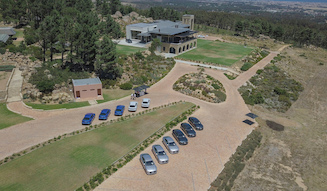
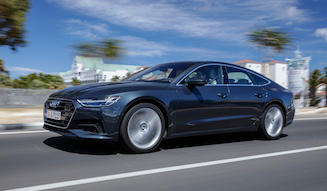
However, once you enter the inland areas with wineries, there are roads where you can experience exhilarating driving. The A7 Sportback's V6 engine begins to deliver strong power from around 1,500 rpm and revs smoothly up to the redline of around 6,500 rpm.
The feel of this engine is excellent. This is likely due to the turbocharger with electronically controlled boost. There is no perceptible turbo lag, and the smoothness is impressive. The operation of this electronically controlled turbo is also said to be a benefit of the 48-volt battery.
The all-wheel-drive quattro system is of the type Audi calls "quattro with ultra technology." It is an efficiency-focused system that primarily uses front-wheel drive and predictively distributes torque to the rear wheels based on road conditions and driving style.
The 7-speed dual-clutch S tronic transmission also pairs well. In normal drive mode, the transmission is set to shift up quickly to select higher gears and conserve fuel, but a light press of the accelerator pedal downshifts to provide power. The response is quick.
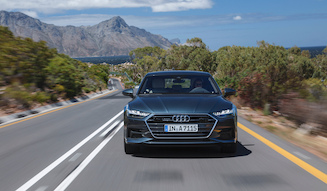
The steering setup was also pleasing. It reacts well from the neutral position, and the car's movement when turning is slightly gradual and predictable, making cornering exhilarating.
The test car was equipped with adaptive suspension, so selecting "Dynamic" in the drive select lowered the vehicle by about 20 mm.
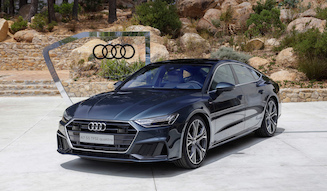
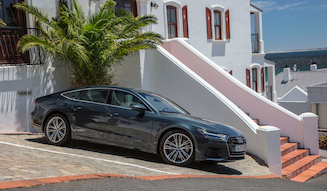
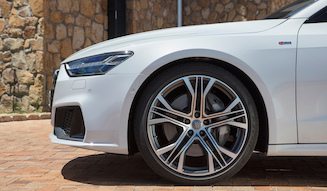
While this might be good for those who enjoy sporty driving, I preferred the "Auto" setting, which maintains the normal ride height, or "Comfort." The tire size of 21 inches was also a bit too stiff; 20 inches felt more agreeable.
Could the aforementioned rear-wheel steering system contribute to the car's agile cornering? Judging from experiences with other cars in slalom courses, the answer is likely yes.
With a reduction in turning radius of up to 1.1 meters, the steering feel completely belies the generous wheelbase of 2,926 mm.
Audi A7 Sportback | Audi A7 Sportback
Test Drive: The New Audi A7 Sportback (3)
Design Focused on the Individuality of People and Cars
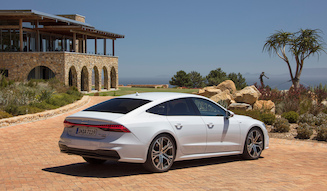
As mentioned earlier, the body is a four-door with a gently sloping tailgate that can be considered an epoch in automotive design history.
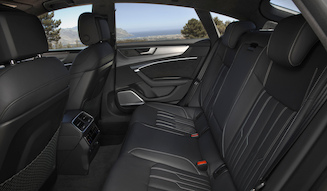
The window graphics subtly diminish the presence of the rear seats, giving a strong impression that the car is centered around the front occupants.
The surface treatment features more pronounced contrasts and highlights than the previous model, with a strong emphasis on the presence of the front and rear wheels. The newly designed lights are also a notable design element.
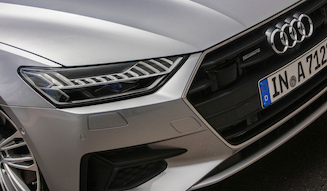
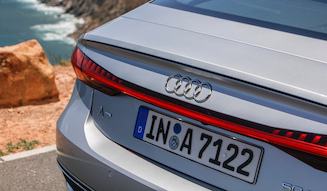
The headlamps (optional) are Matrix LED units, with 25 LEDs on each side creating a distinctive look. The rear combination lamps are also unique. They feature LEDs spanning the full width of the car, with flowing light patterns that give the impression of the car actively communicating.
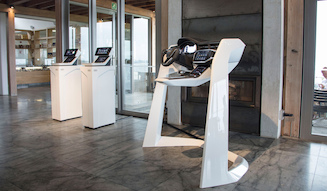
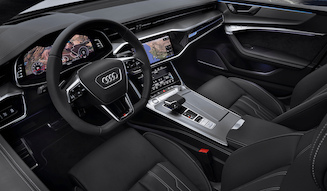
Another characteristic is the interior. The dashboard, with its solid feel reminiscent of a smartphone, is striking. In addition to the virtual cockpit for the instruments, there are two central monitor screens. Most operations are performed here, including climate control, navigation, infotainment, and communication. Icons can be swiped between the two vertically stacked monitors. The screen layout can be customized to your preferences.
It can store user data for six people and even manage navigation history according to the driver. While it's hard to imagine specific scenarios where this feature would be appreciated, it signifies a significant advancement in personalization.
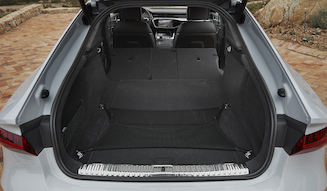
The car is also equipped with a laser scanner, long-range radar, mid-range radar, front camera, 360-degree camera, and ultrasonic sensors. The latest systems will be implemented in stages, and a total of 39 driver assistance features are planned, including those currently available.
For those who use their car daily for commuting, the comprehensive infotainment system, which could be described as a "smartphone on wheels," will be highly beneficial. The new A7 Sportback succinctly embodies the future of automobiles.
The 3-liter gasoline engine A7 Sportback tested is officially called the "A7 Sportback 55 TFSI." Previously, the displacement was included in the name, such as 3.0 TFSI, but Audi has been changing its sub-names since the new "A8."
The reason is that "as downsizing has progressed, displacement is no longer an indicator of performance," explained an Audi engineer.
Incidentally, the 210 kW 3-liter diesel model is named the "A7 Sportback 50 TDI." Mercedes (including AMG) and BMW have already adopted new sub-naming systems.
Despite its 3-liter displacement, the A7 Sportback 55 TFSI, with power comparable to a former 4-liter engine, certainly exudes a new presence. It is scheduled for introduction to Japan in the first half of 2018.