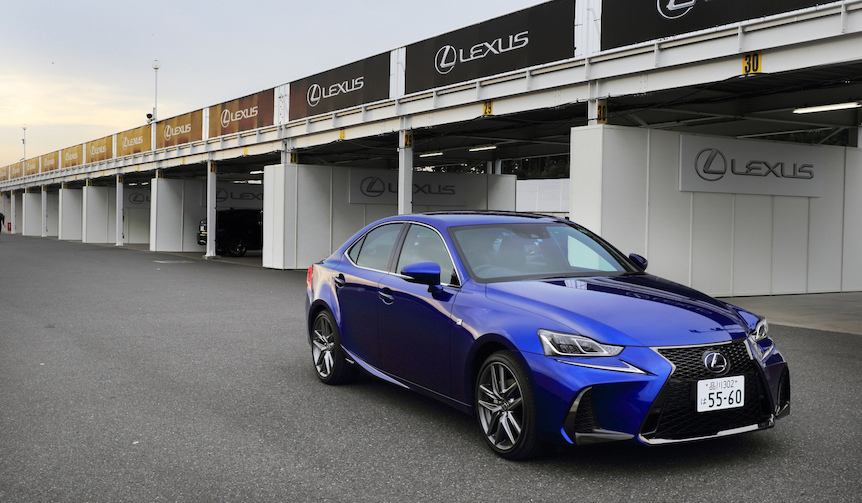
Test Drive of the Minorly Updated Lexus IS
LEXUS IS | The Lexus IS
Test Drive of the Minorly Updated Lexus IS
Chassis and Design See Major Evolution
The "IS," Lexus's signature FR sport saloon. We test drove the latest model, which received a minor update in October 2016, on both the circuit and public roads.
Text by OGAWA FumioPhotographs by ARAKAWA Masayuki
A More Aggressive Styling
The "IS," touted as Lexus's signature FR sport sedan, has undergone a minor change. The "new" IS, announced on October 20, 2016, is characterized by "further refinement of driving pleasure," "evolution of design," and "enhancement of safety support," in Lexus's own words.
The IS lineup remains unchanged, comprising three models: "IS350," "IS300h," and "IS200t." This minor update applies to all models.
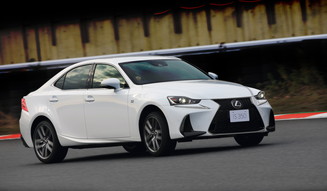
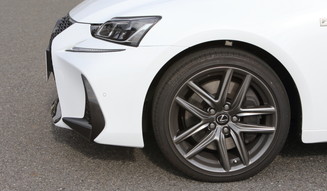
Perhaps to emphasize "driving pleasure" stylistically, the impression is one of increased aggressiveness. The spindle grille's outline has been refined, with the lower portion widened.
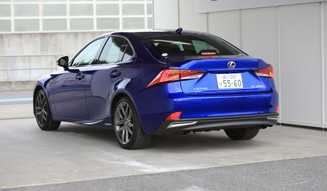
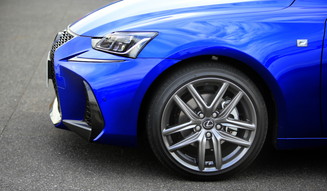
The design change is explained as aiming to "create a low-slung, sporty impression" (Lexus press release). This is combined with large air intakes on both sides. Indeed, it conveys a strong sense of purpose, and seeing it in the rearview mirror on the highway might cause a bit of alarm.
Overall, the lines are streamlined, including the side and rear views, creating an elegant feel. It's a compelling design, well-balanced with a powerful presence reminiscent of a BMW 5 Series.
I recall Lexus once emphasizing the importance of balancing two distinct values. This brings that to mind with the IS.
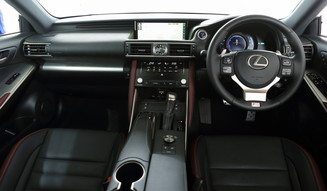
One of the key aspects of this update is the enhancement of driving performance through chassis modifications. In Lexus's words, the goal is to "achieve a higher level of balance between handling stability and ride comfort."
One change is the adoption of improved dampers. These provide ample damping force even at low suspension speeds, contributing to a comfortable ride. Furthermore, the lower arms of the front double-wishbone suspension have been changed to aluminum to increase rigidity and reduce weight.
The effects seem to be evident.
LEXUS IS | The Lexus IS
Test Drive of the Minorly Updated Lexus IS
Chassis and Design See Major Evolution (2)
The Engine is the Biggest Draw – IS350
Lexus's new IS aims to improve both comfort and handling stability through chassis enhancements. Additionally, the characteristics of the bushings, the electric power steering system, and the navigation-coordinated damper control system have reportedly been revised.
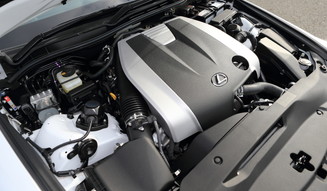
The results are immediately apparent in the drive. We tested two models: the IS350 and the IS300h. The former is equipped with a 3456cc V6 engine producing 234kW (348ps) of maximum power and 380Nm of maximum torque, driving the rear wheels through an 8-speed automatic transmission.
With maximum torque at 4800rpm and maximum power at 6400rpm, the IS350's V6 unit is a joy to rev. Its pleasingly smooth rotation, a characteristic of naturally aspirated engines which are becoming rare, can be fully enjoyed.
The engine, which feels like it generates more power the harder you press the pedal, is the IS350's greatest appeal. Furthermore, the benefits of the suspension improvements become apparent shortly after setting off.
The car's response when turning the steering wheel is sharp. It differs slightly from the direct feel of a sports car; the correlation between the speed of steering wheel input and the car's movement feels exquisitely and delicately calibrated.
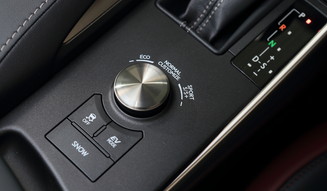
The "Eco," "Normal," and "Sport" drive modes are also a great asset when you want to enjoy spirited driving. The Sport mode, utilizing the higher rev range, allows you to fully experience the IS350's potent engine.
From this model year, the sporty "F Sport" grade also includes a "Custom" mode. This allows for arbitrary combinations of shift-up timing, damping, and even climate control settings (though the fuel-efficiency priority setting might not be relevant to driving).
The impression of the IS300h is also generally positive.
LEXUS IS | The Lexus IS
Test Drive of the Minorly Updated Lexus IS
Chassis and Design See Major Evolution (3)
It Has Two Personalities – IS300h
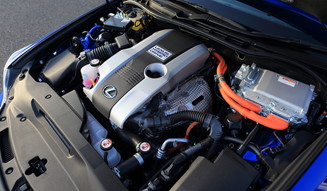
The IS300h features a hybrid system combining a 2493cc 4-cylinder engine with an electric motor. It shares the "premium feel" of the IS350, thanks to its solid chassis and highly rigid body.
The engine produces 131kW (178ps) of maximum power and 221Nm of maximum torque, paired with a 300Nm electric motor. While its official fuel economy of 23.2 km/ℓ (JC08 mode) is noteworthy, its driving performance is equally impressive.
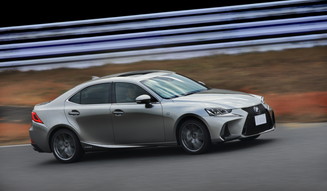
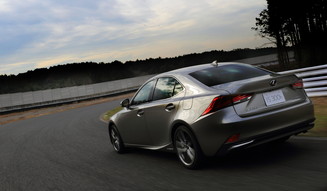
The car starts off on electric power, and the engine kicks in when a slight load is applied. While the engine starts relatively early, this might be unavoidable if the goal is a quick hybrid.
As readers familiar with Lexus hybrid systems know, the transition is exceptionally smooth. In fact, it's difficult to perceive the engine starting. However, you might notice it through the surge of acceleration when you press the accelerator pedal.
Its quietness and the supple ride, as intended by the development team for city driving, make it a highly rated sedan with ample rear-seat space.
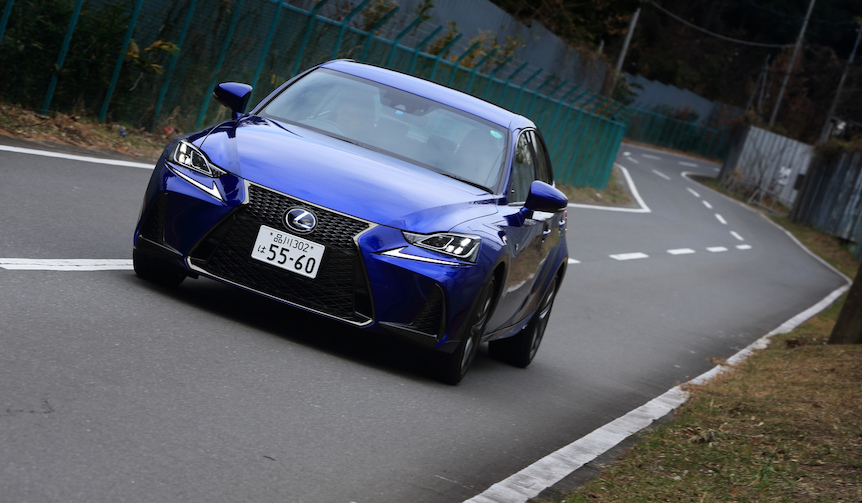
But that's not all; the satisfying response when turning the steering wheel is also notable. Its true potential was clearly demonstrated during the circuit test drive. The ability to maintain grip from all four tires and navigate corners at considerable speed reveals a character distinct from the IS300h's typical "face" as an elegant, fuel-efficient sedan.
It also comes equipped with advanced safety features. These include "Pre-Collision Safety" with pedestrian detection, "Lane Departure Alert" with steering assist, "Automatic High Beams" to aid in early detection of pedestrians at night, and "Radar Cruise Control" with brake control. These are packaged as the "Lexus Safety System+" and are standard equipment.

Lexus IS350
Body Dimensions | Length 4,680 × Width 1,810 × Height 1,430 mm
Wheelbase | 2,800 mm
Tread Front/Rear | 1,535 / 1,550 mm (F SPORT: 1,535 / 1,540 mm)
Weight | 1,640 kg (F SPORT: 1,650 kg)
Engine | 3,456 cc V6
Bore x Stroke | 94.0 × 83.0 mm
Compression Ratio | 11.8 : 1
Max. Power | 234 kW (318 ps) / 6,400 rpm
Max. Torque | 380 Nm (38.7 kgm) / 4,800 rpm
Transmission | 8-speed AT (8-Speed SPDS)
Drivetrain | FR
Front Suspension | Double Wishbone
Rear Suspension | Multi-link
Front Brakes | Ventilated Discs
Rear Brakes | Ventilated Discs
Tires Front/Rear | 225/45R17 (F SPORT: 225/40R18 / 255/35R18)
Fuel Economy (JC08 mode) | 10.0 km/ℓ
Price | (F SPORT) ¥6,303,000
Lexus IS300h
Body Dimensions | Length 4,680 × Width 1,810 × Height 1,430 mm
Wheelbase | 2,800 mm
Tread Front/Rear | 1,535 / 1,550 mm (F SPORT: 1,535 / 1,540 mm)
Weight | (FR) 1,680 kg (AWD) 1,770 kg
Engine | 2,493 cc Inline 4-cylinder DOHC
Engine Bore x Stroke | 90.0 × 98.0 mm
Engine Compression Ratio | 13.0 : 1
Engine Max. Power | 131 kW (178 ps) / 6,000 rpm
Engine Max. Torque | 221 Nm (22.5 kgm) / 4,200-4,800 rpm
Motor | AC Synchronous Generator
Motor Max. Power | 105 kW (143 ps)
Motor Max. Torque | 300 Nm (30.6 kgm)
System Max. Power | 165 kW (220 ps)
Transmission | CVT (Electronically Controlled Continuously Variable Transmission)
Drivetrain | FR, 4WD
Front Suspension | Double Wishbone
Rear Suspension | Multi-link
Front Brakes | Ventilated Discs
Rear Brakes | Discs
Tires Front/Rear | (Standard) 205/55R16 (F SPORT) 225/40R18 / 255/35R18 (version L) 225/45R17
Fuel Economy (JC08 mode) | (FR) 23.2 km/ℓ (4WD) 20.4 km/ℓ
Price | (FR/F SPORT) ¥5,680,000
Lexus Information Desk
0800-500-5577 (9:00-18:00, Open 365 days a year)