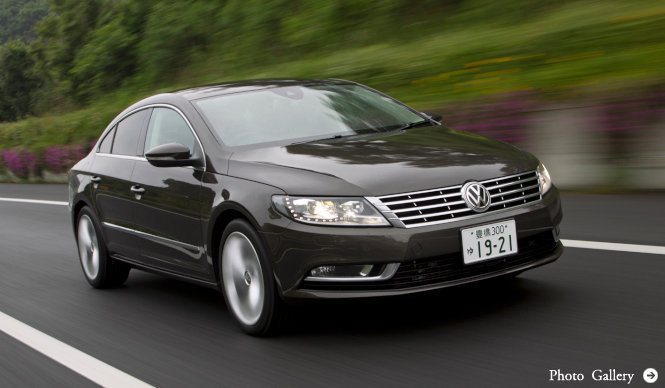
Test Drive: The Volkswagen CC | Volkswagen
Volkswagen CC | Volkswagen CC
Finally Launched in Japan
Test Drive: The Volkswagen CC
Four-door coupés, a segment that has felt almost established since the Mercedes-Benz CLS-Class debuted in 2004, are now a distinct category of European car. Volkswagen introduced the Passat CCin 2008. The successor to this "Passat CC" is the newly released "CC". Redefined as a model positioned between Volkswagen's flagship "Phaeton" and the four-door sedan "Passat," it has been renamed the CC. OPENERS immediately took this model, which has finally landed in Japan, for a test drive. Fumio Ogawa took the wheel.again.
Text by OGAWA Fumio
Photographs by MOCHIZUKI Hirohiko
For the User Who Seeks Beauty in a Car
The "Passat CC" was Volkswagen's first four-door coupé. Coupés with a stylish design have maintained enduring popularity in Europe and North America, and this model adds practicality to that appeal. It was released in Japan in 2008, but has now returned to the Japanese market with improved environmental performance and enhanced safety. The price is 4.99 million yen.
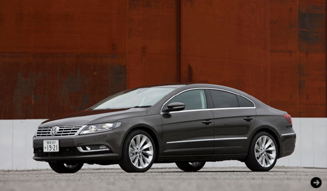
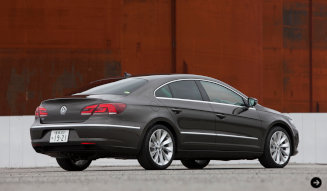
One notable change is that the "Passat" name has been dropped, and it is now simply called the "CC." While it is positioned as the flagship model in Volkswagen's Japanese lineup, it diverges from the company's typically functional image, aiming to appeal to users who seek beauty in their cars. The roofline slopes gently towards the rear, skillfully balancing the aesthetic of a coupé (a car type originating from the French word for short) with the practicality of four doors.
At 4.8 meters long, it is not a small car. Consequently, the packaging prioritizes interior space, eliminating the need for the typical trade-offs where one aspect is sacrificed for another. This is the essence of the CC, embodying "Comfort Coupé."
Volkswagen CC | Volkswagen CC
Finally Launched in Japan
Test Drive: The Volkswagen CC (2)
Are There Downsides to the Reduced Displacement?
The CC is powered by a 1,798cc inline-four engine with an intercooled turbocharger, producing a maximum output of 160 ps and a maximum torque of 250 Nm. This power is delivered to the front wheels via a 7-speed dual-clutch transmission called "DSG." Fuel economy is rated at 13.4 km/liter under the JC08 mode. Volkswagen Group Japan states that this is "a significant improvement over the previous Passat CC."
Even in its premium models, Volkswagen prioritizes environmental compatibility over excessively large engine displacements. This is characteristic of Volkswagen. While luxury cars often emphasize large displacements partly due to weight considerations and the desire for a distinct torque feel, Volkswagen appears to delegate this aspect to Audi within the group, focusing instead on an intelligent approach to the market. This is where the CC's unique character shines.
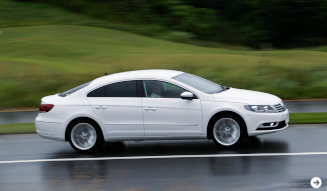
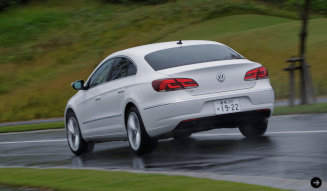
In actual driving, the reduced engine displacement is not noticeable. While it's often said that engine displacement is paramount for exhilarating acceleration (larger displacement generally correlates with faster and more enjoyable acceleration), the new CC, with its 1.8-liter turbo unit powering a 1.5-ton body, shows no discernible difference in acceleration or high-speed cruising compared to its predecessor.
However, it is certainly an engine with a distinct character. This is due to its pronounced torque band above approximately 3,000 rpm. By selecting gears to keep the engine speed slightly higher or by pressing the accelerator pedal more firmly, you can experience the turbo engaging and powerfully accelerating the car. Conversely, relying solely on low-end RPMs does reveal a lack of power during acceleration.
Volkswagen CC | Volkswagen CC
Finally Launched in Japan
Test Drive: The Volkswagen CC (3)
The CC's Strengths
The CC's handling is also commendable. This is likely aided by the lightweight, compact powertrain. The steering remains neutral even at higher speeds, and while it may not possess the sporty edge for "winding road enthusiasts," it allows for enjoyable driving at a good pace.
In Europe, the primary target demographic is likely affluent individuals of a certain age (perhaps also considering the market for company cars for middle management in countries like Germany and the UK). Therefore, agility, as seen in BMWs, might not be its highest priority. On the other hand, the comfortable ride, which is less affected by road imperfections, is a definite strong point of the CC.
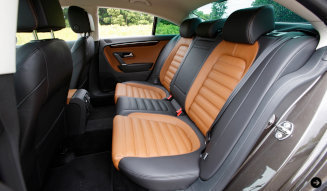
Furthermore, the interior is spacious, and the seats are excellent. The rear seats are also well-designed, offering ample room for adults without any feeling of confinement. The dashboard design, free from ostentation or excessive flair, contributes to a clean and airy ambiance. It's a timeless and user-friendly design.
The Nappa leather upholstery complements the design, featuring prominent horizontal pleats. Visually, it evokes the luxury sports cars of the 1960s, which is appealing. Two-tone leather combinations are also available, allowing for personalization to match the exterior color.
Volkswagen CC | Volkswagen CC
Finally Launched in Japan
Test Drive: The Volkswagen CC (4)
Styling is a Major Value
The safety features are also abundant. The "Adaptive Cruise Control (ACC)" utilizes radar integrated into the front of the car to provide full-speed range follow-up by automatically adjusting acceleration and deceleration.
The "Pre-Crash Brake System (also known as Front Assist)" warns the driver when it detects obstacles or vehicles ahead. When approaching a stationary obstacle at speeds below 30 km/h, it automatically applies the brakes, potentially bringing the vehicle to a complete stop.
Additionally, the "Lane Change Assist System (Side Assist Plus)" detects vehicles approaching from behind and, if the driver attempts to steer towards that lane, it intervenes with automatic steering to correct the trajectory. These three safety systems are included in the optional "Technology Package" (priced at 5.24 million yen).
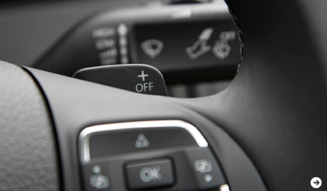
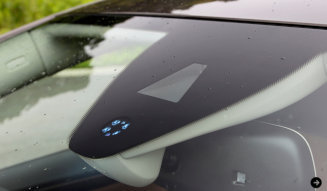
When you actually try to change lanes, the steering wheel first vibrates, and if you attempt to deviate from the lane, automatic steering prevents it. Active safety systems like these are becoming increasingly common in the luxury car segment, and they are particularly welcome features for older drivers who can afford a high-priced model like the CC.
Volkswagen Group Japan, the importer of the CC, considers the vehicle price of 4.99 million yen to be "surprisingly niche." Considering the aforementioned features, this may indeed be the case. Looking for comparable vehicles with a similar concept, we find:Mercedes-Benz CLS (from 9.3 million yen),BMW 6 Series Gran Coupé (from 9.86 million yen), and others. Both are considerably more expensive.
On the other hand, variations of four-door models include:Audi A5 Sportback (5.8 million yen) andVolvo V60 (from 3.95 million yen), which feature a fastback design with a hatchback. These tend to have a more practical image. The CC, in contrast, can be considered more fashionable. Ultimately, styling is indeed a significant value.
More information on the Volkswagen CC

Volkswagen CC | Volkswagen CC
Body Dimensions | Length 4,815 x Width 1,855 x Height 1,425 mm
Wheelbase | 2,710 mm
Tread Front/Rear | 1,550/1,560 mm
Minimum Ground Clearance | 125 mm
Vehicle Weight | 1,540 kg (1,560 kg with optional panoramic glass roof)
Seating Capacity | 5 people
Minimum Turning Radius | 5.3 m
Fuel Economy | 13.4 km/ℓ (JC08 mode)
CO2 Emissions | 173 g/km (converted from JC08 mode fuel economy)
Engine | 1,798cc Inline-4 Direct Injection Intercooled Turbo
Maximum Output | 118 kW (160 ps) / 4,500-6,200 rpm
Maximum Torque | 250 Nm (25.5 kgm) / 1,500-4,500 rpm
Suspension Front/Rear | MacPherson Strut / 4-Link
Brakes Front/Rear | Ventilated Disc / Disc
Tire Size | 235/40R18
Price | 4.99 million yen (5.24 million yen with Technology Package)