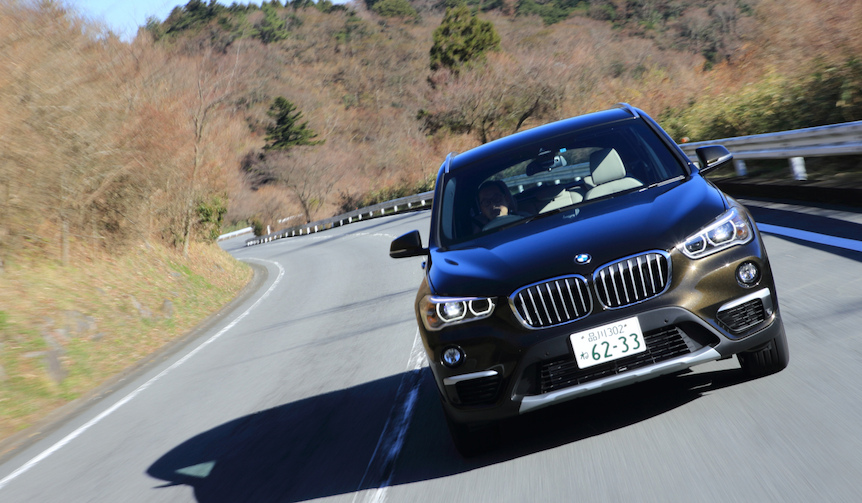
Test Drive the New X1 That Has Landed in Japan | BMW
BMW X1
Test Drive: The New BMW X1 Lands in Japan
An Approachable SUV
This year, the BMW compact SUV "X1" underwent a full model change and went on sale in Japan in October. The biggest topic is the adoption of a front-wheel-drive based platform, similar to the "2 Series Active Tourer" and "Grand Tourer," a departure from the previous rear-wheel-drive base. Motor journalist Fumio Ogawa test drove the X1 xDrive 20i, a mid-range grade in the model lineup.
Text by OGAWA FumioPhotographs by ARAKAWA Masayuki
Focus on Shared Chassis and Expanded Rear Seat Space
The BMW "X1" has been fully redesigned. The biggest focus is the use of a front-wheel-drive chassis. The first-generation X1 was developed based on the previous 3 Series (E90). Its styling, a hybrid of station wagon and SUV, was so unique that the manufacturer itself redefined it as SAV (Sports Activity Vehicle).
Compared to the previous model, which exuded a sporty atmosphere, the new X1 has a significantly changed image. It's not just the 30mm increase in overall height. The styling has become more conventional for an SUV. Those who preferred the distinctive character of the previous generation might be a little saddened by this.
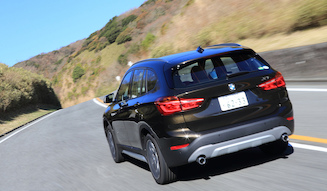
"More robust and powerful styling, befitting a BMW X model" is how the new X1 is defined by BMW Japan, the Japanese subsidiary of BMW AG. Our speculation is that the full model change's core objectives are cost reduction through sharing the chassis with the 2 Series Active Tourer and Grand Tourer, and a packaging revision to "significantly expand rear seat space" (BMW Japan).
However, BMW Japan objects to defining it as a front-wheel-drive model, stating, "It is not. It's all-wheel drive." In the Japanese lineup, front-wheel-drive models, called sDrive, are limited. The model lineup can be broadly divided into three types based on the engine, and two types based on the drivetrain. The base model is the 18i, equipped with a 1.5-liter 3-cylinder engine, available only as front-wheel-drive sDrive. All other models feature the on-demand all-wheel-drive system, xDrive.
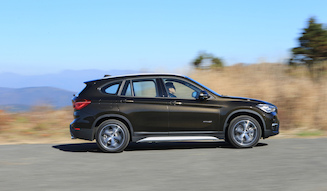
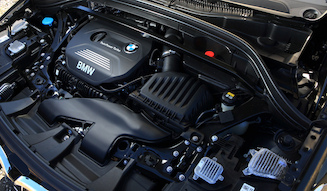
The mid-range grade is the 20i, with a 2-liter 4-cylinder engine. Above that is the 25i, with the same displacement but more power. While the X1 xDrive 20i has a maximum output of 141 kW (192 ps) and a maximum torque of 280 Nm, the X1 xDrive 25i is more powerful, with 170 kW (231 ps) and 350 Nm, respectively.
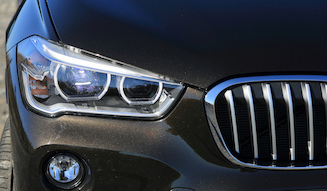
The front mask is quite powerful, with large air dams, slit-like headlights, and a three-dimensional kidney grille that curves upward. It adopts design cues that clearly identify it as part of the BMW "X Series" family at first glance.
Speaking of family, as mentioned earlier, its content is closely related to the "2 Series Active Tourer" (they share the same wheelbase). At the very least, the window graphics when viewed from the side, and the packaging including the dashboard and seats, inherit functional usability in a good way. In a bad way, it lacks a sense of exclusivity. However, users are unlikely to buy both models simultaneously to enjoy the differences, so this is acceptable.
However, when driving, the X1 xDrive 20i was quite good. So much so that I thought it was a different car.
BMW X1
Test Drive: The New BMW X1 Lands in Japan
An Approachable SUV (2)
A Car That Makes You Want to Connect Beyond Reason
As mentioned, the X1 xDrive 20i has a maximum output of 141 kW (192 ps) and a maximum torque of 280 Nm. In the 2 Series Active Tourer, the xDrive is combined with the 25i (the Grand Tourer does not have an xDrive option), highlighting the uniqueness of this model.
When driven, it is indeed quite good. It handles straight roads and winding roads with confidence and is enjoyable. The engine, which produces maximum torque from 1,250 rpm, revs smoothly not only at low speeds but also to the redline, allowing you to savor the joy of the engine. That's BMW for you. Before I knew it, I found myself enjoying the car by revving the engine enthusiastically. It's a car that makes you want to connect with it beyond reason. At least, in the case of a car, this is a strength (laughs).
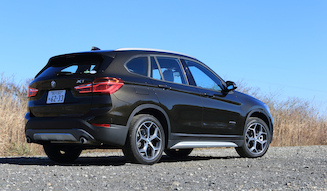
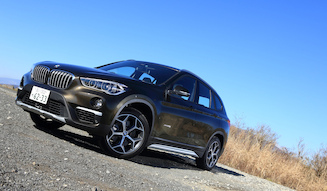
Even in terms of intermediate acceleration, the connection with the 8-speed automatic transmission is excellent, and it truly understands the driver's intentions. Even when "Comfort" is selected in "Driving Performance Control," it is sufficiently enjoyable. When you want to continue accelerating, it maintains higher revs, allowing you to fully experience the pleasure of acceleration. Selecting "Sport" mode further emphasizes the brisk acceleration.
Regardless of the mode selected in "Driving Performance Control," the balance between the suspension and steering settings remains consistent. While the steering feel is slightly light, the suspension can feel a bit too sensitive to road imperfections. However, overall, it's a well-executed vehicle that clearly conveys the manufacturer's intention to provide driving enjoyment. The direct feel is superior to that of the 2 Series Active Tourer.
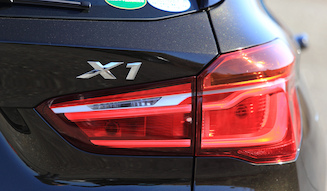
The movement feels much closer to that of a conventional passenger car than suggesting suspension travel. While I haven't experienced off-road driving, with a ground clearance of 185mm, it should handle off-road situations in everyday extensions, such as ski resorts, with ease.
Under normal driving conditions, xDrive distributes nearly 100% of torque to the front wheels. On rough or slippery surfaces, it uses electronic control technology to instantly distribute torque to the rear as well. Furthermore, it actively uses variable torque control technology even during normal cornering. If signs of oversteer or understeer appear in a corner, it stabilizes the vehicle's behavior by adjusting torque distribution. Additionally, automatic brake control is employed in corners. To suppress understeer, the inner rear wheel is braked as needed.
Another appeal is its ease of use.
BMW X1
Test Drive: The New BMW X1 Lands in Japan
An Approachable SUV (3)
Rear Seat Space Comparable to Large Sedans
The benefit of the new X1 adopting a new generation platform is perhaps that it expands the user's lifestyle. Above all, the packaging has improved. In other words, assuming family use, its usability has greatly increased.
BMW claims to have "significantly expanded rear seat space, achieving an interior comparable to a model in a higher class." This is indeed one of the new X1's attractions. Those familiar with the 2 Series Active Tourer will notice similarities in the dashboard and seat design upon entering the cabin. In addition to the clean design, there are significant differences from the previous model, such as the easy-to-use new generation infotainment system.
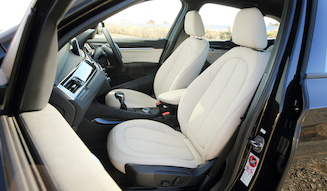
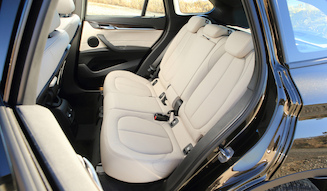
While the previous X1 had a somewhat tight interior, giving a feeling of "wearing" the car, the new model is more rational. It has the feel of a comfortable, clean lounge rather than a "workplace." This feeling was particularly strong in the test-driven "xLine" model, a mid-grade trim that emphasizes luxury with leather seats and other features.
As BMW states, the ease of use of the rear seats is the new model's greatest feature. Both legroom and headroom offer ample space, truly comparable to a large sedan. Furthermore, with the optional large panoramic glass sunroof, it becomes the ultimate welcoming space. On the other hand, the optional sliding rear seats allow for more shoulder room when three passengers are present, and this feature is useful if you are carrying long items, such as golf bags.
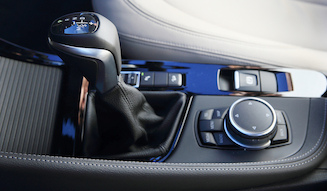
Versatility may be why the X1 is a new generation SAV (Sports Activity Vehicle, as BMW calls it). If we define "activity" as multifunctionality that brings expansion to life's enjoyment, it covers all areas: enjoyable driving on and off-road, and versatility in daily life, including hobbies. The new X1 is an approachable SUV.

BMW X1 xDrive 20i xLine
Body Dimensions: Length 4,455 × Width 1,820 × Height 1,610 mm
Wheelbase: 2,670 mm
Tread Front/Rear: 1,565 / 1,565 mm
Weight: 1,660 kg
Ground Clearance: 185 mm
Engine: 1,998 cc Inline 4-cylinder DOHC TwinPower Turbo
Maximum Output: 141 kW (192 ps) / 5,000 rpm
Maximum Torque: 280 Nm (28.6 kgm) / 1,250-4,600 rpm
Transmission: 8-speed Automatic
Drivetrain: 4WD
Tires Front/Rear: 225/50R18 / 225/50R18
Fuel Economy (JC08 Mode): 14.6 km/ℓ
Trunk Capacity: 505 Liters
Price: 4.92 million yen
BMW Customer Interaction Center
0120-269-437 (Weekdays 9:00-19:00, Weekends and Holidays 9:00-18:00)