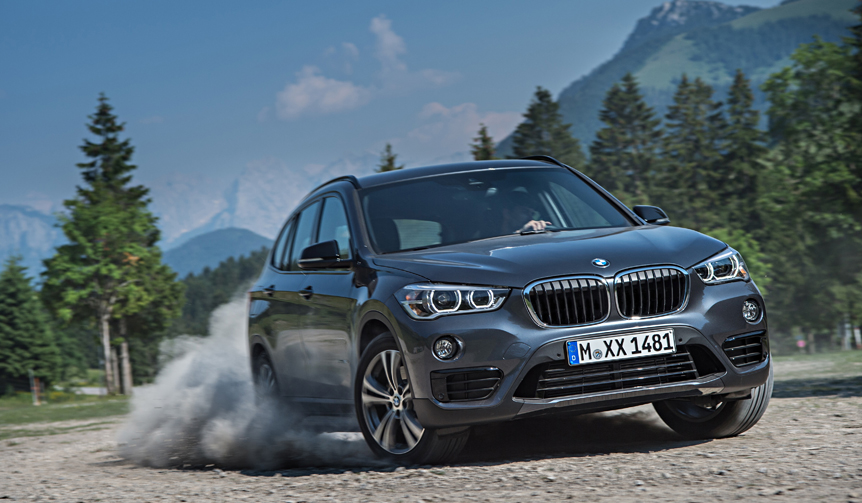
Test Drive the New BMW X1 | BMW
BMW X1 | BMW X1
Test Drive the New BMW X1
Debuting in 2009 as the youngest member of BMW's SUV family, the X1 has evolved into its second generation this year. This boldly reimagined new model, which adopts the front-wheel-drive platform shared with MINI and the 2 Series Active Tourer, moving away from its previous FR platform, is test-driven by Yasuhiko Kawamura.
Text by YASUHIKO KAWAMURA
Different from the Predecessor in Every Way Except Name
A model whose name perfectly captures its role as the "youngest SUV in the lineup."—That is the BMW X1. It debuted as a brand-new model in 2009.The first-generation X1Six years later, the second generation, its first full model change, has been announced.
Of course,The second-generation X1maintains its fundamental positioning as described above. With over 730,000 units sold worldwide, it's clear that "there is a significant market here."
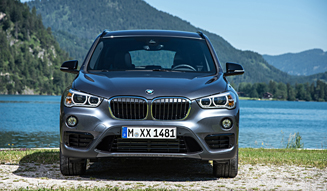
BMW X1 xDrive25i
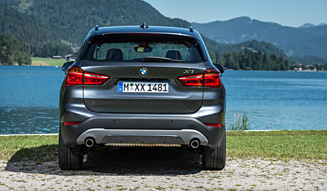
BMW X1 xDrive25i
For some, the idea of driving a large SUV developed with the American market in mind might be daunting. However, many people would likely be interested in trying out a "right-sized" model. The new X1 is sure to be a compelling option for such individuals.
On the other hand, a significant characteristic of the new model is that "everything is different from the predecessor except for the name."The 2 Series Active Tourer and Gran TourerIn other words, it is developed based on a front-wheel-drive platform, a first for BMW's X series.
Consequently,3 Series Touringwhich served as the basis for the previous model, it's only natural that "everything is different." Indeed, it can be said that this new X1 has been created through a completely different approach from models targeting the same niche.
BMW X1 | BMW X1
Test Drive the New BMW X1 (2)
A More SUV-Like Appearance
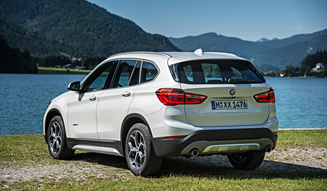
Due to its origins, the previous X1 had a strong station wagon-like character among the X series. In contrast, the new model's stance is more robust and distinctly SUV-like, a point on which few would likely disagree.
While maintaining its position as the "youngest" in the lineup, the new model's proportions differ significantly from its predecessor. The overall length and width of 4,439 x 1,821 mm are slightly shorter and wider, respectively, but in essence, the finish is "not much different from the previous model."
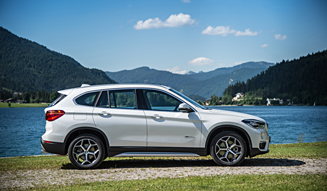
BMW X1 xDrive25d
BMW X1 xDrive25d
However, the height and wheelbase are crucial changes. With a reduction of over 50 mm in height and 90 mm in wheelbase, the visual impact is significant. The cabin has moved forward and grown larger, while the roofline has been raised and thickened, giving the new model a much more SUV-like appearance.
This height means it won't fit in my multi-story garage anymore.—While such practical concerns may arise, there's no doubt that the refreshed styling of the new model is "more fitting as a member of the X series." It's highly likely that many will be saying, "This one looks better!" If SUV utility is also a key consideration, the new model can be described as having a more capable package.
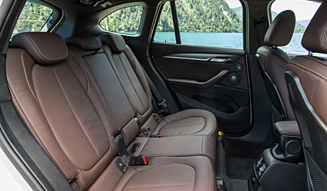
This is most evident in the rear seat's spaciousness, where the more upright seating position and improved legroom under the front seats create a strong sense of ample space. In fact, despite the shortened wheelbase, "knee room has been expanded by 37 mm." This is a significant advantage of being based on an FF layout.
BMW X1 xDrive25d
BMW X1 xDrive25d
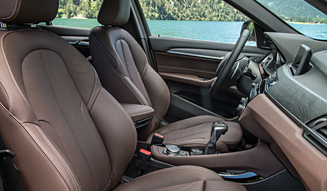
Similarly, the luggage space, which is 85 liters larger than the previous model with the rear seats up, is another gift from the revised layout. From a space efficiency perspective, the new and previous models are "incomparable." On the other hand, a more pronounced SUV feel is also a characteristic of the new model upon entering the driver's seat. The primary reason for this is the higher hip point, with seating positions significantly raised compared to the previous model: 36 mm higher for the front seats and 64 mm higher for the rear seats.
Thus, the new X1, with its enhanced "SUV-ness" both visually and in terms of driving position, is here. But for a BMW, many will undoubtedly be more interested in its driving performance. This is where the real question lies.
BMW X1 | BMW X1
Test Drive the New BMW X1 (3)
A Complete Transformation to an FF Layout Base
Compared to models bearing the "M" designation or BMW cars with long-standing, traditional names, the X series, being younger, may have fewer users who prioritize "driving dynamics."
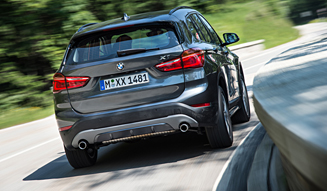
Nevertheless, those who choose a BMW from among various brands likely expect a certain level of "driving pleasure." Given this, will the X1, which has undergone a complete transformation from an FR layout based on the 3 Series to an FF layout based on MINI, truly meet those expectations?
BMW X1 xDrive25i
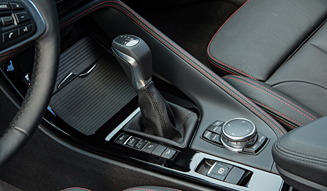
BMW X1 xDrive25i
The new models available at the international press event held in Austria were the "25i" and "25d" grades. Following BMW's convention, the former is equipped with a gasoline engine, and the latter with a diesel engine.
Specifically, both are powered by a 2.0-liter, four-cylinder turbocharged direct-injection unit. While the diesel's maximum torque of 450 Nm is higher than the gasoline's 350 Nm, as might be expected, it's surprising that both share the same maximum output of 231 ps. In other words, depending on how you look at it, the "25"-badged X1 is more high-performance with the diesel.
Starting with the 25i, the powertrain's performance is immediately and clearly felt as "sufficiently fast." The smooth operation of the 8-speed automatic transmission, with its wide gear range and small step ratios, undoubtedly contributes significantly to this impression.
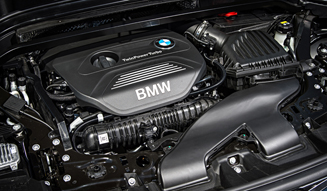
BMW X1 xDrive25i
Regardless, from the smoothness of the initial acceleration to the feeling of power, there are certainly no significant complaints.
Particularly impressive is the strong surge of torque around 1,500 rpm when the accelerator is pressed, reminiscent of a well-tuned diesel engine. On the other hand, perhaps due to a strong focus on fuel efficiency, the slight vibration when shifting to a higher gear at very low RPMs is a minor point of concern.
The test vehicle was equipped with optional 18-inch wheels, one inch larger than standard, and adaptive variable dampers. Although the test drive was primarily with two occupants, the damping felt slightly soft in Comfort mode and a bit too firm in Sport mode at times.
Therefore, while a setting between the two damper levels would have been desirable, this impression might differ with the standard 17-inch wheels.
BMW X1 | BMW X1
Test Drive the New BMW X1 (4)
Diesel Performance on Par with Gasoline
Switching from the 25i to the diesel 25d, the more potent power delivery feels even more refreshing. Simultaneously, the added weight, likely around 35 kg concentrated on the front, seems to contribute positively to the ride quality. Immediately after starting, when "background noise" like tire noise is minimal, the distinct engine sound of the diesel is audible, and at around 1,200 rpm, a slight vibration originating from the engine can be felt through the steering wheel.
However, apart from these limited aspects, the noise and vibration performance is on par with the gasoline model.—In fact, due to the higher torque, higher gears are selected more frequently, resulting in lower engine speeds during normal operation, which paradoxically leads to an impression of greater quietness.
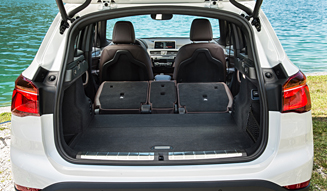
BMW X1 xDrive25d
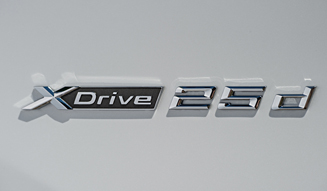
BMW X1 xDrive25d
On the other hand, it's true that the throttle response is not as sharp as the gasoline unit. Nevertheless, within the range of normal engine operation, which constitutes the majority of daily driving, most people will likely find the 25d's performance to be "more powerful than the 25i."
This model also features the optional "Dynamic Damper Control," but perhaps due to the weight difference, the ride quality generally has a more refined feel. Consequently, it's likely that many will favor the 25d's performance and overall ride quality.
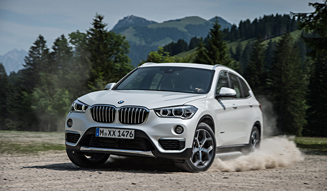
BMW X1 xDrive25d
Regarding the handling of the new X1, the honest impression is that "while it feels natural, it doesn't particularly offer an exceptional 'driving pleasure.'" For the majority of people, this will undoubtedly be satisfactory.
However, some may feel that the loss of the unique rear-wheel push-out sensation, which was sometimes apparent when exiting corners in the previous model, makes "the previous model preferable."
How one perceives these changes in driving feel will likely influence their evaluation of the new X1, which has improved practicality and utility while enhancing its SUV-like appearance. Of course, for BMW, its creator, these character changes between the old and new models are undoubtedly "within expectations." With all this in mind, the new X1 has been launched with a firm conviction of further "success."

BMW X1 xDrive25i | BMW X1 xDrive25i
Body Size | Length 4,439 x Width 1,821 x Height 1,598 mm
Wheelbase | 2,670 mm
Tread Front/Rear | 1,561/1,562 mm
Vehicle Weight | 1,540 kg
Engine | 1,998 cc Inline 4-cylinder Turbo
Max Output | 170 kW (231 ps) / 5,000 - 6,000 rpm
Max Torque | 350 Nm / 1,250 - 4,500 rpm
Transmission | 8-speed AT
Drivetrain | 4WD
Trunk Space | 505 - 1,550 Liters
Suspension Front | Single-joint strut
Suspension Rear | Multi-link
Brakes | Ventilated discs
Tires Front/Rear | 225/55R17 / 225/55R17
Fuel Economy (NEDC Combined) | 6.4 L/100 km (approx. 15.6 km/L)
CO2 Emissions | 149 g/km
BMW X1 xDrive25d | BMW X1 xDrive25d
Body Size | Length 4,439 x Width 1,821 x Height 1,598 mm
Wheelbase | 2,670 mm
Tread Front/Rear | 1,561/1,562 mm
Vehicle Weight | 1,575 kg
Engine | 1,995 cc Inline 4-cylinder Diesel Turbo
Max Output | 170 kW (231 ps) / 4,400 rpm
Max Torque | 450 Nm / 1,500 - 3,000 rpm
Transmission | 8-speed AT
Drivetrain | 4WD
Trunk Space | 505 - 1,550 Liters
Suspension Front | Single-joint strut
Suspension Rear | Multi-link
Brakes | Ventilated discs
Tires Front/Rear | 225/55R17 / 225/55R17
Fuel Economy (NEDC Combined) | 5.0 L/100 km (approx. 20.0 km/L)
CO2 Emissions | 132 g/km