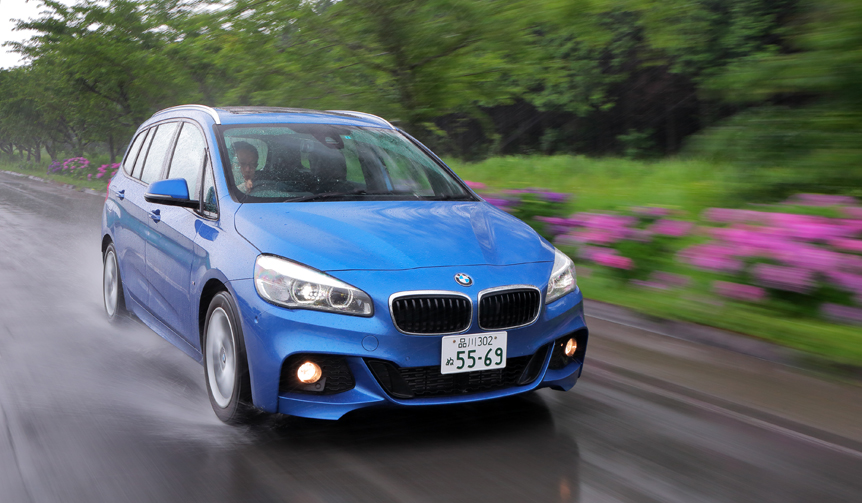
A Test Drive of the BMW 2 Series Gran Tourer
BMW 2 Series Gran Tourer | BMW 2 Series Gran Tourer
BMW's First Family MPV Model
Test Drive: BMW 2 Series Gran Tourer
The "2 Series Gran Tourer" is a minivan that extends the wheelbase of the "2 Series Active Tourer," BMW's first C-segment FF model, and adds a third row of seats. How did BMW, a premium brand, refine an MPV? Kenichi Sakurai reports, comparing it with its sister model, the Active Tourer.
Text by SAKURAI KenichiPhotographs by HANAMURA Hidenori
A 7-Seater MPV with a Third Row
As its name suggests, the "2 Series Gran Tourer" is derived from the "2 Series Active Tourer" which was BMW's first FF model.
Simply put, the difference between the two cars is that the "2 Series Gran Tourer" adds a third row of seats to the "2 Series Active Tourer," a conventional 2-row seat FF compact model, by extending its wheelbase by 110mm. With the extended wheelbase, the "2 Series Gran Tourer's" overall length of 4,350mm has been increased by 215mm to 4,565mm, and its height has also increased by 95mm.
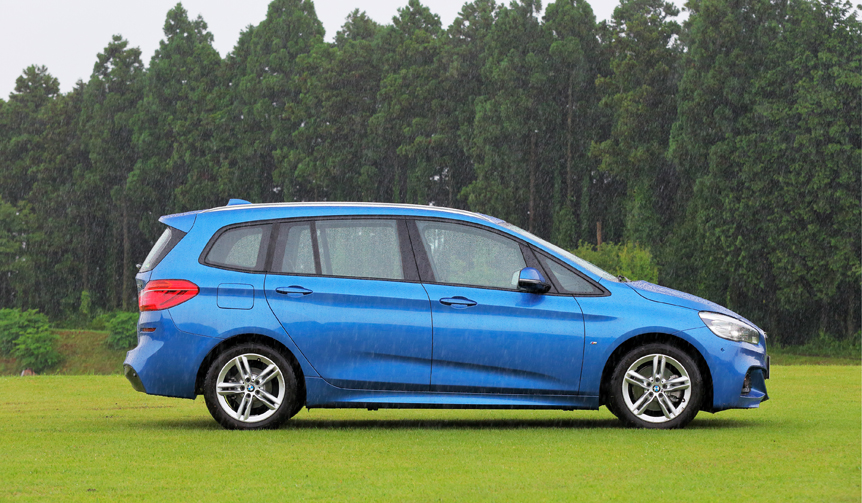
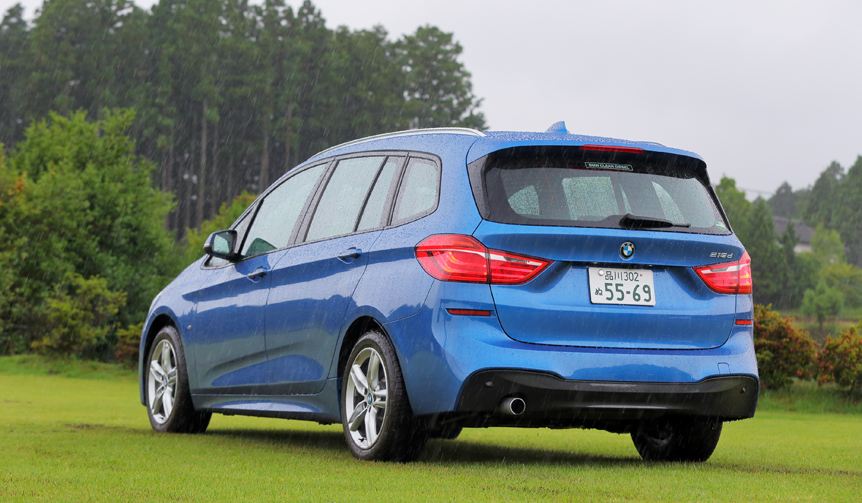
It's safe to assume that the entire extension has been dedicated to expanding the interior space. However, BMW refers to this car as a 7-seater MPV, not a minivan. As a premium brand that has always emphasized driving performance across all its series, they likely don't overtly market it as a family car. Subjectively, even with keywords like FF, 3-row seating, and 7-seater packed into the "2 Series Gran Tourer," they would surely want to avoid a mundane image.
While many understand the convenience of minivans, a significant number shy away from them due to their "lived-in" styling. There are users who choose SUVs despite not being into outdoor sports, simply to fit a stroller in their car, and even affluent housewives who go to great lengths to fit a stroller into a Maserati's trunk. This suggests there's a potential market for BMW's MPV.
BMW 2 Series Gran Tourer | BMW 2 Series Gran Tourer
BMW's First Family Minivan (Style) Model
Test Drive: BMW 2 Series Gran Tourer (2)
Differentiated by a Third Row and Diesel Engine
The direct rivals are Mercedes' A-Class and "B-Class," and Audi's as well as Audi's A3..
Volkswagen's Golftargets a slightly different demographic, which should be intuitively understood. While Volkswagen is perceived as one of the leading premium import brands in Japan, they don't deny their focus on families.
In contrast, Mercedes, Audi, and BMW have long been known as the "German Big Three" premium brands, possessing stylish and luxurious images.
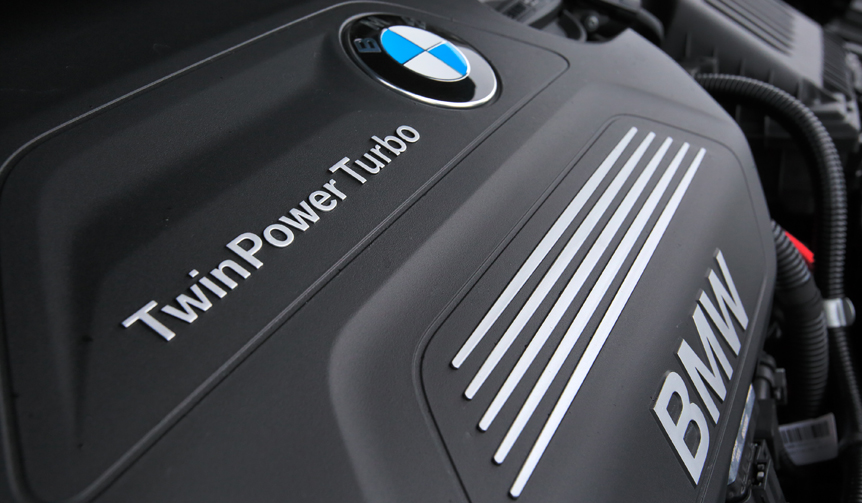
However, the "2 Series Gran Tourer" possesses two weapons that these other brands lack: the aforementioned third row of seats and a 2-liter clean diesel engine.
The clean diesel is a 2-liter inline 4-cylinder DOHC turbo engine powering the "218d," delivering a maximum output of 110 kW (150 hp) and a peak torque of 330 Nm (33.7 kgm). The drawbacks of "smelly, noisy, and slow" are entirely absent in BMW's latest clean diesel technology.
This 2-liter clean diesel is the same power unit used in the "2 Series Active Tourer," delivering its maximum torque from just above idling speed. It's paired with the same 8-speed automatic transmission. Although the "2 Series Gran Tourer" weighs 1,610 kg, 150 kg more than its counterpart, once it starts moving, the difference in weight doesn't seem to significantly impact handling.
BMW 2 Series Gran Tourer | BMW 2 Series Gran Tourer
BMW's First Family Minivan (Style) Model
Test Drive: BMW 2 Series Gran Tourer (3)
The Allure of the BMW Brand
This is because, compared to other BMW models, both of these "2 Series" cars have a particularlyFR models sharing the "2 Series" namelack a sense of agility.
However, this is not a negative comment. While it may be less sporty than the driving experience expected from a BMW, the steering feel that reliably transmits road surface information to the driver, and the car's posture as it transitions from corner exit to full acceleration on the straight, are indeed extensions of the driving dynamics inherent in the BMW brand, even with a heavy diesel engine at the front.
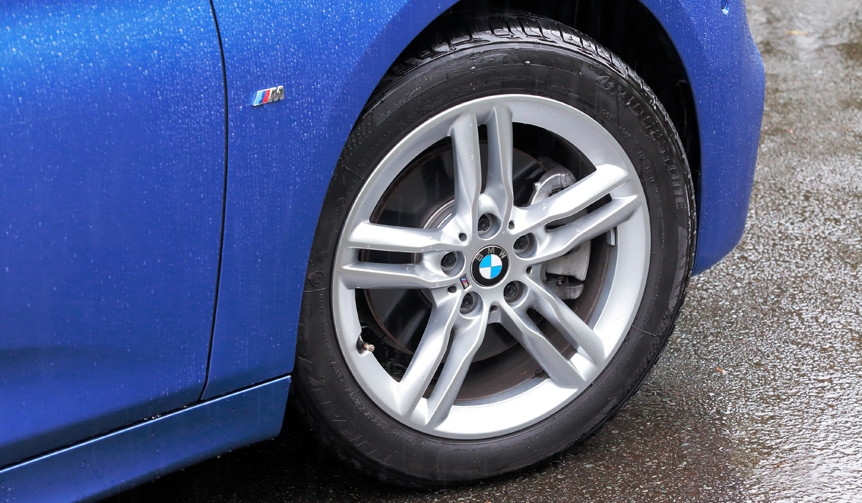
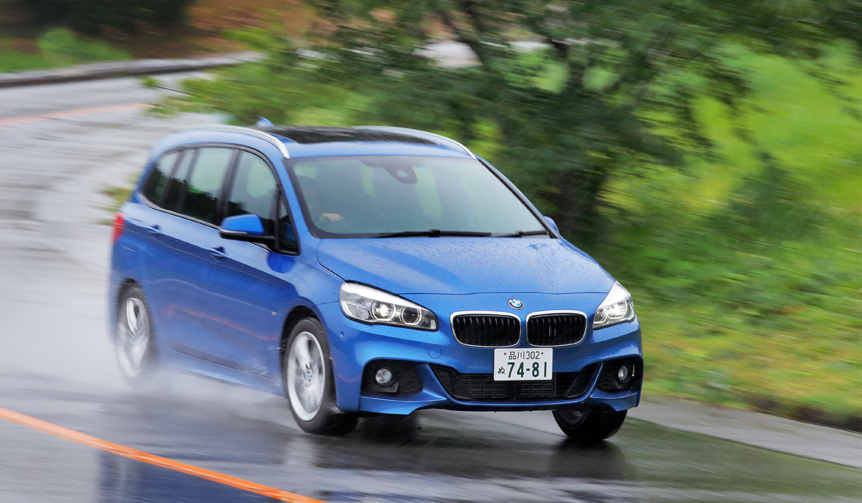
I'm reminded of driving the front-wheel-drive Rover "75" for the first time and thinking, "If BMW were to build an FF car, this is what it would be like." While the front wheels are responsible for steering and traction, the rear wheels firmly grip the road, maintaining a stable posture. It's a sportier drive than you might expect from its minivan appearance. The slight reduction in agility is the only difference; the BMW essence is certainly present.
I understood it wasn't a car for aggressively tackling winding roads, but the allure of the BMW brand drew me towards the mountain roads—making excuses, I headed towards the steep Fuji Skyline (toll road).
The handling, which smoothly turns the car's nose towards the inside of the corner even in tight turns, was enjoyable, albeit with the caveat that it's an FF, unlike the FR 2 Series. The pairing of the torquey diesel engine and the 8-speed automatic transmission is excellent. It's so good that I regretted the absence of paddle shifters.
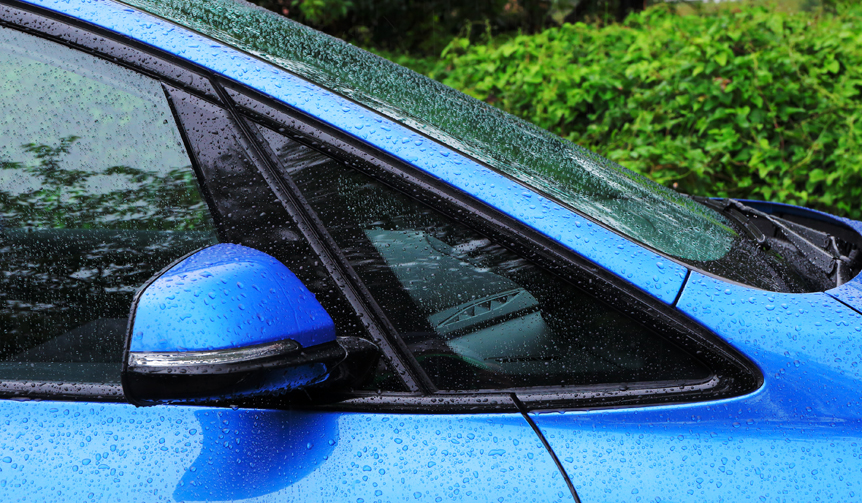
However, I also noticed that the thick A-pillar and the pillar between the A-pillar and the door mirror significantly obstruct the view. In right-hand corners, the forward visibility to the right is so poor that oncoming traffic can momentarily disappear behind these pillars. This is the only aspect that felt un-BMW-like during the drive.
This is the same issue with the 2-row seat "2 Series Active Tourer" that I drove for comparison.
BMW 2 Series Gran Tourer | BMW 2 Series Gran Tourer
BMW's First Family Minivan (Style) Model
Test Drive: BMW 2 Series Gran Tourer (4)
Differences Between the "Gran Tourer" and "Active Tourer"
On the other hand, the ride comfort clearly differs between the two cars. The extended wheelbase likely contributes, along with the increased weight, to the "2 Series Gran Tourer" offering a distinctly better ride. The chassis movement feels more stable, and it handles undulations with a touch more refinement. In short, it feels more settled and composed.
In comparison, even with the same diesel engine, the "2 Series Active Tourer" can be described as a "quick" hatchback, while this one is a "comfortable" hatchback that offers a slightly more mature driving experience.
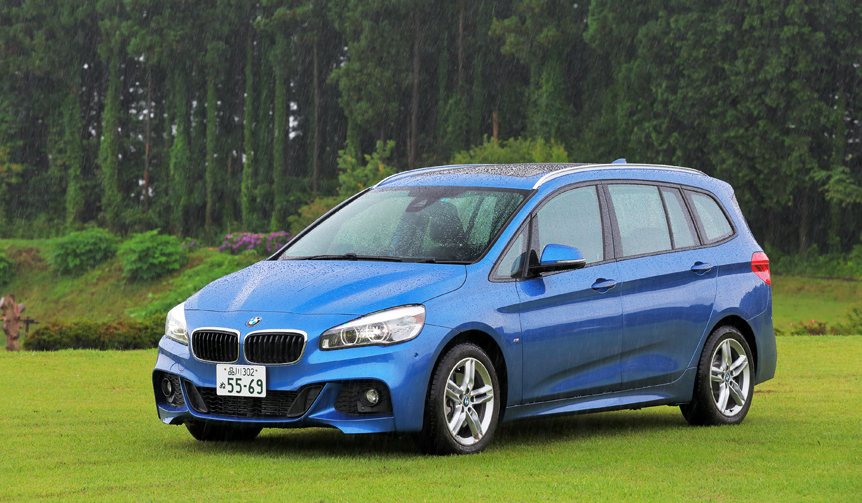
BMW 218d Gran Tourer
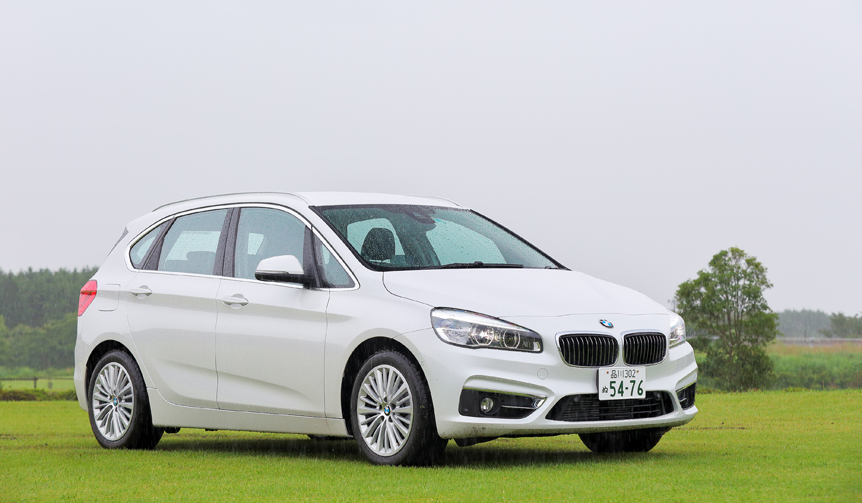
BMW 218d Active Tourer
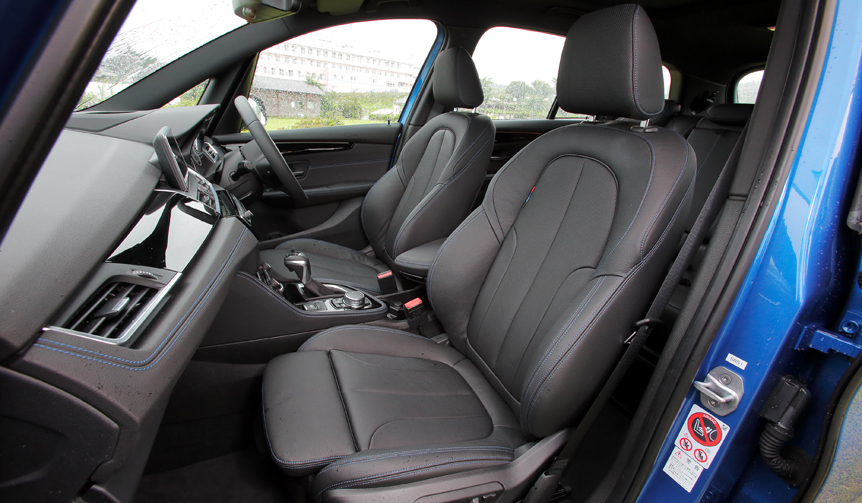
Regarding interior space, the first and second rows are virtually identical between the two cars. The height from the seat to the ceiling is 1,078mm for the first row and 1,003mm for the second, with a stadium seating design where the height increases towards the rear. The interior design thoughtfully ensures good forward visibility from the rear seats. Both cars also feature a 40:20:40 split-folding second-row seatback with a 130mm fore-aft sliding mechanism.
The difference, of course, is the presence of the third row of seats. However, the legroom in the retractable third seats is limited, and the floor is high, so they should be considered suitable only for children. Adults will find themselves in a "gymnastics squat" position. These seats should be strictly reserved for children or for short-distance emergency use.
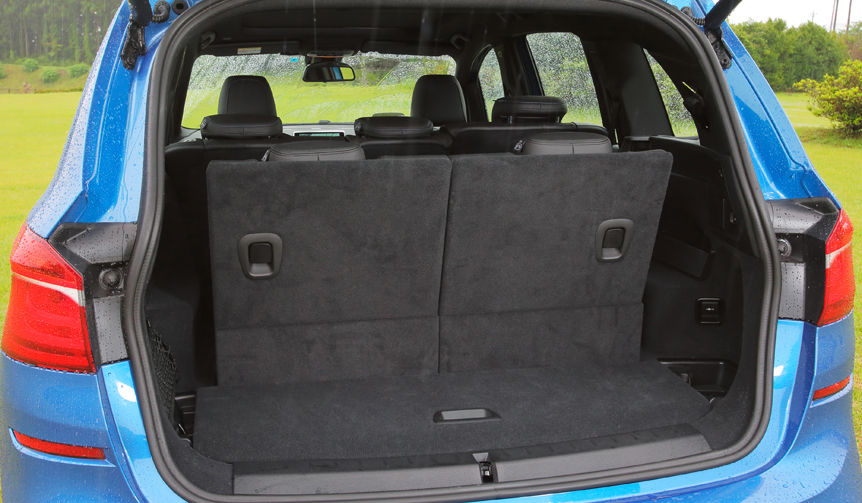
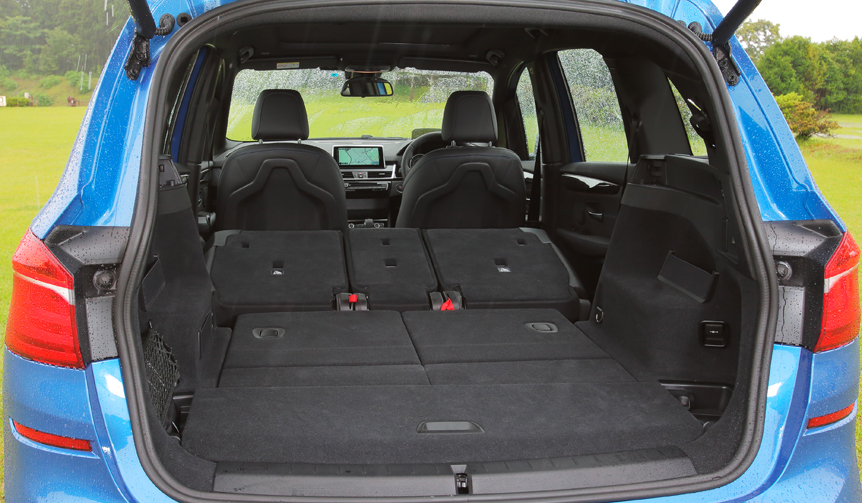
However, these third seats fold flat with the floor at the touch of a button, which is very useful when you need to maximize luggage space. The second-row seatbacks also fold forward with a single lever operation, creating a flat cargo area.
Even for users who won't use the third row in daily life, choosing the "2 Series Gran Tourer" for its larger luggage capacity is a viable decision. The capacity ranges from 560 to 1,820 liters (European figures). Incidentally, the front passenger seatback also folds completely flat, making it very convenient for storing long items. It can accommodate items up to 2,600mm in length.
BMW 2 Series Gran Tourer | BMW 2 Series Gran Tourer
BMW's First Family Minivan (Style) Model
Test Drive: BMW 2 Series Gran Tourer (5)
A Model with BMW's DNA
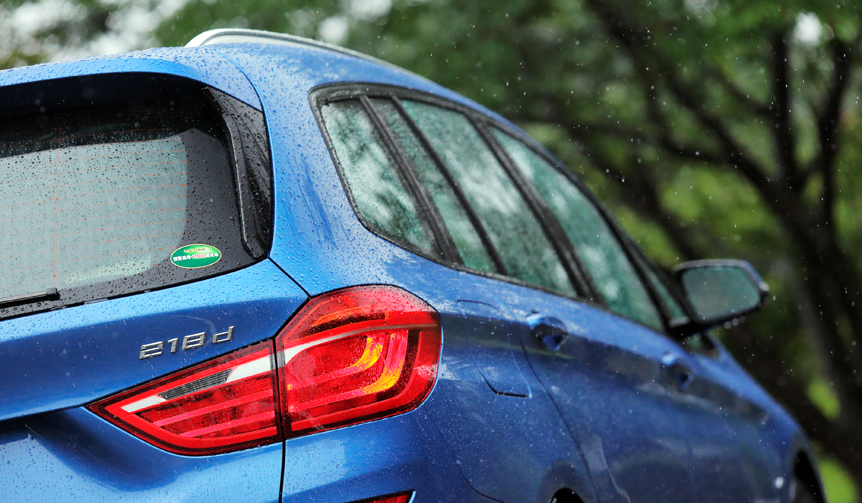
Specifically, the "2 Series Gran Tourer" also features a more upright rear door design around the D-pillar compared to the "2 Series Active Tourer." This design difference, which facilitates entry and exit from the third row, is a testament to BMW's premium brand approach, offering tailored solutions for different models. Manufacturers who prioritize cost and easily reuse parts (doors) could learn from this.
In addition to the diesel engine featured here, the "2 Series Gran Tourer" is also available with 1.5-liter 3-cylinder and 2-liter 4-cylinder gasoline engines. However, due to a pricing strategy that emphasizes clean diesel, the clean diesel models start at 3.79 million yen. The 218i, equipped with the 1.5-liter 3-cylinder gasoline engine, starts at 3.58 million yen, with the 218d being only 210,000 yen more. This is also the case for the "2 Series Active Tourer," where the 218i starts at 3.32 million yen and the 218d at 3.53 million yen, also with a 210,000 yen difference.
While the front-wheel-drive nature and the tall, minivan-like profile of this BMW might feel unusual, driving and experiencing it reveals that this "2 Series" is indeed a model imbued with BMW's DNA.
For consumers targeting European C-segment models, the expanded choice is most welcome. How will Mercedes respond to BMW's aggressive expansion of diesel engines across its entire lineup, positioning them as premium power units? BMW introduced diesel engines to Japan early on and has marketed them as premium power units. The competition between these two brands is also worth watching.

BMW 218d Gran Tourer
Body Dimensions | Length 4,565 x Width 1,800 x Height 1,645 mm
Weight | 1,610 kg
Engine | 1,995 cc Inline 4-cylinder TwinPower Turbo Diesel Engine
Max Output | 110 kW (150 ps) / 4,000 rpm
Max Torque | 330 Nm (33.7 kgm) / 1,750-2,750 rpm
Transmission | 8-speed AT
Drivetrain | FF
Front Suspension | Single-joint spring-strut
Rear Suspension | Multi-link
Front Brakes | Ventilated discs
Rear Brakes | Discs
Fuel Economy (JC08 mode) | 21.3 km/ℓ
Seating Capacity | 7 people
Trunk Capacity | 145 (360 with 3rd row folded) (1,820 with 2nd and 3rd rows folded) ℓ
Price | 3.79 million yen (Standard), 4.32 million yen (Luxury), 4.26 million yen (M Sport)
BMW 218d Active Tourer
Body Dimensions | Length 4,350 x Width 1,800 x Height 1,550 mm
Weight | 1,500 kg
Engine | 1,995 cc Inline 4-cylinder TwinPower Turbo Diesel Engine
Max Output | 110 kW (150 ps) / 4,000 rpm
Max Torque | 330 Nm (33.7 kgm) / 1,750-2,750 rpm
Transmission | 8-speed AT
Drivetrain | FF
Front Suspension | Single-joint spring-strut
Rear Suspension | Multi-link
Front Brakes | Ventilated discs
Rear Brakes | Discs
Fuel Economy (JC08 mode) | 22.2 km/ℓ
Seating Capacity | 5 people
Trunk Capacity | 468 ℓ (1,510 with rear seats folded)
Price | 3.53 million yen (Standard), 4.02 million yen (Luxury), 3.89 million yen (M Sport)
BMW Customer Instruction Center
0120-269-437
(Weekdays 9:00-19:00, Weekends and Holidays 9:00-18:00)