Measuring the Fuel Economy of Porsche's PHEV Sedan, the Panamera S E-Hybrid | Porsche
Porsche Panamera S E-Hybrid
Porsche's PHEV Sedan
Measuring the Fuel Economy of the Panamera S E-Hybrid
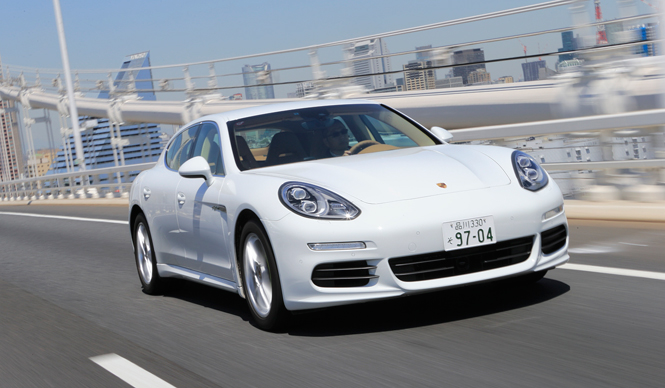
The "Panamera S E-Hybrid," a plug-in hybrid model of Porsche's four-door sedan, the "Panamera." We tested it, focusing on its "fuel economy," under conditions assumed to be close to real-world usage in Japan, by driving to and from a business district in Makuhari, Chiba Prefecture, from the city center. Tatsuya Otani reports.
Text by OTANI TatsuyaPhotographs by ARAKAWA Masayuki
The True Capability of a Porsche Hybrid
As the Panamera S E-Hybrid departed from the building housing Porsche Japan's headquarters in Meguro, it began to move silently on electric power alone. This was primarily because the E-Power mode, which prioritizes battery power during system startup, was automatically selected, and the onboard battery was fully charged when we borrowed the car.
Even in this state, flooring the accelerator would immediately engage the engine, providing access to the system's maximum output of 416ps if desired. However, when simply keeping pace with city traffic, the electric motor's 95ps output is more than sufficient, allowing the Panamera S E-Hybrid to continue its silent journey. Let's call this driving mode "EV driving."
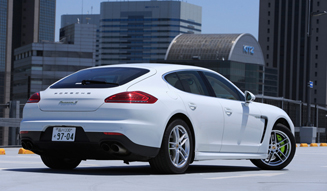
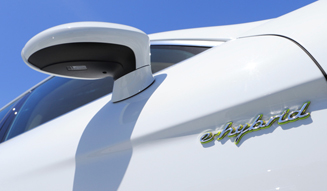
The EV driving continued not only in the city but also on the Shuto Expressway. On the day of the test drive, we confirmed the speedometer reaching 80 km/h in EV mode (meaning the engine did not engage), and during an international test drive event in Germany, we experienced EV driving at 120 km/h on the Autobahn. In other words, the car's performance is such that EV driving alone can handle most situations.
Indeed, on this test drive from Meguro to Makuhari, the engine only "kicked in" for about 10 seconds during the acceleration to merge onto the Shuto Expressway's Bayshore Route. Thereafter, the Panamera S E-Hybrid continued in EV mode until the trip meter reached 24.7 km and the battery charge dropped to 20 percent. The driving time up to this point was 36 minutes, with an average speed of approximately 41 km/h. However, since no gasoline was used during this period, the fuel economy calculated by conventional methods was effectively infinite (the onboard computer displayed 99.9 km/ℓ).
After that, it operated exactly like a conventional hybrid vehicle, with the engine starting when the throttle pedal was pressed and stopping to regenerate energy when it was released, repeating this cycle until we reached our destination in Makuhari (let's call this phase of driving "hybrid driving").
The 41.7 km journey from Meguro took 56 minutes, resulting in an average speed of approximately 45 km/h. The onboard computer indicated an average fuel economy of 33.8 km/ℓ.
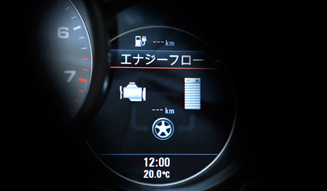
It's nothing short of astonishing that a high-performance car with a maximum output of 416ps achieved a fuel economy of 33.8 km/ℓ while driving in an urban environment.
Porsche Panamera S E-Hybrid
Porsche's PHEV Sedan
Measuring the Fuel Economy of the Panamera S E-Hybrid (2)
Excellent Fuel Economy on Gasoline Alone
However, it would be premature to consider the Panamera S E-Hybrid remarkably fuel-efficient based solely on this figure. As mentioned earlier, the first 24.7 km were driven solely on electric power, using virtually no gasoline. In other words, the Panamera S E-Hybrid continued to run using the "fuel" of electricity pre-charged in the battery.
So, what was the fuel economy in the conventional sense?
Having traveled 41.7 km to Makuhari with an average fuel economy of 33.8 km/ℓ, the gasoline consumed was 1.23 liters. However, the actual driving using gasoline (i.e., the hybrid driving section) began only after the battery charge dropped to 20 percent, covering a distance of 17 km (41.7 km - 24.7 km). If we assume this 17 km was driven using 1.23 liters of gasoline, the average fuel economy during that period was 13.8 km/ℓ. This is still a very respectable figure. And if we are to discuss the economic efficiency of the Panamera S E-Hybrid, I believe this number is more appropriate.
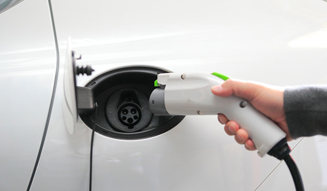
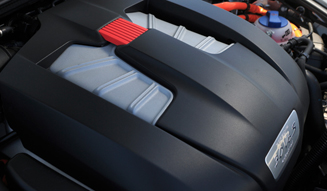
After finishing the interviews in Makuhari, we returned to Meguro. During this return trip, we simulated battery charging for photographic purposes, but in reality, no charging occurred. By the end of the test drive, the onboard computer showed a total distance of 93.4 km and an average fuel economy of 15.6 km/ℓ. While this figure feels more realistic compared to the 33.8 km/ℓ average fuel economy displayed upon arrival in Makuhari, it is still comparable to the fuel economy of a compact car from a decade ago.
However, if we isolate the hybrid driving portion using the same method described earlier, the distance covered was 68.7 km, consuming 5.99 liters of fuel, resulting in an average fuel economy of 11.5 km/ℓ. This is about a 17 percent decrease compared to the "hybrid driving average fuel economy" to Makuhari, likely due to the lower average speed caused by Tokyo's traffic congestion. Incidentally, the average speed during this period was 24.4 km/h.
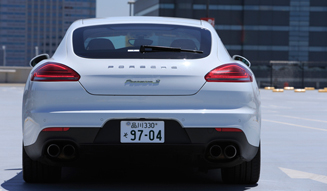
While I've listed many detailed figures, let's organize the data slightly based on the average fuel economy displayed on the onboard computer. The average fuel economy for the initial EV driving section was 99.9 km/ℓ (0% hybrid driving), the average fuel economy upon arrival in Makuhari was 33.8 km/ℓ (41% hybrid driving), and the average fuel economy upon returning to Meguro was 15.6 km/ℓ (64% hybrid driving). (The percentage in parentheses indicates the proportion of hybrid driving within the total distance).
In other words, the "apparent" average fuel economy of the Panamera S E-Hybrid varies significantly depending on the proportion of hybrid driving included.
Porsche Panamera S E-Hybrid
Porsche's PHEV Sedan
Measuring the Fuel Economy of the Panamera S E-Hybrid (3)
The Trick Behind the 32.3 km/ℓ Display
In Europe, the Panamera S E-Hybrid's average fuel economy is actually stated as 3.1 liters per 100 km. In Japanese terms, this is 32.3 km/ℓ, coincidentally very close to the 33.8 km/ℓ we recorded when the hybrid driving ratio was 41 percent.
This suggests that European fuel economy measurements for plug-in hybrid vehicles incorporate a certain range of EV driving. While I haven't fully grasped this calculation method yet, it appears to be based on the EV driving range. In essence, the longer the distance the car can travel on battery power alone, the lower the hybrid driving ratio can be estimated for the calculation.
Why do they do that?
The Panamera S E-Hybrid is officially announced to have an EV-only range of 33.2 km. Let's assume you use the Panamera S E-Hybrid for your daily commute, and the distance to your workplace is 33.2 km, making a round trip of 66.4 km. If you fully charge the battery every day upon returning home, the hybrid driving ratio would be approximately 50 percent, and the average fuel economy on the onboard computer should show around 30 km/ℓ. If the commute distance increases, the apparent fuel economy will decrease, and if it shortens, it will improve.
As mentioned earlier, the apparent fuel economy varies greatly depending on the extent of EV driving. However, from the perspective of daily average fuel economy, it is heavily influenced by the daily driving distance and the car's electric range.
In other words, there are individual differences based on usage. However, to avoid complicating the discussion with such nuances, Europe "determines the hybrid driving ratio based on the electric range and calculates the average fuel economy accordingly." This is why astonishing figures like 32.3 km/ℓ can be displayed.
Porsche Panamera S E-Hybrid
Porsche's PHEV Sedan
Measuring the Fuel Economy of the Panamera S E-Hybrid (4)
Why European Manufacturers Are Enthusiastic About PHEVs
However, Porsche is a conscientious manufacturer and also discloses the average fuel economy when the hybrid driving ratio is 100 percent. This figure is 12.3 km/ℓ, which is also very close to the number we calculated this time.
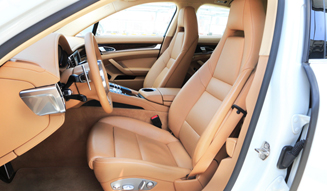
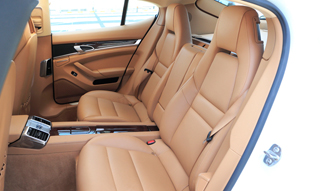
12.3 km/ℓ. For a sports sedan exceeding 5 meters in length and capable of reaching 270 km/h, this is truly an impressive fuel economy. Incidentally, the rear seats of the Panamera S E-Hybrid offer ample space, with about two and a half fists of legroom and one and a half fists of headroom. This is comparable to the spaciousness of a Mercedes E-Class.
On the other hand, being able to officially claim a fuel economy of 32.3 km/ℓ offers significant advantages to car manufacturers. This is because European fuel economy regulations require the average CO2 emissions of all sold models to be below 130g/km. Converted to fuel economy, this is 17.8 km/ℓ, a very stringent target for car manufacturers like Porsche, which primarily deals in high-performance vehicles.
However, plug-in hybrids not only allow them to easily meet this target but also contribute to reducing their overall fleet's average CO2 emissions. This is the primary reason why European car manufacturers are now enthusiastically introducing plug-in hybrid vehicles to the market.
Porsche Panamera S E-Hybrid
Porsche's PHEV Sedan
Measuring the Fuel Economy of the Panamera S E-Hybrid (5)
What Makes a Plug-in Hybrid Appealing?
In an extreme view, it's an almost impossible task for sports car manufacturers like Porsche to achieve CO2 emissions below 130g/km without plug-in hybrids. Therefore, it's not necessarily a bad thing for the government to provide such a realistic solution. However, generally speaking, the cost increases when batteries and motors are added to make a car a plug-in hybrid. Since consumers bear the increased cost, they will not opt for a plug-in hybrid unless the value added justifies the price increase from their perspective.
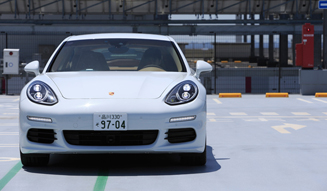
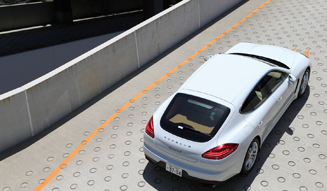
However, Porsche has set the price of the Panamera S E-Hybrid at just 10,000 yen less than the Panamera S, which has equivalent performance. It is imagined that policy considerations played a significant role in this decision. If fuel economy improves as a result, it is undoubtedly a benefit for consumers.
On the other hand, since the Panamera S E-Hybrid is heavier, its handling might not be as agile as the Panamera S. Considering these factors, how consumers perceive the overall appeal of a car will ultimately determine the commercial success of plug-in hybrid vehicles.
How to create an appealing plug-in hybrid vehicle? Car manufacturers, faced with the challenge of reducing CO2 emissions, are now grappling with this complex theme.

Porsche Panamera S E-Hybrid
Body Dimensions | Length 5,015 x Width 1,930 x Height 1,420 mm
Wheelbase | 2,920 mm
Tread Front/Rear | 1,658 / 1,662 mm
Weight | 2,095 kg
Engine | 2,995 cc V6 Direct Injection DOHC Supercharged + Electric Motor
Engine Max Output | 245 kW (333ps) / 5,500-6,500 rpm
Engine Max Torque | 440 Nm / 3,000-5,250 rpm
Motor Max Output | 70 kW (95 ps) / 2,200-2,600 rpm
Motor Max Torque | 310 Nm / 1,700 rpm
System Max Output | 306 kW (416ps) / 5,500 rpm
System Max Torque | 590 Nm / 1,250-4,000 rpm
Transmission | 8-speed Automatic (Tiptronic S)
Drive System | FR
Tires Front/Rear | 245/50R18 / 275/45R18
Max Speed | 270 km/h
0-100km/h Acceleration | 5.5 seconds
Hybrid Fuel Consumption | 12.3 km/ℓ
Electric Driving Range | 33.2 km
Power Consumption | 3.54 km/kWh
Equivalent EV Range | 32.1 km
Battery Capacity | 9.07 kWh
Price | 14,980,000 yen
Porsche Customer Care Center
0120-846-911