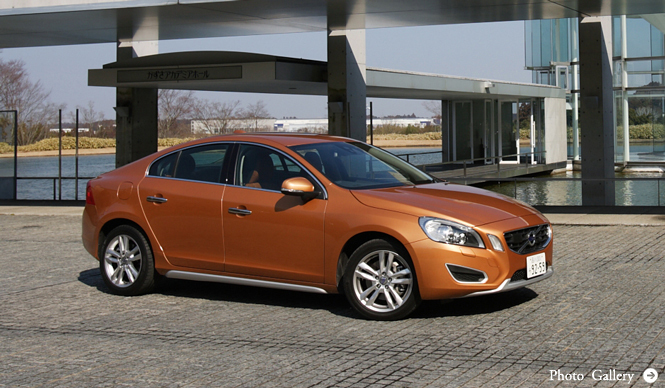
VOLVO S60 | Volvo S60 Test Drive Impressions
VOLVO S60
A Stylish Coupe Sedan with New Safety Features (1)
Volvo's stylish four-door coupe excels in safety and performance.
Text by Fumio OgawaPhotos by Masayuki Arakawa
For a More Agile Driving Sensation
The new Volvo S60 is a model that leaves a lasting impression with its distinctive style, groundbreaking safety features called Human Safety, and driving enjoyment. Furthermore, a 1.6-liter turbo engine model has also been introduced. The downsizing concept, which reduces environmental impact, is also noteworthy. Commuting in a car like this would surely make every day more enjoyable.
The new S60, launched by Volvo Car Japan on March 5, 2010, is a model change after 10 years. It's a stylish coupe sedan. While the market for such vehicles is expanding, the previous S60 pioneered this segment. The new model inherits the flowing roofline characteristic of its predecessor. Moreover, the new model has a more aggressive impression.
There are three model lineups.
S60 DRIVe (1.6-liter turbo / front-wheel drive) | ¥3.75 million
S60 T6 AWD SE (3-liter turbo / full-time four-wheel drive) | ¥5.19 million
S60 T6 AWD R-DESIGN (powertrain same as SE / reinforced suspension + special interior/exterior) | ¥5.79 million

Design Director Peter Horbury
"We designed the front grille with an aggressive shape that projects forward. The fender arches, which we call 'double wave,' have a massive image reminiscent of the musculature of racehorses. Furthermore, the roofline is rounded in an arc, and in the new model, the slope from the C-pillar to the rear is steeper, creating a fastback-like sportiness."
Peter Horbury, the British design director, who came to Japan for the press test drive of the S60, explained the car's features while drawing diagrams with a marker.
Volvo Car Japan explains that the actual driving enjoyment is one of the S60's major features.
"The S60 aims to achieve unprecedented driving pleasure by thoroughly reviewing each part of the chassis. The springs of the front suspension struts have had their rigidity increased by 47%, and the chassis connection points have had their rigidity increased by 50%. The steering column has been thickened and the bushes hardened, increasing torsional rigidity by 100%. The steering gear ratio is 10% quicker than the previous model, providing a sharp steering feel."
Two Features for Smooth Cornering
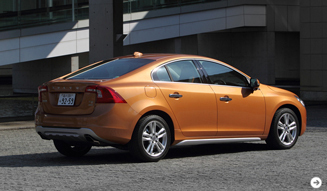
VOLVO S60 T6 AWD SE
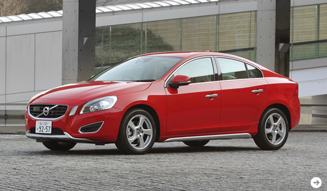
At the same time, the S60 is equipped with two electronic control systems that enhance cornering speed. One is Corner Traction Control. It adjusts the torque balance between the left and right front wheels during cornering. By applying the brakes to the inner wheel of a corner, it counteracts the understeer tendency that causes the car to push outwards. When a strong lateral G-force (centrifugal force) is applied, the driving force is reduced according to the laws of physics. By suppressing the inertia that tries to push the car outward, the driving force is used effectively. In other words, it maintains a high cornering speed. This is the purpose of this system.
The other electronic control system is Advanced Stability Control. Using a gyroscope and accelerator sensors, it detects skidding early and controls torque distribution to the wheels and applies brake control. This makes cornering smoother and simultaneously reduces the risk of the car becoming unstable when needing to avoid an obstacle ahead by steering.
VOLVO S60
A Stylish Coupe Sedan with New Safety Features (2)
Test Drive of Two Models with Different Characters
When actually driving it, it certainly feels good. The handling is slightly less responsive around the neutral point, likely due to Volvo's safety philosophy. On the other hand, as Volvo claims, cornering at high speeds is remarkably stable. Combined with the engine's ample torque, you can corner very smoothly. It gives the impression of successfully balancing stability and high speed.
There are two types of engines: a 3-liter 6-cylinder turbo with a maximum output of 224kW (304ps) and a 1.6-liter 4-cylinder turbo. Both are easy to handle. The 1.6-liter unit is particularly noteworthy. Developed during the period when Volvo was under Ford's umbrella, it follows the downsizing concept of increasing output while reducing displacement. It belongs to the same series as the 2-liter unit in the XC60 T5 SE already introduced to the market. It features direct injection and variable valve lift control.
The 4-cylinder unit, combined with a twin-scroll turbocharger, has a maximum output of 180ps and generates a maximum torque of 240Nm from 1,600 rpm. Therefore, it is easy to handle, and it's surprisingly powerful even below 2,000 rpm. As the revs increase, it delivers power, providing a pleasant acceleration up to high speeds. Its moderately mild power delivery suits the S60's upper-middle class character perfectly.
The 1.6-liter model uses a 6-speed dual-clutch transmission. It works well with the torque, offering relatively low shift shock and a smoothness comparable to a torque converter automatic.
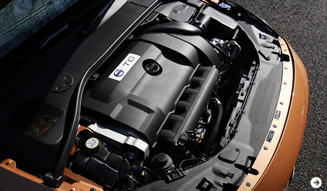
VOLVO S60 T6 AWD SE
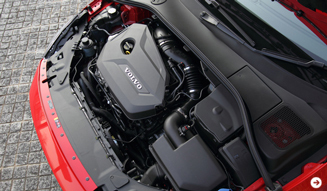
The 1.6-liter engine has another interesting feature. When the 'DRIVe' switch on the dashboard is activated, the engine disconnects from the transmission when you lift your foot off the accelerator, resulting in idling. When you place your foot back on the accelerator, the optimal gear is selected with a light touch, and the engine reconnects to the transmission. This is intended to improve fuel economy. While applicable in limited situations like downhill slopes, it's the accumulation of such small efforts that matters for fuel efficiency.
The 3-liter V6 is also smooth, with ample torque, making it easy to drive. Perhaps due to the larger turbocharger diameter, the power really kicks in above 2,500 rpm, but the larger displacement provides a sense of effortless power. The 4-cylinder model is nimble, while the 6-cylinder model is refined. The distinct characters are appealing. It's worth considering the price difference of about ¥1.4 million and your preference. The 4-cylinder model has its own charm, as does the 6-cylinder model. Therefore, the 4-cylinder model is not lacking in any way (though some equipment is optional, that's another story) and can be enjoyed to the fullest. If you don't require luxurious features like leather seats, you won't be disappointed with the 4-cylinder model.
Two Sporty Specifications: Touring and Dynamic
VOLVO S60 T6 AWD SE
The ride comfort is good. Comparing the suspension system settings, the 4-cylinder DRIVe is tuned for comfort with the 'Touring' specification, while the 6-cylinder T6 AWD SE features the sporty 'Dynamic' specification. Furthermore, the R-DESIGN, available for the T6 AWD SE, includes Volvo's dedicated sports suspension, described as 'the sportiest and hardest.' I experienced both Touring and Dynamic, and I believe both strike a good balance between sportiness and comfort. While there are slight differences in character, neither leans to an extreme.
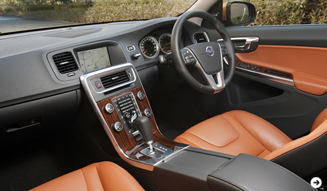
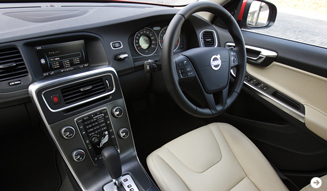
The interior is spacious. The seats offer good support and are comfortable. The center dashboard follows Volvo's 'floating center stack' design, reminiscent of a single piece of thin bent wood, but the quality of the wood and the accompanying metal accents create a luxurious feel. However, the shape of the switches is somewhat complex, making it difficult for beginners to operate the air conditioning while driving.
The rear seats have slightly limited headroom, as expected for a four-door coupe concept. Therefore, the hip point of the seats has been lowered, but for families with children who are not yet adults, this should be sufficient.
VOLVO S60
A Stylish Coupe Sedan with New Safety Features (3)
First-Ever "Human Safety"
One of the notable safety features is 'City Safety.' Based on research indicating that '75% of rear-end collisions in urban areas occur at speeds below 30 km/h, and 50% of drivers do not brake before impact' (according to Volvo's press materials), this system automatically applies the brakes to avoid a collision. It operates at speeds from 4 km/h to 30 km/h. Volvo states that collisions are avoided below 15 km/h, and speeds are reduced to minimize damage from 15 km/h to 30 km/h.XC60This system, adopted from the XC60, is standard equipment on the S60.
Another noteworthy technology making its debut on the S60 is 'Human Safety.' This system is an evolution of the automatic braking with collision warning function that detects obstacles ahead and applies the brakes automatically. While City Safety uses a laser sensor located in the grille, Human Safety utilizes both a laser sensor and a digital camera. It automatically detects vehicles as well as pedestrians 80 cm or taller, and with a warning followed by full braking, it aims to avoid collisions or minimize damage.
"In developed countries, excluding the US, pedestrian-vehicle collisions occur with considerable frequency. Since the beginning of our car manufacturing, safety has been Volvo's most important core value, and we aim to eliminate accidents involving Volvo cars. The Human Safety system is in line with this corporate philosophy. Looking at Japanese accident statistics, while the fatality rate for occupants has decreased and is heading towards zero, the number of fatalities in accidents involving pedestrians, which was previously lower than for occupants, has not significantly decreased. It has now become the leading cause of fatal accidents. We believe Human Safety will be useful in this regard."
said Jonas Ekmark, Director of Electronic Safety Technology at Volvo.
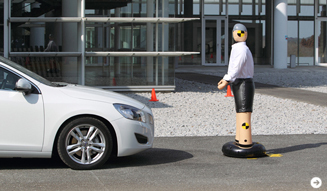
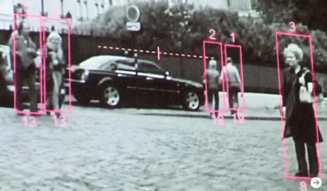
The Human Safety system detecting a person's position in front of the vehicle.
In tests using a dummy, a vehicle accelerating towards the dummy at 20 km/h braked successfully at the last moment. Although the dummy is stationary, Ekmark noted, 'In reality, moving pedestrians, like waving or walking, are easier for the camera to detect.'
However, there are still many limitations to its operation. It cannot detect objects from the sides or rear, its performance degrades in rain, and it does not operate at night. "We are working on improvements," they say, but it seems likely to be useful on Japanese roads where sidewalks are poorly maintained, and pedestrians and vehicles often share the same road surface. On the S60, it is an option for the DRIVe model, offered as a 250,000 yen 'Safety Package' along with Lane Departure Control and other features. Even as an option, we hope to see it implemented in lower-tier models as much as possible.
As a vehicle eligible for eco-car tax reductions (DRIVe), the S60 is truly a car rich in content. Volvo understands the value its brand offers.

VOLVO S60 DRIVe
Body Dimensions | Length 4,630 x Width 1,845 x Height 1,480 mm
Engine | 1.6-liter inline 4-cylinder DOHC
Maximum Output | 132 kW (180 ps) / 5,700 rpm
Maximum Torque | 240 Nm / 1,600-5,000 rpm
Drivetrain | Front-wheel drive
Transmission | 6-speed dual-clutch system
10-15 mode fuel economy | 12.6 km/ℓ
CO2 Emissions | 173 g/km
Price | ¥3.75 million
VOLVO S60 T6 AWD SE
Engine | 3-liter V-type 6-cylinder DOHC
Maximum Output | 224 kW (304 ps) / 5,600 rpm
Maximum Torque | 440 Nm / 2,100-4,200 rpm
Drivetrain | Full-time four-wheel drive
Transmission | 6-speed automatic
10-15 mode fuel economy | 8.9 km/ℓ
CO2 Emissions | 231 g/km
Price | ¥5.19 million
*CO2 emissions are based on European data.