Volkswagen Touareg Hybrid: A Test Drive Review
Volkswagen Touareg Hybrid
The New Top Model Replacing the V8 (1)
The German-made hybrid SUV, the Touareg Hybrid, is not only fuel-efficient but also impressively powerful.
Text by Fumio OgawaPhotos by Masayuki Arakawa
The Fusion of Hybrid Technology and Downsizing Concept
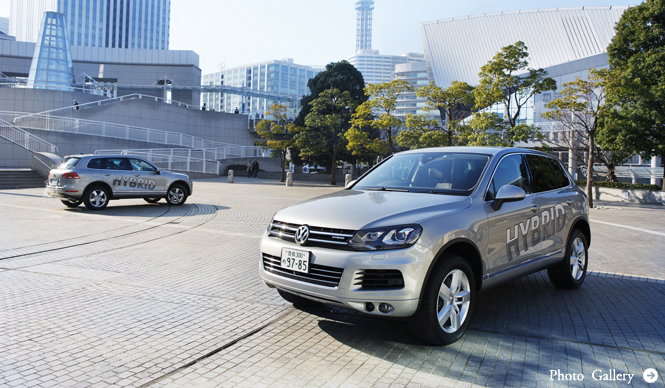
A Hybrid Model Joins the LineupThe new Volkswagen Touareg. Featuring sporty handling and a downsizing concept, it stands out. Many German SUVs are compelling, but the Touareg, with its power and excellent fuel economy, is a model that deserves attention for its modern appeal.
The Touareg, launched in Japan by Volkswagen Group Japan on February 17, 2011, is now in its second generation with this full model change. This tall-bodied SUV is equipped with a 4WD system.
The Touareg lineup consists of two models.
• Touareg V6 (¥6.23 million) - Equipped with a 3.6-liter V6 and 4MOTION
• Touareg Hybrid (¥8.98 million) - Equipped with a 3-liter V6 supercharged engine, electric motor, and 4MOTION
The new Touareg is characterized by its premium feel, functionality, high driving dynamics, and excellent fuel economy. In line with the downsizing concept actively promoted by European automakers, the Touareg also features a smaller engine displacement to improve fuel efficiency.
Achieving a Fuel Economy of 13.8 km/L
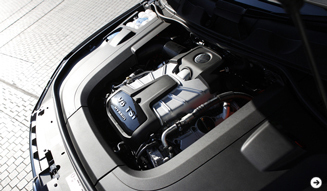
Particularly noteworthy is the hybrid model, which replaces the previous 4.2-liter V8. The engine displacement is significantly reduced to 3 liters. However, it is combined with an electric motor and an intercooled supercharger. In terms of maximum output, the V8 produced 257 kW, while the hybrid system, combining the gasoline engine and electric motor, delivers a total of 279 kW, an increase in power. Fuel economy, measured in the 10-15 mode, is an impressive 13.8 km/L, which the importer proudly states is more than double that of the V8.
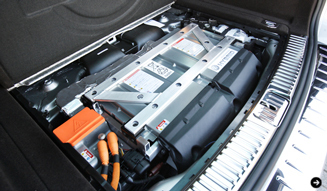
The Touareg Hybrid system places an electric motor between a longitudinally mounted V6 engine and an 8-speed automatic transmission. A clutch allows it to be disengaged from the engine. The nickel-metal hydride battery is mounted behind the rear axle, extending beyond it.
With many manufacturers increasingly adopting smaller, high-performance lithium-ion batteries, why was nickel-metal hydride chosen? Volkswagen Group Japan explained, "Nickel-metal hydride offers advantages in terms of stability and cost. We are not rigidly committed, but at this point, we believe it is the best choice."
Volkswagen Touareg Hybrid
The New Top Model Replacing the V8 (2)
Four Driving Modes Adaptable to the Situation
Driving the hybrid, the first impression is how it belies its 2.3-ton weight. This is likely due to the supercharger, which generates torque from low RPMs, compensating for the smaller displacement. The vehicle glides forward with just a light touch of the accelerator.
The Touareg's system is primarily engine-driven, with the electric motor engaging when more power is needed. Pressing the accelerator further activates the electric motor. Even though the engine produces strong torque above 3,000 rpm, the additional power from the electric motor allows for acceleration that the importer describes as "equivalent to a V8 engine."
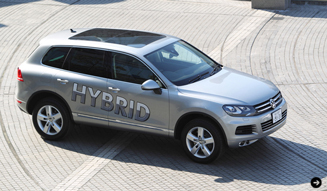
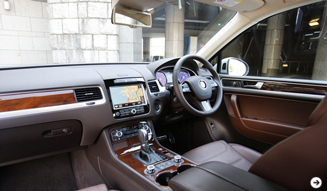
There are several operating modes for the hybrid system.
• "Gasoline Engine Driving Mode" for normal driving
• "Boost Mode," where the electric motor engages for strong acceleration (e.g., when the accelerator is pressed hard)
• "Coasting Mode," where the engine shuts off and disconnects from the drivetrain when the accelerator pedal is released
• "EV Driving Mode," allowing travel on electric power alone up to 50 km/h and for a distance of up to 2 km
It's impressive how the large vehicle moves silently in EV mode. The press materials mention it's "convenient for late-night returns home." Depending on the battery's state, the engine may start up during the drive, but its startup sound is never intrusive.
The handling has significantly improved from the previous generation. The steering is more direct, and the car responds instantly even around the neutral point, offering a sporty driving feel. During cornering, the sensation of the rear settling in is pleasing, and the stable posture provides a high level of confidence.
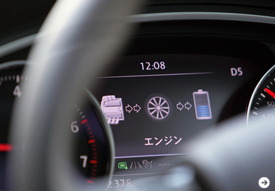
The damping and steering weight can be adjusted between "Normal," "Sport," and "Comfort." While the differences aren't drastic, it's enjoyable to experience subtle variations based on your mood. Personally, I preferred the Normal setting.
When you release the accelerator pedal while driving, the "Coasting Mode" described earlier engages. The tachometer needle drops to zero, and the engine completely shuts off. In this state, the car coasts forward. Shifting gears, whether up or down, has no effect. Then, if you place your foot back on the accelerator and apply light pressure, the engine instantly awakens. This mode, used when you don't need to constantly press the pedal, helps improve fuel economy.
While Japanese hybrid vehicles boast extremely low fuel consumption, the Touareg Hybrid should be understood as a variation of the downsizing concept, replacing the powerful V8. It's perfect for drivers who want a large SUV, enjoy driving, but are also conscious of fuel economy.
Volkswagen Touareg Hybrid
Body: Length 4,800 x Width 1,945 x Height 1,740mm
Engine: 3-liter V6 DOHC Intercooled Supercharger + Motor
Max Output (Engine): 245 kW (333 ps) / 5,500-6,500 rpm
Max Output (Motor): 34 kW (46 ps)
Max Torque: 440 Nm (44.9 kgm) / 3,000-5,250 rpm
Vehicle Weight: 2,340 kg
Drivetrain: 4MOTION (Full-time 4WD)
Transmission: 8-speed AT
10-15 Mode Fuel Economy: 13.8 L/100km
CO2 Emissions: 168 g/km
Price: ¥8.98 million