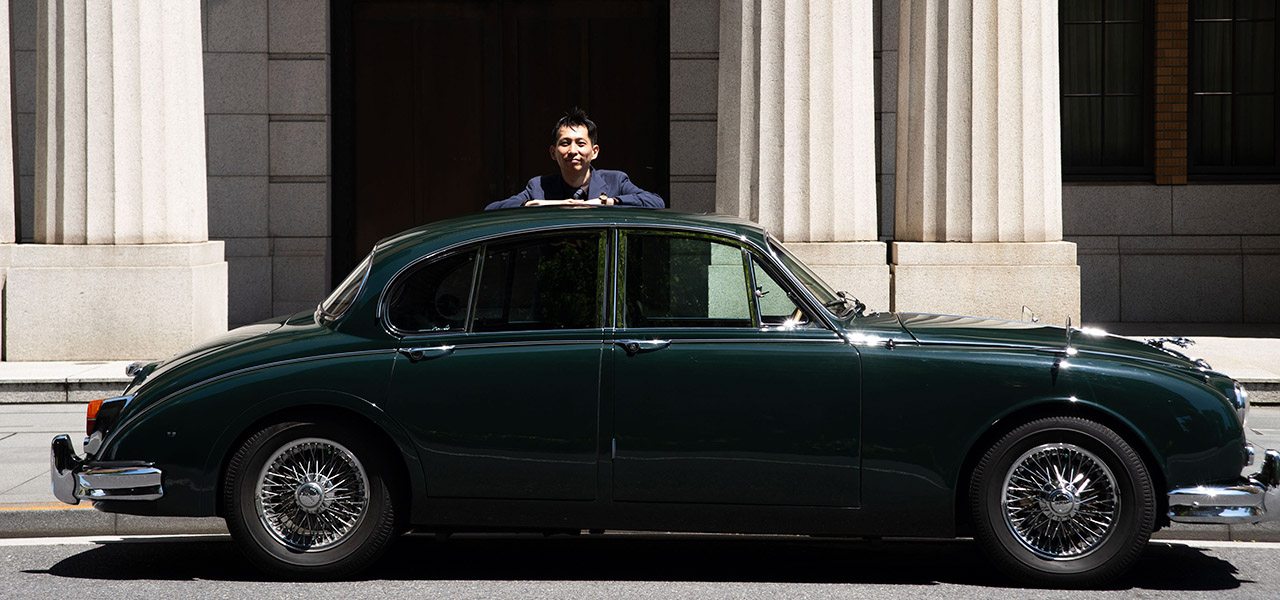
Show Us Your Car, Returns: Part 1, Keisuke Shiozu × Jaguar MK2
Keisuke Shiotu (Kita School Noh Actor) × Jaguar MK2
Things become precious because they are made by human hands. Both the Noh stage and the MK2 evoke the same feeling.
Creators who interestingly change the times with their unique worldview. What do they think about when choosing an item, and by what criteria do they select it? And with what affection do they treat it? This series features creators who love cars, talking about the appeal of a car-centric lifestyle. This time, Keisuke Shiotu, a Kita School Noh actor, shares his thoughts on the Jaguar MK2.
Text & Photographs by KITAHARA Toru
The First Car I Ever Saw at a Dealership Was a Jaguar MK2
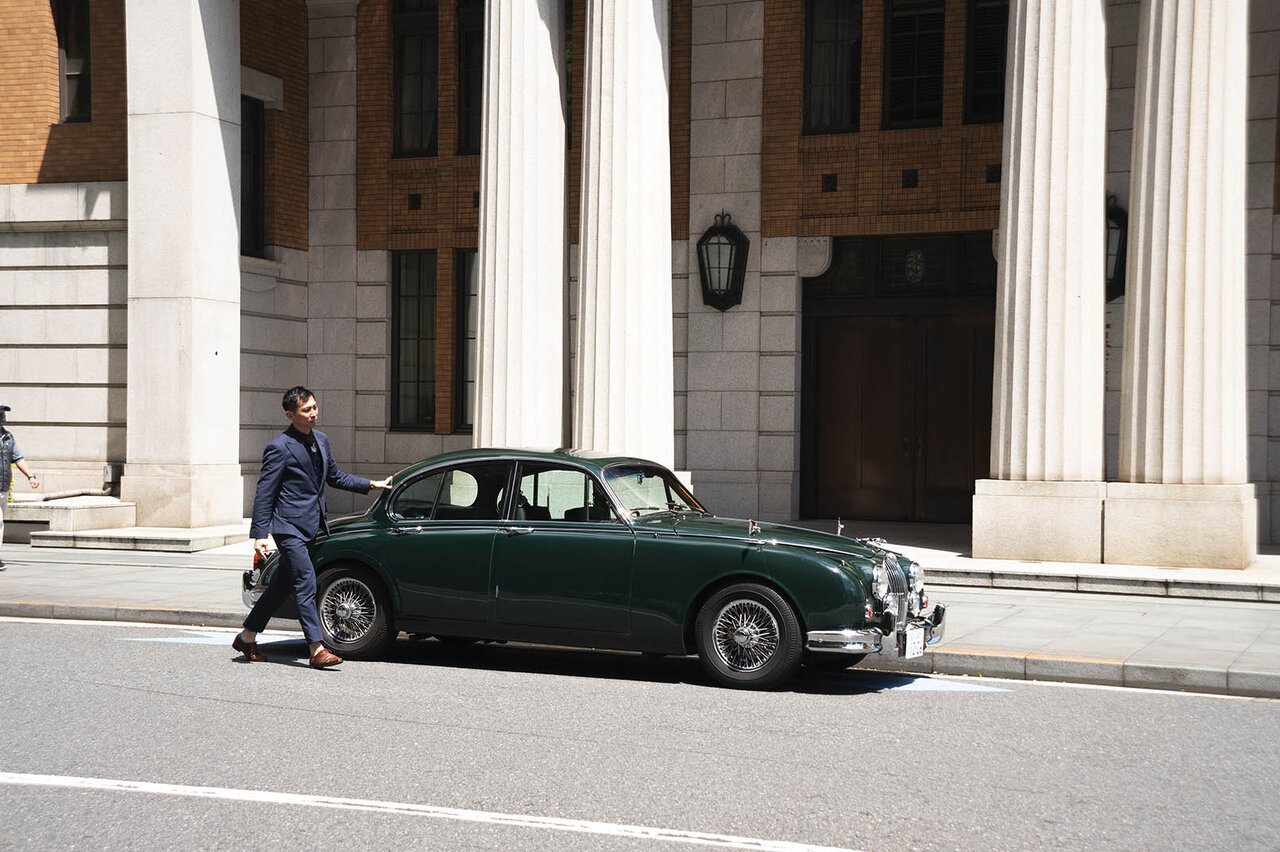
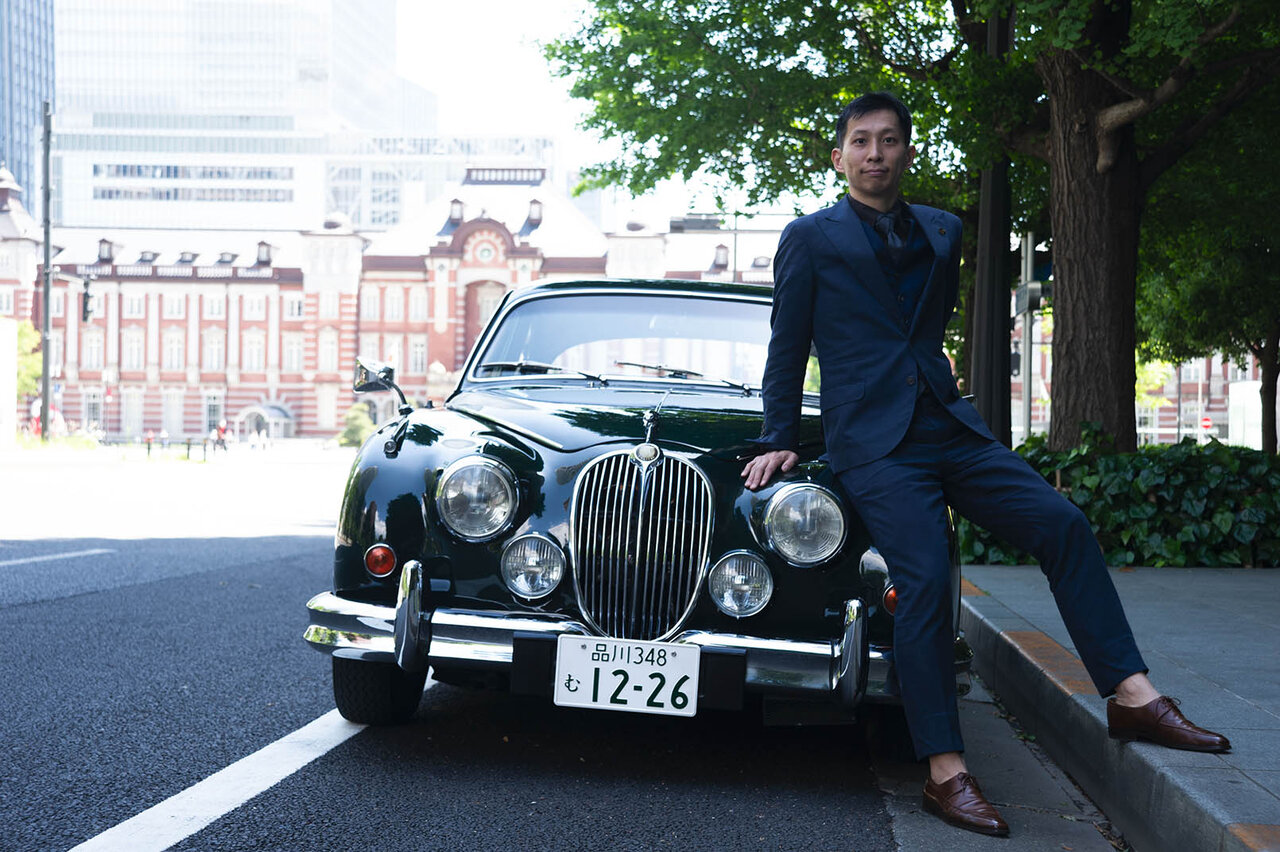
If aesthetics have driven the evolution of cars and preserved old cars as heritage... Perhaps these thoughts arise because I spoke with Keisuke Shiotu, a Kita School Noh actor who lives in the world of Noh, a Japanese traditional performing art with 600 years of history and a symbol of Japanese aesthetics. In terms of tradition, Jaguar is also a traditional British car brand. The encounter between the two, though rare, may have been inevitable. This is Keisuke Shiotu's Jaguar MK2, the first installment of 'Show Me Your Car Returns'.
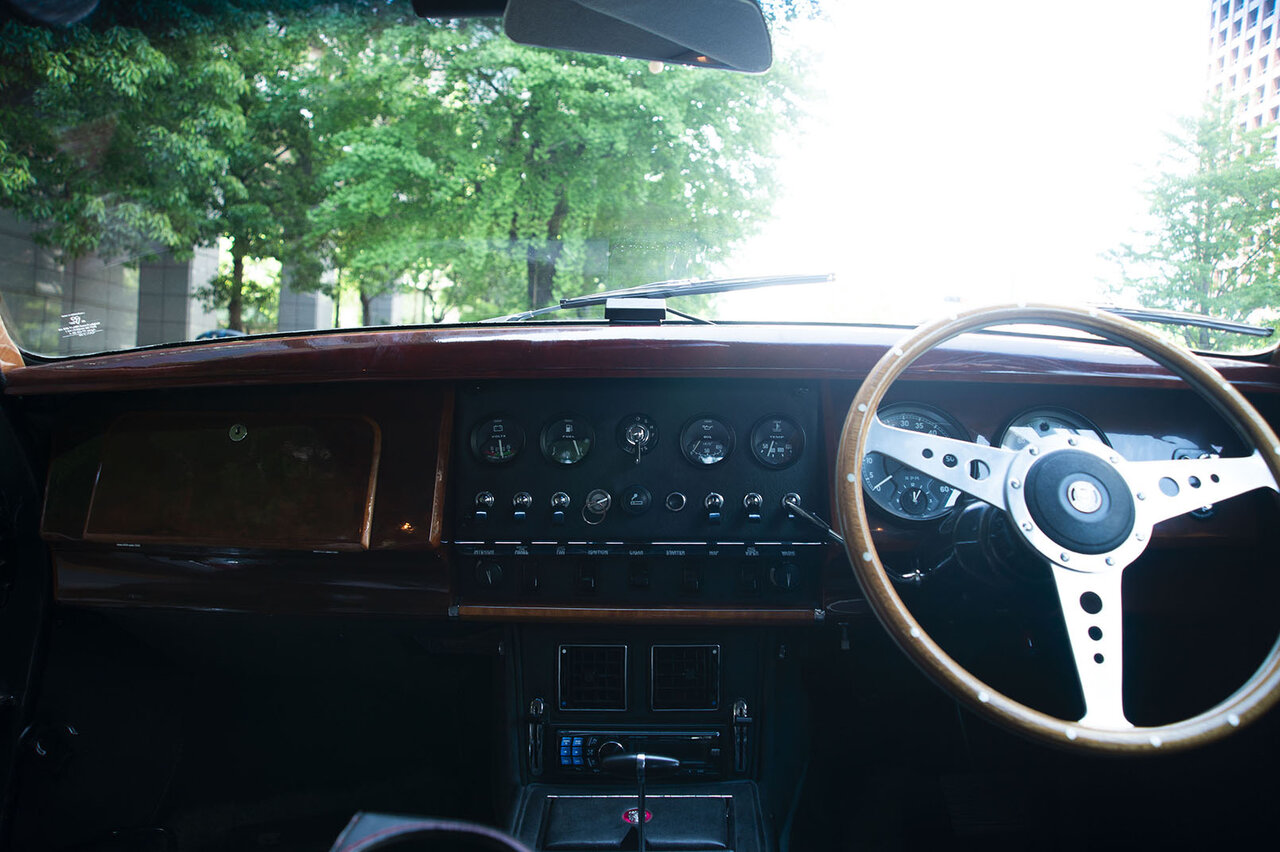
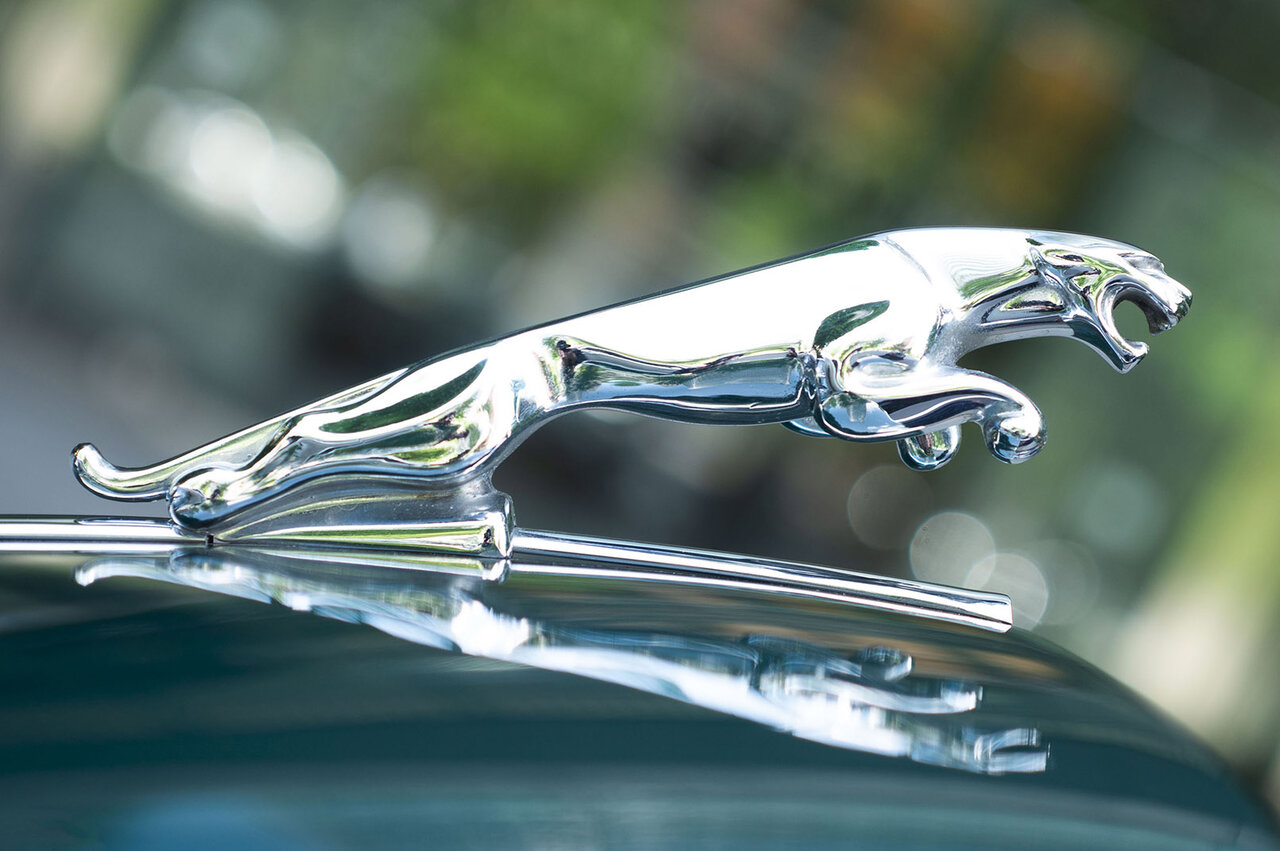
When did you start noticing this Jaguar MK2?
This might have been the first car I ever saw at a dealership. When I was in junior high school, my father (Tetsuo Shiotu, a Kita School Noh actor) wanted to buy a car, so I went with him. There it was, a Jaguar MK2. Apparently, when my father was training, disciples who came to learn Noh as a hobby would arrive in this car. Jaguars back then were ultra-luxury cars, far more valuable than they are now, akin to buying a private jet.
My father also apparently harbored a dream of 'someday owning a Jaguar.' So we went to a dealership that's still there along Kanamachi-dori. The salesperson mentioned they also had a white and a red one, and when I was about to buy it, I heard that the car might spend more time in the shop than on the road, so I gave up. That impression certainly remained.
Could you tell us about your car history leading up to the Jaguar MK2?
I believe coupes are the ultimate in terms of silhouette. I also like convertibles. So, when I decided to buy a car after graduating from university, my choices were narrowed down to coupes and convertibles. There was another factor that narrowed my options. As someone in the world of Noh, I have seniors, and I felt I shouldn't stand out too much, so I chose a hardtop and bought a Peugeot 206CC.
How many convertibles have you owned?
After the 206CC, I had a 307CC, then a Volkswagen Eos. That one was a handful. It was a dream car in a way, with a sunroof that opened and then the roof opened further, but it leaked! (laughs) I ended up repainting it gold and driving it.
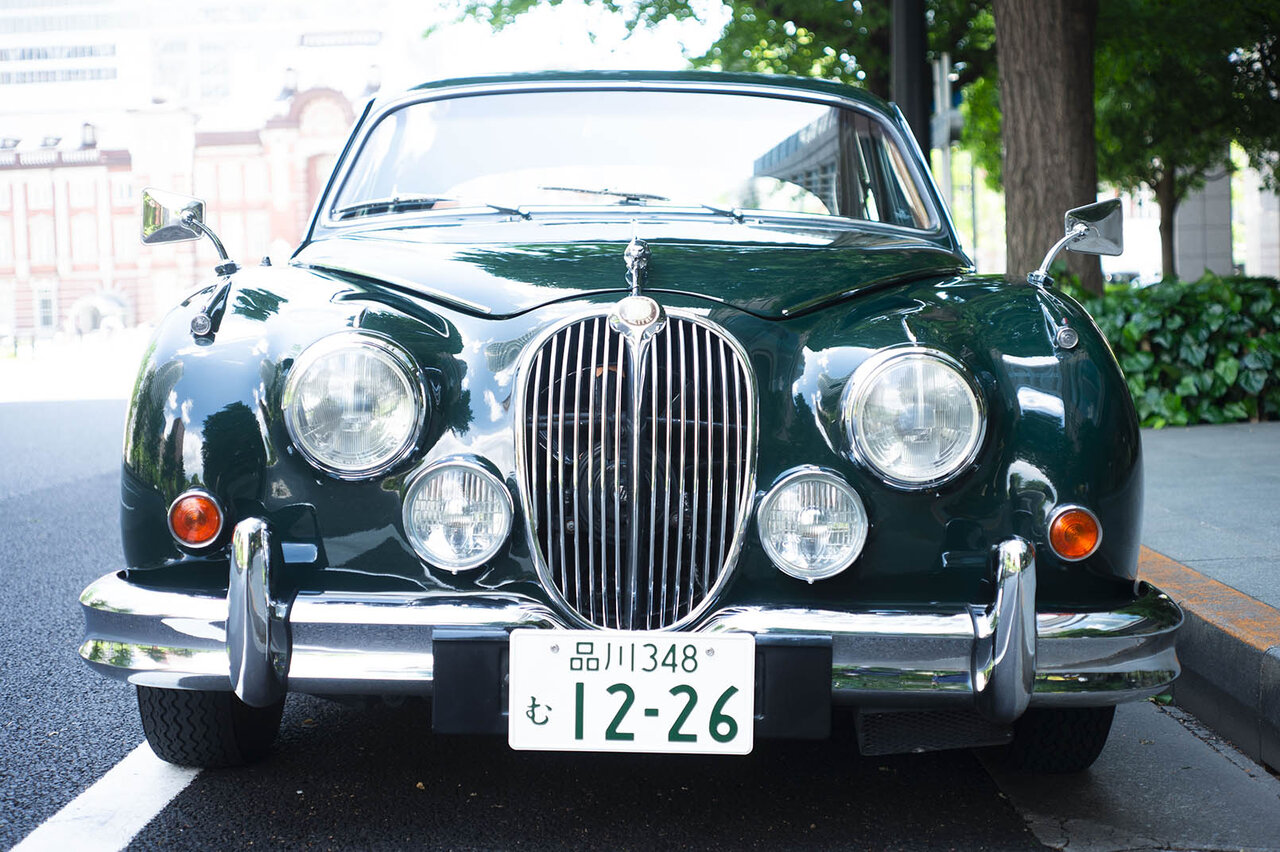
The Coupe is the Ultimate
You mentioned that the coupe is the ultimate. What kind of cars do you like?
I like the lines of the Aston Martin DB4 and DB5, and the Jaguar E-Type. I also generally like lines drawn by Pininfarina. Pininfarina, you could say, is an Italian design house. They also designed for Ferrari, Alfa Romeo, and Maserati. The list is endless: Ferrari 250GT, Alfa Romeo 1600 Spider... Among them, my favorite is the Maserati A6G. I'm drawn to Pininfarina's beautiful, rounded curves.
So Dedicated He Even Buys Model Kits
Your love for coupes... why the Jaguar MK2 then?
Admittedly, the Jaguar MK2 is a sedan. After getting married and having children, the idea of a four-door car started to cross my mind. But it's hard to find a sedan that truly appeals to me. Because I love coupes! (laughs) I used to own the final Maserati Coupe with its Ferrari V8 4.2-liter engine, which was quite unconventional for a Noh actor. (laughs) There were troublesome things like clutch replacements, but driving it was fun.
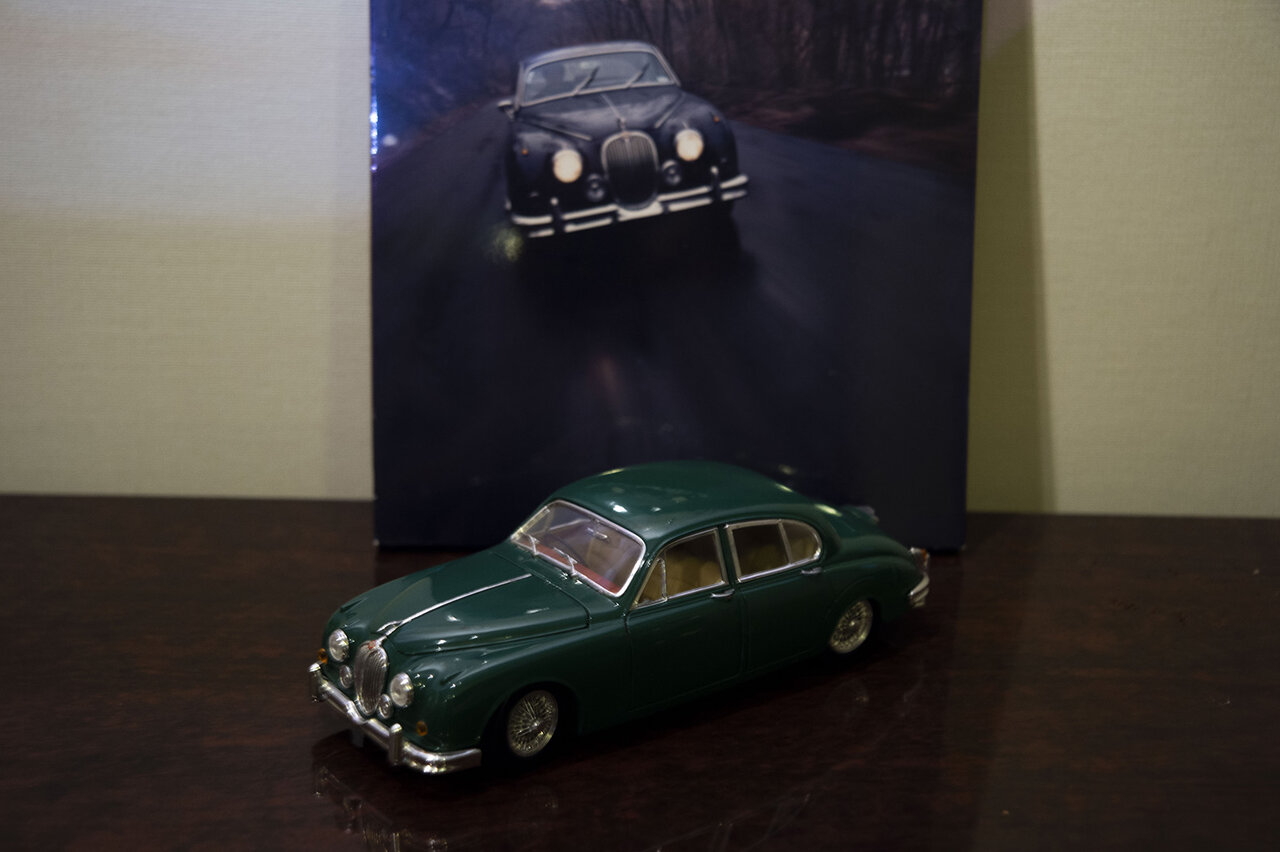
From the time I bought the Maserati, I started thinking about sedans, and the Jaguar MK2 was always in the back of my mind. I just love its lines, its exterior form. It's a shape that absolutely cannot be achieved through mass production. Actually, before buying it, I even bought a Tamiya model kit. I bought it on Mercari for more than the list price! (laughs)
So, after searching, you found this Jaguar MK2?
It wasn't easy. I told a friend who runs a used car dealership, with whom I've had a long relationship, and asked him to look for one. I saw a few, but in the end, we went together to an auction in Nagoya, and that's where I found it. It came to Japan in '90, the service records were intact, and the mileage of 23,000 km seemed genuine. It was clear it had been well cared for.
Drink Coffee While Admiring the Jaguar!?
So, the MK2 you'd always had in your heart is finally yours.
The trouble started after I bought it. I even considered giving up at one point. It took over six months. Right after delivery, the coolant started leaking, and it went straight to the shop, and then it was basically stuck there. For something of that caliber, it's a car you want, even if it's not running.
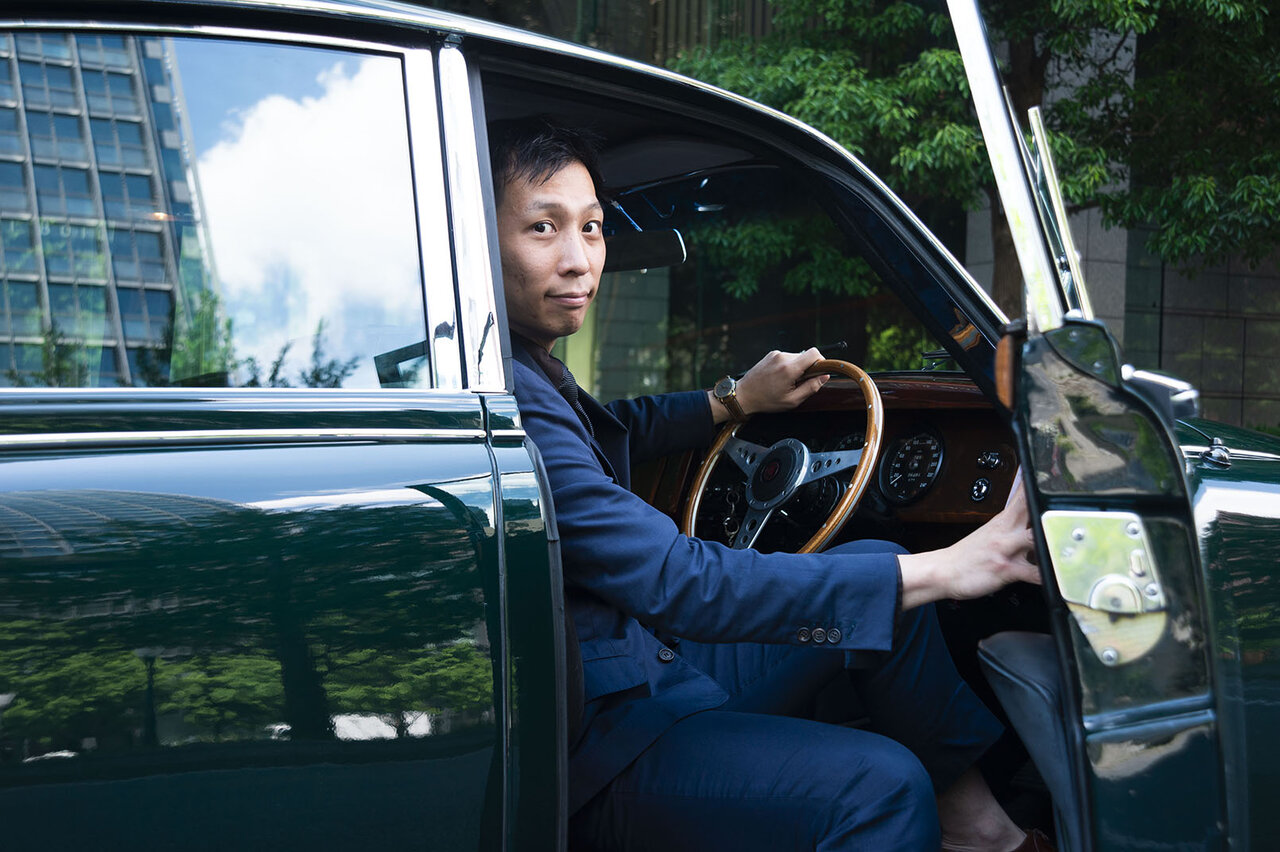
Many people feel they're not so much 'driving' it as 'tinkering' with it. Some even told me, 'That car isn't for driving; it's a 'place' to sit and drink coffee while looking at it.' Nevertheless, I've managed to get it running, but I wonder how it will fare in the summer. To prepare, people double the coolant tank size, work on the air intake and exhaust, but the exhaust during warm-up is quite important, so there's still work to be done there.
What was it like to drive?
I panicked when it overheated, the starter wore out, and the brakes didn't work. There are risks involved in owning a classic car, but I find myself wanting to cherish it, flaws and all. Even opening and closing the rear quarter windows requires a gentle touch, or the handle might break. It's troublesome, every step of the way. When you wear good leather shoes, don't you feel like taking care of them? It's like that. Still, I believe it's a car you can drive for a lifetime. Because it was a popular car, there are many parts available, and you can find them online.
Could you tell us again about the appeal of old cars?
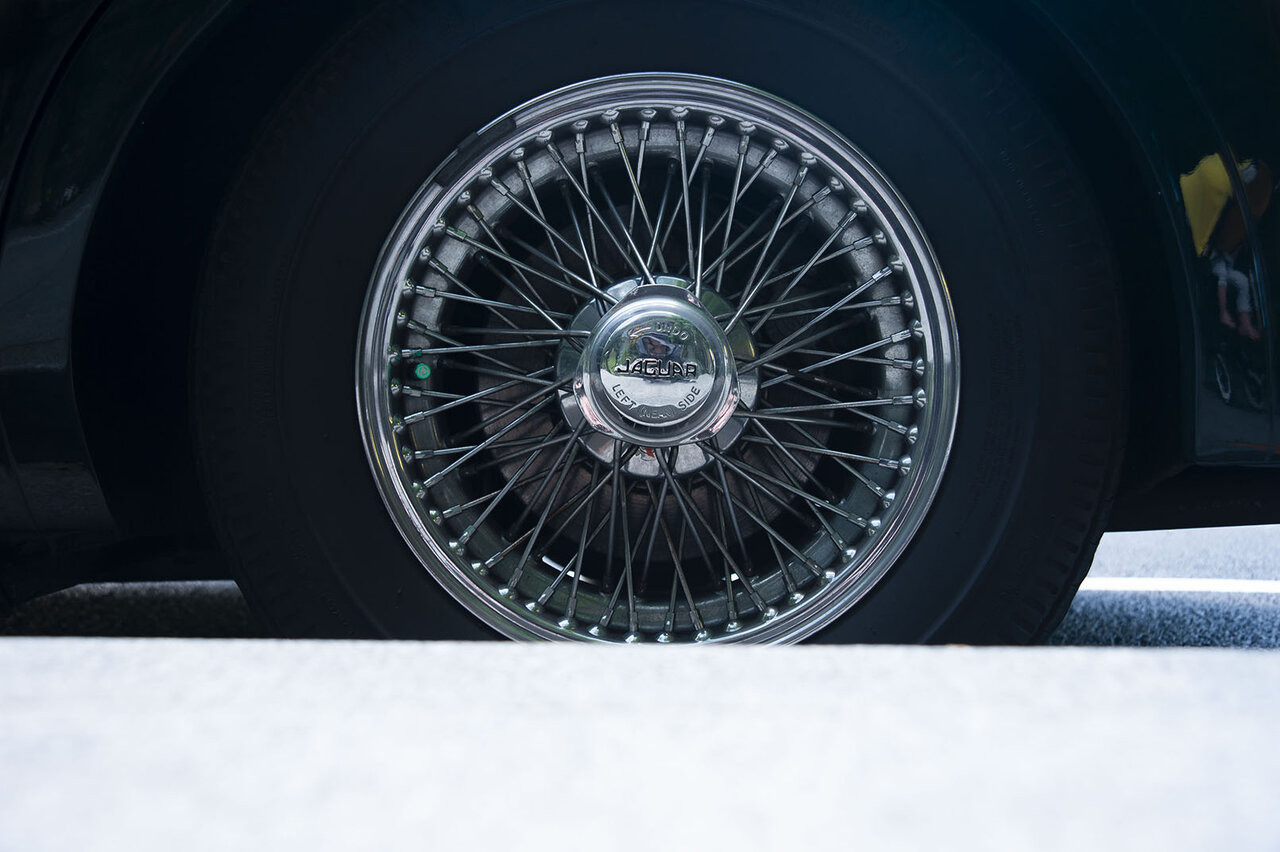
That kind of car is seen as a hobby, something you like. Noh, too, has a certain charm that comes with 600 years of history. In the past, people didn't have convenient things, so they didn't spare any effort. Traditional crafts are similar; I believe they are created one by one with craftsmanship. I imagine those wheels are also woven one by one. Human touch and the craftsman's dedication are concentrated in those details.
Noh is exactly the same; the costumes and masks (called 'omote' in Noh) are made with utmost dedication. A mask maker might create dozens, discard many, and only one survives. When I was young, I wanted to wear beautiful costumes and masks, but I couldn't because it would look unbalanced. But after I turned 35, a senior told me, 'You'll be helped by good costumes and masks. Let them compensate for you and create a good performance.' I understood. He also said, 'Since you're using them, let them inspire you to practice even more.'
Ultimately, the Noh stage is a collective of artisans. Just like a car or fashion, nothing works well without overall balance. If it doesn't suit the car, then I want to become someone who can make it suit. I want to be that kind of person.
The Preciousness of Human Touch
I believe that the value of old things isn't just about their age, but also the presence that comes from being made by human hands.
Some might find old things uncool, but I think there's also an appeal to things that are old and cool. Noh, after 600 years, has a certain newness to it. Even if you try to keep things the same, they change. You perform it the same way, but the result is different. That difference is me. Some people are starting to create new Noh pieces or collaborate. But I want to remain as I am (pointing to the MK2). While EV cars and new designs are necessary, the unchanging style of the past, both in cars and Noh, suits me.
Shiotsu, who continues to engage in innovative activities while preserving tradition in the world of Noh, where a single second can be stretched into an hour of dance, seems to exist in a different dimension. The sight of his Jaguar MK2 running on modern asphalt also gave the impression that time had stopped. But this is a double exposure, overlapping with what Shiotu describes: how the unchanging style of the past appears novel when seen in the present. Noh is currently gaining attention, and as a leading figure, I hope readers will witness his stage. Old yet new things will undoubtedly captivate your gaze.
Keisuke Shiotu
A Kita School Noh actor. Born October 27, 1984, in Tokyo. Made his first stage appearance at the age of three. In 2004, he founded 'Wakamono Noh' (Noh for Young People), which continues to this day. This initiative, featuring condensed Noh performances, explanations by students, and student discounts, has garnered attention for its efforts to broaden young people's interest in Noh. In 2021, he participated in the traditional outdoor Noh performance 'Takeda Shinno.' His proactive engagement with tradition is recognized in various circles. He also has a modern side, participating in triathlons.
A Kita School Noh actor. Born October 27, 1984, in Tokyo. Made his first stage appearance at the age of three. In 2004, he founded 'Wakamono Noh' (Noh for Young People), which continues to this day. This initiative, featuring condensed Noh performances, explanations by students, and student discounts, has garnered attention for its efforts to broaden young people's interest in Noh. In 2021, he participated in the traditional outdoor Noh performance 'Takeda Shinno.' His proactive engagement with tradition is recognized in various circles. He also has a modern side, participating in triathlons.