Car x Product Design, Architecture, Art: What unprecedented ideas emerged from this unique encounter?
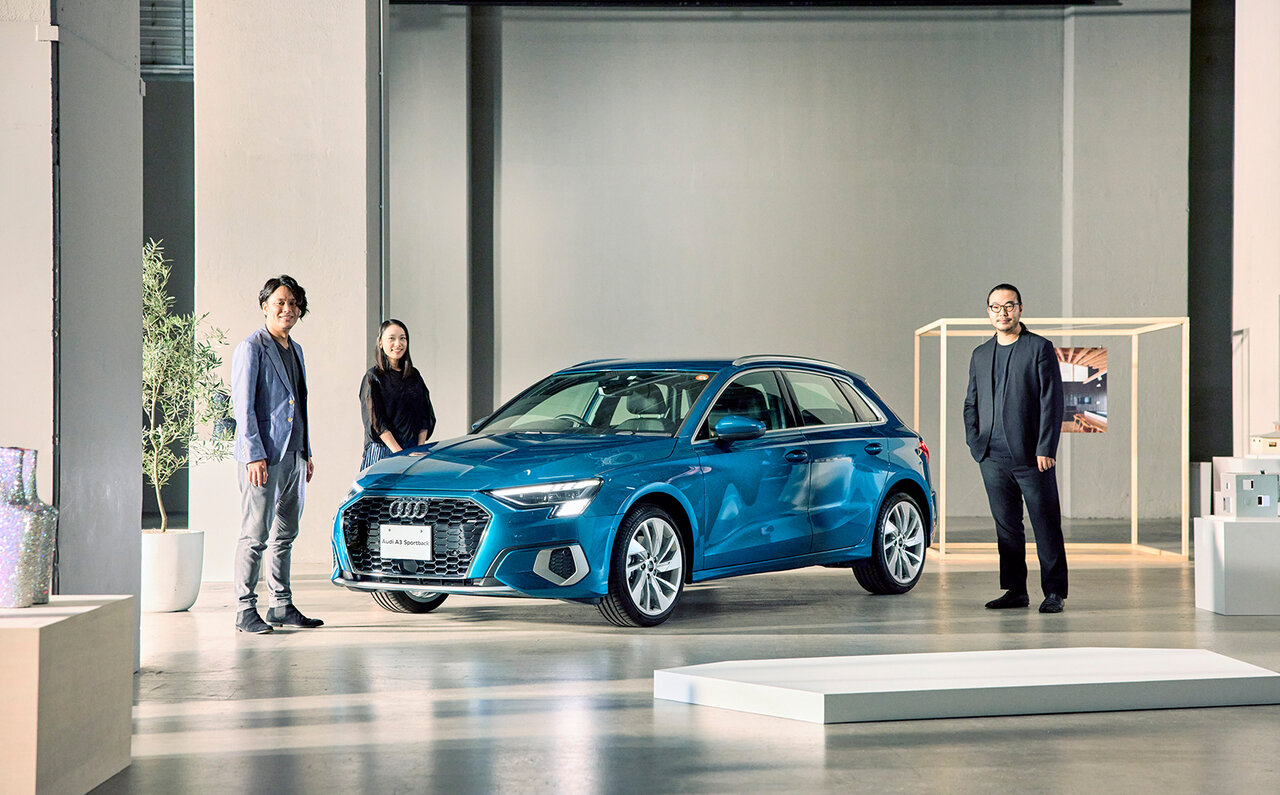
How did these individuals, active in fields distinct from automotive design, interpret the new Audi A3's design? What if they were to express their impressions not with words, but through their respective "designs"? The three readily accepted this challenging task.
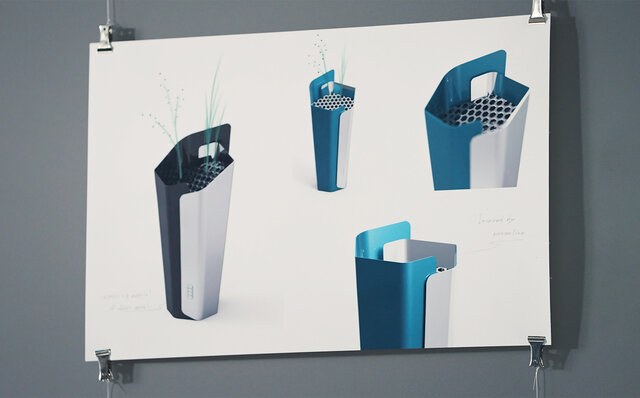
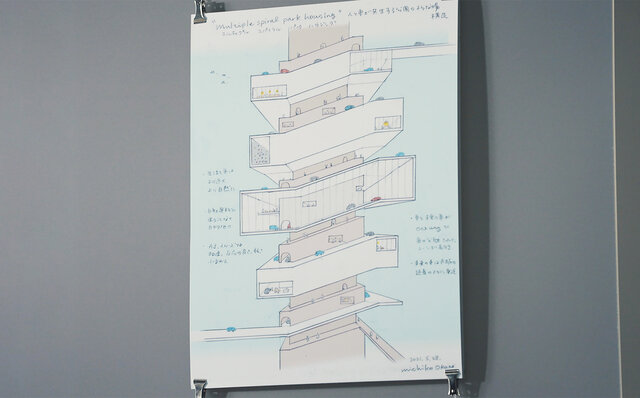
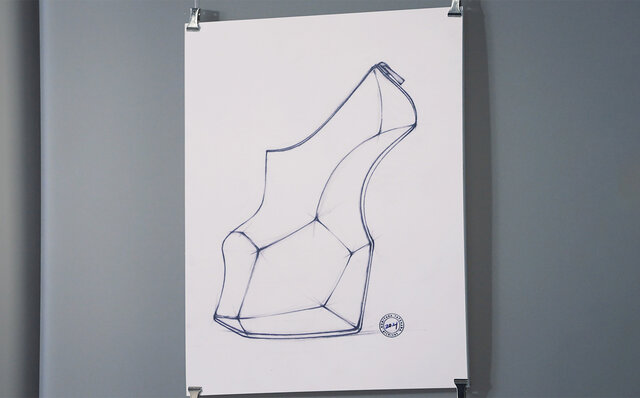
Yokozeki presented a CG rendering already at the prototype level. His flower vase, inspired by the air intakes and singleframe grille, also incorporates sustainability by utilizing recycled body scraps. Tatehana masterfully integrated his first impression of the new Audi A3's three-dimensional form into the silhouette of his signature heel-less shoes. Okuno, having test-driven the new Audi A3 beforehand, proposed a multi-spiral residential architecture inspired by the pleasant sensation of acceleration.
The futuristic architectural design, featuring spiral pathways for cars and other mobility, alongside living spaces, drew exclamations of surprise. These ideas, fittingly termed "cross-genre"—car x product, car x art, car x architecture—suggest the further possibilities and future trajectory of design.
Yokozeki's flower vase, born from a product designer's perspective, imagines integrating the new Audi A3 into the home.
Okuno's architectural concept features a multi-spiral design where lanes for mobility and residential lanes intertwine, conveying a futuristic theme of coexistence between people and mobility.
An idea sketch by Tatehana, integrating the new Audi A3's "minimal yet complex and sharp" form into his signature heel-less shoes.
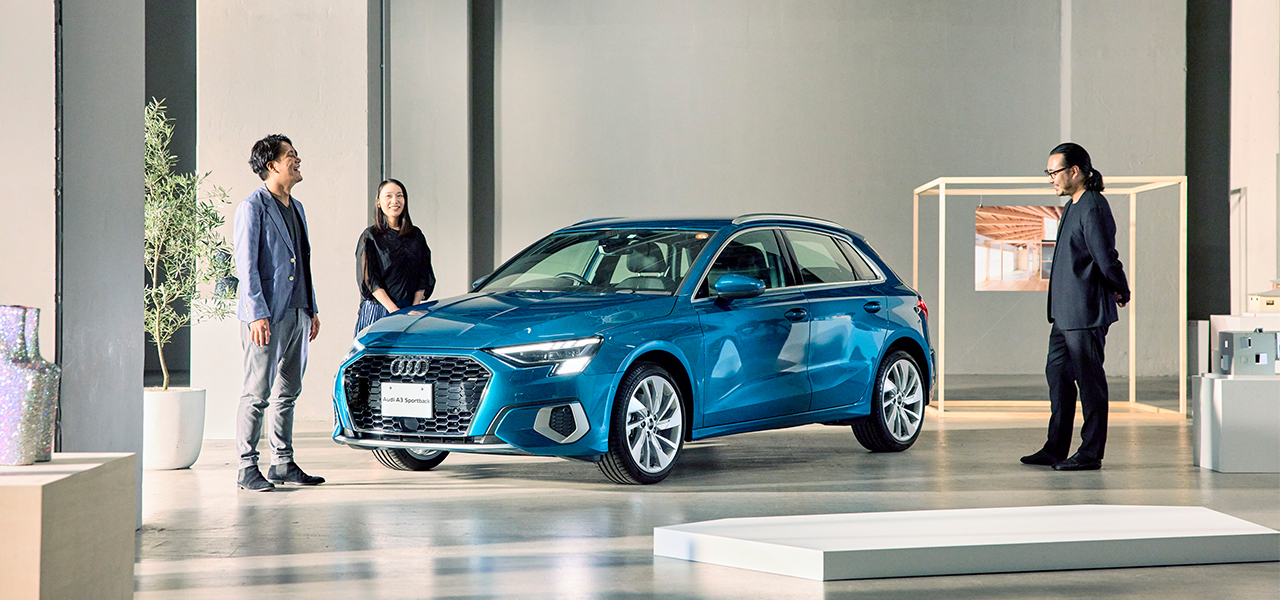
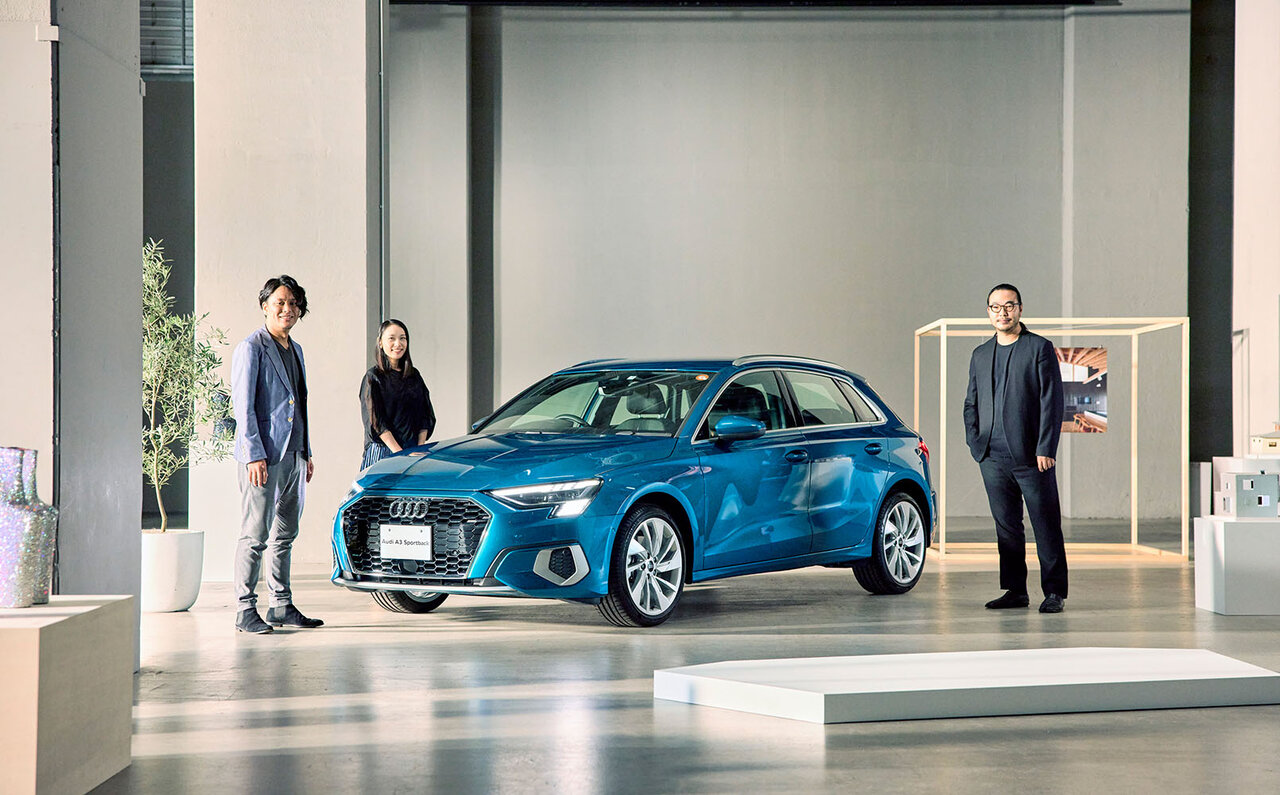
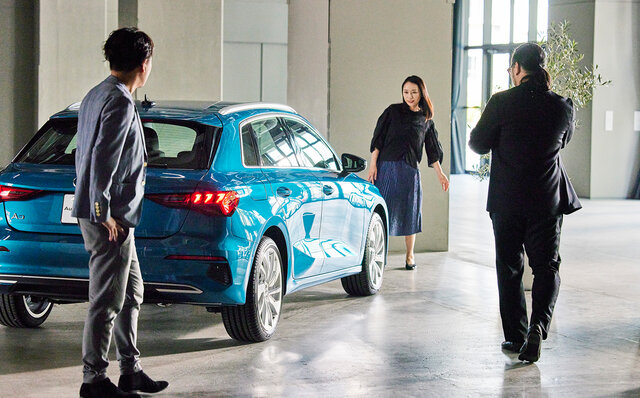
The three experience the new Audi A3 firsthand: What is Audi's design philosophy as they perceive it?
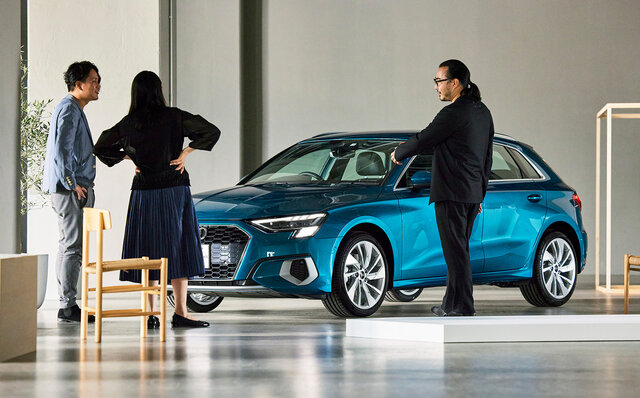
The three gaze anew at the new Audi A3, their conversation flowing as drivers, beyond their roles as creators.
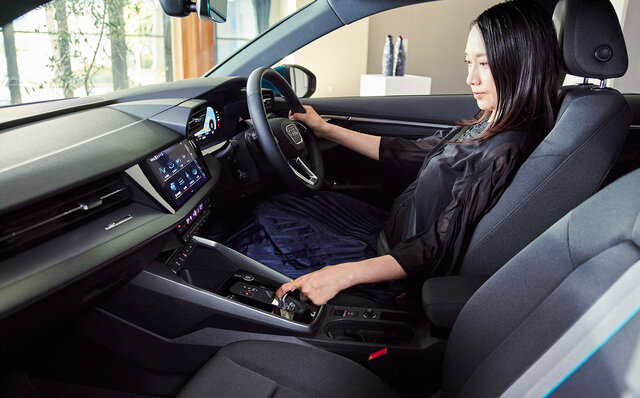
Okuno at the steering wheel: "The cockpit layout, where essential information naturally falls within the line of sight, feels very user-friendly."
After the talk session, the three re-examined the new Audi A3's design, settling into the car and taking the wheel. "From a distance, the silhouette has a minimalist design, but up close, the attention to detail becomes apparent. It has a sharp impression. This contrast itself is highly appealing," commented Tatehana.
Yokozeki, whose work involves various products that complement people's lives, also expressed his admiration: "It's compact yet features sharp lines, enhancing its elegance. Up close, the undulating surfaces reflect a metallic blue gradient, which is stunningly beautiful."
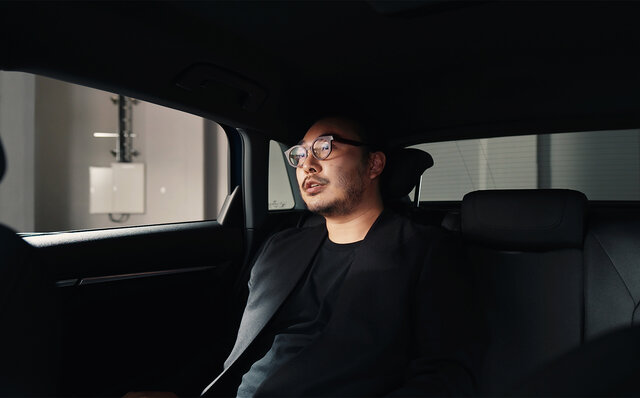
"Even someone as tall as I am can sit comfortably. It's more spacious than its exterior suggests," said Tatehana, his expression softening.
Their fascination continues with the sculptural form and delicate press lines.
Okuno entered the driver's seat to experience Audi's "Human Centric" design philosophy firsthand. "The entire monitor and control panel are slightly angled towards the driver. This seems to allow for stress-free operation." She, who often drives to take her children to school, thoroughly enjoyed the comfortable space embodying a human-centered design.
Tatehana, back in the rear seat, examined the texture of the details: "The treatment of materials creates a contrast, enhancing the sense of luxury."
Car design often focuses solely on superficial aesthetics. However, this talk session, rich with fresh perspectives from product design, architecture, and art, revealed the diverse possibilities for enriching our lives and society.
Perhaps Audi, as a brand committed to providing value to society, has been able to embody this philosophy in the new Audi A3's design precisely because it maintains a keen focus on the daily lives of people today.
The three likely perceived in the car's design an ambition not only for aesthetic evolution but also for progress that considers the lives of drivers and passengers, and ultimately, the design of society itself. This valuable talk session truly illuminated the future of design.
Viewing mobility from a perspective beyond car design unlocks the greater potential of design. This talk session offered a glimpse into the evolution of design's approach toward the future.