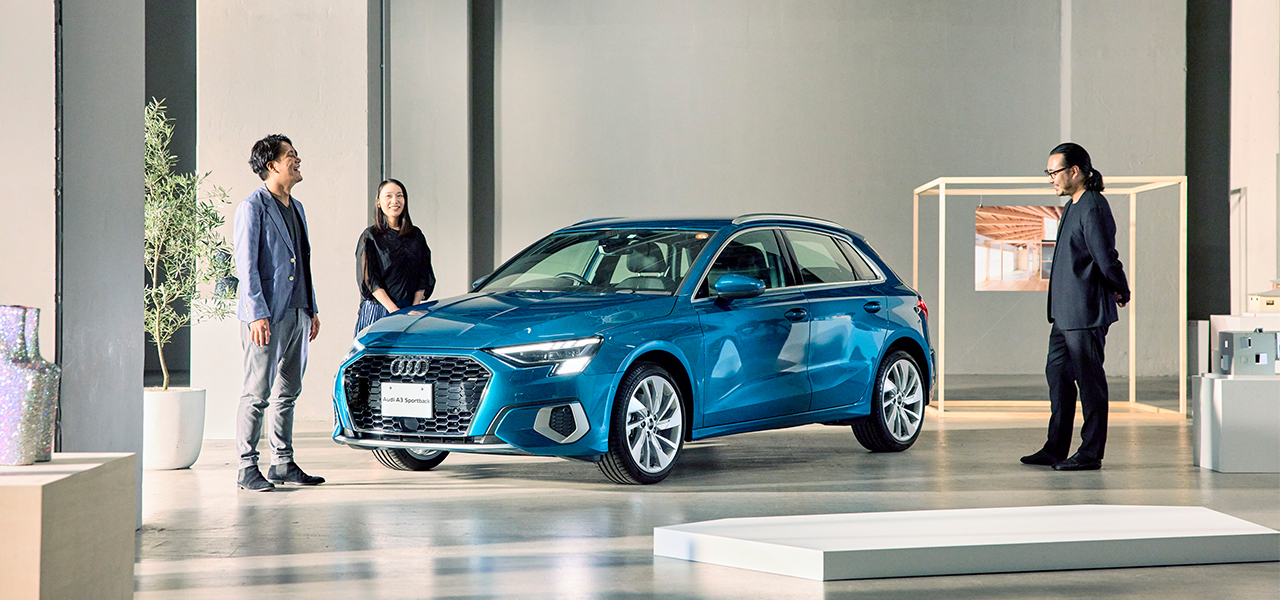
Three creators surround the new Audi A3, examining its design details through their unique perspecti
The Future of Design, Revealed by Three Creators and the New Audi A3 | PR: Audi
Presented by AUDIAudi A3 Sportback
The Future of Design, Revealed by Three Creators and the New Audi A3
A car's allure cannot be captured in a single phrase. The perspective of design, in particular, is profound, its impression shifting dramatically with the angle and depth of observation. The new Audi A3 marks a full model change after eight years. Within its calm presence, Audi's design philosophy resides in every detail. Gathered around this latest Audi A3 were three individuals: artist Noritaka Tatehana, architect Michiko Okuno, and product designer Ryota Yokozeki. In this special talk session, where they shared their thoughts and philosophies through the lens of the new Audi A3, which embodies Audi's latest design language, they also unveiled idea sketches inspired by the A3. How does its design appear to them, active in their respective fields? And what is the future of design as they envision it?
Text by OPENERS Editorial Department
"While retaining the best elements, small innovations are present throughout." Yokozeki's admiration for the new Audi A3's design
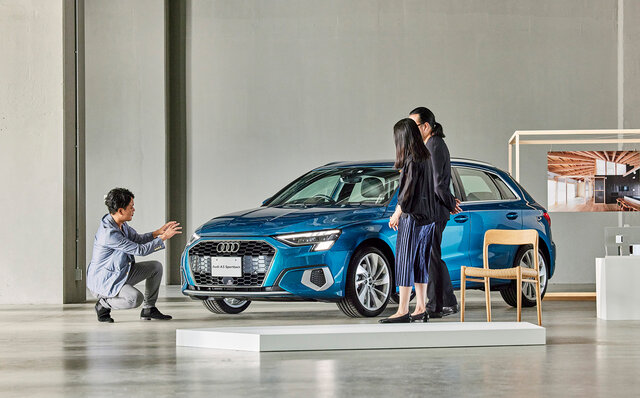
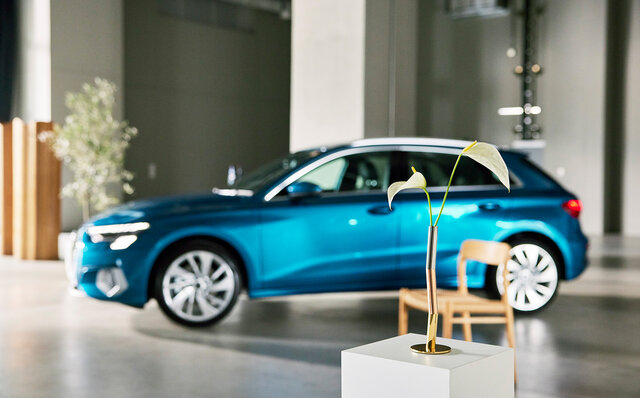
"I design products by working backward from what the experience should be. I believe that what is created through this process inherently possesses beauty," says Yokozeki, whose product designs span a wide range, from home appliances to daily goods.
While "evolution" can take many forms, Yokozeki, as a product designer, saw not a superficial but a more fundamental evolution in the new Audi A3's design. "Compared to previous Audi designs, rather than completely remaking everything, it evolves with a good balance by introducing small innovations in various areas while retaining the best elements. Design can do more than simply evolve; it can indicate the direction evolution should take. I felt the inherent power of design in this new Audi A3, which also provided inspiration for my own work," he shared with a smile.
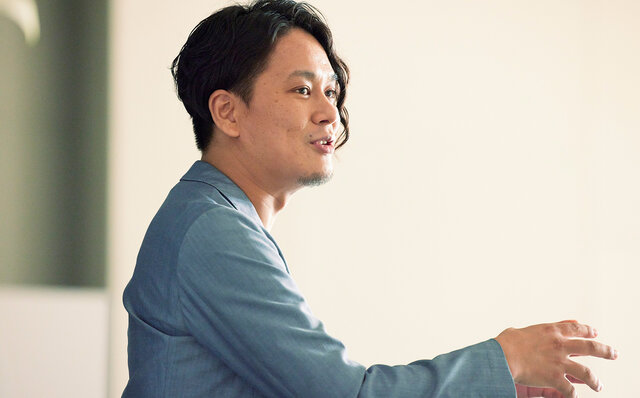
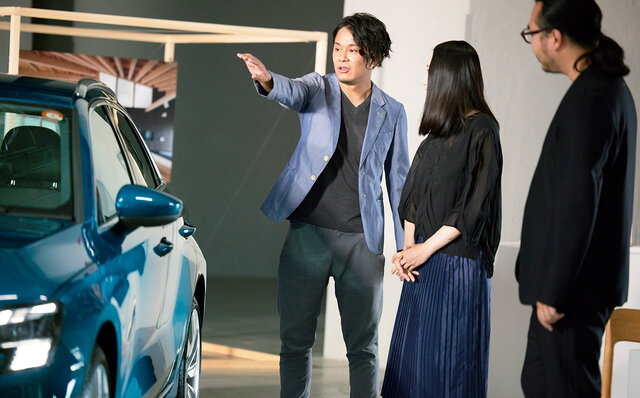
"Evolution is actually close to human instinct. Otherwise, we couldn't constantly strive to improve and innovate everything," Yokozeki remarked, offering his thoughts on the future of design. "One of the things design can do is show the path forward. This path can be a deliberate one, looking five to ten years ahead. In this context, Audi is showing us an example of evolution."
This talk session with creators from different fields has undoubtedly further fueled his passion for creation.
"Precisely because we live in an era where our personal sanctuaries are being eroded." Artist Tatehana's perspective on the new value of mobility
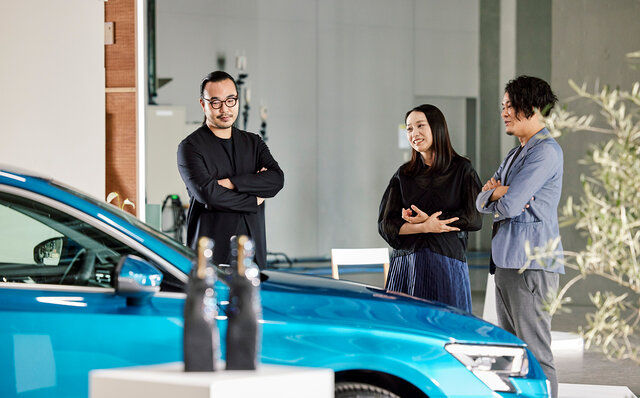
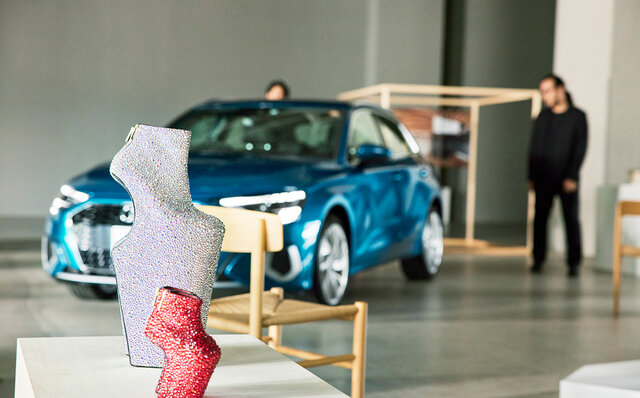
Among the works displayed at the talk venue, where the new Audi A3 was parked, Tatehana's creations stood out. His art, including the heel-less shoes famously worn by Lady Gaga, embodies both the gravitas of traditional craftsmanship and the thematic depth of contemporary art.
"For instance, when I see an object in a store, I often wish its background and how it was made were more visible. The new Audi A3 also involves creators from various specialized fields. I believe that conveying these stories can significantly change how we perceive objects and designs," Tatehana explained, noting that he often collaborates with artisans who carry on traditional techniques.


Beauty or functionality? Addressing the long-standing question in mobility design, Tatehana offered his unique perspective: "In a sense, beauty itself is what is demanded as a function in art. That's one of the fascinating aspects of art."
His viewpoint, coming from an angle entirely different from product designers who face stricter demands for usability and architects who shape spaces, elicited surprised nods from the other two. The talk session gradually broadened in scope, leading to the theme of the future of mobility.
Tatehana prefaced his thoughts by saying they were "personal," but then shared his vision for mobility's future: "In an era where we are all connected online and boundaries are disappearing, as our personal sanctuaries are increasingly eroded, cars may hold even greater value not just as tools for transportation but as distinct private spaces."
Perhaps the creation of time for self-reflection, not just through functionality and comfort but by simply being present, is the underlying theme of his creative process.
"Involving the user in the design process." Okuno's perspective on the evolving style required in creation
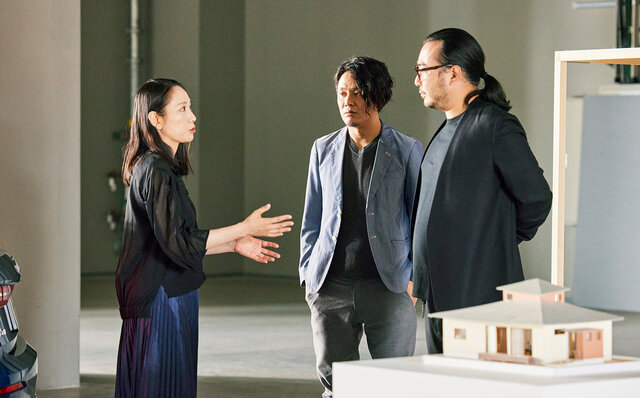
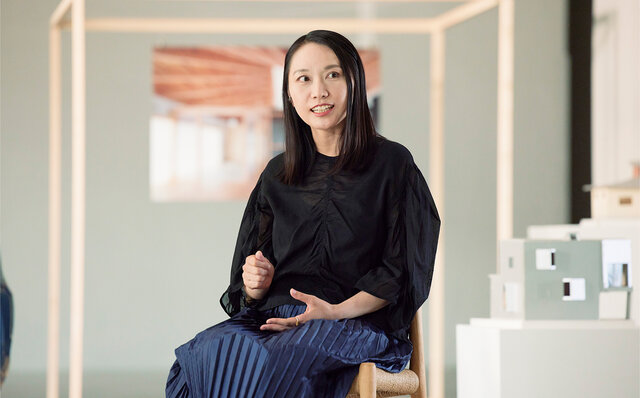
Okuno, an architect who values community connections, discusses the creation of things for a new era based on her experience in home building. "For example, painting a wall together or helping to lay floor tiles. Just doing that can shift the user's perspective from passively receiving to feeling a sense of ownership, 'This is my house.' This approach often leads to greater attachment." She explains that even a slight shift towards co-creation, rather than a one-sided communication between creator and user, can bring about significant changes in both the creation process and subsequent usage.
"In the coming era, it will be essential to involve people in the design process and create things together." Her words resonated with both Yokozeki and Tatehana, who showed expressions of agreement.
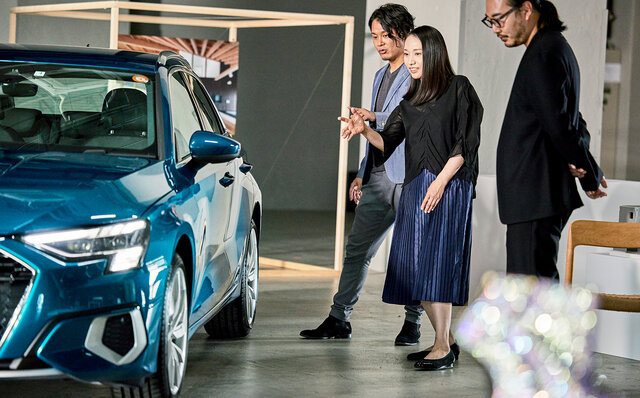

The three, having experienced the fusion of the new Audi A3's advanced technology and driver-centric design firsthand, delved deeper into the concept of "evolution" in design. Yokozeki, captivated by the new Audi A3's design, found it appealing both from a distance and up close, particularly admiring the evolution of its sporty form.
Observing this, Okuno shared her thoughts on design evolution: "Evolution cannot be expressed solely through numbers. It is the result of underlying ideas and innovations backed by functionality."
"Indeed, a car is a mobile living space. Just like architecture, the way the interior space is shaped, along with the visual impression and form, is crucial. I find great resonance in this," she said, finding common ground between her own residential designs and Audi's commitment to interior design, which seemed to offer new inspiration.
Gathering feedback from users leads to better designs. This moment highlighted Okuno's flexible approach to creation.