Pirelli: Changing the Narrative on F1's Perceived Lack of Excitement
2014 FIA Formula One World Championship
Pirelli Changes the Narrative: F1 is Boring
This year marks the fourth season since the Italian tire manufacturer Pirelli began supplying tires to Formula 1 in 2011. The current season has seen significant regulation changes, with power units now combining turbochargers and ERS (Energy Recovery Systems). As teams focus more than ever on matching the car and tires, this article delves into how Pirelli and Ferrari navigated the 2014 season, offering a behind-the-scenes look.
Text by YONEYA MineokiPhotographs by SAKURAI Atsuo
Pirelli Brings "Aggressive" Tires to the World of F1
In the world of Formula 1, there's a term called "the cliff."
Literally translated, it means a cliff. The term refers to a sudden, drastic drop in tire grip at a certain point, much like descending a cliff. F1 insiders use this term to describe Pirelli tires. For a tire manufacturer that must sell high-performance, safe tires in markets worldwide, this might not be a welcome reputation. However, Pirelli's engineers embrace it with pride, as it aligns perfectly with their intentions.
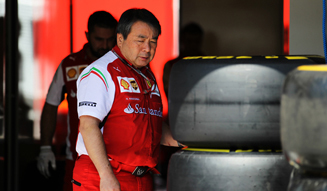
Behind Fernando Alonso's first podium finish of the season at the Chinese Grand Prix, Ferrari's tire engineer Hirohide Hamashima was sweating bullets.
"Look at this. There's hardly any tread left. The center of the tread is practically gone, isn't it? We were on the verge of complete wear, right before hitting the cliff."
Hamashima spoke while looking at the many tires lined up behind the pit garage after the session. Pirelli's "cliff" occurs when the rubber on the tread surface wears away completely. Naturally, without the rubber that provides grip, the car becomes several seconds slower per lap.

Hirohide Hamashima, Engineer in Charge of Ferrari's Tire Strategy

Drivers must maneuver the car while sensing the tire condition, careful not to wear out the rubber. Tire engineers advise on the optimal way to handle the tires based on data accumulated during practice sessions. This is how F1 operates today. By excelling at this, upsets where the underdog triumphs can occur.
"Tires create drama, battles, and make F1 exciting. That is precisely our goal."
says Paul Hembery, Pirelli's Motorsport Director.
"It's easy to make tires that last 300 kilometers. But that would only lead to a monotonous race with no battles. However, if the tire performance changes significantly, various dramas can unfold in the process."
They are bringing tires to the world of F1 that could be considered a gamble for a tire manufacturer – quite "aggressive." Yet, it is precisely because of this that tires, which might otherwise be overlooked during a race, garner so much attention, and Pirelli establishes its presence. Furthermore, Pirelli tires are designed not only to "cliff" but also to gradually decrease in grip level as they are used.
2014 FIA Formula One World Championship
Pirelli Changes the Narrative: F1 is Boring (2)
F1 Tires: Battling Heat
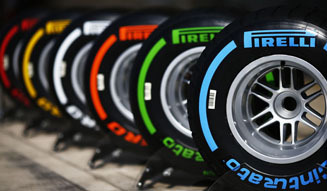
For each Grand Prix, two of the four available dry tire compounds are selected: one is the Prime tire, which is slightly harder and offers stable performance, and the other is the Option tire, which is initially faster but degrades quickly. The strategic interplay between these two compounds in a race leads to dramatic developments.
"This year, with the power units changing to a combination of turbochargers and ERS (Energy Recovery Systems), the torque has become immense. Therefore, rear tire wheelspin is a major concern. If that happens, the tire temperature rises, leading to overheating. This causes a loss of grip, and then it enters a negative spiral where it slips more, further increasing the temperature."
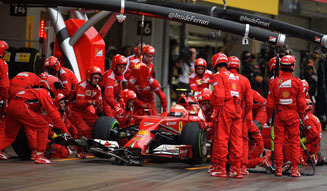

During the Russian Grand Prix, held on a semi-street circuit around the Sochi Olympic Park, Nico Rosberg's aggressive overtaking attempt at the start resulted in a spectacular lock-up that ruined his tires.
Elsewhere, tire smoke was visible everywhere, and one driver even exclaimed over the radio, "My tires have gone square!" With the engine noise reduced, the squealing of tires became more audible.
"This year's tires have been designed with a harder rubber compound to match the immense torque of the power units. This makes them more prone to slipping. Consequently, managing their temperature becomes more challenging."
During the race, constant monitoring of tire performance changes is crucial to determine the optimal timing for a pit stop. While all teams meticulously simulate strategies and prepare multiple plans beforehand, the unpredictability of racing is what makes it challenging and exciting.
2014 FIA Formula One World Championship
Pirelli Changes the Narrative: F1 is Boring (3)
Driving to Your Advantage: Working with Your Tires
To put it bluntly, the Ferrari F14 T is, at best, the fourth or fifth fastest car on the grid this season. This means that even with the skilled drivers Alonso and Räikkönen, it lacks the pace to consistently contend for podiums. Alonso's ability to reach the podium in the Chinese and Hungarian Grands Prix is solely due to his mastery of tire management.
Räikkönen stated that the biggest challenge this season has been adapting to the tire characteristics, more so than the changes in the car itself. Pushing at 100% constantly would quickly wear out the tires. This necessitates strategic thinking and intelligent management, demanding a comprehensive skill set beyond just raw speed.
Alonso commented:
"As drivers, of course, everyone wants to drive as fast as possible every single lap. But that's not possible for us right now due to tire degradation. We have to manage our pace carefully to ensure we can complete the required laps until our target pit stop window for the optimal strategy."
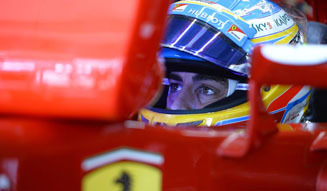
"It's entertaining as a show, and I think it provides very good races and exciting battles. It's improving significantly. Compared to other categories, I believe F1 offers a superb spectacle."
Hamashima holds meetings with the team late into the night almost every day. Though he admits, "It's always demanding," he leaves the darkened paddock with a sense of pride and fulfillment in supporting the Prancing Horse's racing efforts.
Since Pirelli's entry into F1 four years ago, the company's global recognition and market share have significantly increased. They have also invested heavily in promotional activities, such as their eye-catching logo color-coded in six different colors for each compound and logo printing on tire warmers, to assert their presence across various touchpoints.
Most importantly, we should not underestimate their significant contribution to enhancing the F1 spectacle with their "aggressive" tires.