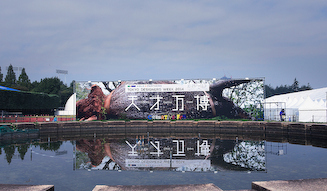
Decoding Renault's New Design Strategy | Renault
Renault
The Significance of Renault's Exhibition at TOKYO DESIGNERS WEEK
Decoding Renault's New Design Strategy
Renault Japon has, for the first time, set up a pavilion at "TOKYO DESIGNERS WEEK 2014," which began last weekend. Inside the venue, they are showcasing an installation that allows visitors to see, touch, and experience Renault's new design strategy through projection mapping onto the body of the "Lutecia." Through an interview with Christophe Dupont, Director of Renault Design Asia Studio, who visited Japan for the event, we delved into the philosophy behind Renault's new design.
Text by OGAWA FumioPhotographs by ARAKAWA Masayuki
Renault's Debut Exhibition at TOKYO DESIGNERS WEEK
Held until November 3, 2014 (Monday, holiday), "TOKYO DESIGNERS WEEK 2014" bills itself as "Japan's largest comprehensive creative event." Renault Japon is exhibiting here, drawing attention with a unique display that offers a tactile experience of Renault's design, utilizing projection mapping.
Renault is enjoying strong sales with the "Lutecia" and "Captur." One is a compact four-door hatchback, the other a compact crossover. Both are characterized by excellent packaging, combining a condensed body of about four meters in length with a surprisingly spacious interior.
Another aspect Renault emphasizes is style. "A car composed solely of sensual curves that invite you to touch, with no sharp edges or aggressive lines from any angle," Renault proclaims in its brochure.
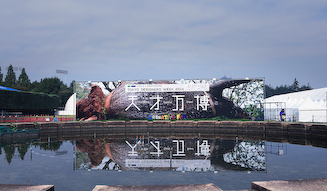
TOKYO DESIGNERS WEEK 2014
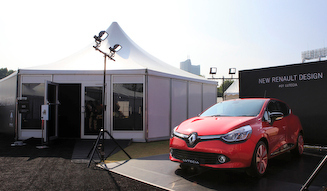
Renault pavilion
At the venue in front of the Picture Gallery in Aoyama, an impressive booth painted entirely in black, with "Touch! New Renault Design" written on the wall, is set up. Inside, a roughly three-minute show themed around water, titled "Interactive Projection Mapping," is presented. Various water-motif images are projected onto a white Lutecia. Furthermore, using Kinect technology, ripples and other new visuals are generated when visitors interact with their hands.
"The absence of straight lines in nature is a key theme for the style of the Lutecia and Captur. We chose water as the motif for this show to visually express Renault's design philosophy," explained Frederic Brun, Chief Product Manager at Renault Japon's Marketing Department.
Coinciding with this exhibition, designer Christophe Dupont, who was involved in creating the new Espace unveiled at the Paris Motor Show, visited Japan. We had the opportunity to hear him speak about Renault's design.
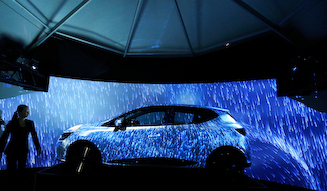
Touch! NEW RENAULT DESIGN
Renault
The Significance of Renault's Exhibition at TOKYO DESIGNERS WEEK
Decoding Renault's New Design Strategy (2)
An Interview with Christophe Dupont, Director of Renault Design Asia Studio
—Could you first tell us about your career path?
Christophe Dupont (hereinafter, Dupont)I was born in France in 1965. I studied transport design at the Art Center College of Design in the United States. I joined Renault in '88 and worked in the Advanced Design Studio. My first notable work was designing the exterior of the "Rodeo" (1988).
—You left Renault after that, didn't you?
DupontIn '95, I moved to Alias Wavefront, known for its design tools. After working as a freelancer for a while, I rejoined Renault in 2001 to focus on integrating digital tools into the design development process.
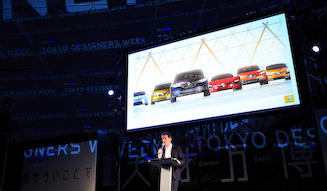
Presentation by Christophe Dupont
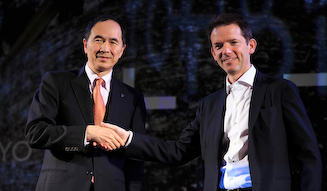
On the left is Renault Japon President Osamu Ohgoku, and on the right is Christophe Dupont.
—Your experience at Alias must have been useful.
DupontFrom 2004, I served as Director of Small Car Design at the Renault Barcelona Design Studio, working on models like the "Twizy," "Scénic," and "Laguna Coupé." In 2007, as head of the Renault Samsung Motors Design Studio in Korea, I oversaw models such as the "SM3," "SM5," and "QM5."
—This work was possible because Renault acquired the shares of the bankrupt Samsung Motors.
DupontReturning to the headquarters studio in 2009, I managed the design development for entry-level cars like the "Logan," the new "Espace" unveiled at the October 2014 Paris Motor Show, as well as large sedans and SUVs.
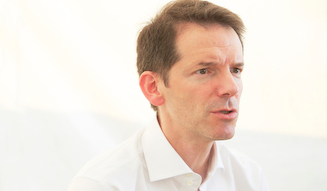
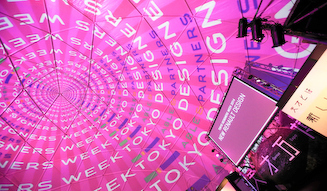
—At the Renault booth at the Paris Motor Show, the new Espace attracted considerable attention. It was almost impossible to get close.
DupontI have since left Renault headquarters and, as of September 2014, I am the Director of Renault Design Asia Studio in Korea, managing Renault's design development in China.
—What are your impressions of TOKYO DESIGNERS WEEK 2014?
DupontIt's full of diversity and creativity. I was impressed by how Renault Japon's "Touch! Renault Design" effectively conveyed the spirit of Renault design, symbolized by the Lutecia. Design is extremely important to Renault, so I feel it's very beneficial to communicate this to many people through this opportunity.
Renault
The Significance of Renault's Exhibition at TOKYO DESIGNERS WEEK
Decoding Renault's New Design Strategy (3)
Cars Must Be Made with People at Their Center
—How does Renault view design today?
DupontSimply put, it expresses the company's culture and philosophy. Since 2009, Laurens van den Acker, who oversees Renault Design, has conceptualized life as "The Cycle of Life," dividing it into six stages: "Love," beginning with people meeting and falling in love; "Explore," when they go on adventures together; "Family"; then "Work"; the fifth stage is "Play," enjoying life; and finally "Wisdom," gaining knowledge. Renault's strategy is to sequentially introduce new models corresponding to these six life stages. We announced the Lutecia as a car for the "Love" stage and the Captur for the "Explore" stage.
—What is the thinking behind the "Cycle of Life" concept?
DupontThe idea that cars must be made with people at their center. Van den Acker has established warmth, simplicity, and sensuality as the core of Renault's design. This is expressed through lines and surfaces that can be described as soft, smooth, masculine, and clear. Aggression and aggressiveness are excluded.
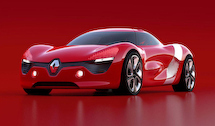
Love | DeZir (2010)
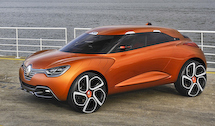
Explore | Captur (2011)
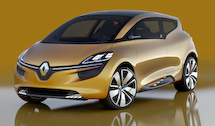
Family | R-Space (2011)
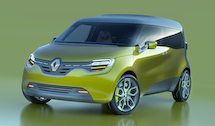
Work | Friendzy (2011)
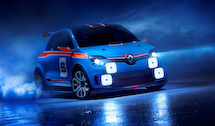
Play | Twin'RUN (2013)
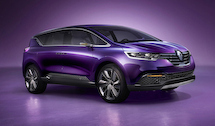
Wisdom | Initiale Paris (2013)
—So, that's the concept behind the Lutecia and Captur.
DupontTaking the Captur as an example, its front face with the large Renault logo on a black background is common with the Lutecia and others, conveying brand consistency. It's a model that pursues high functionality along with attractive styling. The same can be said for the third-generation Twingo unveiled at the Paris Motor Show. Unlike the second generation, I believe it has a presence that makes it more than just a car, but a companion in life. We aim to preserve this as Renault's DNA.
Renault
The Significance of Renault's Exhibition at TOKYO DESIGNERS WEEK
Decoding Renault's New Design Strategy (4)
The Importance of Brand Consistency
—You mentioned the need for consistency in design; could you elaborate?
DupontGerman car manufacturers are doing a good job in this regard. They manage their brands meticulously. We share the belief that a strong brand cannot be built without consistency. In other industries, Apple is a good example. Even without the apple logo, you can tell it's an Apple product just by looking at it, due to its strong design consistency.
—Cars might have a broader scope than computers.
DupontThat's true. Consistency must extend beyond the exterior to the interior as well. Elements like steering wheel trim, air vents, and door panels are crucial when discussing design consistency. Furthermore, it's vital to ensure a consistent brand image across all customer touchpoints, including advertising, websites, and motor show booths.
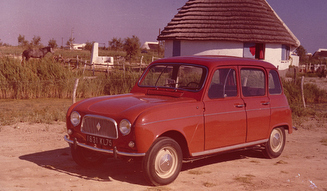
Renault 4L (1961)
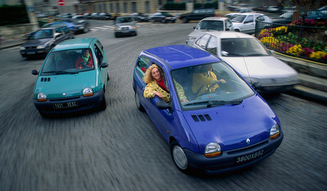
Renault Twingo (1992)
—Personally, when I think of iconic Renaults, the Renault "4L" (1961) immediately comes to mind. It had a spacious interior with removable seats, and to enhance ride comfort, the torsion bars used in the suspension were elongated, intentionally varying the wheelbase length on each side. Then there's the Renault "16" (announced in 1965). With its sliding rear seats, it could be combined with the front seats to create anything from a baby's cradle to a large cargo space. The Renault "5" (1972) adopted a two-door configuration, introducing the concept of personalization to the hatchback.
DupontIndeed. I would also add the Espace (1984), the first-generation Twingo (1992), and the Scénic (1996). These models continue to form the backbone of Renault today. All were conceived with a human-centric approach and reflect customer needs, embedding them in Renault's design DNA.
Renault
The Significance of Renault's Exhibition at TOKYO DESIGNERS WEEK
Decoding Renault's New Design Strategy (5)
Styling and Design
—Regarding design in general, what do you like?
DupontI like architecture. Tadao Ando, Norman Foster, Rem Koolhaas, and Zaha Hadid immediately come to mind. I currently live in Seoul, and I'm quite fascinated by the Dongdaemun Design Plaza designed by Zaha Hadid, which was completed in 2014. I also like watches, and I admire all of Apple's products.
—What about cars?
DupontThere are too many to name! (laughs) I became a car designer because I loved cars. I particularly admire classic sports cars from the 60s and 70s. Among them, I like the Ferrari "250GT Berlinetta SWB" (1959), the Lamborghini "Miura" (1966), the Mercedes-Benz "300SL" (1954), the Alpine "A110 Berlinette" (1963), and the 1963 Chevrolet "Corvette."
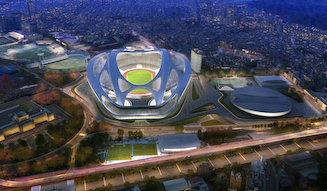
Zaha Hadid's proposal for the New National Stadium
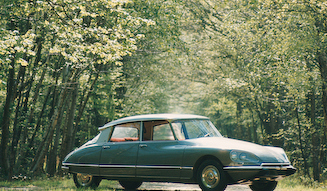
Citroen DS
—Many car designers say the Citroën "DS" is the most outstanding design. What do you think?
DupontAbsolutely. It remains a magnificent design even today. In terms of styling, manufacturing methods, packaging, and technology, it was radical—ahead of its time. The DS is the most advanced car in automotive history, packed with innovation.
—Design critic Victor Papanek stated that styling is about appearance, while design is a solution to make life better.
DupontI understand that very well. The cars I mentioned earlier can be evaluated separately. The '63 Corvette is a prime example of great styling. And the Citroën DS is a prime example of great design. We always strive to provide good design.