Enthusiastic Small & Mid-Size SUV | Feature Story
Feature Story | The Flourishing New Era of SUVs
The Enthusiastic Small & Mid-Size Segment SUVs
The SUV craze, which began with Japanese manufacturers taking the lead in the 1990s, has long since evolved from a fleeting trend into a mainstream phenomenon. It has been quite some time since even brands known as luxury automakers could afford to ignore it.Maserati unveiled the “Ghibli”, Jaguar the “C-X17”, andBentley the “EXP 9 F”, all of which, while concepts, hinted at production-ready vehicles. And Porsche, with its Cayenne, recently announced the smaller “Porsche”.MacanOf course, established names like Range Rover and Jeep are not standing still. 2014 is a year of abundant choices. Motoring journalist Toshifumi Watanabe discusses the current state of the SUV world.
Text by WATANABE Toshifumi
SUV Chronicle
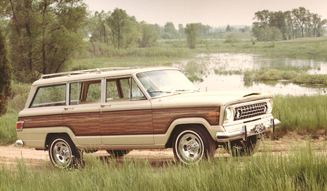
When tracing the history of SUVs, Jeep and Land Rover are brands that cannot be overlooked. Both companies primarily produced four-wheel-drive vehicles for professional use after World War II, and while in limited numbers, they also offered civilian versions leveraging their expertise. However, driven by rising leisure demands, they began to conceive passenger cars with dedicated designs and comfort features. This was in the 1960s, with the Jeep Wagoneer and the Land Rover Range Rover being the progenitors.
The SUV category, long dominated by specialized manufacturers, began to change in the 1990s. Japanese manufacturers were instrumental in popularizing designs based on passenger car monocoque frames within the four-wheel-drive world, which had previously relied on robust full-frame structures. While their off-road capability was less, they offered superior agility in urban use and, being produced on passenger car lines, allowed for lower manufacturing costs. The Toyota RAV4 and Honda CR-V were pioneers in this regard. Then, in 1997, Toyota released theLexus RX (known in Japan as the Harrier), which achieved explosive popularity, establishing the modern SUV category.

Jeep Wagoneer Stationwagon (1975)

Land Rover Range Rover (1970)
Most of the models shaping today's SUV market are based on passenger car platforms, resulting in a wide array of vehicles in terms of type and class. In contrast, models with full-frame structures are now largely confined to those intended for serious off-road use.
Land Rover is attempting to address the on-road performance and environmental drawbacks of full-frame structures by employing a dedicated aluminum monocoque construction for its flagship Range Rover models.
This strategy was concretely realized with the introduction of theRange Rover Sportlast year. While the previous generation was based on the Discovery's robust integrated frame monocoque, the new model utilizes the same aluminum monocoque as the Range Rover.Discovery
By sharing the structure between the two vehicles, the cost of the expensive aluminum architecture is distributed. This allows Land Rover to skillfully differentiate the Range Rover towards luxury and the Range Rover Sport towards sportiness.

Range Rover Sport (2013)
The Range Rover Sport, with its off-road capability nearly on par with the Range Rover, yet agile enough to handle winding roads with its fuel-efficient 3-liter V6 engine, offers a compelling value proposition for urban SUV buyers. While it concedes slightly to its larger sibling in terms of ride comfort at lower speeds and interior refinement, its attractive pricing more than compensates, demonstrating the company's ambition to grow it into a flagship model.
Feature Story | The Flourishing New Era of SUVs
The Enthusiastic Small & Mid-Size Segment SUVs (2)
Could the Porsche Macan Be the Game Changer?
In terms of cost performance, Mercedes-Benz also added an attractive new grade to itsMercedes-Benz G-Class.
Originally developed as a military-spec vehicle and debuting for civilian use in '79, this model features a full-frame chassis, rigid front and rear suspension, and three independently lockable differentials (front, rear, and center) – a truly typical and robust mechanical setup.
Its exterior panels and windows are designed with minimal curves for ease of procurement and repair. It's precisely these details, each with a specific reason, and its ruggedness that likely contribute to its appeal, especially its recent adoption as a fashion item, as you may know.

Mercedes-Benz G-Class (1979)
However, the newly established grade, theG 350 BlueTEC, largely retains its original, unadorned exterior, with minimal cosmetic additions like large tires or wide fenders. Paired with its understated status, the engine is a 3-liter V6 diesel. This combination offers both the substantial torque band and fuel efficiency that gasoline engines can't match, arguably embodying the G-Class's spirit of being able to drive anywhere, anytime.
Coupled with a price tag under 10 million yen, I personally believe this is the only G-Class to consider right now.

BMW X5 xDrive35d

Porsche Macan Turbo
While the BMW X5 has also undergone a full model change, and the full-size SUV category seems to be in a lull in terms of new model cycles, the small and mid-size SUV segment is highly active. Among these, the model poised to be the game changer this year is likelyPorsche'sMacan.
While sharing its basic architecture with its sibling,Audi's“Q5”, its chassis, powertrain, and other mechanicals are the result of full Porsche engineering. This vehicle is not merely a smaller sibling to the Cayenne; its pricing also positions it perfectly to meet the needs of specialty models, including D to E segment station wagons.
Just as the911spawned models like theBoxsterandCayman, which are now evaluated on their own merits, it is highly intriguing to see if the Macan can possess a distinct appeal separate from the Cayenne.
Feature Story | The Flourishing New Era of SUVs
The Enthusiastic Small & Mid-Size Segment SUVs (3)
Strongly Focused on City Use
SUVs even more compact than the Macan, in the B-C segment, represent a category with immense growth potential in the global automotive market. While Japanese manufacturers have historically led this segment, large manufacturers like Volkswagen and Ford, as well as the German premium trio, are increasingly showing interest.
This year, Mercedes-Benz will introduce its offering in this segment:Mercedes-BenztheGLA-Class. As a variation utilizing the assets of the C-segmentA-Class—, it shares a similar concept withAudi's“Q3”. However, the GLA-Class features slightly lower exterior dimensions and ground clearance, resulting in a package strongly oriented towards city use.
While 4WD systems based on transverse front-wheel-drive powertrains once faced performance challenges, such as delayed power delivery to the rear wheels, modern systems offer significantly improved responsiveness, largely eliminating usability issues for recreational purposes.

A high-performance version, the Mercedes-Benz GLA 45 AMG with 360 horsepower, is also available.
While the robust construction of traditional SUVs lends them a distinct character and driving feel, this aspect is now more of a niche preference. For most people, SUVs in this class represent the best choice, offering the most versatile personal vehicle to expand their range of activities.