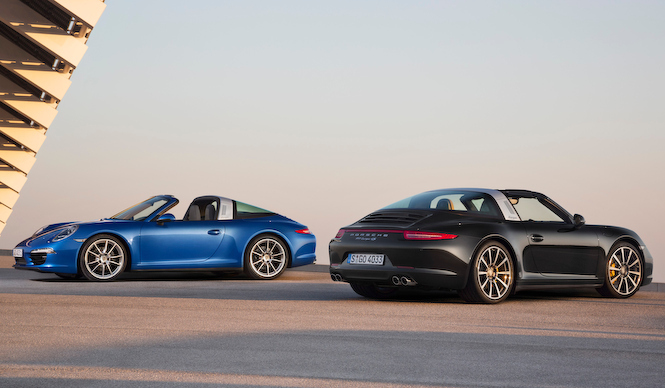
Introducing the 911 Targa with a New Open-Top Mechanism
Porsche 911 Targa | The Porsche 911 Targa
Introducing the 911 Targa with a New Open-Top Mechanism
PorschehasDetroit Motor Show (NAIAS)unveiled the new "911 Targa 4" and "911 Targa 4S". The reborn "911 Targa" features a canopy design reminiscent of the classic "911 Targa" and a new open-top system.
Text by SAKURAI Kenichi
Highlight: A New Electric Rooftop Inspired by Classic Designs
The new "911 Targa"Type 901to930,964, draws inspiration from the classic Targa design adopted up to the Type 964. Originally, the "Targa", first offered by Porsche in 1965 with the Type 901, was a semi-convertible model created to commemorate a victory in the "Targa Florio" race. It was developed to offer the enjoyment of open-air motoring with minimal compromise to body rigidity by allowing only the roof section above the front seats to be removed.
A similar approach was used for the mid-engined "914". As this style of removable roof section is commonly known as a "Targa top", the name and design have become synonymous with semi-convertible systems. In recent years, the 911 lineupfeatured models with large sliding glass roofs as the Targa, but this Type 991 Targa marks a return to its origins.
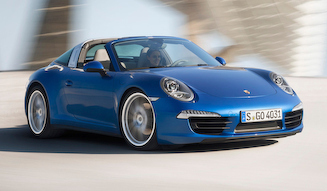
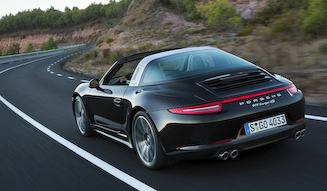
The new "911 Targa" adopts a distinctive design, similar to the first-generation Targa, featuring a wide B-pillar and a wrap-around rear window that extends to the C-pillar, omitting the C-pillar itself. The roof section above the front seats is movable and retracts beneath the wide rear window, pivoting at the rear.
When stowed, the top of the B-pillar on each side moves inward. A novel and entirely new system is employed where a frame supporting the roof, concealed within the thick, fixed B-pillar, lifts the top while simultaneously moving backward. Naturally, this roof system can be opened and closed with a single switch. Unlike previous Targas, there is no double-layered sliding glass obstructing rearward visibility, ensuring good visibility even when the top is open.
The lineup consists of two versions, just like the previous model. Both feature all-wheel drive. The "911 Targa 4" is equipped with a 3.4-liter flat-six engine producing 350 hp (257 kW). The top model, the "911 Targa 4S", is powered by a 3.8-liter engine delivering 400 hp (294 kW). Both utilize Porsche Traction Management (PTM) all-wheel drive systems, adapted for the Targa's rearward weight bias. With the PDK and Sport Chrono Package, the 911 Targa 4S achieves a top speed of 296 km/h and a 0-100 km/h acceleration time of 4.4 seconds. Fuel consumption in the NEDC cycle is 10.8 km/liter, with CO2 emissions at 214 g/km.
Deliveries in Germany are scheduled to begin in May 2014. The prices for the German market, including standard equipment and VAT (Value Added Tax), have been announced as €109,338 (approximately ¥15.5 million) for the 911 Targa 4 and €124,094 (approximately ¥17.6 million) for the 911 Targa 4S.
With its classical styling befitting the traditional "Targa" name and its dramatic new system, the new "911 Targa" is poised to become an even more compelling presence within the 911 lineup.
