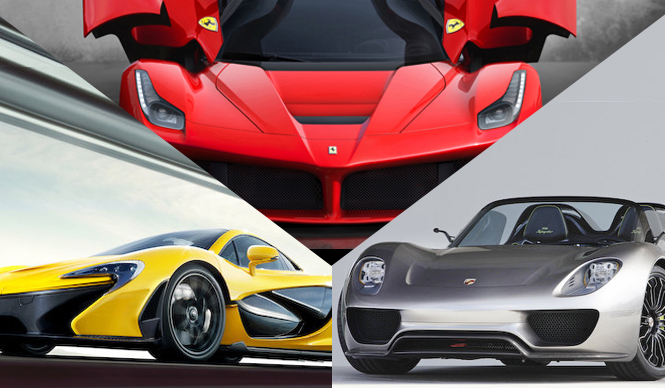
The world of new-century high-end supersports | Super Sports 2013
Porsche 918 Spyder | Porsche 918 Spyder
McLaren P1 | McLaren P1
Ferrari LaFerrari | Ferrari LaFerrari
Hybrid Models Emerge from Porsche, McLaren, and Ferrari
The World of New-Century High-End Super Sports
A concept car unveiled by Porsche at the 2010 Geneva Motor Show918 Spydermarked the rapid acceleration of development in next-generation high-end super sports. At the 2012 Paris Motor Show, McLaren unveiled itsP1'P1,' and Ferrari debuted its 'LaFerrari' at the 2013 Geneva Motor Show.LaFerrariHow did Porsche, McLaren, and Ferrari approach the new value of balancing performance and environmental consciousness in next-generation super sports? Motohiro Yamazaki delves into these three special models, representing the pinnacle of current technology.
Text by YAMAZAKI Motohiro
The Historic Surprise of the 918 Spyder's Arrival
In the future, when we look back at the evolution of super sports, the year 2013 will undoubtedly be remembered as a significant historical turning point. Much like the year 2003, exactly ten years prior,—
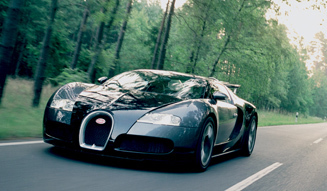
Over the past decade, high-end super sports have developed a new set of values. If we were to characterize these as 'last-century' and 'new-century' values, the symbol of the former wasthe Bugatti Veyron 16.4,while the latter is represented by the latest models that emerged one after another in 2013.
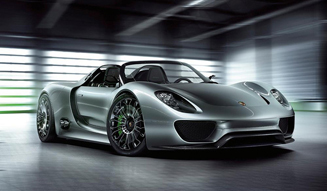
Porsche was the first to embody this new-century value in the world of super sports with its '918 Spyder.' Unveiled as a concept car at the 2010 Geneva Motor Show, its production was later confirmed, with deliveries of 918 units scheduled to begin on September 18, 2013.
The arrival of the 918 Spyder was a historic surprise, with no prior information leaked. Under the banner of 'Porsche Intelligent Performance,' it declared Porsche's commitment to achieving the world's best performance and environmental efficiency simultaneously.
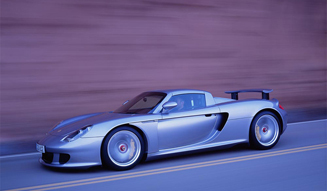
Although its production plan was officially undecided at the time of the concept car's unveiling, expectations for a limited production run—a 'special Porsche' following the 2003 Carrera GT—must have been considerable, both from the market and within the company.
Soon after, PorscheAnnounced the limited production plan for the 918 Spyder,and its design, engineering, and production preparations rapidly gained momentum.
Porsche 918 Spyder | Porsche 918 Spyder
McLaren P1 | McLaren P1
Ferrari LaFerrari | Ferrari LaFerrari
Hybrid Models Emerge from Porsche, McLaren, and Ferrari
The World of New-Century High-End Super Sports (2)
The Role of PHV in Super Sports
The most significant engineering innovation in the 918 Spyder was undoubtedly its adoption of a PHV (Plug-in Hybrid) system. The engine, mounted behind the CFRP monocoque tub—a hallmark of current high-end super sports—via a subframe, is a 4593cc V8 DOHC, derived from the engine used in the competition model 'RS Spyder.'
While the engine alone is rated at over 570 ps, the extensive weight-saving measures are also striking, including titanium connecting rods and plastic vacuum pumps for the dry-sump lubrication system.
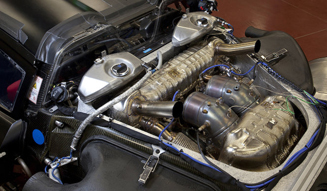
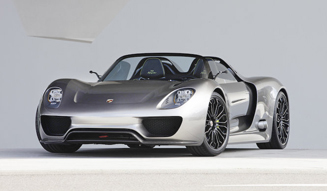
A key difference between the concept and production models lies in the exhaust system design; the production version features top-mounted exhausts, complying with road regulations and optimizing aerodynamics. The transmission is a 7-speed PDK.
Furthermore, Porsche integrated electric motors at both the front and rear axles, creating a parallel hybrid system. These electric motors deliver a combined maximum output of over 231 ps. Porsche claims that under maximum load, the total output can exceed 770 ps.
Porsche 918 Spyder | Porsche 918 Spyder
McLaren P1 | McLaren P1
Ferrari LaFerrari | Ferrari LaFerrari
Hybrid Models Emerge from Porsche, McLaren, and Ferrari
The World of New-Century High-End Super Sports (3)
Astonishing Performance and Environmental Efficiency Combined
The 918 Spyder offers five driving modes: 'E-Power,' 'Hybrid,' 'Sport Hybrid,' 'Race Hybrid,' and 'Hot Lap.' When the driver selects 'E-Power,' the car can operate in pure electric (EV) mode.
From a standstill up to 25 km/h, only the front electric motor is used. From there up to 150 km/h, the rear electric motor also provides power, enabling a range of up to 25 km on electric power alone, indicating significant practical usability in real-world driving scenarios.
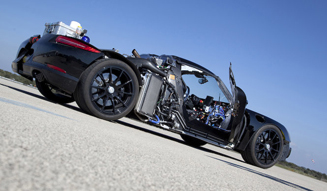
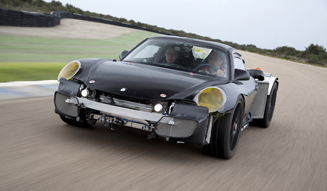
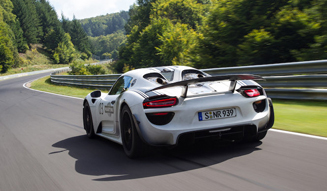
For reference, Porsche's target figures for fuel economy and CO2 emissions during the development of the 918 Spyder were 3 liters/100 km and 70 g/km, respectively. Last year, Porsche took a near-production test car tothe Nürburgring Nordschleifeand, driven by Walter Röhrl, recorded a lap time of 7 minutes and 14 seconds from a standing start.
Considering that the target time announced for the concept car was 7 minutes and 22 seconds, this achievement holds more value than its top speed of over 325 km/h. Frankly, rivals witnessing this real-world demonstration of combined performance and environmental efficiency must have been left speechless.
So, what about the rivals pursuing the Porsche 918 Spyder, who also aimed to transition from last-century values to new-century ones?
At this year's Geneva Motor Show, Ferrari and McLaren, as if by prior arrangement, unveiled new limited-production models. Let's begin by examining McLaren's offering, which presents an engineering concept relatively close to that of the pioneer, Porsche.
Porsche 918 Spyder | Porsche 918 Spyder
McLaren P1 | McLaren P1
Ferrari LaFerrari | Ferrari LaFerrari
Hybrid Models Emerge from Porsche, McLaren, and Ferrari
The World of New-Century High-End Super Sports (4)
Function and Minimalism
The 'P1,' first presented as a design concept at last year's Paris Motor Show, was described as being 'about 95 percent complete' in terms of styling. Indeed, the final prototype that appeared in Geneva, geared towards production,the final prototypeshowed little significant change.
The basic structure is, of course, a CFRP monocoque, but McLaren refers to its integrated roof structure as a 'monocage,' in contrast to the 'monocell' of theMP4-12C.
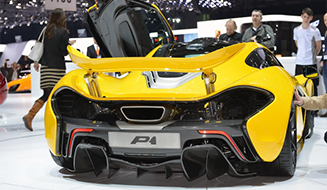
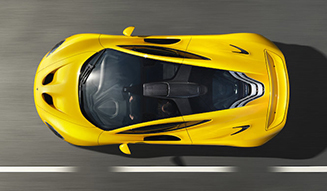
The exterior design of the P1 is truly the epitome of aerodynamics. Frank Stephenson, chief stylist who transitioned from Ferrari to McLaren some time ago, describes the design as 'function and minimalism.' Indeed, there is no styling element on the P1's body that does not serve a function.
The active rear wing features additional movable flaps, mirroring the DRS (Drag Reduction System) of F1 cars. McLaren states the P1's top speed is a limited 350 km/h, achievable by the driver operating the DRS switch on the steering wheel, reducing drag by 23 percent. Furthermore, this wing can generate up to 600 kg of downforce, highlighting its exceptional functionality.
Porsche 918 Spyder | Porsche 918 Spyder
McLaren P1 | McLaren P1
Ferrari LaFerrari | Ferrari LaFerrari
Hybrid Models Emerge from Porsche, McLaren, and Ferrari
The World of New-Century High-End Super Sports (5)
The 918 Spyder's AWD vs. the P1's RWD
The mid-mounted powertrain is based on the 3.8-liter V8 twin-turbo engine used in the MP4-12C series, further tuned for enhanced performance. It produces a maximum output of 737 ps, supported by a 179 ps electric motor from McLaren Electronics.
Consequently, the maximum output under full load reaches 916 ps. McLaren calls this system 'IPAS' (Integrated Power Assist System), which can be activated by a switch on the right side of the steering wheel, separate from the DRS, or can operate automatically in conjunction with engine control.
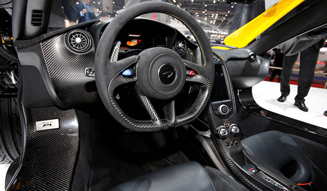
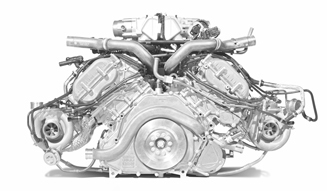
The compact battery pack is located low down near the center of the car and can be charged via an external power source. Thus, the P1 is also a super sports car born as a PHV, capable of electric-only driving. Its notable CO2 emissions are reported to be under 200 g/km.
The transmission is a 7-speed DCT. A significant difference in the powertrain compared to the Porsche 918 Spyder is its conventional RWD configuration.
The braking system, supplied by Akebono Brake Industry of Japan, McLaren's technical partner in F1, is a source of great pride for us Japanese.
Porsche 918 Spyder | Porsche 918 Spyder
McLaren P1 | McLaren P1
Ferrari LaFerrari | Ferrari LaFerrari
Hybrid Models Emerge from Porsche, McLaren, and Ferrari
The World of New-Century High-End Super Sports (6)
Design by Ferrari In-House
Among the new-century super sports, the Ferrari 'LaFerrari,' the successor to the 'Enzo' and a 'speciale' model, garners particularly intense global attention.
With a production run of 499 units, this is a considerable number compared to the Enzo's 399 units, symbolizing the rapid expansion of Ferrari's market size over the past decade. Naturally, the competition to secure a spot on the customer list is fierce.
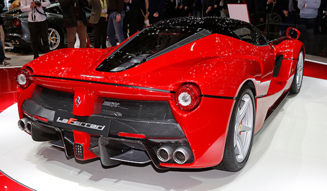
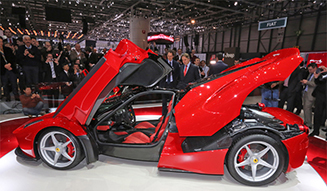
The body design of the LaFerrari was not a traditional collaboration with Pininfarina but was entirely developed in-house by Ferrari. It can be described as the realization of the ideal aerodynamics for a super sports car.
Incidentally, Ferrari states that the aerodynamic coefficient—the drag value—for the LaFerrari is 3.0. This is remarkable, especially considering that the 'F12berlinetta,' released around the same time,F12berlinettahad a drag value of 1.2.
And, of course, Ferrari has incorporated various active aerodynamic elements into this body. The underside at the front features adjustable flaps, and a similar adjustable system is employed in the diffuser.
The rear wing, which appears more compact compared to the McLaren P1's, also functions as a DRS. The purpose of these mechanisms is, naturally, to overcome the direct proportionality between vehicle speed and downforce.
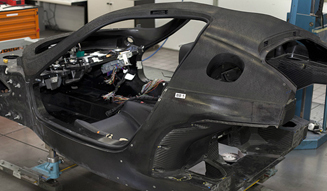
Development and Production of the CFRP MonocoqueThe monocoque, constructed using four types of CFRP materials, achieves a 20 percent weight reduction compared to the Enzo, while simultaneously increasing torsional rigidity by 27 percent and bending rigidity by 22 percent. It forms the very core of the LaFerrari's performance.
Porsche 918 Spyder | Porsche 918 Spyder
McLaren P1 | McLaren P1
Ferrari LaFerrari | Ferrari LaFerrari
Hybrid Models Emerge from Porsche, McLaren, and Ferrari
The World of New-Century High-End Super Sports (7)
A "Speciale" Without the Roar of a V12 Engine is Unnecessary
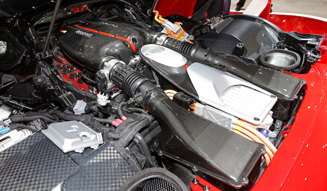
The mid-mounted powertrain is based on the technical concept unveiled at last year's Beijing Motor Show,'HY-KERS 2012',which forms the basis of the system. Specifically, it utilizes a 6,262cc V12 DOHC engine, shared with the F12berlinetta andFF,enhanced to produce 800 ps. This is combined with a 7-speed DCT, and a 163 ps electric motor is positioned at the rear of the transmission.
Another compact electric motor is located in front of the engine, used for battery charging and auxiliary power, not for generating extra power. The battery, which receives charge from the KERS system, is, like those in Porsche and McLaren, a lithium-ion type. It weighs 60 kg, and its cells are manufactured by Scuderia Ferrari.
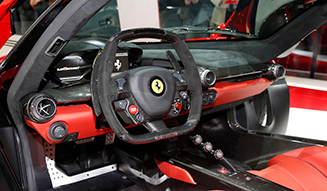
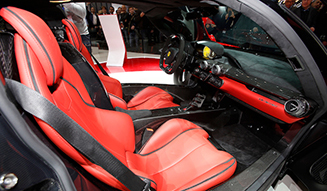
This powertrain is also located in the floor section behind the monocoque. As a result, the LaFerrari's center of gravity is 35 mm lower than the Enzo's, and the front-rear weight distribution is 41:59, an ideal ratio considering load transfer during braking.
The LaFerrari, producing a total of 963 ps, does not feature an EV driving mode. This decision was made to keep the system lightweight and compact, and because Ferrari customers, it is believed, do not desire a 'speciale' without the V12 engine's sound. Ferrari has long advocated the concept of offsetting every kilogram of weight increase with more than one horsepower for hybridizing road cars, a condition that the LaFerrari undoubtedly meets.
With a top speed exceeding 350 km/h and a breathtaking 0-100 km/h acceleration in under 3 seconds, the LaFerrari also makes a compelling environmental statement. The V12 engine alone achieves 330 g/km of CO2 emissions, and the total figure is reduced to 220 g/km.
The fact that the LaFerrari represents the culmination of Ferrari's technological achievements and boasts the highest specifications is perfectly captured by its name, 'The Ferrari.'
Porsche 918 Spyder, McLaren P1, and LaFerrari. As mentioned earlier, the world of high-end super sports has truly entered a new era with the birth of these innovative new models. The anxieties felt in 2003, amidst the final roar of last-century super sports, have been completely dispelled, replaced by a firm conviction: super sports will continue their normal evolution and remain a presence in the market.
Porsche 918 Spyder | Porsche 918 Spyder
McLaren P1 | McLaren P1
Ferrari LaFerrari | Ferrari LaFerrari
Hybrid Models Emerge from Porsche, McLaren, and Ferrari
The World of New-Century High-End Super Sports (8)
New-Century Super Sports at a Glance: The Three Models
| Item | Porsche 918 Spider Porsche 918 Spyder | Mclaren P McLaren P1 | Ferrari LaFerrari Ferrari LaFerrari |
|---|---|---|---|
| Overall Length | 4,643 mm | 4,588 mm | 4,702 mm |
| Overall Width | 1,940 mm | 1,946 mm | 1,992 mm |
| Overall Height | 1,167 mm | 1,188 mm | 1,116 mm |
| Wheelbase | 2,730 mm | 2,670 mm | 2,650 mm |
| Tread Front/Rear | - / - mm | 1,658 / 1,604 mm | - / - mm |
| Weight | Under 1,700 kg | 1,395 kg | - kg |
| Engine | 4.6-liter V8 | 3,799cc V8 Twin-Turbo | 6,262cc V12 |
| Max Engine Output | Over 570 ps | 737 ps / 7,500 rpm | 800 ps / 9,000 rpm |
| Max Engine Torque | 750 Nm | 720 Nm / 4,000 rpm | 700 Nm / 6,750 rpm |
| Max Motor Output | Front: 80 kW / Rear: 90 kW | 179 ps | 163 ps (160 kW) |
| Max Motor Torque | - Nm | 260 Nm | - Nm |
| System Max Output | - ps | 916 ps | 963 ps |
| System Max Torque | - Nm | 900 Nm | Over 900 Nm |
| Transmission | 7-speed Dual-Clutch (PDK) | 7-speed Dual-Clutch (SSG) | 7-speed Dual-Clutch (7-Speed DCT) |
| Front Suspension | Double Wishbone (with Porsche Active Suspension Management - PASM) | Hydraulic Proactive Suspension (Race Active Chassis Control - RCC) | Double Wishbone |
| Rear Suspension | Multi-link (with electronic-mechanical adaptive steering system for rear-wheel steering, Porsche Active Suspension Management - PASM) | Hydraulic Proactive Suspension (Race Active Chassis Control - RCC) | Multi-link |
| Front Brakes | Ceramic Brake Discs (PCCB) | Carbon Ceramic Discs | Carbon Ceramic Discs, 398 x 223 x 36 mm |
| Rear Brakes | Ceramic Brake Discs (PCCB) | Carbon Ceramic Discs | Carbon Ceramic Discs, 388 x 253 x 34 mm |
| Front Tires / Rear | 245/35ZR19 315/30ZR20 | 265/30R19 345/30R20 | |
| 0-100 km/h Acceleration | Under 3.0 seconds | Under 3.0 seconds | Under 3.0 seconds |
| Top Speed | Over 325 km/h | 350 km/h | 350 km/h |
| Fuel Economy (European Cycle) | 3.0 ℓ / 100 km | - ℓ / 100 km | - ℓ / 100 km |
| CO2 Emissions | 70 g/km | 200 g/km | 330 g/km |
| Price | 684,800 Euros | 866,000 Pounds 96,615,000 Yen | |
| Production Volume | 918 units | 375 units | 499 units |