The Audi A3: Zero CO2 Emissions | Audi
Audi A3 Sportback g-tron | Audi A3 Sportback g-tron
CO2 Emissions
The g-tron for the A3 Sportback
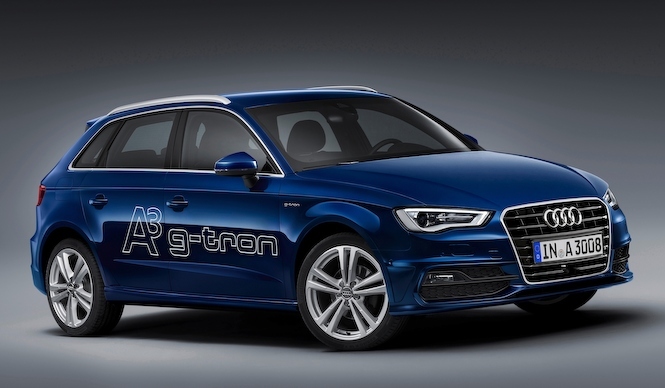
Audi takes a significant step towards realizing sustainable mobility. Based on the compact five-door model, theAudi A3 SportbackAudi has announced the "Audi A3 Sportback g-tron," which uses "e-gas" as its energy source, achieving virtually zero CO2 emissions.
Text by SUZUKI Fumihiko (OPENERS)
Fundamentally, the A3
At OPENERS, we have already introducedReport by Tatsuya Otanias,Audi's plan for mobility that achieves zero CO2 emissionsThe new "Audi A3" foreshadowed here, equipped with a powertrain that uses methane gas called "e-gas," has finally been officially announced. It is named the "Audi A3 Sportback g-tron."
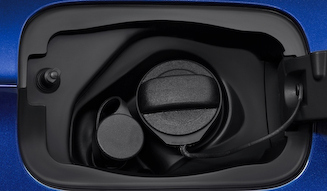
This "A3 Sportback g-tron" is equipped with one gasoline tank and two gas tanks, which hold 7kg of gas at 200 bar pressure, located beneath the luggage compartment. It is essentially a bi-fuel vehicle, running on both natural gas and gasoline.
To begin with the car itself, it is fundamentally the new "Audi A3 Sportback."
The engine isNew Golfand is adapted for theMQB platformenvironmentally friendly 4-cylinder turbo engine "1.4 TFSI," which has been made capable of using both gas and gasoline.
It is said to produce a maximum output of 81kW (110ps) and a maximum torque of 200Nm, with a top speed for the A3 Sportback g-tron of 190km/h. The 0-100km/h acceleration time is 11 seconds.
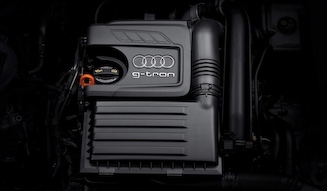
As mentioned above, it can utilize both gasoline and gas, but it is equipped with an electronically controlled two-stage gas pressure regulation system that reduces the high gas pressure to about 5 to 9 bar, ensuring a constant supply of appropriate gas pressure for driving demands. When the gas pressure in the tank drops below 10 bar, the engine management system automatically switches to gasoline operation.
Through this mechanism, the A3 Sportback g-tron's powertrain can deliver identical output from both energy sources. In other words, apart from the two fuel gauges on the instrument panel indicating the remaining levels of each energy source, the driver can operate the car like any ordinary A3, without paying special attention to the energy source.
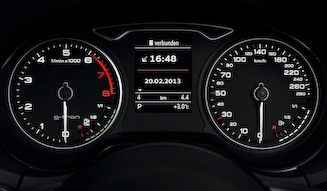
The driving range on gas is approximately 400km. An additional 900km can be covered on gasoline, giving a combined total range of up to 1,300km.
Furthermore, immediately after refueling or in cold conditions, the car starts on gasoline and switches to gas operation as soon as possible.
The gas tank, which is 27kg lighter than conventional tanks of similar capacity, features a three-layer structure made of impermeable polyamide, CFRP (carbon fiber reinforced polymer), and GFRP (glass fiber reinforced polymer), bonded together with a strong epoxy resin for enhanced durability.
Its Environmental Performance
The energy source is natural gas or Audi e-gas. Fuel consumption is less than 3.5kg/100km, with CO2 emissions below 95g/km. However, when using Audi e-gas, the CO2 used during gas production offsets the emissions, resulting in virtually zero CO2 emissions.
Even when considering the "well-to-wheel" analysis, which measures the environmental impact throughout the entire energy flow from fuel production to supply, in addition to the environmental load generated during vehicle operation, the CO2 emissions from producing this e-gas are fundamentally zero.
To recap Audi e-gas: electricity generated by wind power is used to electrolyze water into oxygen and hydrogen. While this hydrogen itself is expected to be used as an energy source for vehicles like the "Audi e-hydrogen," the infrastructure for using hydrogen as vehicle fuel is still underdeveloped. Therefore, in a factory, this hydrogen is reacted with carbon dioxide to produce methane gas. Chemically, the resulting methane gas functions identically to underground natural gas, allowing it to be utilized within the existing natural gas infrastructure.
Carbon dioxide is sourced from emissions from factories and other industrial sources. For every 1,000 tons of e-gas produced, 2,800 tons of carbon dioxide are used.
The e-gas plant currently nearing completion in Werlte, Germany, is expected to produce enough e-gas annually to power 1,500 A3 Sportback g-trons driven 15,000km each.
Even when accounting for the CO2 emissions generated during the construction of this e-gas plant and the wind farms supplying its electricity, the "A3 Sportback g-tron" is reported to have CO2 emissions of less than 30g/km.
This "A3 Sportback g-tron," along with theA3 Sportback e-tronis highly likely to appear at theGeneva Motor Show.


