The Future of the "Motor" Show | IAA 2017
IAA 2017 | Frankfurt Motor Show 2017
The Future of the "Motor" Show
Fade Out or "Manned Drone Pavilion" Next?
Akio Oya attended the Frankfurt Motor Show, experiencing firsthand the local excitement and media coverage.
This piece offers insights not only into the trends of production models but also into the future of the motor show itself when viewed from a broader perspective.
Photographs by Akio Lorenzo OYA / Mari OYAText by Akio Lorenzo OYA
This Year, Not Drowned Out by the iPhone
For the past few years, the true rival to the Frankfurt Motor Show has been, quite simply, Apple.
Specifically, their new product launch events held across the Atlantic around the same time as the show.
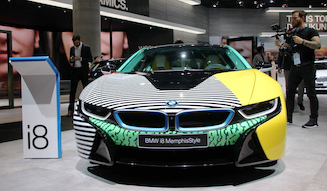
BMW i8 Memphis Style
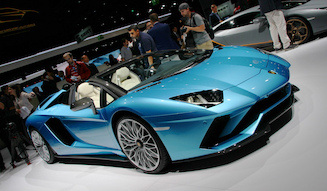
Lamborghini Aventador S Roadster
Typically, even if manufacturers released teaser images of concept cars and new models throughout the summer, media attention would quickly shift away from cars once a new iPhone was announced.
In terms of buzz, Apple's new products, with just a few models, could completely overshadow the more than 200 premiere cars at Frankfurt. Such was their "disruptive power."
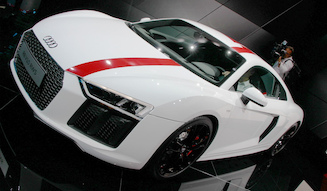
Audi R8 V10 RWS
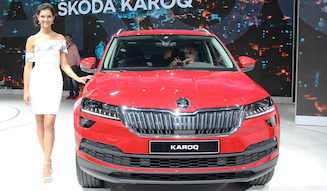
Skoda KAROQ
However, in 2017, European media surprisingly continued to focus on Frankfurt.
One reason for this was the attention given to manufacturers' electrification strategies amidst the growing scandal of diesel emissions fraud. Another was likely that the iPhone 8 and X specs were largely as expected.
IAA 2017 | Frankfurt Motor Show 2017
The Future of the "Motor" Show
Fade Out or "Manned Drone Pavilion" Next? (2)
SUVs Continue to Draw Crowds
The trend for production cars, or concept cars intended for production, remains firmly with SUVs. The Volkswagen Group was particularly active.
The core Volkswagen brand unveiled the long-rumored small SUV, the "T-Roc." SEAT, its Spanish subsidiary, also premiered the "Arona," an SUV in the same B-segment.
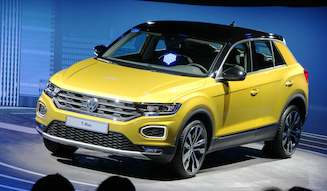
Volkswagen T-Roc
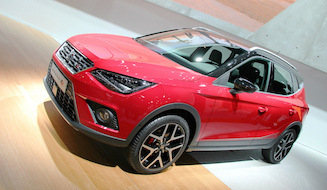
Seat Arona
About a decade ago in Europe, large SUVs became a trend. However, once they became widespread, drivers found their unwieldiness in parking lots of large cities and narrow streets of historic old towns to be a drawback. Soaring fuel prices until a few years ago only amplified user frustration.
Compact SUVs from Japanese and Korean brands, designed with these situations in mind, have achieved great success in recent years. Sales of the Audi "Q2," launched in autumn 2016, are also strong. Therefore, the T-Roc and Arona, sister models to the Q2, are almost certain to be hits.Q2Q2
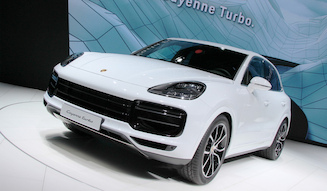
Porsche Cayenne
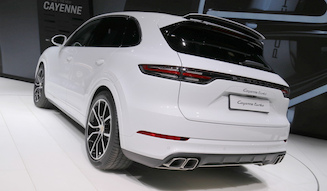
Meanwhile, Porsche unveiled the third generation of the "Cayenne." This aims to further solidify its position in the premium SUV market.CayenneCayenne
The newly equipped "adaptive roof spoiler" allows the vehicle to stop up to two meters sooner compared to models without it when braking fully from 250 km/h.
Furthermore, the car features a 48-volt onboard power supply. This enables more advanced multimedia compatibility and increased efficiency for heating systems. Simultaneously, it allows for thinner wiring, contributing to weight reduction. German manufacturers and suppliers are actively promoting its adoption.
IAA 2017 | Frankfurt Motor Show 2017
The Future of the "Motor" Show
Fade Out or "Manned Drone Pavilion" Next? (3)
Considering the Future of the Motor Show
So, what was the attendance figure for the 67th Frankfurt Motor Show?
Despite the media attention mentioned earlier, attendance was 810,000, a decrease of approximately 120,000 from the previous event. This figure is comparable to the 2015 Tokyo Motor Show.
Two days after the show opened, on September 26th, the British appliance manufacturer Dyson announced its plan to develop its own electric vehicles.
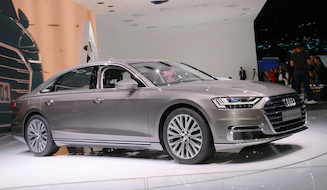
Audi A8
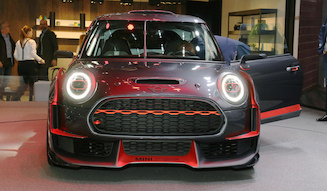
MINI John Cooper Works GP Concept
On the same day, Volocopter, a venture company invested in by Daimler (as previously reported), successfully completed a 30-minute test flight of its drone-based electric flying taxi in Dubai.
Will the motor show as an institution soon be forced to fade out, or will it be revitalized with the addition of a "Manned Drone & Flying Car Pavilion" from new industry entrants?
The situation is becoming quite thrilling.