Audi: Journeying Towards the Future City
Audi Urban Future Award
Audi Moves Toward the Future City
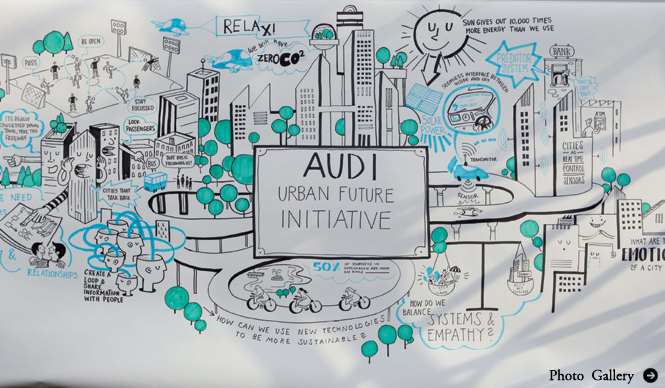
What can an automaker do to solve the problems of megacities, which are facing increasing population density? Audi AG is developing a project called the “Audi Urban Future Initiative” to envision the future of mobility and urban life. Within this initiative, the “Audi Urban Future Award,” which seeks visions for cities, architecture, and urban planning, offers the largest prize money for an architectural award in Germany and is presented every two years. This report comes from Fumio Ogawa, who attended the presentation for the “Audi Urban Future Award.”
Text by OGAWA Fumio
What Will Cities Look Like in 2030?
Recently, Audi Japan invited journalists to an online presentation connecting Audi Japan with Audi headquarters in Germany. The theme was a progress report on the “Audi Urban Future Award,” scheduled for October 2012.
The “Audi Urban Future Award” is a prize established by Audi “for solutions concerning future mobility” (Rupert Stadler, Chairman of the Board of Management). Following 2010, the second award in 2012 will see five architectural firms from around the world compete.
The theme given to each architectural firm was to propose a roadmap for optimizing and redeveloping urban structures, focusing on a major city in their respective countries: specifically Boston/Washington, Istanbul, Mumbai, the Pearl River Delta, and São Paulo.
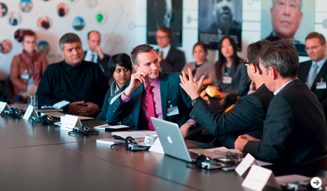
The target year is 2030.
The background presented is Audi's desire to “learn from cities and continue to contribute to shaping the future of urban life.”
In 1800, only London, Beijing, and Tokyo had populations exceeding one million. Today, there are 442 such cities. Audi projects that by 2030, 70 percent of the world's population will live in megacities with over 8 million inhabitants, and they aim to consider what mobility should be like in such cities.
Audi Urban Future Award
Audi Moves Toward the Future City (2)
How Can 28,000 People Live in One Square Kilometer?
The details of the regions targeted by the “Audi Urban Future Award” and the architectural firms in charge are as follows.
Mumbai (India) is represented by “CRIT.” In Mumbai, where 28,000 people live per square kilometer, there is no room for horizontal expansion, and the only option is to build vertically. Are there suitable modes of transport for people living in such a confined area? CRIT is based in Mumbai. They are recognized for their approach, which requires not just architectural expertise but also a multifaceted perspective to solve the complex problems of a rapidly changing city.
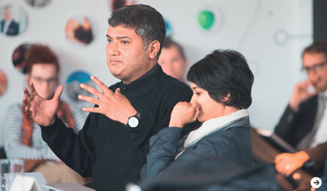
Prasad Shetty, Rupali Gupte (CRIT, Mumbai/India)
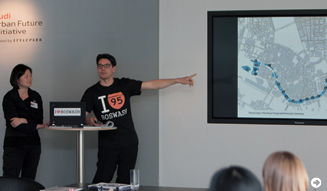
Yoon, Eric Höweler (Höweler + Yoon Architecture, Boston/USA)
Boston/Washington (USA) is represented by “Höweler + Yoon Architecture.” This region, sometimes abbreviated as Bos/Wash, experienced rapid development after World War II. The suburban population has ballooned from 6 million to 30 million, increasing the burden on transportation systems due to the massive flow of commuters to the city center. Boston-based Höweler + Yoon Architecture's policy is to address these issues by integrating architecture, landscape, and art.
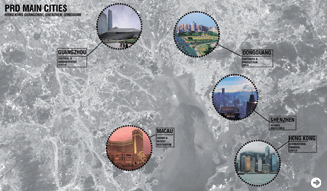
Pearl River Delta (China) is represented by “NODE Architecture & Urbanism.” The Pearl River Delta (the triangle connecting Guangzhou, Hong Kong, and Macau at the mouth of the Pearl River), expected to exceed 80 million inhabitants in the near future, has 80 percent of its population as migrants, highlighting the need for a distinct urban identity. Furthermore, while expressways are being built, there is no space for bicycle paths or pedestrian walkways, leaving the city's form ambiguous.
NODE Architecture & Urbanism was founded in Hong Kong and now has an office in Nansha District, at the mouth of the Pearl River. They handle a wide range of projects, from architecture to urban planning and lighting.
Audi Urban Future Award
Audi Moves Toward the Future City (3)
The Importance of Architecture from a Mobility Perspective
Istanbul (Turkey) is represented by “Superpool.” Istanbul is a city facing the Bosphorus Strait with intricate waterways. Due to the constant threat of earthquakes, extending the subway system to alleviate road traffic is difficult. How can traffic congestion be eased in this city, which will likely remain dependent on cars in the future? Superpool, active in Istanbul, strives to give importance to architecture in a city that expands faster and more complexly than orderly urban planning allows.
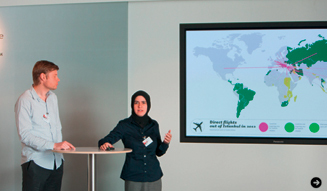
Gregers Tang Thomsen, Selva Gürdoğan (Superpool, Istanbul/Turkey)
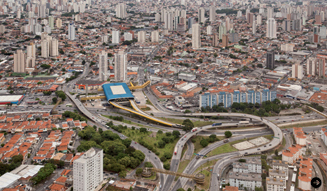
São Paulo (Brazil) is represented by “Urban Think Tank.” São Paulo, a city surrounded by an industrial metropolis that accounts for about 10 percent of Brazil's population, is rumored to merge with Rio de Janeiro in the future. However, no formal urban planning, including new transportation systems, has been initiated for such a scenario.
Urban Think Tank in São Paulo specializes in planning and designing large-scale urban projects. They advocate that architecture should be designed purposefully, not just for form, and that urban planning should begin by addressing on-site needs rather than being top-down.
Initially, Junya Ishigami + Associates from Tokyo was scheduled to participate, but they unexpectedly withdrew from the project in early August due to a busy schedule.
It is regrettable, as their proposed theme regarding the interaction and complementarity between public transportation systems and individual mobility in Tokyo was compelling.
Audi Urban Future Award
Audi Moves Toward the Future City (4)
Could These Be Solutions for Urban Problems Worldwide?
The proposals from five local architectural firms envision the future (2030) of five cities, with the final presentations scheduled for October 2012 in Istanbul.
“Although each city presents unique challenges, we believe that the solutions for these specific problems can actually serve as solutions for the global issues faced by cities,” stated Dominik Stämpfli, a key promoter of this project. He spoke to us in Tokyo in real-time via camera from a conference room at Audi's headquarters in Ingolstadt.
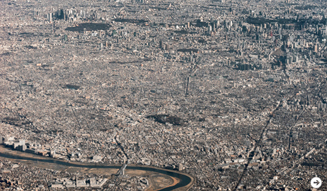
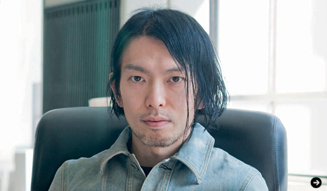
Stämpfli offered an example of how urban changes might impact automakers.
“Although he has since withdrawn, when I spoke with Junya Ishigami, he mentioned that a significant amount of land in Tokyo is subject to redevelopment or renovation plans each year. This suggests that car manufacturers might also need to consider how to flexibly adapt to such changes.”
However, he emphasized that this project is not intended to increase car sales.
“Out of the nine judges, only one is from Audi. The rest are experts from diverse fields. They will evaluate how applicants have envisioned the future of urban mobility. While it's called an award, we see it as a platform for exchanging ideas rather than a competition.”
Audi intends to actively engage in these projects and, as long as they do not encounter exclusionary attitudes, plans to contribute to future transformations in each city.