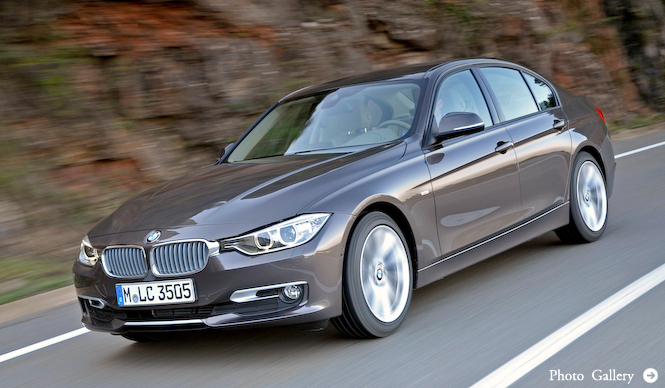
Considering Japan's Energy Imbalance Through a BMW Diesel Test Drive | BMW
BMW 3 Series | BMW 3 Series
Considering Japan's Energy Landscape
Test Drive of the BMW 3 Series Diesel Model
It has been a long time since diesel engine models became uncommon in passenger cars in Japan. Meanwhile, in Europe, diesel cars, with their image of being clean and economical, account for over 50% of the market share. While there are many reasons, such as differing national energy policies and environmental awareness, the gap is vast, even though the premise of addressing environmental issues is shared. This time,Review of the BMW X5Toshifumi Watanabe explains Japan's diesel situation and the BMW 3 Series diesel model, which BMW is considering introducing, incorporating his own experiences.
Text by WATANABE Toshifumi
The "Imbalance" Realized by Chance During the Earthquake
During the Great East Japan Earthquake, fuel shortages became a significant problem not only in the affected areas but throughout Japan. The scarcity of gasoline, which became apparent within a few days, was particularly severe. Many people likely found themselves having to queue at gas stations.
The situation had not improved at all in late March when I was delivering supplies to the disaster-stricken areas. The hospital administrator I delivered medical supplies to explained that even though they needed more medicine, the vendors' delivery vehicles were all out of gas and unable to move.
At that time, I was driving a Mercedes-BenzML350 BlueTec, an SUV with a diesel engine.
This was because, considering its driving performance on the undulating Tohoku Expressway, its cargo capacity, and the fact that we couldn't afford to use local fuel when gasoline was unavailable, no other option seemed better.
In fact, the ML350, loaded with nearly 300kg of supplies, performed its role perfectly, covering a total of approximately 1,000km, including the round trip of about 700km between Tokyo and Sendai and local travel, without needing to refuel.

Mercedes-Benz ML350 Bluetec (W164)
What I learned then was that the queues at the gas stations were all for gasoline, and diesel fuel was readily available without any issues. (However, depending on the region, the overwhelming demand for gasoline meant that gasoline supply was prioritized, which in turn made diesel fuel harder to obtain).
BMW 3 Series | BMW 3 Series
Considering Japan's Energy Landscape
Test Drive of the BMW 3 Series Diesel Model (2)
Japan's Strategy
Today, most private passenger cars in Japan run on gasoline engines. The decisive factor was the ordinance to regulate diesel vehicles in urban areas, initiated by the performance of Governor Ishihara, who shook a plastic bottle. On the other hand, it can also be seen as a reflection of the differing approaches between Japan and Europe regarding next-generation powertrains.
In other words, Japan had a mid-to-long-term blueprint to navigate a certain period by hybridizing small, lightweight gasoline engines, while awaiting the realization of next-generation internal combustion engines such as EVs, fuel cells, or HCCI (Homogeneous Charge Compression Ignition), a technology expected to combine the best of gasoline and diesel.
The situation where diesel vehicles using diesel fuel are extremely scarce, or rather, skewed, can directly translate to a vulnerability in our lifeline. I believe the recent earthquake unfortunately proved this. Furthermore, Japan imports almost all of its crude oil and tolerates a distorted situation where it exports about a quarter of the diesel fuel produced during gasoline refining.
The structure where it is more profitable to re-export diesel fuel to overseas markets with high demand than to distribute it domestically at low prices is something that should be urgently rectified, considering future energy management and the reduction of environmental impact.
Therefore, I strongly feel that we should explore a direction where 10-20% of private passenger cars are replaced with diesel vehicles.
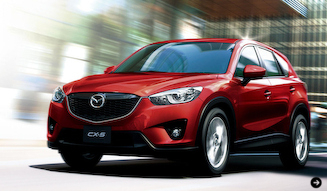
MAZDA CX-5 XD | MAZDA CX-5 Cross-D
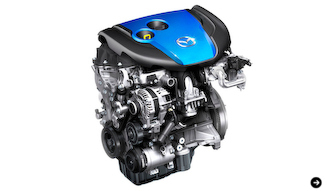
MAZDA SKYACTIVE-D | MAZDA SKYACTIV-D
Clean Diesel Begins to Gain Recognition
The preamble has become long, but the stage is gradually being set for diesel to be recognized again, with product offerings improving. Notably this year, Mazda launched the "CX-5," which fully adopts their crucial "Skyactiv Technology.""CX-5"The unique diesel unit installed has been well-received in the Japanese market, accounting for 80% of current orders.
Among imported cars, BMW entered the Japanese market this year with its latest diesel unit installed in the SUV "X5."as reported previously, and it seems that following this, a diesel model will be added to the 3 Series, with a high probability of its arrival within this year. As you know, if it's installed in an imported car that sells second only to the Volkswagen Golf in Japan, it will undoubtedly attract the attention of many people.
BMW 3 Series | BMW 3 Series
Considering Japan's Energy Landscape
Test Drive of the BMW 3 Series Diesel Model (3)
BMW 3 Series Diesel "320d"
The grade being considered for introduction in Japan is the "320d," equipped with the latest 2-liter 4-cylinder turbo diesel engine, featuring piezo injectors, a variable geometry turbocharger, and a start-stop system.the gasoline 320i released earlier, but the torque, where diesel excels, is 380 Nm, 110 Nm higher than the 320i, available from 1,750 rpm.
Regarding the weight concerns associated with installing a diesel engine, efforts have been made to reduce weight, such as using an aluminum alloy crankcase, resulting in a vehicle weight not significantly different from the 320i. However, for its introduction in Japan, compliance with "Post New Long-Term Regulations" will necessitate the installation of a urea system, likely causing a slight increase in weight.
I have already test-driven the new 3 Series sedan with this engine overseas, and what was impressive was that there was almost no feeling of sluggishness, which is often associated with diesel engines, neither in terms of feel nor mass.
The redline was set at 5,300 rpm, but in reality, the power delivery remained strong up to the mid-4,000s rpm, and it smoothly accelerated up to nearly 5,000 rpm.
This demonstrated that even with a diesel engine, BMW can achieve such a sporty feel.
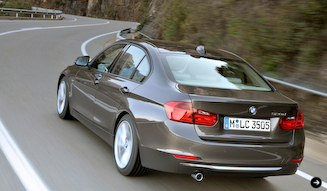
BMW 320d | BMW 320d
BMW's headquarters even included circuit driving for the 320d test drive, and I recall that even there, the car could cut into corners sharply without conveying the physical weight of the diesel engine, which tends to be heavier than gasoline engines. Strictly speaking, the tendency towards understeer due to the load on the front wheels increases with spirited driving, but considering that this is not a car typically driven that way, it is within acceptable limits. Its qualities as a sports sedan were, in fact, more striking than those of the328iwhich I test-drove simultaneously.
BMW 3 Series | BMW 3 Series
Considering Japan's Energy Landscape
Test Drive of the BMW 3 Series Diesel Model (4)
Station Wagon: The Ideal Choice for Diesel
However, it is true that the gasoline engines in the new 3 Series have also reached a considerable level in terms of fuel efficiency. The decisive advantage of the 320d may be most apparent during long-distance cruising, where there are fewer accelerations and decelerations, and the low-rpm range is used steadily.
In this context, its compatibility with the 3 Series Touring, the station wagon variant announced earlier, becomes noteworthy. The new 3 Series Touring, which inherits the design aesthetic of previous generations and retains its excellent features such as the separately opening glass hatch, demonstrates a level of refinement comparable to the sedan in terms of handling, quietness, and comfort. Its agility on winding roads, with only a slight increase in weight that is barely noticeable, indicates its exceptional suitability as a sports wagon.
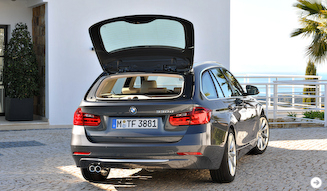
BMW 3 Series Touring | BMW 3 Series Touring
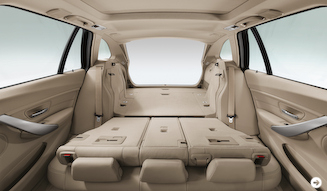
BMW 3 Series Touring | BMW 3 Series Touring
And considering the cargo space, which has been expanded by 35 liters compared to the previous model, and its capacity for long-distance travel, the idea that the diesel unit is a perfect match for this body style becomes stronger. In Japanese traffic conditions, achieving over 20 km/L in highway cruising fuel economy would be achievable, offering a compelling benefit to users alongside its social significance. Whether the 320d Touring will be introduced in the Japanese market remains uncertain, but we hope for a positive decision from the importer, who is reportedly aiming for an announcement this autumn.

BMW 320d | BMW 320d
Body | Length 4,624 x Width 1,811 x Height 1,429 mm
Engine | Water-cooled inline 4-cylinder TwinPower Turbo Diesel
Compression Ratio | 16.5
Displacement | 1,995 cc
Max Output | 135 kW (184 ps) / 4,000 rpm
Max Torque | 380 Nm / 1,750-2,750 rpm
Transmission | 8-speed automatic
Vehicle Weight | 1,495 kg
Luggage Capacity | 480 liters
Fuel Economy | 4.6-4.5 L/100km (NEDC combined, approx. 21.7-22.2 km/L)
CO2 Emissions | 120-119 g/km
Tire Size | 205/60 R16 92V
BMW 320d Touring | BMW 320d Touring
Body | Length 4,624 x Width 1,811 x Height 1,429 mm
Engine | Water-cooled inline 4-cylinder TwinPower Turbo Diesel
Compression Ratio | 16.5
Displacement | 1,995 cc
Max Output | 135 kW (184 ps) / 4,000 rpm
Max Torque | 380 Nm / 1,750-2,750 rpm
Transmission | 8-speed automatic
Vehicle Weight | 1,565 kg
Luggage Capacity | 495 liters / 1,500 liters (rear seats folded)
Fuel Economy | 4.8-4.7 L/100km (NEDC combined, approx. 20.8-21.3 km/L)
CO2 Emissions | 125-124 g/km
Tire Size | 205/60 R16 92W
*All figures above are for the domestic specification.