Porsche 911 Story—The Fifth Generation, Type 996
Porsche 911 | The Porsche 911
Porsche 911 Story—The Fifth Generation, Type 996
A New Era for the 911
This is "Porsche 911 Story," looking back at the history of the Porsche 911. The fifth installment covers the Type 996. It adopted a water-cooled engine and underwent significant styling changes. This 911 was controversial.
Text by OGAWA Fumio
Adoption of Water Cooling
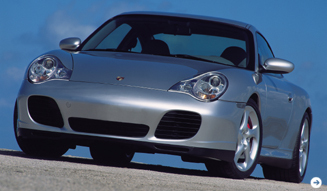
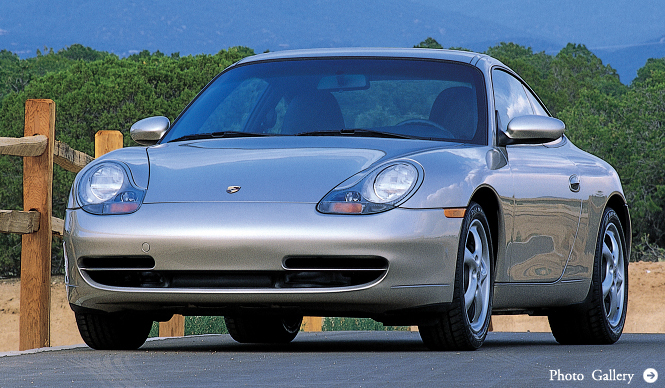
Launched in 1998, the Type 996 was the most epoch-making model in the 911's history. Its key features were the abandonment of the traditional air-cooled engine in favor of a water-cooled system, and a departure from the flared-fender styling to a more streamlined body shape.
The 3.4-liter flat-six engine, and its rear-mounted layout, were elements Porsche had adhered to for the past 35 years. However, in the Type 996, it became water-cooled and was given a four-valve head.
The adoption of water cooling was a result of an effort to achieve both high power, competitive with rivals, and fuel efficiency demanded by the times. The era of clinging to the lightweight air-cooled system had finally come to an end.
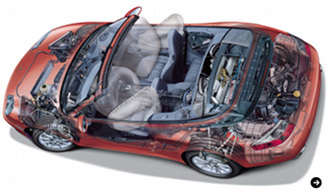
The styling changes were also driven by the need for aerodynamic refinement with fuel efficiency in mind. Although the body width increased, the reduced fender flares resulted in an aerodynamic drag coefficient of 0.30 for the Type 996, compared to 0.34 for the preceding Type 993.
The wheelbase was extended by 83mm to 2,355mm, and the overall length increased by 90mm to 4,435mm. Behind these changes were not only aerodynamic reasons but also enhanced crash safety and improved comfort through increased interior space, all responding to the demands of the era.
The Arrival of the Boxster
Elevating Engineering to Modern Standards──While the numerous improvements Porsche implemented with the Type 996 are highly commendable, the company was simultaneously struggling with poor sales, facing a financial crisis so severe that bankruptcy seemed imminent.
To cut costs, Porsche adopted a strategy of increasing its model variations. They developed lower-tier models to broaden their appeal and simultaneously expanded the 911 lineup. Most notably, they announced the Boxster, a mid-engined, lightweight sports car. In a "bold decision," the Type 996 shared parts with the Boxster, including the same headlamps.
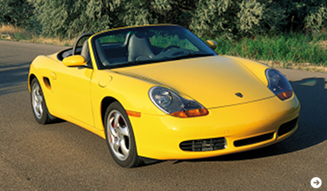
Boxster
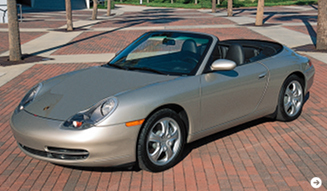
Carrera 4 Cabriolet
This headlamp design, which integrated functions such as main beam, high beam, position lamps, turn signals, and headlamp washers into a single unit, was primarily aimed at cost reduction, as the development manager stated at the time. However, using the same headlamp design as the less refined Boxster, which significantly shapes a car's face, displeased many 911 fans.
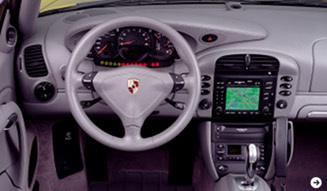
A similar issue arose with the interior design. While the functional layout and larger, easier-to-operate switches were improvements, the prominent use of synthetic materials and the strong resemblance to the Boxster drew widespread criticism.
It is understandable that fans found it difficult to accept that models with a price difference of nearly double shared such a similar impression, especially when it concerned the iconic 911.
However, they boldly made significant changes where necessary, while turning a blind eye to the potential for design and image stagnation.──In retrospect, this was an excellent decision by Porsche's management. By investing in engineering while compromising on aesthetic pursuits, they managed to preserve the car's status as a sports car, leading to Porsche's current prosperity.
Porsche 911 | The Porsche 911
Porsche 911 Story—The Fifth Generation, Type 996
A New Era for the 911 (2)
Evolution Integrated with Racing
The variations of the Type 996, beginning with the announcement of the Carrera 2 in 1997, were fundamentally similar to the Type 993. There were two drivetrain options: rear-wheel drive and four-wheel drive (Carrera 4 introduced in 1999). Transmissions included a 6-speed manual and a 5-speed automatic with manual mode, the Tiptronic S. Body styles included the full convertible "Cabriolet" in 1998 and the "Targa" with a large sliding roof in 2002.
The flat-six engine initially displaced 3.4 liters and produced 300 hp. In 2002, the displacement was increased to 3.6 liters, raising the maximum output to 320 hp. Remarkably, 80 percent of the engine's parts were renewed. While the larger displacement increased power and torque, fuel efficiency was maintained at the same level as the earlier engine. This was partly due to the adoption of "VarioCam Plus," which automatically adjusts valve lift.
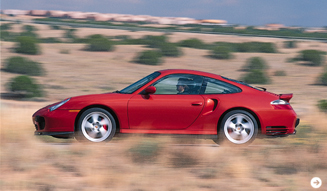
Turbo
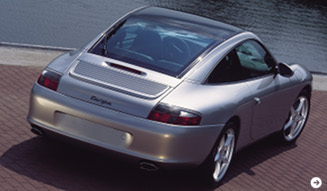
Targa
The "Turbo" arrived in 2000 with a maximum output of 420 hp. Like the Type 993, it featured a full-time four-wheel-drive system. The availability of optional ceramic brakes, known as PCCB, was another characteristic of the Type 996. These brakes offered excellent fade resistance even during track use, continuing Porsche's tradition of "evolution" always considering racing performance.
Expansion of High-Performance Models
As mentioned earlier, Porsche began to focus on increasing its model variations around this time, particularly pouring resources into the development of high-profit, high-performance models.
The "Turbo S," released in 2005 with an increased output of 450 hp, was part of this strategy. Furthermore, the integration of the Tiptronic S automatic transmission into the Turbo model, aiming to balance comfort and performance, was a notable first for Porsche.
In 1999, the "GT3" was introduced, designed with track use in mind. Developed with the goals of being lighter, lower, stiffer, and sportier, this model weighed under 1.4 tons thanks to weight reduction and was powered by a 360 hp, 3.6-liter naturally aspirated engine.
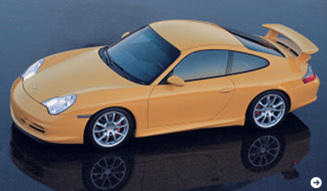
In 2003, a limited-production homologation special, the "GT3 RS," was unveiled. It featured an even lighter body and a more powerful 380 hp engine.
Additionally, in 2001, a "GT2" package based on the Turbo model, intended for track-focused drivers, was introduced. It was not a catalog model but was sold through orders placed at Porsche's development center.
The GT2 can be described as a road-legal model that allows drivers to enjoy Porsche's race-honed technology. Key components such as the chassis, suspension, and brakes were significantly enhanced for track performance, and the engine also received upgrades.
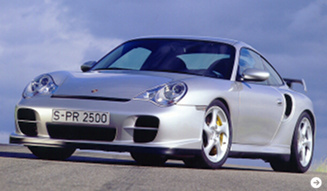
Initially rated at 462 hp, the maximum output was increased to 483 hp by the end of its four-year model life. The GT2's top speed was officially stated as 319 km/h.
In 2002, the Carrera 4 gained a wide-body variant, the "Carrera 4S." In 2003, a convertible version of the "Turbo" was added. This approach of expanding the model lineup to meticulously meet customer demands became something of a Porsche trademark thereafter.