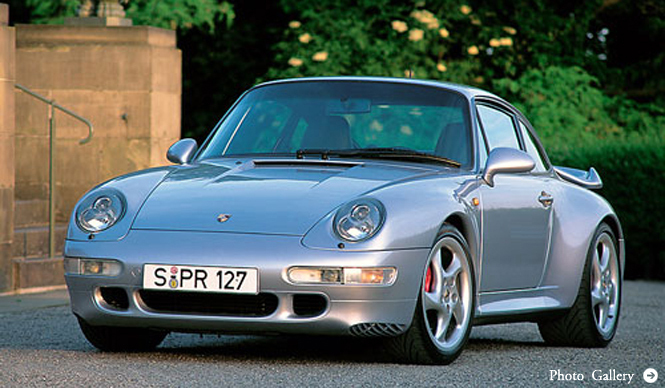
Porsche 911 Story—The Fourth Generation, Type 993
Porsche 911 | The Porsche 911
Porsche 911 Story—The Fourth Generation, Type 993
The Pinnacle of Air-Cooled 911s
This is the fourth installment of 'Porsche 911 Story,' looking back at the history of the Porsche 911, focusing on the Type 993. As the last air-cooled 911 and considered its ultimate form, it remains highly popular today. While inheriting the image of the 964, the wave of modernization also reached the 911's iconic look, marking a definitive chapter with the 993.
Text by OGAWA Fumio
Modernization with Fuel Efficiency in Mind
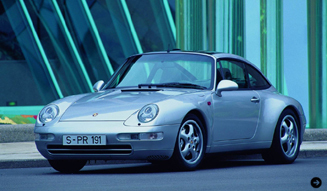
Targa | Targa
Among the air-cooled 911s, this is the most refined model. Introduced in 1993, the fourth generation is commonly known as the 993. Its primary layout was rear-engine, rear-wheel drive. Furthermore, the styling inherited the image of the preceding 964. However, the headlamp shape, along with the fenders, became slightly flatter and more raked, marking a design that brought a sense of closure to the iconic 911 look that had continued since its debut in 1963.
The wheelbase is nearly identical to the previous generation, and while the width has increased slightly, the overall length and height remain almost the same.
The air-cooled 6-cylinder engine has the same displacement as the previous generation: 3600cc. The standard Carrera produces 272 horsepower, 22 hp more than its predecessor. In 1995, the Carrera RS arrived with a more powerful 3746cc engine producing 300 hp. The all-wheel-drive Carrera 4 was also part of the lineup. Incidentally, the Japanese market Carrera 4 adopted the same engine as the RS. Topping the range was the Turbo, boasting a maximum output of 408 hp, an increase of 48 hp over the previous generation.
Beyond the air-cooled engine, many elements carried over from previous 911s, such as the Tiptronic automatic transmission that allowed for easy manual gear selection, the dashboard integrated with the body, and the high-back front seats.
However, in response to the era's demand for better fuel efficiency, the gearbox was updated to six speeds, and the fenders were made flatter to improve aerodynamics, making it more modernized.
The most significant change was the adoption of a multi-link rear suspension. To compete with rivals offering higher power, this system aimed to compensate for the weaknesses of the unique mechanical layout, which concentrated weight at the rear, ensuring appropriate power delivery to the rear tires and enhancing stability and handling during cornering.
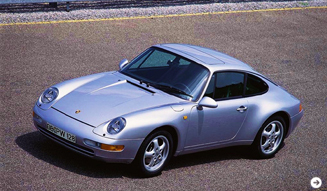
Achieving Comfortable Livability
Nevertheless, these were all concepts Porsche employed to refine the 911. Perhaps 'evolved' is a more fitting description than 'changed.' The 993 inherited the 911 series' strengths of being compact and lightweight, while also notably improving comfort. The ride quality became more refined, and crucially, the air conditioning became dramatically more effective. The shifter feel during manual operation was smoother, and it could be said that the 993 offered almost everything one could expect from a 911 at the time.
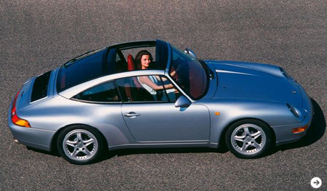
Targa | Targa
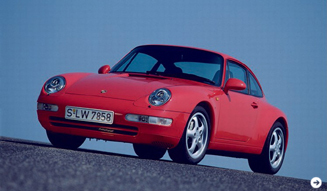
Carrera 4 | Carrera 4
A Turning Point in 1996
A major turning point came in 1996 when the engine adopted Varioram, a variable intake system designed to achieve higher output and better fuel efficiency. This resulted in an increase in maximum output, for example, to 285 hp for the Carrera, a gain of 13 hp.
While current 911s have become larger and heavier to enhance crash safety, the 993's weight did not significantly impact its agility as a sports car.
With just the clutch engaged, the roughly 1.5-ton body glided forward effortlessly. A slight press of the accelerator pedal was all it took for the car to surge ahead instantly, like a well-fitted sports shoe. Even with increased torque to compensate for a heavier body, achieving such a delightful sensation is not easily accomplished.
The Arrival of the Carrera S
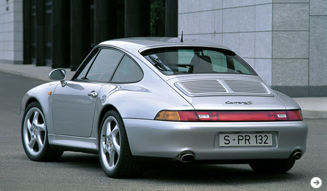
Carrera S | Carrera S
With the 993, Porsche introduced two distinct lineups: the slim standard Carrera and the Carrera S, which exuded power with its wider tires and flared fenders. The Targa also underwent a design concept change; instead of the roof being manually removable in sections as before, the glass panel now slid back electrically, creating a unique, large opening.
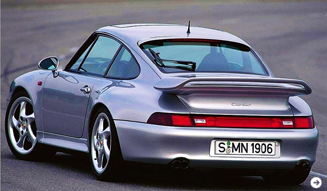
The presence of the Turbo, the first in 911 history to be equipped with a flat-six engine exceeding 400 hp, is another noteworthy aspect of the 993. Its flared fenders, front spoiler, and the rear spoiler mounted above the rear engine lid, all contributing to a powerful impression, remain distinctive exterior features that continue to captivate fans.
The driving experience of the Turbo is smooth and delicate. The sensation of torque building progressively from low RPMs is something you'll never forget once you've experienced it. Yet, it doesn't possess the exoticism of an Italian exotic sports car. In its ability to be a sports car for everyday use, it is truly a legitimate member of the 993 family.


