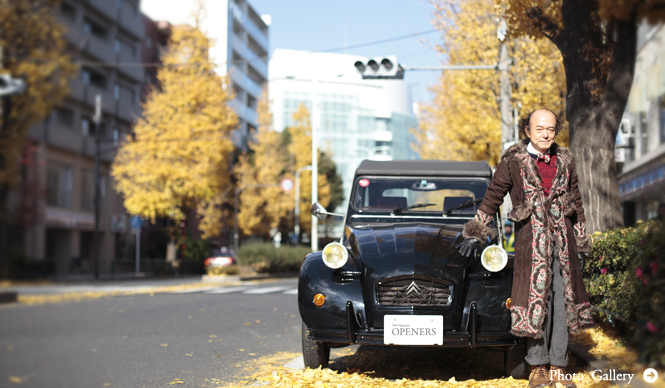
Show Us Your Car: Part 3 - Masafumi Suzuki × Citroën 2CV
Volume 3: Masafumi Suzuki x Citroën 2CV
Mr. Suzuki's Citroën Journey
At the end of 2010, Masafumi Suzuki left the magazine "ENGINE," which he founded himself, to become the editor-in-chief of "GQ." Mr. Suzuki, a self-proclaimed and widely recognized enthusiast, chose the Citroën 2CV as his partner for this new chapter. How did Mr. Suzuki begin his relationship with the 2CV?
Text by MASAFUMI SUZUKI (OPENERS)
Photographs by JAMANDFIX
I Received It
I received this car from Hisamitsu Sekine, who runs Sekine Yofukuten, a tailor shop for jackets and suits, in Setagaya. He owned this 2CV but said, 'I don't drive it, and I don't have space to keep it, so would anyone like to take it?' I replied, 'If I'm acceptable,' and that's how I got it. It was originally a gray and black Charleston. The seats were gray fabric.
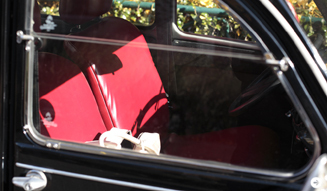
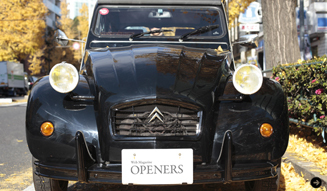
But the paint was already in bad shape, it had no vehicle inspection, and the interior was tattered, with the yellow sponge showing through the seats. It was a 1985 model, had only run about 15,000 km, and the soft top was in good condition, with no suspension issues. Since it needed repairs anyway, I thought, 'Wouldn't it look cool if I made the interior a deep red?' So I did. Red vinyl leather, isn't it lovely? And you've never seen an all-black 2CV before, have you? The front grille is also black, and I painted the wheels a shiny black.
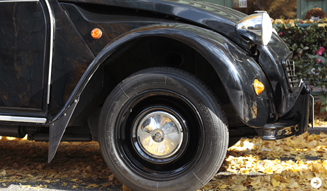
Ralph Lauren's "Atlantic Coupé"It's not that, but I thought it would look cool. I painted the bumpers black too. It's quite stylish, isn't it? Actually, I'm not a big fan of the original gray Charleston. And the black and red Charleston isn't really my thing either. I was hoping for red or beige, so I was glad it was a 2CV that needed repainting anyway. By the way, the tires are the first radial tires, Michelin X, which I received as new. I wonder if Michelin still makes them for people who drive 2CVs, as they're not used on anything else now. They're even in the catalog. That's impressive.
But I also want a 964 Carrera RS.
I thought the 2CV was nice, so it was good timing. Well, I mostly just drive around town, not really going on long trips, just puttering about.Porsche 911 (964 generation)
I was also thinking a black-on-black-on-black 964 convertible would be nice, but compared to the 911, the 2CV has better fuel economy. It doesn't take 20 liters to fill the tank, so I think it's about 22-23 liters when full, but it gets about 250 km on roughly 17 liters. That's in Tokyo during winter.
My First Citroën Experience Was the 2CV
This is probably my third 2CV. Or maybe my fourth. I've owned blue, black and gray Charleston, and white ones. I don't really remember anymore. But my first Citroën was a 2CV. The first Citroën I bought myself was the GS, though.
There was a "Used Car Guide" page in "Car Graphic" where readers could buy and sell cars. Someone in Tachikawa was selling an orange GS, and I went to see it at night. I thought, 'Ah, it's so wonderful,' and bought it. At that time, I thought the GS was much cooler and better than the 2CV.
There was a Yanase used car center nearby, and they had a Volvo Amazon, a diesel Volkswagen Golf, an Audi 80... or was it a 100? And a Ford Taunus... various cars, but I thought the GS was the best. However, it cost around 1.8 million yen, which I couldn't afford at the time, so I bought a 200,000 yen, mustard-yellow, two-door, second-generation Corolla. I ended up not liking it and traded it for a Mitsubishi Lancer EX. The Lancer EX was a 1.6-liter GT with 100 horsepower. I thought, 'Wow, 100 horsepower!' That was considered very high performance back then, over 60 horsepower per liter. But being a reader of "Car Graphic," my dreams expanded. There were stories about how great the GS was, right? So I traded it for that orange GS. But it was constantly breaking down (laughs).
Volume 3: Masafumi Suzuki x Citroën 2CV
Mr. Suzuki's Citroën Journey (2)
The Citroën Journey Begins
The GS was so prone to breakdowns that it cost about 1 million yen just in repairs, even though I had children and a wife. She forgave me, but I felt so sorry. So I sold the GS and switched to a Honda City Turbo. I liked the hydropneumatic suspension, so before that, I bought the second-generation Accord, which electronically controlled hydropneumatic suspension, but it wasn't much fun. When the City Turbo came out, I switched to that.
But then the "City Turbo II" came out, and I didn't find it interesting. Just then, I found a good 2CV. It was a Turkish blue, right-hand drive model that had belonged to a German embassy official. This German had specifically bought a right-hand drive British-market 2CV and brought it to Japan. It had a water flower ornament on the shift knob. He probably thought it was 'Japan cool.' It wasn't cool from a Japanese perspective, but it was certainly refreshing (laughs).
Still, I wanted a hydropneumatic system, so I bought a white GS as well, and owned two cars.
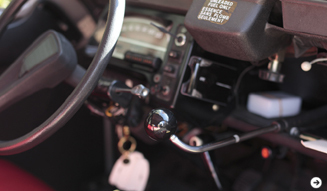
After that, I also bought a CX. The CX was the most luxurious car in France, so it felt opulent, the seats were comfortable, and the interior felt like a cocoon, offering great protection.
Why Did You Keep Driving Citroëns?
Perhaps it was because Citroëns were advanced, avant-garde, or I just wanted to try driving them. But they were all incredibly troublesome. The 2CV had the fewest problems. Eventually, whether I could manage or not, I got rid of three cars in succession. The BX after that was a station wagon, and it didn't feel very Citroën-like anymore, perhaps because it was shared with Peugeot. It had hydropneumatic suspension, but I didn't buy it. Then, I had nothing left and felt lonely, so I bought another 2CV. That was the black and gray Charleston. That's how my Citroën journey ended. After that, I bought a new Golf II.
Volume 3: Masafumi Suzuki x Citroën 2CV
Mr. Suzuki's Citroën Journey (3)
Cars? No Thanks!
I think my first brief experience with the 2CV was on the banks of the Tamagawa River. The steering had absolutely no kickback, and the ride quality was superb. I was incredibly impressed. Paved roads didn't spread throughout Europe until the 1960s. The 2CV was announced in '48 and probably went on sale the following year, but it was likely designed with unpaved roads in mind. It offered a comfortable ride in such conditions, with a minimal engine and maximum capacity. It could carry luggage and people, and it had a sort of left-wing feel, didn't it? It weighed less than 500 kg and had good fuel economy. I thought it was great.
By the time I bought the 2CV, I was already working for "NAVI," and I was in charge of my own project called "Cars? No Thanks," a page dedicated to anti-car arguments. There had been two oil crises, and I had heard anti-car arguments from many people. So, in a way, it was the opposite of that, or perhaps like Fujio Akatsuka's way of speaking, it was about being against it, but still finding a minimum level of acceptance. I think I saw the 2CV as that kind of car.

Mr. Suzuki Talks About the 2CV
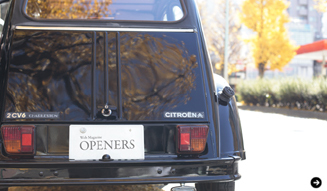
The 2CV had almost no model changes, but the suspension and engine were slightly modified. Initially, it had a unique interconnected suspension that prevented the rear from rising when the front nose-dived. But towards the end of the 70s, it adopted a conventional suspension with struts at the front and trailing arms at the rear. The engine grew from 375cc to 425cc, and mine is 602cc. To keep up with higher speeds, it remained a two-cylinder but got larger. This also increased horsepower slightly. Mine has about 29 horsepower. We talk about 0-100 km/h as a performance metric, right? A modern 911 does it in about 4.7 seconds, and 5 seconds is considered high performance. But what about the 2CV? It takes all day (laughs).
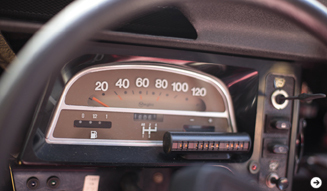
André Citroën was apparently inspired by the Model T Ford and visited Detroit. He then founded the Citroën company so that everyone could own a car. But for some reason, perhaps because he prioritized good handling, he chose a front-engine, front-wheel-drive layout with more weight on the front wheels. The drawback is that on inclines, there isn't enough weight, and it struggles to climb. When the engine was around 400cc, I used to have to go up a nine-step slope in reverse. Old photos also show people riding on the front of the car to climb uphill in the Alps. Starting on a hill is difficult. I don't use the handbrake for hill starts now, but once, at a toll booth near the top of a steep incline at the Grand Palace hotel, I pulled the handbrake, thinking it would be too much for the 2CV on such a slope. It failed. Well, the handbrake on a 2CV usually doesn't work well anyway. Since then, I haven't used the handbrake for hill starts. The 2CV does roll back, of course, but I overcame the fear of rolling back with the 2CV.
Mr. Suzuki's Journey Continues
But I've been everywhere in the 2CV. It can reach about 110 km/h. On expressways like the Chuo Expressway, it averages about 80 km/h uphill. So, it's very sensitive to the terrain (laughs). The ride is comfortable, it goes straight well, and the visibility is good, but driving on the highway for about four hours is tiring due to the noise. I'm constantly pressing the throttle pedal at the upper limit of its RPM range. The wind noise is also considerable. But fundamentally, it's a fun car. The low gear is noisy, but once you shift to second, it's not that loud. The tremolo-like 'tururururu' sound unique to the air-cooled twin-cylinder is also enjoyable, and the response is good. The Fiat 500's TwinAir, right? That's also a twin-cylinder and supposed to be good, isn't it? Well, even when the 2CV is trying its best, it gets overtaken by a spirited taxi or a kei car in the city, but it has the minimum necessary for a car.
The atmosphere is great, and it puts me in a peaceful mood. And doesn't mine look stylish? It's not an expensive car, so there's no sense of arrogance. Does it suit me? My work has also started anew, and I'm driving one of my favorite cars from when I first fell in love with cars. It's like returning to my roots; the 2CV was indeed a good choice.

Masafumi Suzuki
Born in Tokyo in 1949. After working as a journalist for an English-language newspaper, he joined Kodansha. He participated in the launch of the automotive magazine "NAVI" and became its editor-in-chief in 1989. Under his direction, the magazine adopted the slogan of an automotive culture magazine that critiques cars not only by numbers but also by social and cultural standards.
He became independent in 1999 and launched the men's lifestyle monthly magazine "ENGINE" (Shinchosha) the following year. Since January 2012, he has been energetically active as the editor-in-chief of "GQ." His books include "Marx" and "Run! Yokoguruma."